
Modern Spinal Cord Rehabilitation | Advanced Recovery Care
A spinal cord injury (SCI) can change life in an instant. Simple activities such as standing, walking, getting dressed, or even maintaining balance may suddenly become challenging. While the diagnosis can feel overwhelming, advances in Modern Spinal Cord Rehabilitation have transformed how recovery is approached today.
Rather than focusing only on the injury itself, modern rehabilitation emphasizes restoring function, maximizing independence, preventing complications, and improving quality of life. Every patient’s journey is unique, and recovery depends on factors such as the level of injury, overall health, consistency with rehabilitation, and early intervention.
At Varia Physiotherapy Clinic, Ahmedabad, we frequently meet patients who initially fear they may never regain confidence in movement. Through structured assessment, personalized physiotherapy, and goal-oriented rehabilitation, many patients experience meaningful improvements in mobility, balance, strength, and daily independence.
This article explains how advanced spinal cord rehabilitation works, who benefits from it, what recovery realistically looks like, and when professional physiotherapy can make the greatest difference.
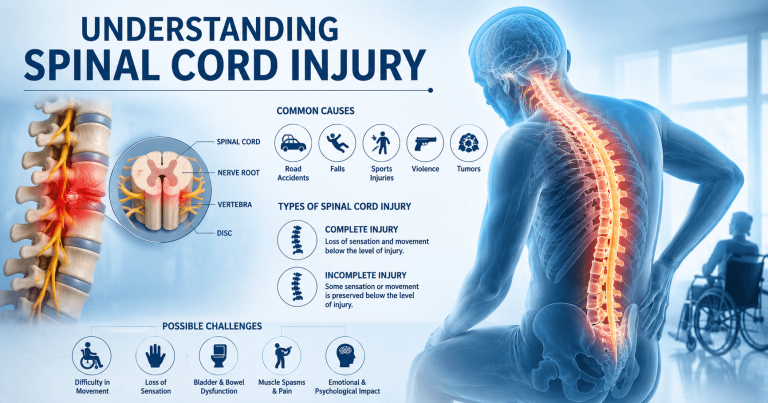
Understanding Spinal Cord Injury
The spinal cord acts as the communication pathway between the brain and the rest of the body. When it is injured, these signals may become partially or completely disrupted.
Depending on the severity and location of the injury, patients may experience:
- Muscle weakness
- Loss of movement
- Difficulty walking
- Poor balance
- Changes in sensation
- Muscle stiffness (spasticity)
- Coordination problems
- Reduced bladder or bowel control
Not every spinal cord injury causes complete paralysis. Many people retain varying levels of movement and sensation, making rehabilitation an essential part of maximizing recovery.
Common Causes of Spinal Cord Injury
Several medical conditions and traumatic events can affect the spinal cord.
Common causes include:
- Road traffic accidents
- Falls, especially among older adults
- Sports injuries
- Workplace accidents
- Spinal tumors
- Degenerative spinal disorders
- Infections affecting the spine
- Surgical complications involving the spine
Regardless of the cause, early assessment and rehabilitation often contribute to better long-term outcomes.
What Makes Modern Spinal Cord Rehabilitation Different?
Unlike traditional rehabilitation, Modern Spinal Cord Rehabilitation combines evidence-based physiotherapy with individualized treatment planning. The goal is not only to regain movement but also to improve participation in everyday life.
Modern rehabilitation focuses on:
- Functional recovery
- Neuroplasticity
- Task-specific practice
- Balance retraining
- Strength development
- Mobility training
- Prevention of secondary complications
- Patient education
- Family involvement
Research supported by organizations such as the World Health Organization (WHO) and the National Institutes of Health (NIH) highlights the importance of early, multidisciplinary rehabilitation in improving functional outcomes and long-term independence.
How Physiotherapy Helps: Step-by-Step Recovery
Every person’s recovery journey is unique, so rehabilitation begins with a thorough assessment of their condition, abilities, and personal goals. Based on these findings, physiotherapists create a structured, evidence-based treatment plan that progresses safely while supporting meaningful improvements in mobility and independence.
1. Comprehensive Clinical Assessment
Recovery starts with understanding the patient’s current abilities.
A physiotherapist evaluates:
- Muscle strength
- Joint mobility
- Sensation
- Balance
- Walking ability
- Functional independence
- Muscle tone
- Pain levels
- Transfer ability
- Risk of falls
The findings help create realistic, measurable rehabilitation goals.
2. Personalized Goal Setting
Rather than using a standard exercise program, treatment is tailored to each individual’s needs.
Goals may include:
- Sitting independently
- Standing safely
- Walking with support
- Improving transfers
- Returning to work
- Climbing stairs
- Improving endurance
- Increasing confidence during daily activities
Patient priorities are always included in treatment planning.
3. Strength Training
Muscle weakness commonly develops after spinal cord injury.
Progressive strengthening helps improve:
- Stability
- Functional movement
- Joint protection
- Endurance
- Walking ability
Exercises are carefully adjusted according to the patient’s current level of function.
4. Balance Rehabilitation
Balance training reduces instability and improves confidence.
Treatment may include:
- Static standing exercises
- Dynamic balance tasks
- Weight shifting
- Core stability
- Reaching activities
- Surface progression
Improved balance often reduces fall risk during daily activities.
5. Gait Training
Walking recovery is a major goal for many patients.
Physiotherapists may use:
- Parallel bars
- Walker-assisted gait
- Walking aids
- Body-weight supported training
- Functional walking practice
- Step training
Progression depends on individual recovery rather than a fixed timeline.
6. Neuromuscular Re-education
Following spinal cord injury, the nervous system needs repeated practice to improve communication with muscles. Task-specific exercises encourage the brain and spinal cord to strengthen existing neural pathways.
This approach supports improvements in:
- Coordination
- Muscle activation
- Movement control
- Functional independence
7. Flexibility and Spasticity Management
Muscle stiffness can interfere with movement.
Stretching programs help:
- Maintain joint mobility
- Reduce tightness
- Improve posture
- Prevent contractures
- Enhance comfort during movement
8. Home Exercise Program
Recovery doesn’t stop when a therapy session ends. Continuing prescribed home exercises, staying active, and attending follow-up appointments are essential for maintaining progress, improving mobility, and achieving long-term independence.
Patients receive structured home programs designed to:
- Maintain progress
- Build consistency
- Improve confidence
- Encourage long-term independence
Regular follow-up ensures exercises remain appropriate as recovery progresses.
A Real Patient Scenario from Varia Physiotherapy Clinic
A gentleman in his early 50s visited our clinic several weeks after spinal surgery following a road traffic accident. He had difficulty standing without support and felt anxious about walking because of repeated loss of balance.
This personalized approach reflects how advanced recovery care for spinal cord injury combines clinical expertise with goal-oriented rehabilitation to support meaningful functional improvements. focused on balance retraining, lower-limb strengthening, gait practice, transfer training, and home exercises.
Over the following months, he gradually progressed from assisted standing to walking with a mobility aid. Although recovery remained ongoing, he regained enough confidence to perform many daily activities independently and returned to participating in family life.
Every patient’s recovery is different, but structured rehabilitation often helps individuals achieve meaningful functional improvements.
Realistic Recovery Timeline
Recovery after spinal cord injury varies significantly.
Several factors influence progress:
- Injury severity
- Level of spinal cord involvement
- Age
- Associated medical conditions
- Time between injury and rehabilitation
- Consistency with therapy
- Motivation
- Family support
General expectations may include:
First Few Weeks
- Pain management
- Safe positioning
- Early movement
- Preventing complications
1–3 Months
- Strength improvement
- Better sitting balance
- Transfer training
- Initial standing practice
3–12 Months
- Functional walking improvements (where possible)
- Better endurance
- Improved coordination
- Greater independence
Some patients continue making functional gains beyond one year with ongoing rehabilitation.
Read More: Spinal Cord Injury Rehabilitation Exercises: Regaining Strength, Mobility, And Independence
Common Myths vs Facts
Myth | Fact |
Recovery stops after a few months. | Many patients continue improving with consistent rehabilitation. |
Paralysis always means no improvement is possible. | Even without complete recovery, many people improve strength, function, and independence. |
Rest is the best treatment. | Guided movement and physiotherapy are essential for recovery. |
Every patient follows the same rehabilitation timeline. | Recovery is highly individual. |
Exercise is unsafe after spinal cord injury. | Evidence-based physiotherapy is designed to improve safety and function. |
When Should You See a Physiotherapist?
Early intervention often leads to better functional outcomes.
Seek physiotherapy if you experience:
- Difficulty walking
- Muscle weakness
- Poor balance
- Reduced coordination
- Frequent falls
- Stiffness
- Trouble standing
- Difficulty transferring from bed or chair
- Reduced independence after spinal surgery or injury
If symptoms include rapidly worsening weakness, severe spinal pain, sudden loss of bladder or bowel control, or unexplained neurological symptoms, immediate evaluation by an orthopedic spine specialist or neurologist is recommended before or alongside rehabilitation.
Why Evidence-Based Rehabilitation Matters
Modern rehabilitation relies on scientific evidence rather than assumptions.
Treatment decisions are guided by:
- Comprehensive clinical assessment
- Functional outcome measures
- Patient-centered goals
- Regular progress reviews
- Evidence-based exercise progression
Organizations including the World Health Organization (WHO) and the National Institutes of Health (NIH) support multidisciplinary rehabilitation as an important component of spinal cord injury management.
Conclusion
Recovering from a spinal cord injury is rarely a straight path, but advances in Modern Spinal Cord Rehabilitation have made recovery more structured, evidence-based, and patient-centered than ever before. With early assessment, personalized physiotherapy, and consistent participation, many individuals improve mobility, balance, strength, and confidence in daily life.
At Varia Physiotherapy Clinic, Ahmedabad, every rehabilitation program begins with understanding the individual—not just the diagnosis. Our experienced physiotherapists create personalized treatment plans focused on meaningful functional goals while working closely with patients and their families throughout the recovery journey.
If you or a loved one is recovering from a spinal cord injury, seeking timely professional guidance can help you build a safer, more independent future.
Book a Professional Assessment
If you’re unsure whether your symptoms need attention, it’s okay to start with a simple consultation. Understanding your condition is the first step toward recovery—no pressure, just guidance.
If you’d like to speak with a physiotherapist or book an assessment at Varia Physiotherapy Clinic, you can reach out here:
 Call: +91 95123 79555
 Email: hello.drhetalvaria@gmail.com
 Website: www.variaphysiotherapyclinic.com
Our team is here to listen, assess, and guide you toward safe and effective recovery.
Modern Spinal Cord Rehabilitation - FAQs
Can spinal cord rehabilitation help months after injury?
How long does spinal cord rehabilitation take?
Is walking possible after spinal cord injury?
Is physiotherapy painful?
Can older adults benefit from spinal cord rehabilitation?
About the Author

Dr. Hetal M Varia
After a rich experience of working in US healthcare as manager and licensed physiotherapist in US for last 11 years, she has returned home with a vision to become pioneer of Vestibular Therapy and specialized Parkinson physiotherapy in Ahmedabad. With her special skills and expertise in vertigo, Parkinson, balance and movement disorders therapy, Dr. Varia is committed to provide US standards of therapy services , compassionate and patient centered care to our people and community. With a vision of the world where everyone walks strong & steady, she intends to empower individuals with vestibular and neurological disorders through specialized care, rehabilitation & innovative therapies to improve mobility, balance & overall quality of life!