
Spinal Cord Injury Rehabilitation Exercises: Regaining Strength, Mobility, And Independence
A spinal cord injury can change life in seconds. One accident, one fall, or one sudden impact can affect your ability to move, feel, and perform everyday activities. For many patients, the biggest fear is losing independence.
At Varia Physiotherapy Clinic in Ahmedabad, we often meet people in the early days after a spinal cord injury—confused, scared, and unsure whether they will walk again or return to normal life.
The truth is, recovery looks different for every person.
Some regain mobility faster. Others need months or even years of guided rehabilitation. But one thing remains constant:
Early and structured spinal cord injury rehabilitation exercises can significantly improve recovery outcomes.
According to the World Health Organization, rehabilitation is essential for improving function, reducing disability, and helping individuals participate fully in life again.
Physiotherapy does not “fix” the spinal cord—but it helps the body adapt, strengthen, and relearn movement in the safest and most effective way.
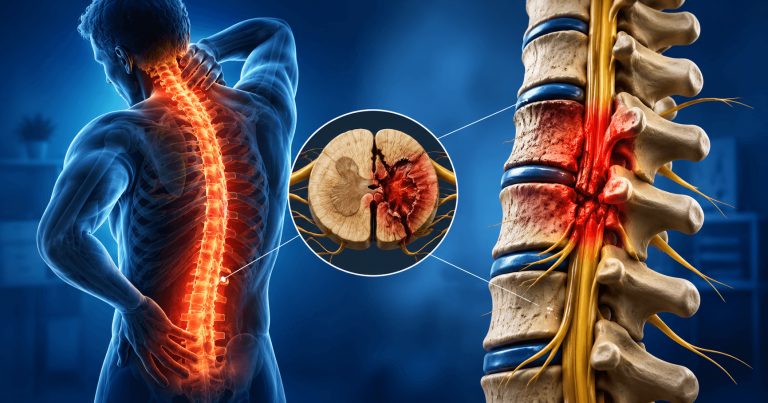
Understanding Spinal Cord Injury in Simple Terms
The spinal cord acts like the body’s communication highway. It carries signals between the brain and body. When injured, these signals may be disrupted.
This can affect:
- Movement
- Muscle control
- Balance
- Sensation
- Bladder and bowel function
- Breathing (in severe cases)
The severity depends on:
Complete Injury
No signals pass below the injury level.
Incomplete Injury
Some signals still pass, offering better rehabilitation potential.
At Varia, we always explain this clearly to patients because understanding the injury helps set realistic expectations.
Common Causes of Spinal Cord Injuries
We commonly see spinal injuries caused by:
Road Traffic Accidents
Road traffic accidents are one of the most common causes of spinal cord injury in India. The sudden force from collisions can damage the spine and surrounding nerves, often requiring immediate medical attention and structured rehabilitation for recovery.
Falls
Falls are a frequent cause of spinal injuries, especially in older adults and individuals working in physically demanding environments. Even a simple slip can lead to serious spinal trauma, affecting mobility and daily independence.
Sports Trauma
High-impact sports or improper landing during activity can place excessive stress on the spine. These injuries may range from mild strain to serious vertebral damage, and early assessment helps prevent long-term complications.
Degenerative Conditions
Conditions like spinal stenosis or age-related disc degeneration can gradually compress the spinal cord. Patients often experience slowly increasing pain, stiffness, or weakness that needs medical evaluation and rehabilitation support.
Tumors or Infections
Although less common, tumors or infections affecting the spine can create pressure on the spinal cord over time. This may lead to progressive neurological symptoms that require timely diagnosis and specialist care.
The National Institutes of Health states that timely rehabilitation can improve long-term neurological function and quality of life.
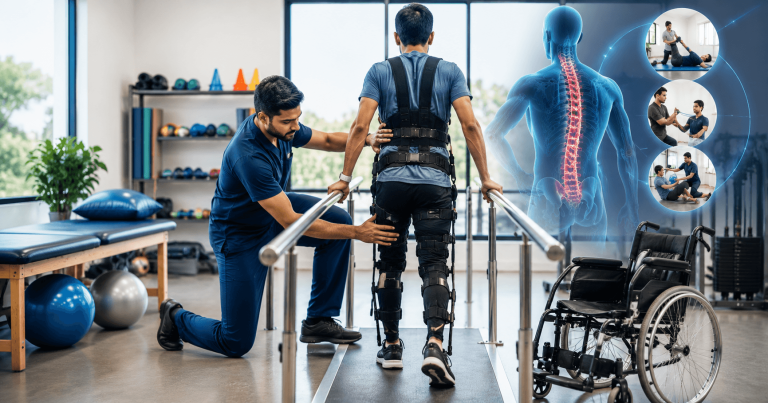
How Physiotherapy Helps After Spinal Cord Injury
Physiotherapy is not just exercise.
It is a structured recovery plan based on:
- Neurological assessment
- Muscle strength testing
- Range of motion evaluation
- Functional mobility assessment
- Balance analysis
- Pain assessment
At Varia Physiotherapy Clinic, every rehabilitation program is personalized. Here’s how treatment usually progresses:
Phase 1: Preventing Complications in Early Recovery
In the first few weeks, the focus is often on preventing:
- Muscle stiffness
- Pressure sores
- Joint contractures
- Blood clots
- Lung infections
Passive Range of Motion Exercises
These involve therapist-assisted movements.
Benefits:
- Keeps joints flexible
- Improves circulation
- Reduces stiffness
This is often the first stage of spinal cord injury rehabilitation exercises.
Phase 2: Strengthening Weak Muscles
Once the patient gains stability, strengthening begins. Exercises include:
Assisted Leg Raises
Assisted leg raises help gently activate weak hip and thigh muscles after spinal cord injury. With therapist support, they improve muscle awareness and prepare the body for functional movements.
Core Stabilization
Core stabilization focuses on strengthening deep abdominal and back muscles for better sitting control. It plays a key role in improving posture, balance, and overall trunk stability during recovery.
Arm Strengthening
Arm strengthening is essential for patients who rely on wheelchairs or assistive devices. It improves independence in daily tasks like transfers, pushing, and supporting body weight safely.
Resistance Band Exercises
Resistance band exercises are introduced gradually to build safe and controlled muscle strength. They allow progressive training without overloading joints or increasing injury risk.
Why It Matters
Stronger muscles form the foundation of functional recovery after spinal cord injury. They directly improve standing ability, safe transfers, walking potential, and overall independence in daily life.
Phase 3: Balance and Postural Training
Balance is often heavily affected, which is why guided rehabilitation exercises for spinal recovery are important for improving trunk control and stability
Patients may struggle to:
- Sit unsupported
- Stand safely
- Shift body weight
Sitting Balance Training
Sitting balance training helps patients regain control of their trunk muscles after spinal cord injury. It improves stability, reduces fall risk, and builds confidence for independent sitting and daily activities.
Weight Shifting Exercises
Weight shifting exercises gently train the body to move weight from one side to another in a controlled way. They are essential for preparing the body for standing, walking, and safe movement transitions.
Supported Standing Frames
Supported standing frames allow patients to stand safely even when leg strength is limited. This position promotes better blood circulation, supports bone health, and helps reduce long-term complications of immobility. At Varia, this stage is crucial for confidence-building.
Phase 4: Gait Training and Walking Rehabilitation
For incomplete injuries, walking recovery is possible. This stage may include:
Parallel Bar Walking
Parallel bar walking provides a safe and supportive environment for early gait training after spinal injury. It helps patients rebuild confidence while improving balance and coordination under therapist supervision.
Body Weight Supported Treadmill Training
This technique partially reduces body weight to make walking easier and safer during early recovery. It helps retrain natural walking patterns while reducing strain on weak muscles and joints.
Step-Up Training
Step-up exercises focus on strengthening the legs and improving control during upward and downward movements. It helps patients regain functional strength needed for stairs, walking, and daily activities.
Functional Electrical Stimulation (if needed)
Functional Electrical Stimulation (FES) uses gentle electrical impulses to activate weak or inactive muscles. It supports muscle re-education and improves movement patterns in patients with neurological weakness. These advanced spinal cord injury rehabilitation exercises help improve motor relearning.
Phase 5: Functional Independence Training
Recovery is meaningful only when it helps daily life.
This includes:
- Bed mobility
- Wheelchair transfers
- Standing from sitting
- Stair climbing
- Bathroom safety training
We focus on practical goals because real-life movement matters most.
A Real Patient Story from Varia Physiotherapy Clinic
A 42-year-old male from Ahmedabad came to us after a road accident causing incomplete spinal cord injury at the lumbar level.
When he started:
- He could not stand without support
- Leg strength was severely weak
- Sitting balance was poor
Our clinical approach included:
Week 1–4:
Passive mobility, positioning, and pain management
Week 5–8:
Strengthening and sitting balance
Month 3:
Standing training and supported walking
Month 6:
Independent indoor walking with minimal aid
His recovery was not “quick.”
It was consistent.
This is what we often tell families:
Progress in spinal cord rehabilitation is measured in small victories.
Myths vs Facts About Spinal Cord Injury Recovery
Myth: Exercise can damage the spinal cord more.
Fact: Properly guided rehab improves healing and prevents complications.
Myth: If movement doesn’t return in one month, it never will.
Fact: Recovery can continue for many months.
Myth: Bed rest is the best treatment.
Fact: Too much inactivity causes stiffness and weakness.
Myth: Surgery alone is enough.
Fact: Surgery stabilizes; rehabilitation restores function.
When Should You See a Physiotherapist?
Seek physiotherapy immediately if you have:
- Difficulty moving limbs
- Muscle weakness
- Balance problems
- Tingling or numbness
- Trouble walking
- Reduced coordination
Urgent referral to an orthopedic specialist or neurologist may be necessary if:
- Symptoms worsen suddenly
- Severe pain develops
- Bladder or bowel changes occur
- Breathing becomes difficult
At Varia, we work closely with medical specialists for integrated care.
Recovery Timeline: What Is Realistic?
Patients often ask:
“How long will recovery take?”
The honest answer:
It depends.
Factors include:
- Injury level
- Severity
- Age
- Overall health
- Motivation
- Consistency with therapy
General timeline:
0–3 months
Early healing and mobility work
3–6 months
Strengthening and balance progress
6–12 months
Functional improvements continue
Some patients improve beyond one year. There is no exact formula. Consistency matters most.
Conclusion
Spinal cord injuries can feel overwhelming—but recovery is possible with the right support. The right spinal cord injury rehabilitation exercises can improve strength, mobility, balance, and independence over time.
At Varia Physiotherapy Clinic, we believe rehabilitation is not about false promises.
It is about:
- Real progress
- Safe movement
- Better function
- Better quality of life
Every patient’s journey is unique. And every small improvement matters.
If you or a loved one is recovering from a spinal injury, professional physiotherapy guidance can make a meaningful difference.
Book an assessment and understand what recovery may look like for your condition.
Book a Professional Assessment
If you’re unsure whether your symptoms need attention, it’s okay to start with a simple consultation. Understanding your condition is the first step toward recovery—no pressure, just guidance.
If you’d like to speak with a physiotherapist or book an assessment at Varia Physiotherapy Clinic, you can reach out here:
 Call: +91 95123 79555
 Email: hello.drhetalvaria@gmail.com
 Website: www.variaphysiotherapyclinic.com
Our team is here to listen, assess, and guide you toward safe and effective recovery.
Spinal Cord Injury Rehabilitation Exercises - FAQs
1. Can spinal cord injury patients walk again?
2. How soon should rehab start?
3. Are spinal cord injury rehabilitation exercises painful?
4. How often should exercises be done?
5. Can physiotherapy help years after injury?
About the Author

Dr. Hetal M Varia
After a rich experience of working in US healthcare as manager and licensed physiotherapist in US for last 11 years, she has returned home with a vision to become pioneer of Vestibular Therapy and specialized Parkinson physiotherapy in Ahmedabad. With her special skills and expertise in vertigo, Parkinson, balance and movement disorders therapy, Dr. Varia is committed to provide US standards of therapy services , compassionate and patient centered care to our people and community. With a vision of the world where everyone walks strong & steady, she intends to empower individuals with vestibular and neurological disorders through specialized care, rehabilitation & innovative therapies to improve mobility, balance & overall quality of life!