
Role of Strengthening Exercises In Preventing Injuries
In my years of working as a physiotherapist with athletes—from high school players to weekend warriors and semi-professionals—one truth stands out clearly: most sports injuries are preventable. Not by luck, not by tape or braces alone, but by smart, progressive strengthening done the right way.
In today’s high-intensity sports culture, athletes train harder, compete longer, and recover less. That’s exactly why injury prevention is no longer optional—it’s a performance strategy.
Why Athletes Actually Get Injured (What Most Programs Miss)
Many athletes I see in the clinic say the same thing: “I was stretching regularly, but I still got injured.”
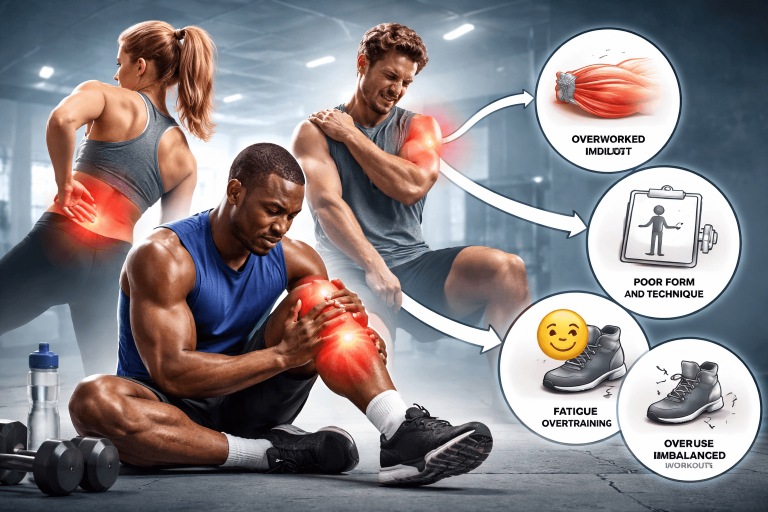
Here’s the hard truth: flexibility without strength is not protection.The most common injury causes I encounter include:
Muscle Imbalances (Strong Quads, Weak Glutes)
Muscle imbalances occur when certain muscle groups dominate movement while others fail to activate properly. Strong quadriceps combined with weak gluteal muscles place excessive stress on the knees, hips, and lower back during running, jumping, and squatting. Over time, this imbalance alters movement mechanics and increases injury risk. Strengthening the glutes restores proper force distribution and improves overall joint stability. Correcting imbalances is essential for long-term athletic health.
Poor Core and Hip Control
The core and hips act as the body’s central stabilizing system during all athletic movements. When these muscles lack strength or coordination, excessive motion occurs at the spine, hips, and knees. This leads to inefficient movement patterns and increased strain on muscles and ligaments. Poor control is commonly seen during cutting, landing, or sudden direction changes. Targeted core and hip strengthening significantly reduces injury risk and improves performance.
Fatigue-Related Breakdown in Technique
As fatigue sets in, the body naturally compensates by altering movement patterns. Athletes may lose proper alignment, stability, and timing during high-intensity or prolonged activity. These subtle technique breakdowns dramatically increase stress on joints and soft tissues. Many non-contact injuries occur late in training sessions or games for this reason. Conditioning and endurance-based strengthening help maintain safe mechanics under fatigue.
Returning to Sport Too Quickly After Minor Pain
Minor pain is often ignored or masked with rest, taping, or medication, leading athletes to return before tissues are fully healed. This incomplete recovery reduces load tolerance and increases vulnerability to reinjury. Pain-free movement does not always indicate full strength or control. Gradual return-to-sport protocols ensure tissues adapt safely to increasing demands. Proper rehabilitation prevents small issues from becoming chronic problems.
Training Volume Increasing Faster Than Tissue Capacity
Injuries commonly occur when training intensity, frequency, or duration increases too rapidly. Muscles and tendons require time to adapt to new loads, even when fitness improves quickly. When tissue capacity is exceeded, microdamage accumulates faster than the body can repair. This leads to overuse injuries such as tendinitis or stress reactions. Progressive loading and recovery planning are key to sustainable performance.
How Strength Training Prevents Injuries (Clinically Explained)
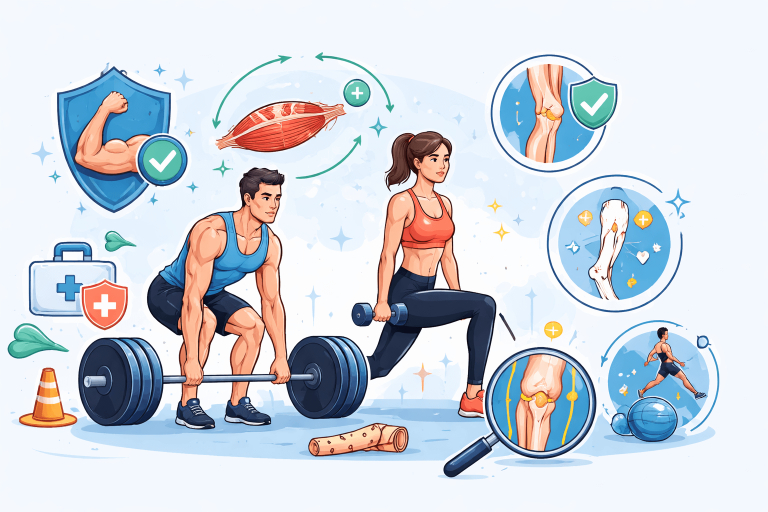
From a physiotherapy standpoint, strengthening works because it:
- Improves load tolerance of muscles, tendons, and ligaments
- Enhances joint control during high-speed or unpredictable movements
- Reduces stress on passive structures (ligaments, cartilage)
- Improves neuromuscular coordination, especially under fatigue
In simple terms:
Stronger, well-coordinated muscles protect joints when the game gets chaotic.

Step-by-Step: A Practical Injury Prevention Framework
Step 1: Movement & Risk Assessment
Before exercises, we assess:
- Single-leg balance and control
- Squat and landing mechanics
- Core endurance
- Previous injury history
This helps us identify where injuries are most likely to happen.
Step 2: Dynamic Preparation (Not Passive Stretching)
Instead of long static stretches before play, we focus on:
Controlled Leg Swings
Controlled leg swings are used to gently increase hip mobility while activating the muscles that stabilize the pelvis. Performing the movement in a slow, controlled manner helps prepare the hips and hamstrings for running, jumping, and change of direction. This exercise improves range of motion without overstressing the joints. It also enhances neuromuscular control, reducing the risk of sudden muscle strains—this is an important part of injury prevention with physiotherapy in Ahmedabad. Proper control is more important than speed.
Walking Lunges with Rotation
Walking lunges combined with trunk rotation activate the hips, core, and lower limbs simultaneously. This movement mimics sport-specific patterns such as cutting, twisting, and reaching. It helps improve balance, coordination, and dynamic stability. The rotational component prepares the spine and hips for multi-directional forces. This exercise is especially effective for reducing lower limb and lower back injury risk.
Arm and Shoulder Mobility Drills
Arm and shoulder mobility drills prepare the upper body for overhead, throwing, and pushing movements. These exercises improve blood flow to the shoulder muscles while maintaining healthy joint movement. Proper shoulder mobility reduces strain on the rotator cuff and neck. They also help correct stiffness caused by poor posture or repetitive training. Controlled motion ensures joint safety and optimal activation.
Light Activation of Glutes and Core
Light glute and core activation wakes up key stabilizing muscles before intense activity. When these muscles activate early, they support proper alignment of the hips, spine, and knees. This reduces compensatory stress on smaller or overworked muscles. Simple activation exercises improve movement efficiency and power transfer. Early activation plays a critical role in injury prevention and performance readiness.
Step 3: Core & Pelvic Stability (The Injury Firewall)
Injury prevention always starts at the center. Effective exercises include:
Dead Bug Variations
Dead bug variations are excellent for improving deep core stability while maintaining a neutral spine. This exercise trains the body to control movement of the arms and legs without excessive spinal motion. It is particularly effective for reducing lower back strain during sports activities. Slow, controlled execution enhances neuromuscular coordination and core endurance. Dead bugs form a safe foundation for advanced athletic movements.
Side Planks with Movement
Side planks with movement strengthen the lateral core muscles that stabilize the pelvis and spine. Adding controlled leg or arm movements challenges balance and dynamic control. This exercise is especially useful for preventing hip, groin, and lower back injuries. It improves the body’s ability to resist unwanted side bending during running and cutting. Proper alignment is essential for maximum benefit.
Anti-Rotation Presses
Anti-rotation presses train the core to resist twisting forces rather than producing rotation. This is crucial for sports involving sudden direction changes, throwing, or contact. The exercise strengthens deep abdominal and spinal stabilizers while protecting the lower back. Controlled resistance improves force transfer between the upper and lower body. This makes it highly effective for injury prevention and performance stability.
Bird Dogs with Slow Control
Bird dogs with slow control improve coordination between the spine, hips, and shoulders. The exercise emphasizes stability while moving opposite limbs, mimicking functional movement patterns. Slow execution enhances muscle activation and postural awareness. It reduces excessive spinal movement that can lead to injury. Bird dogs are ideal for building endurance and control in the core stabilizers.
Step 4: Lower Limb Strength (Where Most Injuries Happen)
In real-world practice, most sports injuries involve the knee, ankle, or hip. Key strengthening patterns:
- Squats (progressing to single-leg)
- Reverse and lateral lunges
- Hip hinge movements
- Calf strengthening (often overlooked but critical)
We emphasize quality of movement over heavy weight, especially during injury prevention phases.
Step 5: Upper Body & Shoulder Protection
Scapular Stability Exercises
Scapular stability exercises focus on strengthening the muscles that control shoulder blade movement. Proper scapular control ensures efficient force transfer during lifting, throwing, and overhead activities. Weak or poorly coordinated scapular muscles often lead to shoulder impingement and rotator cuff overload. These exercises improve shoulder alignment and reduce unnecessary strain on the neck and upper arm. Consistent training enhances both performance and injury resistance.
Controlled Shoulder Rotations
Controlled shoulder rotations strengthen the rotator cuff while maintaining joint stability throughout movement. Performing these exercises slowly improves muscle activation and joint awareness. This control is essential for protecting the shoulder during repetitive or high-speed actions. Proper rotation mechanics help prevent common injuries such as tendinitis and labral strain. Quality of movement is prioritized over resistance.
Thoracic Spine Mobility
Thoracic spine mobility plays a critical role in healthy shoulder and neck function. Restricted upper-back movement forces the shoulders and lower back to compensate excessively. Improving thoracic mobility allows better overhead reach and rotational control. This reduces stress on the shoulder joint during sports and daily activities. Mobility work here supports both injury prevention and posture correction.
Step 6: Recovery-Based Flexibility
Stretching works best after training, not before:
- Targets tight, overworked muscles
- Restores movement symmetry
- Reduces post-training stiffness
We keep it purposeful, not excessive.

Real Case Example from Practice
Case 1 : 19-year-old football player with repeated hamstring strains
- History: 3 strains in 2 seasons
- Problem: Strong quads, weak glutes, poor pelvic control
- Solution: 6-week progressive strengthening + sprint mechanics retraining
- Result: Returned full season without recurrence
The takeaway?
The hamstring wasn’t “weak”—the system around it was failing.
Case 2: Preventing Shoulder Injury in a Volleyball Player
Patient: 22-year-old female volleyball player
Problem: Shoulder pain during spikes and serves
Intervention: Scapular stability exercises, controlled shoulder rotations, thoracic mobility drills, and gradual load progression
Outcome: Pain reduced in 6 weeks, improved shoulder control, returned to full training without injury
Key Point: Targeted strengthening and mobility exercises prevented a serious shoulder injury and enhanced performance.
Takeaway: Targeted strengthening and mobility exercises not only reduced pain but also prevented a potential serious shoulder injury, highlighting the critical Role of Strengthening Exercises In Preventing Injuries in overhead athletes.

Common Buyer Concerns We Hear (And Honest Answers)
“Can I just do these exercises on my own?”
You can—but incorrect progression often leads to overload or missed weak points.
“I’m not injured yet. Do I still need this?”
Preventive strengthening works best before pain starts.
“I don’t want bulky muscles.”
Injury prevention training focuses on control and resilience, not bodybuilding.

Testimonials & Social Proof
“After working with the team at Therapy Solutions, my knee pain disappeared. The strengthening exercises not only prevented further injuries but also improved my stability on the field. I finally feel confident playing at full intensity.”
— Arjun V.
“I never realized weak core muscles were causing my lower back problems. The physiotherapists created a simple strengthening program, and within weeks, my pain reduced and I haven’t had a flare-up since.”
— Priya M.
“Shoulder pain was affecting my spikes during matches. The targeted shoulder and core exercises helped me recover and stay injury-free. I can now train harder without fear of reinjury.”
— Sameer K.
Conclusion
Injury prevention is not about avoiding training—it is about training intelligently. Proper strengthening, mobility work, and controlled progression create a strong foundation that protects the body during high-demand activities.
When key areas like the core, hips, shoulders, and upper back function efficiently, the risk of overload and breakdown is significantly reduced.
A structured, step-by-step approach ensures muscles and joints adapt safely to increasing demands. By prioritizing prevention, athletes can enhance performance, recover better, and enjoy long-term participation without recurring injuries.
If you need:
An honest, professional opinion
A second assessment
Guidance on choosing the right clinic
📩 Comment below, reach out, or book a consultation today.
Your recovery deserves more than guesswork—it deserves the right care.
Role Of Strengthening Exercises In Preventing Injuries- FAQs
1. What is the role of strengthening exercises in preventing injuries?
2. How often should I perform strengthening exercises to prevent injuries?
3. Which muscles should I focus on for injury prevention?
4. Can strengthening exercises help prevent injuries after an existing pain or minor injury?
5. Are strengthening exercises enough to prevent all injuries?
References
About the Author

Dr. Hetal M Varia
After a rich experience of working in US healthcare as manager and licensed physiotherapist in US for last 11 years, she has returned home with a vision to become pioneer of Vestibular Therapy and specialized Parkinson physiotherapy in Ahmedabad. With her special skills and expertise in vertigo, Parkinson, balance and movement disorders therapy, Dr. Varia is committed to provide US standards of therapy services , compassionate and patient centered care to our people and community. With a vision of the world where everyone walks strong & steady, she intends to empower individuals with vestibular and neurological disorders through specialized care, rehabilitation & innovative therapies to improve mobility, balance & overall quality of life!