
How physiotherapy supports brain injury rehabilitation?
A practical, doctor-led guide for patients and caregivers
When a person survives a brain injury, families often ask me in the clinic:
“Doctor, will physiotherapy really help the brain recover?”
“Is it too early… or too late… to start therapy?”
“Why is progress so slow compared to bone or muscle injuries?”
These are valid questions. Brain injury recovery is not straightforward, and misinformation online often creates false hope or unnecessary fear.
As a physiotherapy doctor working closely with neurologists, neurosurgeons, and caregivers, this guide explains how physiotherapy truly supports brain injury rehabilitation, what it can and cannot do, and how patients can make informed decisions at each stage of recovery.
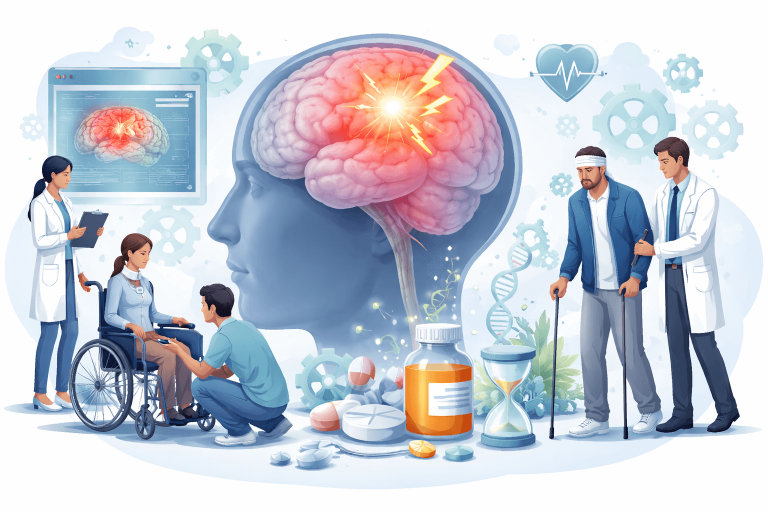
Understanding Brain Injury: Why Recovery Is Different
A brain injury affects how the brain sends, receives, and processes signals, not just muscles or joints, often requiring trusted Back rehabilitation support in Ahmedabad for structured recovery. Depending on the area involved, patients may experience:
Weakness or paralysis on one side of the body
This condition often occurs after stroke or brain injury, making movement difficult on one side. It can affect walking, hand use, and daily functional activities.
Poor balance or coordination
Individuals may feel unsteady while standing or walking and have difficulty controlling movements. This increases the risk of falls and limits independence.
Muscle stiffness or abnormal movements
Increased muscle tone, spasms, or involuntary movements can restrict smooth motion. These changes may cause discomfort and interfere with normal posture and mobility.
Speech or swallowing difficulty
Damage to neurological pathways can affect speech clarity and safe swallowing. This may lead to communication challenges and increased risk of choking.
Memory, attention, or behavioral changes
Cognitive changes can impact focus, problem-solving, and emotional control. These difficulties may affect work, social interactions, and daily decision-making.
Extreme fatigue with simple activities
Neurological conditions often cause rapid tiredness even with minimal effort. Fatigue can reduce participation in therapy and slow overall recovery.
Unlike fractures, the brain does not “heal” in a predictable timeline. Recovery depends on neuroplasticity — the brain’s ability to reorganize and relearn functions.
- Physiotherapy does not repair damaged brain cells.
- It trains the remaining healthy networks to take over lost functions.
That distinction matters for setting realistic expectations.
Read More:- How To Manage Chronic Neck Pain with Physiotherapy
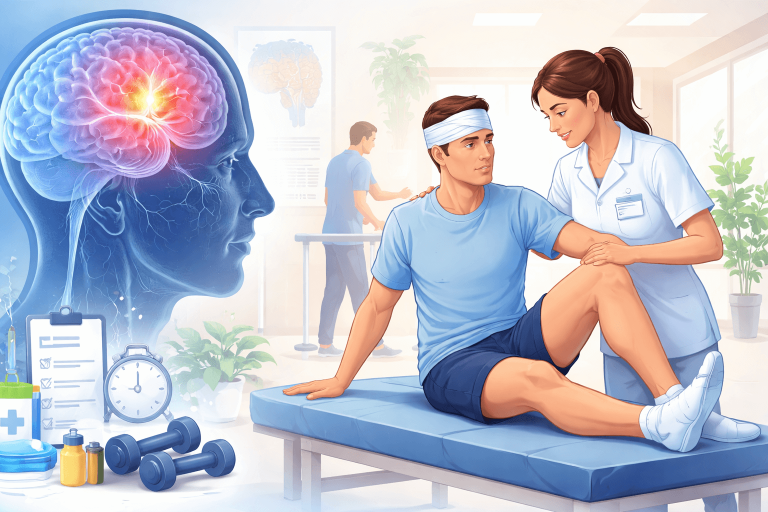
When Physiotherapy Becomes Essential After Brain Injury
Physiotherapy is not optional rehabilitation after a brain injury — it is foundational once the patient is medically stable.
Physiotherapy usually begins when:
Vital signs are stable
The patient’s heart rate, blood pressure, and oxygen levels remain within safe limits. Stable vital signs indicate the body can handle gentle activity and rehabilitation.
Brain swelling is controlled
Reduced or stabilized brain swelling lowers the risk of further neurological damage. This allows rehabilitation to begin safely without worsening symptoms.
The patient can tolerate basic movement or positioning
The individual is able to handle simple movements such as turning in bed or sitting with support. This shows readiness for early therapeutic exercises.
The medical team clears rehabilitation
Doctors confirm the patient is medically safe to start therapy. This clearance ensures rehabilitation will support recovery without causing complications.
Early therapy is not about “exercise” — it is about preventing secondary damage such as:
- Joint stiffness
- Muscle shortening
- Pressure sores
- Chest complications
- Learned non-use of affected limbs
Delaying rehabilitation often makes recovery harder, slower, and less complete.
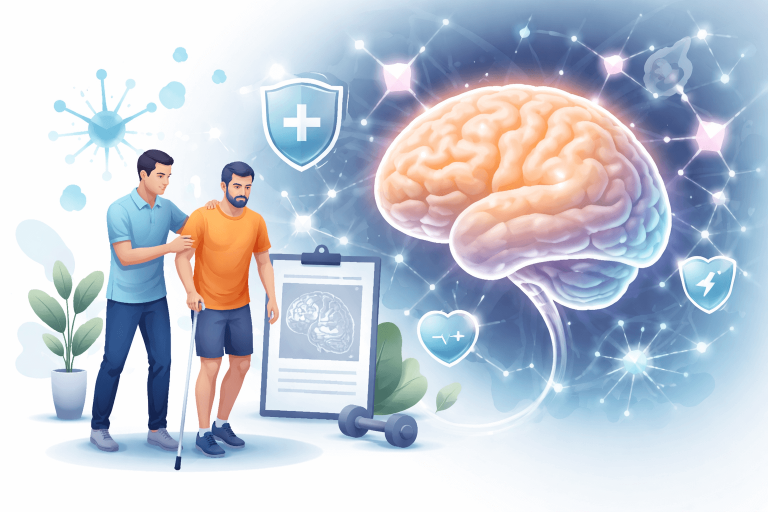
How Physiotherapy Actually Helps the Brain Recover
Restoring Movement Control (Not Just Strength)
Many patients tell me:
“My hand has strength, but it doesn’t move properly.”
This happens because brain injury disrupts motor control, not only muscle power.
Physiotherapy focuses on:
Re-educating movement patterns
Therapy focuses on retraining the brain and body to perform correct, functional movements. This helps restore natural motion and improves daily activity performance.
Reducing abnormal muscle tone (spasticity or floppiness)
Treatment aims to normalize muscle tone to allow better control and comfort. Proper tone improves movement efficiency and prevents stiffness or instability.
Improving timing, coordination, and smoothness
Exercises help movements become more controlled and well-timed. This enhances balance, precision, and overall functional ability.
Preventing compensatory movements that limit long-term recovery
Therapists correct faulty movement habits that develop due to weakness. Avoiding compensation supports better recovery and long-term functional outcomes.
2. Improving Balance and Postural Stability
Balance loss after brain injury is common and frightening. Patients often avoid movement due to fear of falling.
Therapy includes:
Sitting and standing balance retraining
Exercises focus on maintaining stability while sitting or standing in different positions. This helps improve posture control and confidence during daily activities.
Weight-shifting and postural reactions
Training encourages safe shifting of body weight in different directions. It improves automatic postural responses needed to prevent falls.
Controlled exposure to safe imbalance
Patients are gently challenged in a supervised environment to improve balance recovery. This builds confidence and enhances the body’s protective responses.
Vision-vestibular-proprioceptive integration
Therapy combines visual input, inner ear balance signals, and body position awareness. This integration improves overall balance, coordination, and movement control.
3. Gait and Walking Retraining
Drag one leg
Weakness or poor control in one leg causes difficulty lifting the foot during walking. This leads to dragging and increases the risk of tripping.
Walk with excessive stiffness
High muscle tone makes leg movements rigid and slow. This stiffness affects walking speed, balance, and overall mobility.
Feel unsafe without support
Poor balance or weakness creates fear while standing or walking independently. Support is often needed to prevent falls and build confidence.
Physiotherapy retrains:
- Step symmetry
- Foot clearance
- Trunk alignment
- Arm swing and rhythm
4. Preventing Long-Term Disability
Fixed joint deformities
Long-term stiffness and muscle imbalance can cause joints to lose their normal range of motion. This makes movement difficult and may become permanent if untreated.
Chronic pain
Ongoing muscle tightness, poor posture, or joint stress can lead to persistent pain. Chronic pain reduces comfort and limits participation in daily activities.
Severe spasticity
Excessive muscle tightness causes uncontrolled stiffness and restricted movement. It can interfere with walking, hand function, and personal care.
Loss of independence despite “brain recovery”
Even when the brain heals, poor movement patterns may remain without proper rehabilitation. This can prevent a person from returning to independent daily living.
Read More:- Best Physiotherapy Clinic in Ahmedabad
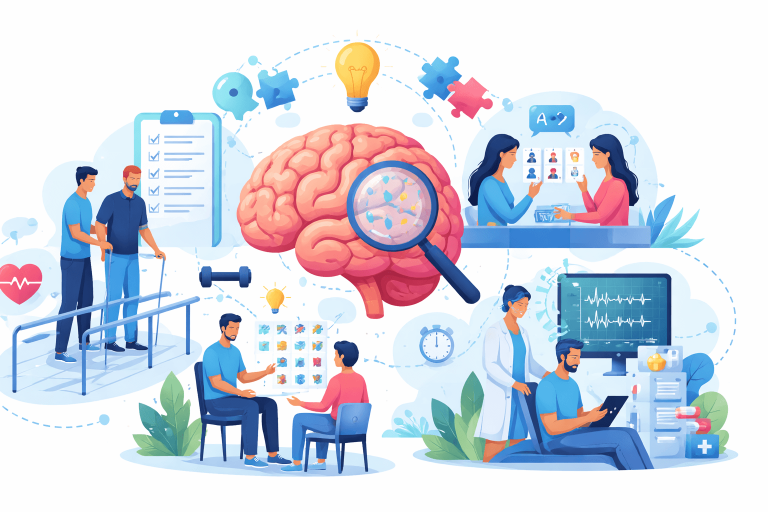
Step-by-Step: What Brain Injury Rehabilitation Looks Like
Phase 1: Early / Acute Phase
Positioning and joint protection
Proper positioning helps maintain joint alignment and prevents stiffness or injury. It also reduces pain and protects weak or affected limbs.
Bed mobility
Training focuses on safe movements such as turning, rolling, and shifting in bed. Improved bed mobility increases comfort and independence.
Early sitting balance
Exercises help the patient sit upright with better control and stability. This is an important step toward standing and walking activities.
Prevent complications
Early rehabilitation reduces the risk of pressure sores, contractures, and breathing issues. Preventing complications supports faster and safer recovery.
What families should know
- Progress looks small but is critical
- Fatigue is normal
- Overstimulation can worsen recovery
Phase 2: Subacute Rehabilitation Phase
Active movement retraining
Therapy encourages the patient to actively move weakened muscles with proper control. This helps rebuild strength and improve motor control.
Sitting → standing → walking progression
Rehabilitation follows a step-by-step approach from sitting to standing and then walking. This ensures safe mobility gains and builds confidence.
Functional use of affected limbs
Exercises focus on using the affected arm or leg in daily tasks. Regular use improves coordination and reduces dependence on the stronger side.
Balance and endurance training
Training improves stability and the ability to sustain activity over time. This helps patients move safely and perform daily activities with less fatigue.
Phase 3: Long-Term / Community Rehabilitation
Independence in daily activities
Rehabilitation aims to help individuals perform self-care tasks such as dressing, bathing, and eating independently. This improves confidence and quality of life.
Return to work or social roles (where possible)
Therapy supports physical and cognitive abilities needed for work and social participation. Gradual reintegration helps restore routine and social connection.
Prevent regression
Ongoing exercises and activity help maintain functional gains achieved during rehabilitation. This reduces the risk of decline or loss of abilities over time.
Adaptation strategies when full recovery isn’t achievable
Therapists teach alternative techniques and use of assistive devices to maximize function. These strategies help individuals remain active and independent despite limitations.
Realistic Case Example
A 42-year-old man came to our clinic 6 weeks after a traumatic brain injury.
He could walk with support but avoided using his left arm completely.
Family concern:
“His hand is weak. Should we do heavy strengthening?”
Clinical reality:
- Strength was partially present
- Motor control and sensory awareness were poor
- Aggressive strengthening increased spasticity
Treatment focus
- Guided reaching tasks
- Weight-bearing through the arm
- Sensory retraining
- Functional activities (not gym exercises)
Outcome after 3 months
- Improved arm use in daily tasks
- Reduced stiffness
- Better walking balance
Not perfect recovery — but meaningful independence.
What Physiotherapy Cannot Do
Physiotherapy cannot:
- Guarantee full recovery
- Reverse severe brain damage
- Restore lost memory or cognition alone
- Replace speech or occupational therapy when needed
When Physiotherapy Alone Is NOT Enough
Refer back to the medical team if there is:
- Worsening consciousness or confusion
- Increasing headaches or vomiting
- Sudden loss of function
- Seizures
- Severe behavioral changes
Rehabilitation works with medicine, not instead of it.
Common Home Mistakes That Slow Recovery
I frequently see patients harmed by:
- Random YouTube exercises
- Over-stretching spastic muscles
- Forcing movements through pain
- Ignoring fatigue limits
- Stopping therapy too early because “progress is slow”
Brain recovery requires precision, patience, and progression.
Who Benefits Most From Physiotherapy After Brain Injury?
Physiotherapy is most effective when patients:
- Are medically stable
- Can follow at least simple instructions
- Have consistent caregiver support
- Start early and continue long-term
Even severe injuries can benefit — but goals must be realistic.
How Long Does Brain Injury Recovery Take?
There is no fixed timeline, but generally:
- Most rapid gains: first 3–6 months
- Continued improvement: up to 18–24 months
- Functional adaptation: lifelong
Recovery is non-linear — plateaus are normal, not failure.
Final Thoughts From a Clinician
Physiotherapy after brain injury is not about pushing harder —
It is about training smarter, safer, and consistently.
The right rehabilitation:
Reduces disability
Improves quality of life
Supports dignity and independence
Prevents avoidable complications
If you or your loved one is navigating brain injury recovery, seek individualized, evidence-based physiotherapy for brain injury rehabilitation, not generic exercise programs.
Conclusion:
Physiotherapy plays a vital role in brain injury rehabilitation by retraining movement, balance, and functional independence through structured, evidence-based care. Recovery is gradual and highly individual, requiring patience, consistency, and proper clinical guidance. When started at the right time and continued appropriately, physiotherapy helps reduce long-term disability and improves quality of life, even when full recovery is not possible. How Physiotherapy Supports Brain Injury Rehabilitation?
Conclusion:
Physiotherapy plays a vital role in brain injury rehabilitation by retraining movement, balance, and functional independence through structured, evidence-based care. Recovery is gradual and highly individual, requiring patience, consistency, and proper clinical guidance. When started at the right time and continued appropriately, physiotherapy helps reduce long-term disability and improves quality of life, even when full recovery is not possible. How Physiotherapy Supports Brain Injury Rehabilitation?
How physiotherapy supports brain injury rehabilitation? - FAQs
Q1. When should physiotherapy start after a brain injury?
Q2. Can physiotherapy fully reverse brain damage?
Q3. How long does brain injury rehabilitation take?
Q4. Is home exercise alone enough for brain injury recovery?
Q5. What signs mean the patient should see the doctor again urgently?
References
About the Author

Dr. Hetal M Varia
After a rich experience of working in US healthcare as manager and licensed physiotherapist in US for last 11 years, she has returned home with a vision to become pioneer of Vestibular Therapy and specialized Parkinson physiotherapy in Ahmedabad. With her special skills and expertise in vertigo, Parkinson, balance and movement disorders therapy, Dr. Varia is committed to provide US standards of therapy services , compassionate and patient centered care to our people and community. With a vision of the world where everyone walks strong & steady, she intends to empower individuals with vestibular and neurological disorders through specialized care, rehabilitation & innovative therapies to improve mobility, balance & overall quality of life!