Posture Improvement After Stroke Physiotherapy | Regain Balance & Stability
Recovering from a stroke is not only about regaining the ability to move an arm or take a few steps. For most patients, the real challenge begins afterward—when they try to sit upright, maintain balance, or perform simple daily activities like eating, standing, or dressing.
At Varia Physiotherapy Clinic in Ahmedabad, we often meet patients and families who say, “My movement is coming back, but I still feel unstable and bent on one side.” This is one of the most common and important rehabilitation concerns: Posture Improvement After Stroke Physiotherapy | Regain Balance & Stability.
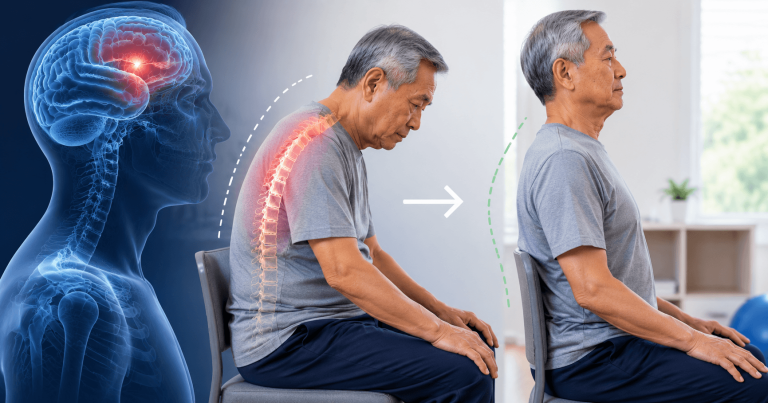
Poor posture after stroke is not just a cosmetic issue—it directly affects independence, walking ability, fall risk, and overall recovery speed. The good news is that with structured neuro-physiotherapy, posture can significantly improve over time.
Why Posture Changes After Stroke
A stroke affects the brain’s ability to communicate with muscles. When this communication is disrupted, the body loses its natural balance and alignment.
Common postural changes include:
- Leaning to one side while sitting or standing
- Shoulder dropping on the affected side
- Head tilting forward or sideways
- Difficulty maintaining upright sitting without support
- Unequal weight distribution while walking
- Poor core stability and trunk control
These changes are managed through post-stroke physiotherapy treatment that focuses on restoring control and alignment.
According to the World Health Organization (WHO), stroke is a leading cause of long-term disability globally, and motor impairments like posture imbalance are among the most common consequences.
At Varia Physiotherapy Clinic, our first step is always to understand why the posture is affected, not just how it looks.
Main Causes of Posture Problems After Stroke
Postural instability is usually caused by multiple overlapping issues:
1. Weak Core and Trunk Muscles
After a stroke, the brain may struggle to properly activate deep core muscles that support sitting and standing. This makes it difficult for patients to maintain an upright posture without support. With guided physiotherapy, these muscles can gradually regain strength and control.
2. Loss of Balance Control
Stroke can affect the brain’s balance and sensory systems, reducing awareness of body position in space. Patients may feel unsteady even while sitting or standing still. Targeted balance training helps retrain the brain to restore stability and confidence.
3. Muscle Imbalance
One side of the body often becomes weaker after a stroke, while the stronger side overcompensates. This leads to uneven posture and movement patterns. Physiotherapy focuses on restoring symmetry and encouraging equal use of both sides.
4. Spasticity or Stiffness
Some muscles may become overly tight or resistant to movement after a stroke. This stiffness can pull the body into abnormal postures and limit smooth motion. Careful stretching, positioning, and neuro-rehabilitation help reduce these effects safely.
5. Reduced Awareness (Neglect)
In some cases, patients may not fully recognize or use one side of their body. This lack of awareness can lead to constant leaning or ignoring the affected side. Therapists use specific techniques to improve attention and body awareness.
6. Learned Dependence
Over time, patients may rely too much on caregivers or the stronger side of the body for daily tasks. This can slow down natural recovery and reduce independence. Structured rehabilitation helps rebuild confidence and encourages active participation in recovery.
How Physiotherapy Helps Posture Recovery After Stroke
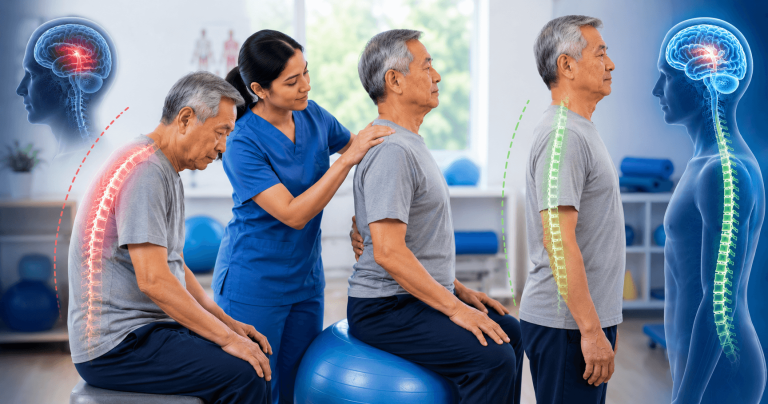
At Varia Physiotherapy Clinic, we follow a structured neurological rehabilitation approach based on clinical assessment and patient-specific goals.
Step 1: Detailed Postural & Neurological Assessment
We evaluate:
- Sitting and standing alignment
- Muscle strength and tone
- Balance reactions
- Weight shifting ability
- Functional movement patterns
- Gait symmetry
This helps us design a personalized treatment plan instead of a general exercise routine.
Step 2: Trunk Control and Core Activation Training
The foundation of posture is trunk stability.
We use:
- Assisted sitting balance exercises
- Midline orientation training
- Controlled weight shifting
- Reach-out activities
- Stability-based exercises (mat-based or supported)
These techniques help retrain the brain to activate both sides of the body equally.
Step 3: Neuro-Developmental Treatment (NDT) Approach
NDT techniques are widely used in neurological rehabilitation to improve movement quality and reduce abnormal patterns.
These include:
- Guided handling techniques
- Correction of abnormal tone
- Facilitation of normal movement patterns
- Alignment training during functional tasks
This approach is supported by neuro-rehabilitation principles recommended in clinical research from the National Institutes of Health (NIH).
Step 4: Weight-Bearing and Symmetry Training
Patients are trained to:
- Distribute weight equally on both sides
- Maintain midline posture during standing
- Reduce leaning tendencies
- Improve hip and shoulder alignment
This step is crucial for preventing long-term deformities.
Step 5: Balance and Functional Movement Training
Once stability improves, therapy progresses to dynamic tasks:
- Sitting to standing transitions
- Standing balance exercises
- Walking with support or assistive devices
- Step training and obstacle navigation
- Dual-task training (movement + attention tasks)
These exercises directly improve independence in real-life situations.
Step 6: Daily Activity Integration
Physiotherapy is not complete until improvements are seen in daily life.
We train patients for:
- Sitting while eating without support
- Dressing independently
- Reaching for objects safely
- Toileting and hygiene tasks
- Safe stair climbing
This is where true independence is rebuilt.
Real Patient Case from Varia Physiotherapy Clinic
A 62-year-old patient from Ahmedabad came to us two weeks after a stroke. He had regained partial movement in his left arm but could not sit upright without leaning heavily to one side.
Initial Findings:
- Severe right-side trunk weakness
- Poor sitting balance
- Loss of midline awareness
- Dependence on caregiver for dressing
Treatment Plan:
We started with trunk activation, assisted sitting balance, and gradual weight-shifting exercises.
Progress After 6 Weeks:
- Able to sit independently for longer periods
- Reduced leaning significantly
- Improved confidence in standing
- Started performing basic dressing with minimal help
This case reflects a common reality: posture recovery is gradual but highly achievable with consistent therapy.
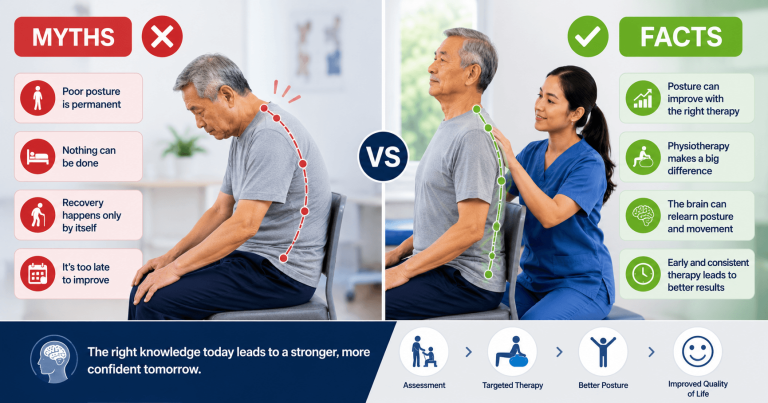
Myths vs Facts About Posture Recovery After Stroke
Myth: Posture will automatically correct over time
Fact: Without physiotherapy, postural imbalance may worsen.
Myth: Only leg exercises matter for walking
Fact: Core and trunk stability are equally important.
Myth: Older patients cannot recover posture
Fact: Neuroplasticity exists at all ages with proper therapy.
Myth: Recovery happens within weeks
Fact: Recovery may take months depending on severity.
When to See a Physiotherapist
You should consult a physiotherapist if you notice:
- Difficulty sitting upright without support
- Leaning to one side while standing or walking
- Frequent loss of balance or falls
- Shoulder or hip asymmetry
- Difficulty performing daily activities
- Slow or unstable movement patterns
Early intervention is critical for better outcomes. In complex cases, collaboration with a neurologist or orthopedic specialist may be required.
Why Early Rehabilitation Matters
Research shows that early rehabilitation improves brain recovery through neuroplasticity—the brain’s ability to reorganize itself. The earlier structured physiotherapy begins, the better the functional recovery outcomes.
Delaying treatment may lead to:
1. Muscle Contractures
When muscles stay in one position for too long after a stroke, they can become permanently shortened or tight. This may limit movement and make daily activities more difficult. Early physiotherapy helps prevent and manage contractures through guided stretching and positioning.
2. Joint Stiffness
After a stroke, reduced movement can cause joints to become stiff and harder to move smoothly. This can affect walking, dressing, and basic self-care tasks. Regular physiotherapy helps maintain joint mobility and improves comfort during movement.
3. Long-Term Balance Issues
Without proper rehabilitation, stroke-related balance problems may persist and increase the risk of falls. Patients may feel unsteady while standing or walking. Balance training in physiotherapy helps retrain stability and improve safety in daily life.
4. Reduced Independence
Ongoing physical limitations can make patients dependent on family members for routine activities. This can affect confidence and emotional well-being over time. Structured rehabilitation focuses on restoring functional independence step by step.
Conclusion
Post-stroke posture problems can significantly impact independence, confidence, and quality of life. However, with structured Posture Improvement After Stroke Physiotherapy | Regain Balance & Stability, patients can regain control over their movements and daily activities.
At Varia Physiotherapy Clinic in Ahmedabad, our goal is not just movement recovery but complete functional independence through evidence-based neurological rehabilitation.
Every recovery journey is unique, but with the right guidance, consistent therapy, and patience, meaningful improvement is always possible.
Book a Professional Assessment
If you’re unsure whether your symptoms need attention, it’s okay to start with a simple consultation. Understanding your condition is the first step toward recovery—no pressure, just guidance.
If you’d like to speak with a physiotherapist or book an assessment at Varia Physiotherapy Clinic, you can reach out here:
 Call: +91 95123 79555
 Email: hello.drhetalvaria@gmail.com
 Website: www.variaphysiotherapyclinic.com
Our team is here to listen, assess, and guide you toward safe and effective recovery.
Posture Improvement After Stroke Physiotherapy - FAQs