Home-Based Neuro Rehabilitation Exercises
As a neuro physiotherapy doctor, I often meet families who ask the same question:
“Doctor, can neurological recovery really happen at home?”
The honest answer is: yes—but only when home-based neuro rehabilitation is done correctly, selectively, and under professional guidance.
Done wrongly, it can delay recovery, worsen spasticity, increase fall risk, or reinforce wrong movement patterns that become very difficult to reverse later.
This article will help you understand:
- When home-based neuro rehabilitation is appropriate
- What exercises actually help neurological recovery
- What commonly goes wrong at home
- How to build a safe, staged, realistic home rehab plan
This is not a motivational article.
It is a clinical decision guide written the same way I would explain things to a patient sitting in my clinic.
What Is Home-Based Neuro Rehabilitation?
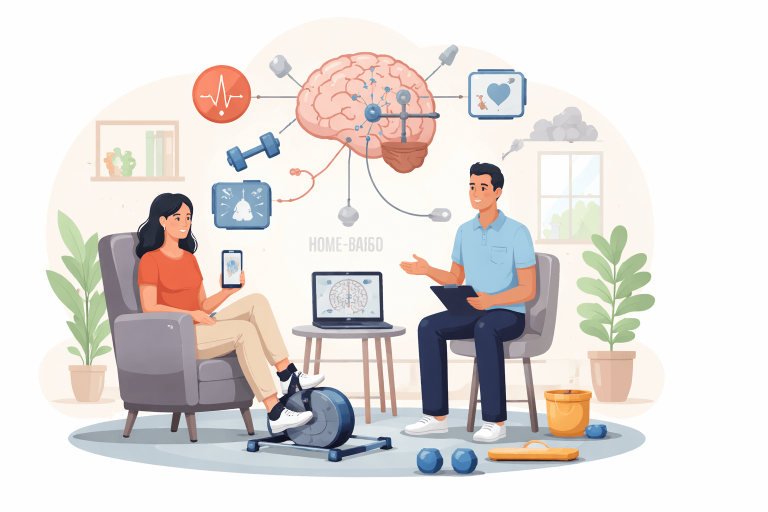
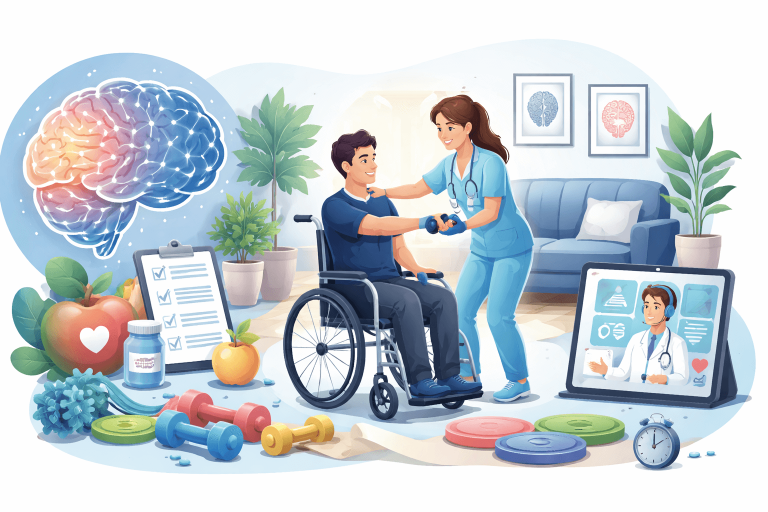
Home-based neuro rehabilitation is a structured neurological recovery program performed in the patient’s home, designed to improve:
Movement Control:
Focuses on improving coordination, muscle activation, and precise movements to enhance overall physical function.
Balance and Posture:
Helps maintain stability, prevent falls, and support proper alignment for safer daily activities.
Walking Ability:
Aims to restore safe, efficient gait patterns and endurance for independent mobility.
Hand and Arm Function:
Enhances strength, dexterity, and fine motor skills for everyday tasks.
Daily Activities:
Supports independence in bed mobility, transfers, and self-care through targeted functional training.
It is commonly used for patients with:
- Stroke
- Parkinson’s disease
- Brain injury
- Spinal cord-related weakness
- Peripheral nerve injuries
- Age-related neurological decline
Important:
Who Is Home Neuro Rehabilitation Suitable For?
From clinical experience, home rehab works best for patients who:
Medically stable:
Patients whose health condition is stable and not at immediate risk, making home rehabilitation safe to start.
Predictable neurological deficits:
Individuals with consistent and identifiable neurological impairments that can be targeted effectively with exercises.
Can follow instructions (or have a trained caregiver):
Patients who can understand and perform exercises safely, or have someone trained to assist them.
Need repetition and consistency more than heavy equipment:
Recovery depends on frequent, correct practice rather than advanced machines, emphasizing daily, structured exercises.
Common suitable cases
- Subacute stroke patients after hospital discharge
- Early to mid-stage Parkinson’s disease
- Post-surgical neurological recovery
- Elderly patients with balance and coordination decline
Who Should NOT Rely Only on Home-Based Rehab?
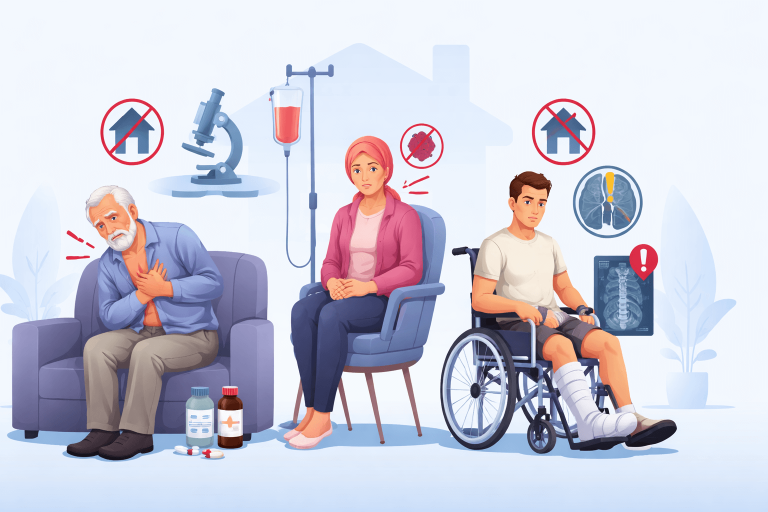
Home-based rehab may NOT be enough if the patient has:
- Rapid neurological deterioration
- Severe spasticity or contractures
- Repeated unexplained falls
- New speech, swallowing, or vision problems
- Uncontrolled blood pressure or cardiac issues
In such cases, clinic-based or hospital-based neuro rehabilitation is necessary, at least initially.
Home rehab should never replace medical evaluation when red flags are present.
Read More: Neuro Physiotherapy Benefits For Elderly Patients
Core Principles of Effective Neuro Rehabilitation at Home
Neurological recovery does not happen by random movement. It happens through specific, meaningful, repeated tasks.
1. Quality of movement matters more than quantity
Doing 100 repetitions of a wrong pattern reinforces damage.
Doing 10 correct, guided repetitions builds recovery.
Sitting Balance:
Improves core stability and control to maintain a safe and steady seated position.
Standing Up:
Enhances strength and coordination to rise from chairs or beds safely and independently.
Walking Safely:
Focuses on gait training, balance, and awareness to prevent falls and move confidently.
Reaching and Gripping Objects:
Strengthens hand and arm function to pick up, hold, and use objects effectively.
3. Fatigue and overload slow recovery
Excessive physical or mental strain can delay recovery, reduce performance, and increase the risk of injury, making gradual, balanced activity essential for healing.
Step-by-Step: How to Start Home-Based Neuro Rehabilitation Safely
Step 1: Proper Neurological Assessment
Muscle tone (spastic vs flaccid):
Muscle tone affects movement control; spastic muscles are stiff and resist movement, while flaccid muscles are weak and lack resistance, impacting function and daily activities.
Balance reactions:
Balance reactions help maintain stability during movement or unexpected shifts, reducing fall risk and supporting safe mobility.
Sensory loss:
Sensory loss reduces the ability to feel touch, pressure, or pain, affecting movement accuracy and increasing injury risk.
Coordination:
Coordination is the smooth, controlled interaction of muscles and senses, essential for precise, purposeful movements.
Cognitive ability:
Cognitive ability influences attention, memory, and problem-solving, which are crucial for planning and executing safe physical activities.
Step 2: Early-Stage Home Exercises (Foundation Phase)
Bed-based activities
Rolling training:
Teaches safe movement from back to side or vice versa, improving mobility, trunk strength, and independence in bed or daily activities.
Bridging with controlled effort:
Strengthens the lower back, hips, and core while promoting stability and controlled movement for functional tasks.
Assisted limb movements:
Sitting balance:
Weight shifting in sitting:
Trains controlled weight transfer, improving balance, trunk control, and readiness for reaching or standing activities.
Reaching tasks:
Encourages coordinated upper limb movement, trunk engagement, and functional arm use for daily activities.
Trunk control drills:
Focuses on core strength and stability, supporting safe posture, balance, and coordinated movement.
Step 3: Mid-Stage Exercises (Functional Control)
Sit-to-stand training:
Improves leg strength, balance, and functional independence by practicing safe transitions from sitting to standing.
Static standing balance:
Enhances stability and postural control while standing, reducing fall risk and improving confidence in weight-bearing activities.
Supported walking practice:
Builds endurance, coordination, and safe gait patterns using support or assistance to prevent falls during walking.
Controlled arm and hand tasks:
Promotes fine motor skills, strength, and coordination for daily activities requiring precise arm and hand movements.
Step 4: Advanced Home Neuro Training (Independence Phase)
Gait correction
Focuses on improving walking pattern, step symmetry, and posture to enhance safety, efficiency, and reduce fall risk.
Obstacle navigation:
Trains safe movement over, around, or between objects, improving balance, coordination, and real-world walking confidence.
Dual-task balance (movement + thinking):
Combines physical movement with cognitive tasks to improve balance control during everyday multitasking situations.
Fine motor retraining:
Restores precise hand and finger movements, improving coordination and functional use for daily activities like writing or buttoning.
Real Clinical Example
Problems observed:
- Increased shoulder pain
- Worsening hand spasticity
- Poor walking pattern
Why?
- Exercises were too aggressive
- No posture correction
- No progression logic
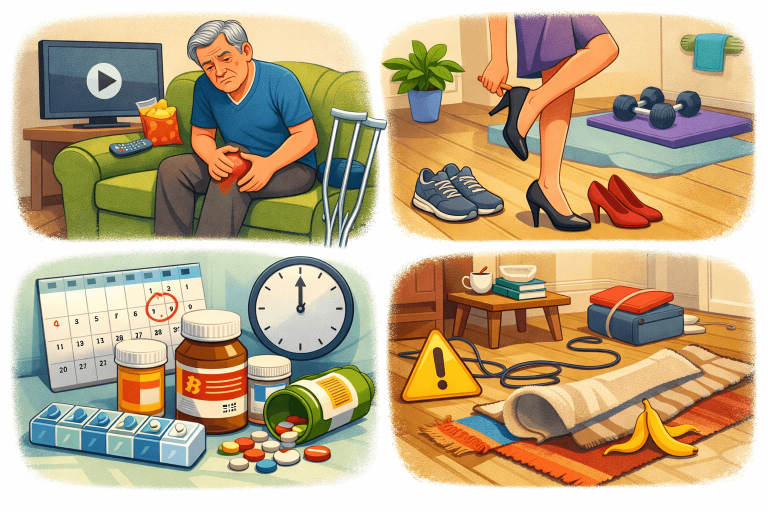
Common Home Rehab Mistakes That Delay Recovery
I see these daily in practice:
- Copying generic online videos
- Overstretching spastic muscles
- Ignoring fatigue signs
- Practicing unsafe walking alone
- Skipping reassessment for months
How Long Does Recovery Take Realistically?
This depends on:
- Diagnosis
- Severity
- Age
- Comorbidities
- Consistency of therapy
General clinical expectations
- Early improvements: 4–6 weeks
- Functional gains: 3–6 months
- Long-term adaptation: 6–12 months
Red Flags During Home Neuro Rehab
- Sudden weakness or numbness
- New speech or swallowing difficulty
- Severe dizziness or repeated falls
- Increasing pain or spasticity
Evidence-Based Foundation of Neuro Rehabilitation
- Neuroplasticity principles
- Task-specific motor learning
- Graded exposure and repetition
- International neuro rehab guidelines
Final Doctor’s Advice to Patients and Caregivers
- Properly assessed
- Individually planned
- Regularly reviewed
If you are unsure:
- Start slow
- Seek professional guidance
- Prioritize safety over speed
Physiotherapy Clinic in ahmedabad - FAQs
References