Why Does Knee Pain Happen While Climbing Stairs?
Climbing stairs is a simple daily activity—until it starts causing pain. Many adults between 30 and 65 in Ahmedabad visit Varia Physiotherapy Clinic with a very specific concern: “I can walk normally, but my knee hurts when I climb stairs.”
If you’ve been experiencing this, it’s important to understand that your body is trying to signal something. Knowing why knee pain happens while climbing stairs can help you take the right steps toward recovery instead of ignoring the problem until it worsens.
This article is written to guide you through the real reasons behind your pain, based on clinical experience, and help you understand how physiotherapy can make a meaningful difference.
Why Does Knee Pain Happen While Climbing Stairs?
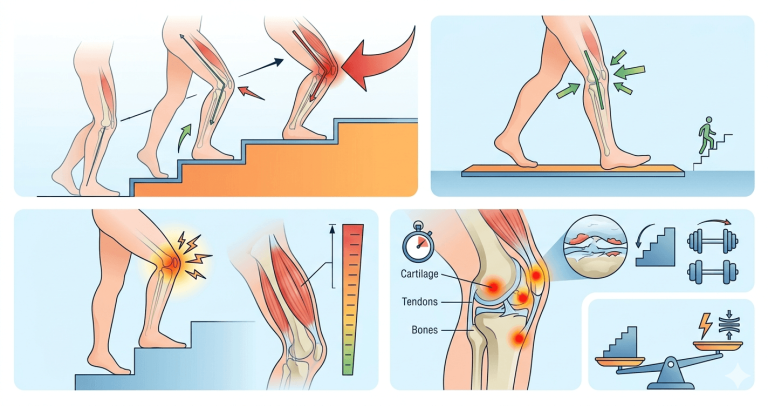
Climbing stairs places a higher load on your knee joint than walking on flat ground. In fact, the pressure on your knees can increase up to 3–4 times your body weight when you climb stairs.
Your knee is a complex joint involving bones, cartilage, ligaments, and muscles working together. When even one of these components is not functioning properly, the added stress during stair climbing exposes the problem.
This is why many people feel perfectly fine walking on level ground but experience discomfort or sharp pain when using stairs.
Why Does Knee Pain Happen While Climbing Stairs More Than Other Activities?
This is one of the most common questions patients ask during consultations.
When climbing stairs:
- Your knee bends more deeply than usual
- The kneecap presses firmly against the thigh bone
- Your muscles—especially the quadriceps—must work harder to lift your body
If your muscles are weak, your joint alignment is off, or the cartilage is irritated, this extra demand leads to pain. In such cases, knee pain treatment in Ahmedabad can help address the underlying cause and improve joint function.
Descending stairs can sometimes feel even worse because it requires controlled muscle contraction and stability, which puts additional strain on the joint.
Common Causes of Knee Pain While Climbing Stairs
Let’s break down the most common reasons we see at Varia Physiotherapy Clinic, explained in simple, practical terms.
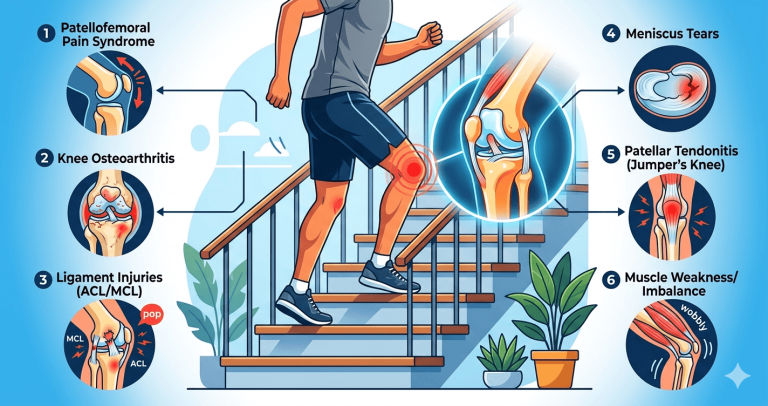
1. Patellofemoral Pain Syndrome
This condition occurs when the kneecap (patella) does not move smoothly within its groove.
What patients feel:
- Pain in the front of the knee
- Discomfort during stair climbing or squatting
- A dull ache after sitting for long periods
This is especially common in individuals with sedentary lifestyles or those who recently increased physical activity.
2. Osteoarthritis
Over time, the cartilage that cushions your knee can gradually wear down. This condition is more common in adults over 40.
Symptoms include:
- Stiffness, especially in the morning
- Pain that increases with activity
- Grinding or clicking sensation
According to the World Health Organization, osteoarthritis is a leading cause of disability worldwide, affecting millions of adults.
3. Muscle Weakness
Your muscles act as shock absorbers for your joints. If they are weak, the knee joint takes on more stress than it should.
This is one of the most overlooked causes—and also one of the most treatable.
4. Ligament or Meniscus Issues
Previous injuries—even those that seemed minor—can lead to instability or irritation in the knee.
Patients may report:
- A feeling of the knee “giving way”
- Pain during twisting movements
- Difficulty with stairs or uneven surfaces
5. Poor Movement Patterns and Posture
Sometimes, the issue is not damage but how you move.
We often see:
- Knees collapsing inward while climbing
- Uneven weight distribution
- Incorrect stair-climbing technique
Over time, these patterns strain the joint and lead to pain.
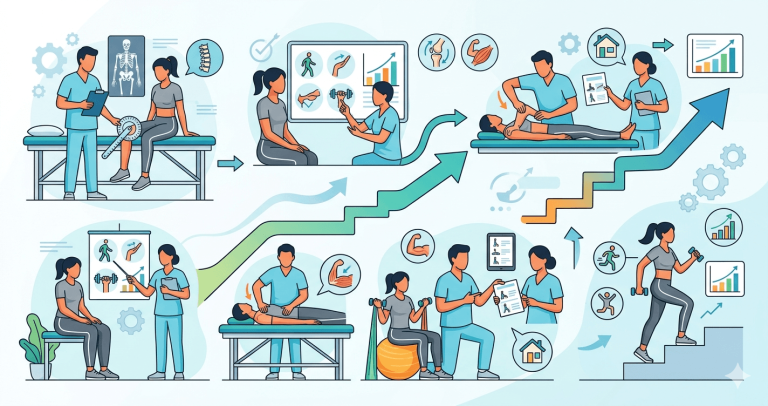
How Physiotherapy Helps: A Step-by-Step Clinical Approach
At Varia Physiotherapy Clinic, we don’t just treat pain—we identify and correct the root cause.
1. Detailed Clinical Assessment
Your treatment begins with a thorough evaluation, including:
- Joint mobility testing
- Muscle strength assessment
- Gait and stair-climbing analysis
- Postural evaluation
This allows us to create a personalized treatment plan tailored to your condition.
2. Pain Relief and Inflammation Control
In the initial phase, the goal is to reduce pain and swelling.
This may include:
- Manual therapy techniques
- Electrotherapy modalities
- Ice or heat application
These methods are safe and evidence-based, helping prepare your body for active rehabilitation.
3. Targeted Strengthening Program
Strengthening is the cornerstone of recovery.
We focus on:
- Quadriceps strengthening
- Hamstring flexibility
- Hip and core stability
Stronger muscles reduce the load on your knee and improve joint alignment.
4. Movement Retraining
This is where long-term improvement happens.
We guide patients in:
- Correct stair-climbing technique
- Proper walking patterns
- Functional movements for daily activities
Small corrections can significantly reduce strain on the knee.
5. Gradual Return to Normal Activity
Recovery is a process, not a quick fix.
Most patients begin noticing improvement within 4–8 weeks, depending on the severity and consistency of therapy.
Research supported by the National Institutes of Health highlights that structured exercise therapy is highly effective for managing knee pain without surgery.
A Real Patient Story from Ahmedabad
A 52-year-old woman visited our clinic with complaints of knee pain while climbing stairs. She had stopped using stairs altogether and relied heavily on elevators, highlighting the importance of understanding why knee pain happens on stairs so that the root cause can be identified and treated effectively.
Assessment revealed:
- Weak quadriceps muscles
- Early signs of osteoarthritis
- Poor stair-climbing mechanics
Treatment approach:
- Gradual strengthening exercises
- Movement correction
- Activity modification
Outcome:
Within 6 weeks:
- Pain reduced significantly
- She regained confidence in using stairs
- Her overall mobility improved
This case reflects what we commonly see—pain improves when the underlying cause is addressed systematically.
Myths vs Facts About Knee Pain
Myth 1: “Knee pain is a normal part of aging”
Fact: While aging can contribute, many cases are due to treatable factors like muscle weakness.
Myth 2: “Rest is the best solution”
Fact: Too much rest can worsen stiffness and weakness. Controlled activity is essential.
Myth 3: “If it hurts, it must be serious damage”
Fact: Pain often indicates irritation or imbalance—not necessarily severe injury.
Myth 4: “Surgery is the only option”
Fact: Most knee pain cases improve with conservative physiotherapy treatment.
When Should You See a Physiotherapist?
It’s important not to ignore persistent symptoms.
You should consider consulting a physiotherapist if:
- Pain occurs while climbing or descending stairs
- There is swelling or stiffness
- You feel instability in the knee
- Pain lasts more than 1–2 weeks
Early treatment leads to faster recovery and prevents complications.
When Is Medical Referral Necessary?
Physiotherapy is effective for most conditions, but some cases require additional medical evaluation.
We may refer you to an orthopedic specialist if:
- Severe structural damage is suspected
- There is no improvement after consistent therapy
- Symptoms suggest advanced arthritis or ligament tears
This ensures you receive comprehensive and appropriate care.
Conclusion
To conclude, why does knee pain happen while climbing stairs is mainly due to increased pressure on the knee joint combined with underlying issues such as muscle weakness, joint wear, or poor movement patterns.
The important thing to understand is that knee pain is not something you have to live with. In most cases, it can be effectively managed—and often significantly improved—through the right physiotherapy approach.
At Varia Physiotherapy Clinic in Ahmedabad, the focus is always on identifying the root cause and guiding patients through a structured, realistic recovery process. There are no shortcuts, but with consistent effort and expert care, improvement is very achievable.
If you’ve been avoiding stairs or feeling anxious about knee pain, it may be time to take action rather than wait.
Ethical Call-to-Action
If you’re unsure whether your symptoms need attention, it’s okay to start with a simple consultation. Understanding your condition is the first step toward recovery—no pressure, just guidance.
If you’d like to speak with a physiotherapist or book an assessment at Varia Physiotherapy Clinic, you can reach out here:
 Call: +91 95123 79555
 Email: hello.drhetalvaria@gmail.com
 Website: www.variaphysiotherapyclinic.com
Our team is here to listen, assess, and guide you toward safe and effective recovery.
Why Does Knee Pain Happen While Climbing Stairs? - FAQs