
Vestibular Migraine Treatment In Ahmedabad
Dizziness that appears without warning can disrupt nearly every part of daily life. Many people in Ahmedabad living with vestibular migraines describe feeling unsteady while walking, overwhelmed in crowded places, sensitive to bright lights, or mentally exhausted after simple activities. Some experience spinning sensations without a headache, while others struggle with nausea, neck tightness, blurred vision, or fear of sudden imbalance.
At Varia Physiotherapy Clinic, patients often arrive after months of confusion. They may have visited multiple doctors, undergone scans, or been told their symptoms are “just stress.” In reality, vestibular migraine is a complex neurological condition that affects the brain’s processing of balance and sensory information.
This article explains how evidence-based physiotherapy and vestibular rehabilitation can support recovery, reduce symptom intensity, and help patients return to normal daily activities safely.
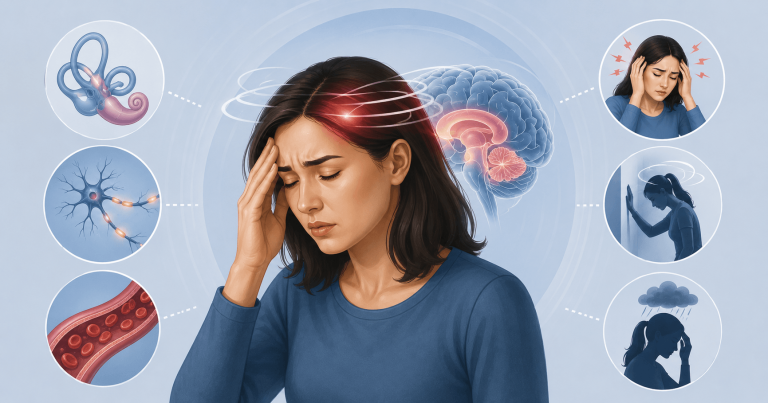
Understanding Vestibular Migraine
Vestibular migraine is a neurological condition where the brain’s balance-processing systems become overly sensitive. Unlike traditional migraines, dizziness may occur even without severe headache pain.
Patients commonly report:
- Sudden episodes of dizziness or vertigo
- Feeling off-balance while walking
- Motion sensitivity during travel
- Difficulty focusing in busy environments
- Nausea or light sensitivity
- Neck stiffness and fatigue
- Anxiety related to unpredictable symptoms
According to the National Institutes of Health, vestibular migraine is one of the most common causes of recurrent dizziness in adults. Many cases are underdiagnosed because symptoms overlap with ear disorders, cervical problems, or anxiety conditions.
Why Vestibular Migraine Happens
Vestibular migraine does not have one single cause. In clinical practice, symptoms are often triggered by a combination of neurological, physical, and lifestyle factors.
Common contributing factors include:
Stress and Poor Sleep
Many people with vestibular migraine notice their symptoms become worse during stressful periods or after poor-quality sleep. When the brain and nervous system remain under constant stress, balance processing can become more sensitive, leading to dizziness, fatigue, or motion intolerance. Patients often describe feeling “off balance” after long workdays, emotional strain, or irregular sleep patterns. Improving sleep habits and stress management may help reduce the frequency of flare-ups over time.
Sensory Overload
Busy environments such as shopping malls, traffic, loud events, or prolonged screen exposure can overwhelm the brain’s sensory system in people with vestibular migraine. Patients commonly report feeling dizzy, mentally exhausted, or uncomfortable in visually crowded places. This happens because the brain struggles to process movement, light, and sound efficiently. Physiotherapy and gradual exposure strategies can help the nervous system become less reactive to these triggers.
Neck Dysfunction
Tight muscles, poor posture, and restricted neck movement may contribute to dizziness symptoms in some individuals with vestibular migraine. Many patients who spend long hours on computers or mobile devices also experience neck stiffness alongside balance problems. The cervical spine works closely with the vestibular and visual systems to maintain stability. Addressing neck mobility and posture through physiotherapy may help improve movement confidence and reduce symptom aggravation.
Hormonal or Dietary Triggers
Certain lifestyle patterns can influence vestibular migraine episodes, including skipping meals, dehydration, excessive caffeine intake, or hormonal fluctuations. Patients often notice symptoms becoming worse during irregular eating schedules or physically exhausting days. While triggers vary from person to person, identifying patterns can help patients better manage their condition. Maintaining hydration, balanced nutrition, and consistent routines may support overall nervous system stability.
Previous Vestibular Disorders
Some patients develop vestibular migraine after experiencing earlier balance-related conditions such as vertigo, viral infections, or inner ear disturbances. Even after the original issue improves, the nervous system may remain more sensitive to movement and sensory changes. Patients frequently describe ongoing imbalance, motion sensitivity, or fear of dizziness returning. A detailed clinical assessment helps determine whether vestibular rehabilitation may support recovery and improve daily functioning.
At Varia Physiotherapy Clinic, clinicians assess the entire movement and balance system instead of focusing on only one symptom.
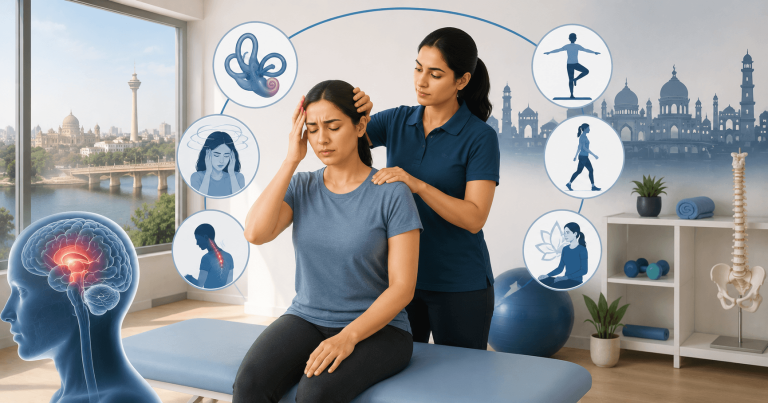
How Physiotherapy Supports Vestibular Migraine Treatment In Ahmedabad
Many patients are surprised to learn that physiotherapy can play an important role in vestibular migraine recovery. Vestibular rehabilitation focuses on helping the brain adapt more effectively to movement and sensory input.
Treatment is always individualized because each patient’s triggers and symptoms are different.
1. Detailed Clinical Assessment
The first step involves understanding how symptoms behave in real-life situations.
A physiotherapist may assess:
- Balance and walking pattern
- Eye movement coordination
- Head movement tolerance
- Neck mobility and posture
- Triggering movements
- Visual sensitivity
- Functional limitations during daily activities
If symptoms suggest another medical condition such as stroke, severe neurological disease, or significant inner ear pathology, referral to a neurologist or ENT specialist may be recommended immediately.
2. Vestibular Rehabilitation Exercises
Treatment may include:
Gaze Stabilization Training
Many patients with vestibular migraine find it difficult to focus clearly while moving their head, especially during reading, walking, or screen use. Gaze stabilization exercises are designed to improve coordination between the eyes, inner ear, and brain. Over time, these exercises may help reduce blurred vision, dizziness, and movement discomfort during daily activities. Treatment is progressed gradually based on the patient’s tolerance and symptom response.
Habituation Exercises
Certain head or body movements may repeatedly trigger dizziness in people with vestibular migraine. Habituation exercises involve carefully repeated exposure to these mild triggering movements in a safe and controlled way. The goal is to help the nervous system become less sensitive over time rather than avoiding movement completely. Patients often notice gradual improvement in confidence and reduced symptom intensity with consistent practice.
Balance Retraining
Vestibular migraine can affect stability during walking, standing, turning, or climbing stairs. Balance retraining exercises help the brain improve coordination between the visual, vestibular, and muscular systems responsible for maintaining posture and movement control. Therapy may begin with simple standing activities and progress toward more functional daily movements. This approach aims to improve confidence and reduce fear of falling during routine activities.
Visual Motion Desensitization
Busy environments such as shopping centers, traffic, or scrolling on screens can feel overwhelming for some vestibular migraine patients. Visual motion desensitization uses gradual exposure to moving visual stimuli in a controlled and supervised manner. This helps the brain adapt more effectively to motion-related sensory input without becoming overstimulated. Many patients report improved tolerance to crowded places and reduced dizziness during daily activities.
3. Cervical Spine Physiotherapy
Neck pain and vestibular migraine frequently occur together.
Treatment may involve:
- Manual therapy for neck stiffness
- Postural correction
- Deep neck muscle strengthening
- Mobility exercises
- Ergonomic advice for desk workers
Improving cervical function may reduce strain on the nervous system and improve movement confidence.
4. Lifestyle and Trigger Management
Recovery often requires more than exercises alone.
Patients are educated about:
- Sleep regulation
- Hydration habits
- Screen management
- Stress reduction
- Activity pacing
- Safe physical activity progression
The World Health Organization emphasizes the importance of physical activity and rehabilitation in improving quality of life for individuals with neurological and balance-related conditions.
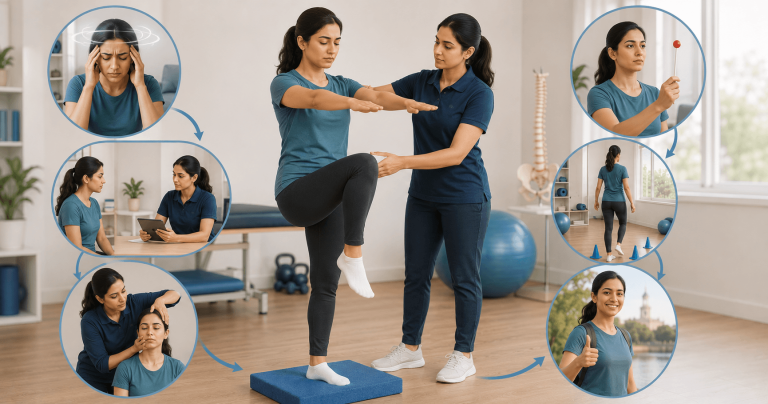
A Real Patient Scenario Seen At Varia Physiotherapy Clinic
A 42-year-old working professional from Ahmedabad visited the clinic after experiencing dizziness for nearly eight months. She felt unstable while walking in shopping malls, avoided driving alone, and became anxious during office presentations.
Her MRI scans were normal, and medications provided only temporary relief.
During physiotherapy assessment, clinicians identified:
- Significant visual motion sensitivity
- Poor gaze stabilization
- Neck stiffness from prolonged computer work
- Fear of movement due to previous vertigo episodes
Her rehabilitation program included vestibular exercises, cervical physiotherapy, posture correction, and comprehensive vestibular rehabilitation services focused on improving balance confidence and reducing dizziness triggers. Within six weeks, she reported improved walking confidence and reduced dizziness frequency. However, recovery was gradual rather than immediate. Some symptoms still appeared during stressful periods, but she learned how to manage them effectively through continued exercise and lifestyle adjustments. This reflects a realistic recovery pattern often seen in vestibular migraine rehabilitation.
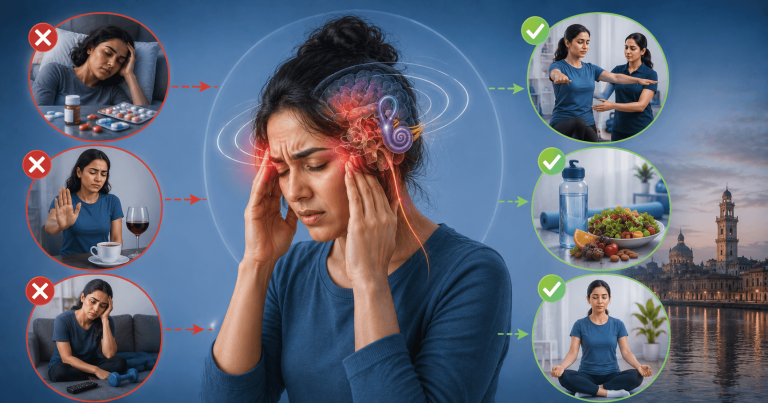
Common Myths About Vestibular Migraine Treatment In Ahmedabad
Myth: “Dizziness always means an ear problem.”
Fact: Not all dizziness originates from the inner ear. Vestibular migraine involves how the brain processes sensory information.
Myth: “Complete bed rest is best.”
Fact: Avoiding movement for long periods may worsen balance sensitivity and reduce confidence.
Myth: “Physiotherapy only helps muscle pain.”
Fact: Vestibular physiotherapy is specifically designed to address dizziness, balance dysfunction, and movement sensitivity.
Myth: “Recovery should happen within a few days.”
Fact: Vestibular rehabilitation often requires consistent effort over several weeks or months depending on symptom severity and duration.
When Should You See a Physiotherapist?
Consider seeking professional assessment if you experience:
- Recurrent dizziness lasting weeks or months
- Balance problems during walking
- Motion sensitivity while traveling
- Dizziness triggered by head movement
- Neck pain associated with vertigo
- Fear of movement after previous vertigo episodes
- Difficulty performing routine activities confidently
Immediate medical evaluation is important if dizziness is accompanied by:
- Sudden weakness
- Facial drooping
- Difficulty speaking
- Severe unexplained headache
- Loss of consciousness
These symptoms may indicate a more serious neurological condition requiring urgent care.
Conclusion
Living with persistent dizziness can feel isolating and frustrating, especially when symptoms interfere with work, travel, family activities, and confidence in daily movement. The good news is that many patients improve when their condition is properly assessed and managed through a structured rehabilitation approach.
At Varia Physiotherapy Clinic, Vestibular Migraine Treatment In Ahmedabad focuses on understanding each patient’s unique triggers, balance challenges, and functional goals. Treatment emphasizes evidence-based physiotherapy, gradual recovery, patient education, and realistic expectations rather than quick fixes.
If dizziness or balance issues are affecting your quality of life, early assessment may help you understand the underlying cause and begin a safer path toward recovery.
Book a Professional Assessment
If you’re unsure whether your symptoms need attention, it’s okay to start with a simple consultation. Understanding your condition is the first step toward recovery—no pressure, just guidance.
If you’d like to speak with a physiotherapist or book an assessment at Varia Physiotherapy Clinic, you can reach out here:
 Call: +91 95123 79555
 Email: hello.drhetalvaria@gmail.com
 Website: www.variaphysiotherapyclinic.com
Our team is here to listen, assess, and guide you toward safe and effective recovery.
Vestibular Migraine Treatment In Ahmedabad - FAQs
Can vestibular migraine be cured permanently?
How long does vestibular rehabilitation take?
Is vestibular migraine dangerous?
Can neck problems worsen vestibular migraine symptoms?
Should I avoid exercise if I feel dizzy?
About the Author

Dr. Hetal M Varia
After a rich experience of working in US healthcare as manager and licensed physiotherapist in US for last 11 years, she has returned home with a vision to become pioneer of Vestibular Therapy and specialized Parkinson physiotherapy in Ahmedabad. With her special skills and expertise in vertigo, Parkinson, balance and movement disorders therapy, Dr. Varia is committed to provide US standards of therapy services , compassionate and patient centered care to our people and community. With a vision of the world where everyone walks strong & steady, she intends to empower individuals with vestibular and neurological disorders through specialized care, rehabilitation & innovative therapies to improve mobility, balance & overall quality of life!