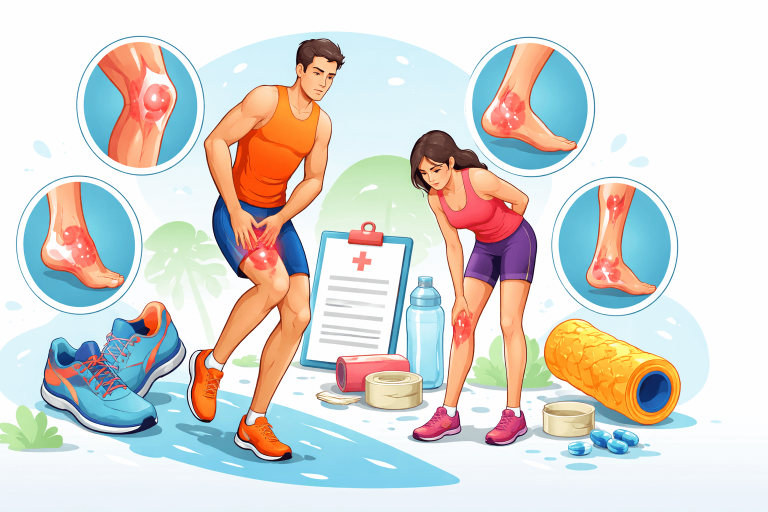
Sports Injury Physiotherapy For Runners Ahmedabad
Running is one of the most popular forms of exercise in Ahmedabad. From early morning joggers in parks near Thaltej to marathon trainees on SG Highway, more people are choosing running for fitness.
But with increased running comes increased injury.
If you’re searching for Sports Injury Physiotherapy for Runners Ahmedabad, chances are you’re dealing with knee pain, shin splints, ankle instability, or persistent muscle tightness that refuses to settle.
At Varia Physiotherapy Clinic, we regularly treat runners aged 30–65 who want to return to running safely — not just temporarily relieve pain.
Why Runners Commonly Get Injured
Running injuries are rarely “sudden.” They are usually the result of:
- Sudden increase in mileage
- Poor footwear
- Weak hip or core muscles
- Improper running mechanics
- Running on hard surfaces
- Lack of recovery days
The key takeaway? Pain is usually a load-management problem — not just inflammation.
According to the National Institutes of Health, overuse injuries account for the majority of recreational running injuries (Reference: https://www.ncbi.nlm.nih.gov)
Common Running Injuries We Treat in Ahmedabad
At Varia Physiotherapy Clinic, the most frequent cases include:
Runner’s Knee (Patellofemoral Pain Syndrome)
Pain is usually felt around or behind the kneecap, especially during stairs, squats, or long runs.It often develops from training overload, hip weakness, or poor knee alignment. Treatment focuses on correcting muscle imbalance and improving movement control, not just resting the knee.
Shin Splints
This causes aching or burning pain along the inner shin, commonly after increasing running distance or intensity too quickly. It is a load-related condition, not just an “inflammation problem.” Early load adjustment and calf–foot strengthening help prevent progression to stress injury.
Achilles Tendinitis
Pain and morning stiffness are felt at the back of the heel, especially with the first few steps. It usually occurs when tendon load exceeds its current capacity. Progressive calf strengthening and controlled loading are essential for long-term tendon recovery.
IT Band Syndrome
Sharp or burning pain on the outer knee often appears during longer runs. It is commonly linked to hip muscle weakness and repetitive strain. Rehabilitation focuses on hip stability and training correction rather than aggressive stretching alone.
Ankle Instability
Repeated ankle sprains or a feeling of the ankle “giving way” suggests poor joint control. This often happens when the first sprain was not fully rehabilitated. Balance training and strengthening of stabilizing muscles are critical to restore confidence and prevent recurrence, helping patients improve mobility with physiotherapy care through better stability and movement control.
How Sports Injury Physiotherapy Actually Helps (Step-by-Step)
Here’s what evidence-based rehabilitation looks like:
Step 1: Detailed Biomechanical Assessment
We evaluate:
- Running posture
- Hip strength
- Core stability
- Foot alignment
- Gait pattern
Many runners are surprised to learn their knee pain actually originates from weak hip abductors.
Step 2: Pain Reduction Phase
May include:
- Manual therapy
- Myofascial release
- Taping
- Controlled loading exercises
The goal is controlled recovery — not complete rest.
Step 3: Corrective Strength Training
We focus on:
- Glute strengthening
- Core stabilization
- Eccentric calf training
- Balance retraining
Research consistently supports strengthening over passive treatments for long-term recovery.
Step 4: Return-to-Run Protocol
We design graded running plans:
- Walk-run intervals
- Surface modification
- Cadence adjustments
This reduces re-injury risk significantly.
Real Patient Scenario (Experience Section)
A 38-year-old corporate professional from Satellite visited us with persistent knee pain before the Ahmedabad half marathon.
He had already tried:
- Painkillers
- Knee brace
- Complete rest
Pain returned every time he resumed running.
After assessment, we found:
- Weak glute muscles
- Poor single-leg stability
- Overstriding while running
With 6 weeks of structured rehab and a modified running plan, he completed his marathon without recurrence.
The lesson? The problem was not the knee — it was biomechanics.
This is common in runners.
What Usually Works (And What Doesn’t)
What Works
- Progressive strengthening
- Load management
- Gait correction
- Patient education
What Doesn’t Work
- Only rest
- Only electrotherapy
- Ignoring muscle imbalance
- Running through pain
Myths vs Facts
Myth: Running always damages knees.
Fact: Properly conditioned runners often have healthier joints than sedentary individuals.
Myth: Pain means permanent damage.
Fact: Most running injuries are reversible with guided rehabilitation.
Myth: Surgery is the only solution for chronic pain.
Fact: Many cases improve with structured physiotherapy.
When Should a Runner See a Physiotherapist?
Seek professional help if:
- Pain lasts more than 7 days
- Swelling persists
- You limp while walking
- Pain increases with each run
- You’ve had repeat injuries
Delaying treatment often prolongs recovery time.
When Is Medical Referral Necessary?
You may need orthopedic evaluation if:
Severe ligament tear suspected
If there is a loud “pop,” rapid swelling, significant bruising, or inability to bear weight, a major ligament injury may be present. These cases require prompt clinical assessment and possibly imaging to guide proper management.
Fracture signs
Severe pain, visible deformity, intense swelling, or pain when putting even minimal weight on the limb can indicate a fracture. Immediate medical evaluation is essential before starting any rehabilitation.
Locking of joint
If a knee, elbow, or other joint gets stuck and cannot fully straighten or bend, it may suggest a mechanical block such as a meniscal tear or loose body. This should be assessed early to prevent further joint damage.
Sudden instability
A feeling that the joint is “giving way” unexpectedly during normal activity can indicate structural damage or significant weakness. Early evaluation helps prevent falls, repeat injury, and long-term instability.
Why Choose Varia Physiotherapy Clinic?
- Experienced physiotherapists in sports rehab
- Evidence-based protocols
- Personalized rehab plans
- Focus on long-term return to sport
- Convenient access from Thaltej & SG Highway
Conclusion
Running injuries can feel frustrating, especially when you’re training consistently. But most cases are treatable without surgery.
If you’re looking for Sports Injury Physiotherapy for Runners in Ahmedabad, the goal isn’t just pain relief it’s a safe and structured return to running. Choosing the right Physiotherapy Clinic in Ahmedabad ensures that your assessment focuses on load management, strength deficits, and movement correction rather than temporary symptom relief.
At Varia Physiotherapy Clinic, we focus on correcting the root cause, not just the symptoms.
📞 Book a consultation and get back on track — safely and confidently.
Sports Injury Physiotherapy For Runners Ahmedabad - FAQs