
Physiotherapy for Postural Imbalance: Assessment, Exercises & Recovery
In my clinic, one of the most common statements I hear is: “Doctor, my scan is normal… then why am I still in pain?”
Very often, the answer lies not in a slipped disc or arthritis, but in how the body is being used every day.
Posture is not about standing straight for photos. It is about how your spine, joints, muscles, and nervous system interact hour after hour—while working, using a phone, driving, or sleeping. When posture is repeatedly poor, the body adapts in the wrong direction. Muscles weaken where they should support, tighten where they should relax, and pain becomes a long-term companion.
Postural exercises are a core physiotherapy tool, but they are often misunderstood, oversimplified, or done incorrectly without guidance.
This article explains what postural exercises actually are, who benefits from them, how they are used clinically, and when they are not enough on their own.
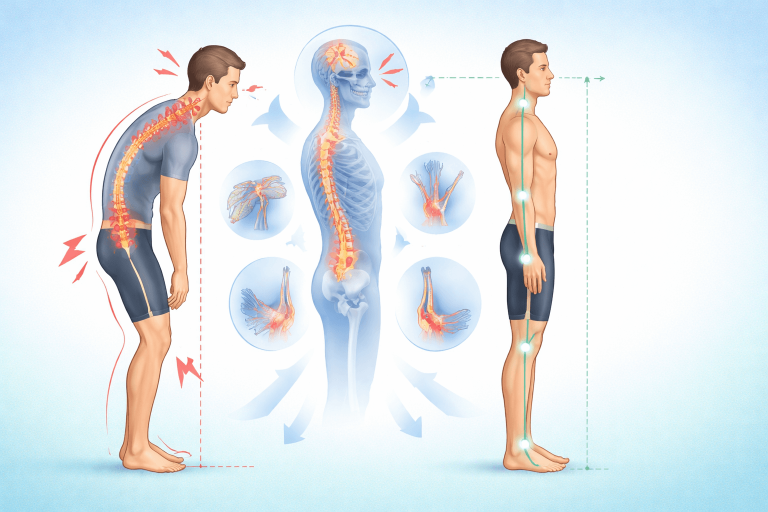
Understanding Postural Imbalance: What’s really happening in your body
Postural problems do not appear overnight. They develop gradually due to a combination of:
Prolonged Sitting (Office Work, Driving, Studying)
Sitting for long hours reduces natural spinal movement and overloads certain muscles. Over time, the neck, upper back, and lower back adapt to poor positions. Blood flow decreases, muscles fatigue faster, and stiffness sets in. This is a major cause of chronic posture-related pain.
Excessive Mobile or Laptop Use (“Tech Neck”)
Constantly looking down at screens shifts the head forward, increasing load on the neck and upper spine. Even a small forward tilt multiplies strain on neck muscles. This often leads to neck pain, headaches, shoulder tightness, and upper back discomfort over time.
Poor Workstation Setup
Incorrect chair height, screen level, or desk position forces the body into unnatural postures. When the setup is wrong, muscles work harder just to maintain balance. Over months or years, this leads to fatigue, pain, and postural imbalance. Ergonomic correction is often as important as exercise.
Previous Injury or Surgery
After injury or surgery, the body naturally adopts protective postures to avoid pain. If not corrected, these compensations become long-term habits. Certain muscles weaken while others overwork, disturbing alignment. Postural rehabilitation helps restore normal movement patterns safely.
Weak Core and Back Muscles
The core and back muscles support the spine throughout daily activities. When they are weak, the body relies on passive structures like ligaments and joints. This increases strain and reduces postural stability. Strengthening these muscles is essential for long-term pain control.
Stress-Related Muscle Tension
Emotional stress often shows up physically as tight shoulders, stiff neck, and shallow breathing, making expert postural imbalance treatment in Ahmedabad an important part of addressing both muscular and functional changes. Constant muscle tension alters posture and reduces movement efficiency. Over time, this can trigger pain even without structural damage. Relaxation and breathing retraining are key components of treatment.
Inadequate Physical Activity
Lack of regular movement leads to stiffness, muscle weakness, and reduced joint mobility. The body becomes less adaptable to daily postural demands. Sedentary habits also slow recovery from minor strain. Regular activity keeps posture-supporting muscles active and responsive.
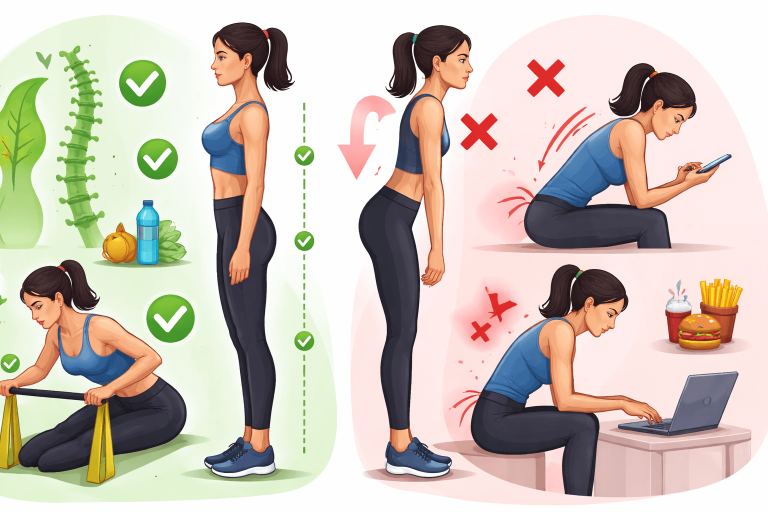
What postural exercises actually do (and what they don’t)
Postural exercises are not random stretches or YouTube routines. In clinical practice, they are carefully chosen movements designed to:
1. Re-train Muscle Balance
Poor posture causes some muscles to weaken while others become tight and overworked. Postural exercises target these imbalances specifically, not just overall strength. The goal is to restore proper support around the spine. This helps the body hold itself correctly with less effort.
2. Improve Body Awareness
Many patients are unaware when they slouch or shift incorrectly. Postural training improves body awareness, helping the brain recognise correct alignment. This awareness is essential for maintaining posture during daily activities. Without it, exercises alone have limited benefit.
3. Reduce Mechanical Strain
Correct alignment distributes body weight more evenly across the spine and joints. This reduces excessive stress on discs, ligaments, and nerves. As strain decreases, muscles work more efficiently. This often leads to gradual pain relief and improved movement.
4. Support Long-Term Pain Control
Correct alignment distributes body weight more evenly across the spine and joints. This reduces excessive stress on discs, ligaments, and nerves. As strain decreases, muscles work more efficiently. This often leads to gradual pain relief and improved movement.

Conditions where postural exercises are commonly helpful
Chronic Neck Pain and Stiffness
Poor head and shoulder posture places continuous strain on neck muscles and joints. Over time, this leads to stiffness, reduced mobility, and recurring pain. Postural exercises help rebalance muscle activity and improve neck support. Relief is gradual and improves with consistency.
Upper and Lower Back Pain Without Serious Pathology
Many back pain cases are related to muscle imbalance and poor movement habits rather than structural damage. Postural correction reduces abnormal loading on the spine. Exercises improve support and endurance of spinal muscles. This often helps prevent repeated pain episodes.
Shoulder Discomfort Related to Rounded Posture
Rounded shoulders alter normal shoulder joint mechanics. This increases strain on tendons and surrounding muscles. Postural exercises help reposition the shoulders and strengthen supporting muscles. As alignment improves, shoulder movement becomes smoother and less painful.
Postural Kyphosis (Excessive Upper Back Rounding)
Postural kyphosis commonly develops from prolonged sitting and slouched habits. It differs from structural kyphosis and is often reversible. Exercises focus on spinal extension, muscle strengthening, and awareness. Early intervention leads to better outcomes.
Mild to Moderate Scoliosis (Supervised Program)
Postural exercises can help improve muscle balance and spinal control in mild scoliosis. They do not straighten the spine completely but support better stability. Supervision is important to avoid asymmetrical strain. Exercises are tailored to curve patterns and symptoms.
Work-Related Musculoskeletal Pain
Repetitive tasks and static postures overload specific muscle groups. Over time, this causes fatigue, tightness, and pain. Postural physiotherapy addresses both body mechanics and work habits, and understanding how physiotherapy helps correct postural imbalance makes it easier to see why targeted exercises and ergonomic adjustments are essential. Ergonomic advice is often combined with exercises to support long-term correction.
Recurrent Pain After Scans Show “Nothing Serious”
Normal scans do not rule out functional problems. Poor posture and muscle control often cause persistent pain despite normal reports. Postural exercises address these hidden contributors. This explains why many patients improve without medication or surgery.
Read More: Cost Of Physiotherapy In Ahmedabad
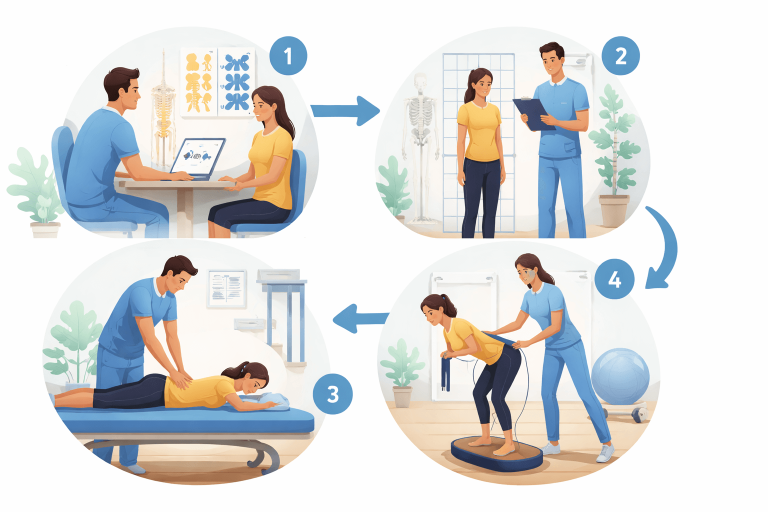
A step-by-step view of how postural physiotherapy works in clinic
Step 1: Proper assessment (this is where many go wrong)
Before exercises are prescribed, I assess:
Standing and Sitting Posture
Posture is observed in relaxed standing and normal sitting, not forced correction. This shows habitual alignment and loading patterns. Deviations help identify which areas are under strain. It guides exercise selection and ergonomic advice.
Spine Mobility
Spinal movement is assessed in all directions to identify stiffness or excessive movement. Restricted mobility can overload nearby segments. Excess mobility may indicate poor muscular control. Both influence treatment planning.
Muscle Strength and Endurance
Muscle testing focuses on postural support muscles, not just power. Weak or quickly fatiguing muscles fail to support the spine during daily activities. Endurance deficits are common in chronic pain. Exercises are tailored accordingly.
Breathing Pattern
Breathing is assessed to see if it is chest-dominant or diaphragm-driven. Poor breathing patterns increase neck and shoulder tension. This also affects posture and fatigue levels. Breathing retraining is often included in treatment.
Daily Activity Demands
Work, travel, hobbies, and sleep positions are reviewed in detail. These factors often maintain postural stress despite exercises. Treatment must match real-life demands. Advice is practical and activity-specific.
Pain Behaviour and Triggers
Pain patterns are analysed—what increases pain, what eases it, and how it behaves during the day. This helps distinguish mechanical pain from other causes. It also ensures exercises are safe and appropriate. Monitoring response guides progression.
Step 2: Early-stage correction
Activating Weak Muscles
Chronic poor posture or pain often causes important postural muscles to “switch off.” Exercises focus on gently re-activating these muscles, like the deep neck flexors, mid-back, and core stabilisers. Proper activation provides a stable foundation for further strengthening and reduces compensatory strain. Strength is added gradually.
Improving Breathing Mechanics
Shallow or chest-dominant breathing increases tension in the neck, shoulders, and upper back. Breathing retraining encourages diaphragmatic use, which relaxes overworked muscles and supports spinal alignment. Improved breathing also helps with endurance and overall comfort during exercises. It is integrated from the very beginning.
Reducing Protective Muscle Guarding
When pain persists, muscles stay tense to “protect” the area, limiting movement. Gentle exercises and relaxation techniques help release this guarding safely. Reducing tension allows better mobility and helps the muscles work correctly. This step is critical before progressing to strengthening.
Neurological screening
Neurological screening checks reflexes, sensation, muscle control, and coordination. It helps distinguish between muscular issues and true nerve-related problems. Early screening prevents misdiagnosis and ensures the right rehabilitation approach.
Pain pattern analysis
Pain pattern analysis looks at when, where, and how pain occurs during daily activities. It helps differentiate between mechanical, nerve-related, and central pain sources. Understanding pain behavior allows more targeted and effective treatment.
Step 3: Strength and endurance building
Activating Weak Muscles
Pain and poor posture often switch off important support muscles. Early exercises gently re-activate these muscles without strain. The focus is on correct engagement, not strength. This creates a stable base for further rehabilitation.
Improving Breathing Mechanics
Shallow or chest-dominant breathing increases neck and shoulder tension. Breathing retraining restores diaphragm use and reduces unnecessary muscle activity. Proper breathing also supports spinal alignment. It plays a key role in pain reduction.
Reducing Protective Muscle Guarding
When pain persists, muscles remain constantly tight to protect the area. This guarding reduces movement and increases fatigue. Gentle movement and relaxation techniques help the muscles let go safely. This improves comfort and mobility.
Step 4: Integration into daily life
Postural Endurance Training
This focuses on helping postural muscles hold correct alignment for longer periods. The aim is to reduce fatigue during daily activities like sitting or standing. Exercises are progressed gradually to build tolerance. This is essential for lasting posture improvement.
Functional Strengthening
Strength is trained in positions and movements used in real life. This helps the body maintain good posture during work, lifting, and walking. Exercises are tailored to daily demands. The goal is safe, practical strength—not gym-based performance.
Controlled Spinal Loading
The spine is gradually exposed to safe, controlled loads. This helps tissues adapt without triggering pain. Proper technique is critical at this stage. It prepares the body for normal activities and prevents future injury.

Common mistakes patients make at home
Doing Posture Exercises Aggressively or With Weights Too Early
Postural muscles first need control and coordination, not heavy resistance. Starting too aggressively can overload weak muscles and worsen pain. This often causes flare-ups and delays recovery. Early exercises should be gentle and precise. Strength is added only after proper control is achieved.
Doing Posture Exercises Aggressively or With Weights Too Early
Postural muscles first need control and coordination, not heavy resistance. Starting too aggressively can overload weak muscles and worsen pain. This often causes flare-ups and delays recovery. Early exercises should be gentle and precise. Strength is added only after proper control is achieved.
Holding the Body “Stiffly Straight” All Day
Forcing posture creates constant muscle tension and fatigue. The body is not designed to stay rigid for long periods. Good posture should feel natural and flexible. Regular movement is just as important as alignment. Over-correction often increases discomfort.
Copying Generic Routines Without Assessment
Not all posture problems are the same. Generic exercises may strengthen the wrong muscles or ignore key imbalances. Without assessment, symptoms can worsen instead of improving. Personalised guidance ensures safety. Correct exercise selection improves outcomes.
Ignoring Breathing While Exercising
Poor breathing patterns increase neck and shoulder strain. This reduces the effectiveness of postural exercises. Breathing directly affects muscle tension and spinal support. Diaphragmatic breathing improves relaxation. It should be integrated into all exercises.
Expecting Instant Results and Stopping Too Early
Postural correction takes time and consistency. Early progress may be subtle rather than dramatic. Stopping too soon prevents lasting improvement. Habits take weeks to change. Long-term commitment leads to stable results.
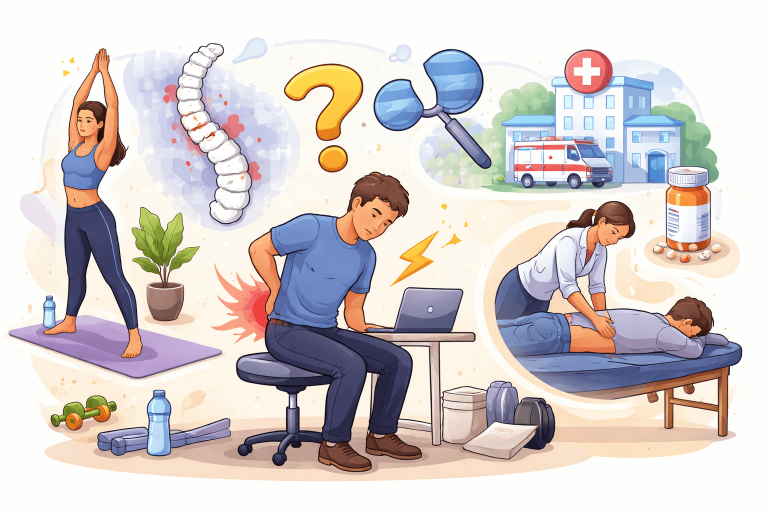
When postural exercises alone may NOT be enough
Pain Is Worsening Despite Correct Therapy
If pain continues to increase even with proper exercises and guidance, it may indicate a more serious underlying condition. Continuing the same program without evaluation can delay diagnosis. Early medical review is important to rule out structural or systemic issues. Don’t ignore persistent worsening.
There Is Progressive Weakness or Numbness
Increasing weakness, tingling, or numbness in the arms or legs is a sign of nerve involvement. This requires urgent assessment, as it may indicate spinal cord or peripheral nerve compression. Physiotherapy alone is not enough in these cases. Prompt evaluation prevents long-term damage.
Pain Follows Trauma or Accident
Pain that appears after a fall, car accident, or sudden injury should not be assumed “postural.” Fractures, ligament injuries, or internal issues must be ruled out first. Postural exercises may be unsafe until cleared by a physician. Early assessment ensures safe rehabilitation.
Symptoms Are Associated With Dizziness, Balance Loss, or Neurological Signs
Posture-related exercises are safe only if neurological function is intact. Dizziness, unsteady gait, or coordination problems may indicate vestibular or central nervous system issues. Immediate medical evaluation is necessary. Therapy should be adapted based on findings.
Structural Spine Conditions Are Advanced
Severe scoliosis, kyphosis, or degenerative spine disease may not respond fully to postural exercises alone. Exercises can help manage symptoms but cannot correct structural deformities. Specialist evaluation and multidisciplinary care are often needed for safe and effective treatment.

Red flags that require medical referral
Unexplained Weight Loss
Significant weight loss without dieting or lifestyle changes may indicate an underlying medical condition. When combined with musculoskeletal pain, it warrants urgent evaluation. Postural exercises alone cannot address this. Early medical assessment is essential to identify the cause.
Night Pain That Does Not Ease With Position Change
Pain that persists or worsens at night, regardless of sleeping position, may signal serious structural or systemic issues. This is not typical of simple postural problems. Immediate medical review helps rule out infections, tumors, or inflammatory conditions. Early detection improves outcomes.
Loss of Bladder or Bowel Control
Any new difficulty controlling bladder or bowel function is a red flag for possible spinal cord or nerve compression. This requires urgent medical attention. Postural therapy should be paused until cleared by a doctor. Delaying care may cause permanent complications.
Conclusion
Postural exercises are not a trend or a cosmetic fix. They are a foundational part of musculoskeletal rehabilitation when applied thoughtfully and individually.
The goal is not to “sit straight forever,” but to build a body that can move, adapt, and support itself without pain.
If you are unsure whether posture is contributing to your symptoms, a proper physiotherapy assessment can clarify this—often more accurately than scans alone.
Physiotherapy for Postural Imbalance- FAQs
Q1. Can postural exercises really reduce pain, or are they only for appearance?
Q2. How often should I do postural exercises?
Q3. Do I need to do postural exercises for life?
Q4. Can these exercises help even if my MRI or X-ray is normal?
Q5. Is it safe to start postural exercises on my own?
References
About the Author

Dr. Hetal M Varia
After a rich experience of working in US healthcare as manager and licensed physiotherapist in US for last 11 years, she has returned home with a vision to become pioneer of Vestibular Therapy and specialized Parkinson physiotherapy in Ahmedabad. With her special skills and expertise in vertigo, Parkinson, balance and movement disorders therapy, Dr. Varia is committed to provide US standards of therapy services , compassionate and patient centered care to our people and community. With a vision of the world where everyone walks strong & steady, she intends to empower individuals with vestibular and neurological disorders through specialized care, rehabilitation & innovative therapies to improve mobility, balance & overall quality of life!