
How To Choose The Best Physiotherapist in Ahmedabad
A 42-year-old IT professional came to me with 18 months of neck and shoulder pain.
He had already visited:
- 2 orthopedic doctors
- 3 physiotherapy clinics
- Completed 40+ therapy sessions
Everywhere he went, the routine was the same:
10 minutes heat, 20 minutes machine therapy, vague exercises, and pressure to buy a “package.”
His MRI was normal. His pain wasn’t.
What finally helped him wasn’t a new machine or stronger treatment — it was a correct assessment. His pain was coming from poor workstation ergonomics and cervical motor control failure, not “muscle tightness.”
Most online blogs fail patients because they:
Push physiotherapy as a universal solution
Promote clinics instead of clinical judgment
Never explain when physiotherapy is NOT needed
In my years of treating patients across musculoskeletal, orthopedic, neurological, and post-surgical cases, I’ve learned one thing clearly:
Choosing the wrong physiotherapist can delay recovery more than not taking therapy at all. That’s exactly why choosing the right physiotherapist in Ahmedabad requires more than checking reviews — it requires understanding clinical reasoning, assessment quality, and treatment approach.

REAL PATIENT PROBLEMS — GROUND REALITY IN AHMEDABAD
Wrong Diagnosis
Many patients receive treatment without a proper clinical assessment, leading to pain being misunderstood or misclassified. When the root cause is missed, therapy becomes ineffective, recovery is delayed, and symptoms often worsen instead of improving.
Nerve pain treated as muscle spasm
Nerve-related pain often feels deep, burning, or radiating, but is mistakenly treated as simple muscle tightness. This delays recovery because the real cause—nerve irritation or compression—is never addressed, which is why choosing the right physiotherapy clinic in Ahmedabad becomes important for accurate diagnosis and effective treatment.
Joint instability treated with only heat
Applying heat may reduce temporary discomfort but does nothing to control unstable joints. Without strengthening and stability training, pain keeps returning and the joint becomes weaker over time.
Disc issues missed because no neurological screening was done
When neurological tests are skipped, disc-related problems can go undetected. This can lead to worsening symptoms like numbness, tingling, or weakness despite ongoing treatment.
One-Plan-Fits-All Therapy
25-year-old athletes
Young athletes need performance-focused rehab that restores strength, control, and injury prevention. Treating them with generic pain relief ignores sport-specific demands and increases re-injury risk.
60-year-old diabetics
Older diabetic patients require cautious, individualized therapy due to slower healing and nerve sensitivity. Aggressive or generic treatment can worsen pain and delay recovery.
Post-surgery patients
Post-surgical rehab must follow structured, phase-wise protocols to protect healing tissues. Skipping progression or rushing recovery can compromise surgical outcomes.
Over-Dependence on Machines
IFT, ultrasound, traction — without manual assessment or progression.
Machines can reduce pain temporarily. They do not correct movement.
Unnecessary Long-Term Sessions
Simple back pain dragged into 30–40 sessions
Many mild back pain cases improve with correct guidance and short-term care, but unnecessary prolonged therapy creates dependency. This increases cost and delays self-managed recovery.
Patients afraid to stop because “pain may come back”
Fear-based treatment keeps patients tied to clinics instead of building confidence. Good physiotherapy should teach independence, not create long-term reliance.
Ignoring Lifestyle & Root Cause
How long you sit
Prolonged sitting increases stress on the spine and muscles, often becoming the main reason pain keeps returning despite treatment. Without correcting sitting habits, recovery remains incomplete.
Pro tip:
How you sleep
Poor sleep posture can overload the neck and lower back for hours every night. Even good therapy fails if sleeping positions continue to strain healing tissues.
How you lift
Incorrect lifting technique places excessive load on the spine and joints, triggering repeated injury. Teaching safe movement is essential to prevent recurring pain.
How compliant you are at home
Clinic treatment works only when supported by regular home exercises and lifestyle changes.
Read More: Best Physiotherapy Clinic in Ahmedabad

STEP-BY-STEP PATIENT ACTION PLAN
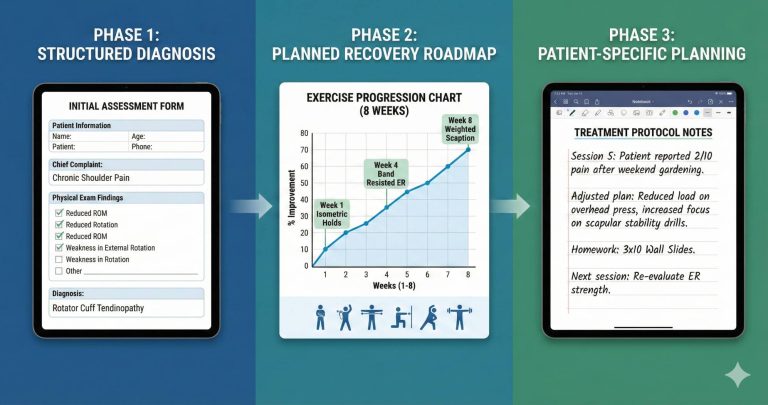
Step 1: Correct Diagnosis & Assessment
What to do:
Detailed history
Understanding when pain started, how it behaves, and what worsens or relieves it helps identify the true source of the problem. Without this, treatment often targets symptoms instead of causes.
Posture & movement analysis
Observing how you sit, stand, walk, and move reveals faulty patterns stressing the body. Correcting these patterns is essential for long-term pain relief.
Neurological screening when required
Testing reflexes, sensation, and strength helps detect nerve involvement early. Missing this step can allow serious conditions to go untreated and worsen over time.
Why it matters:
Pain location ≠ pain source.
Mistakes to avoid:
Starting therapy without assessment.
Pro tip:
If the assessment is under 10 minutes, walk out.
Step 2: Choosing the Right Physiotherapy Approach
What to do:
What to do:
Ask how your problem will be treated
Manual therapy
Hands-on techniques help reduce pain, improve joint movement, and prepare the body for active rehab. Used alone, it gives short-term relief but does not ensure lasting recovery.
Exercise-based rehab
Targeted exercises restore strength, stability, and tissue tolerance over time. This is the foundation of long-term recovery and prevention of recurrence.
Movement retraining
Movement retraining corrects faulty patterns that repeatedly stress the body. It teaches you how to move safely in daily life, reducing the chances of pain returning.x`x
Mistakes to avoid:
Believing stronger machines = faster recovery.
Pro tip:
Active rehab > passive therapy for long-term results.
Step 3: Therapist Credentials & Clinic Evaluation
What to check:
Degree
A formal physiotherapy degree ensures the therapist has proper clinical training and understands safe, evidence-based treatment. It reduces the risk of trial-and-error therapy.
Clinical focus
A therapist’s specialization matters because each condition requires different skills and protocols. The right clinical focus leads to more accurate treatment decisions.
Hands-on involvement
Active hands-on assessment and treatment show the therapist is directly involved in your care. Minimal involvement often leads to generic, ineffective therapy plans.
Why it matters:
Experience changes clinical judgment.
Mistakes to avoid:
Assuming all physiotherapists treat everything equally we
Step 4: First Session — What to Observe
Does the therapist explain your condition?
A good therapist clearly explains what is causing your pain and how treatment will help. If you don’t understand your problem, informed recovery becomes difficult.
Are exercises tailored?
Exercises should be selected based on your condition, ability, and progress. Generic routines increase the risk of irritation or poor results.
Red flag:
Being handed to an assistant without reassessment.
REAL CASE STUDIES
Case 1: Chronic Pain
- Age: 48
- Lifestyle: Office + long driving
- Condition: Chronic low back pain (2 years)
- Treatment duration: 6 weeks
- Outcome: Pain reduced 70%, function improved
- Key mistake corrected: Stopped passive therapy, started core motor control + posture correction
Case 2: Sports / Post-Surgery Rehab
- Patient: 26-year-old recreational footballer
- Injury: ACL reconstruction
- Rehab protocol: Phase-wise strength + neuromuscular training
- Recovery timeline: 6 months
- What worked: Strict progression & compliance

SOCIAL PROOF — REALISTIC PATIENT VOICES
- IT Professional (Neck Pain):
“Pain reduced, but more importantly I understood what caused it.” - Homemaker (Knee Pain):
“Exercises were hard initially, but I avoided surgery.”
Senior Citizen (Balance Issues):
“Therapy improved confidence, not just pain.”

CREDIBILITY, DATA & MEDICAL CONTEXT
- Indian Association of Physiotherapists (IAP) guidelines
- Evidence-based rehab protocols for musculoskeletal pain
- Orthopedic best practices for conservative management
Important truths:
- Recovery varies
- Age, metabolism, sleep, stress matter
- No two rehab plans should look identical
References
- IAP Clinical Practice Guidelines
- Journal of Orthopaedic & Sports Physical Therapy
- NICE Musculoskeletal Care Guidelines
PROOFS & SCREENSHOT PLACEMENTS
How to choose the best physiotherapist in Ahmedabad - FAQs
Q1: How long before I feel relief?
Q2: Is physiotherapy better than painkillers?
Q3: What if pain increases initially?
Q4: How many sessions are really needed?
Q5: Can physiotherapy avoid surgery?
CONCLUSION
Choosing the best physiotherapist in Ahmedabad isn’t about reputation or machines.
It’s about clinical judgment, honest timelines, and patient education.
If this guide helped you:
- Download a free physiotherapy assessment checklist
- Comment with your symptoms for educational guidance
- Ask better questions before starting treatment
No pressure. No selling.
References
About the Author

Dr. Hetal M Varia
After a rich experience of working in US healthcare as manager and licensed physiotherapist in US for last 11 years, she has returned home with a vision to become pioneer of Vestibular Therapy and specialized Parkinson physiotherapy in Ahmedabad. With her special skills and expertise in vertigo, Parkinson, balance and movement disorders therapy, Dr. Varia is committed to provide US standards of therapy services , compassionate and patient centered care to our people and community. With a vision of the world where everyone walks strong & steady, she intends to empower individuals with vestibular and neurological disorders through specialized care, rehabilitation & innovative therapies to improve mobility, balance & overall quality of life!