
Freezing While Walking Parkinson's Therapy Ahmedabad
Walking should feel natural, but for many individuals living with Parkinson’s disease, movement can suddenly become difficult. One of the most frustrating symptoms is freezing gait, where the feet feel “stuck” to the floor despite trying to move forward. These episodes may last only a few seconds, but they can increase fear, reduce confidence, and raise the risk of falls.
At Varia Physiotherapy Clinic, many patients in Ahmedabad seek help for Freezing While Walking Parkinson’s Therapy Ahmedabad after experiencing walking instability, movement hesitation, balance impairment, or sudden walking stops during daily activities. Simple movements like turning around, entering elevators, or walking through crowded places may become stressful.
Physiotherapy focuses on improving mobility dysfunction, gait disturbance, posture, and coordination using evidence-based neuro rehabilitation techniques. With structured gait retraining, movement retraining, and balance retraining, many individuals can improve walking confidence and maintain independence safely.
Understanding Freezing of Gait in Parkinson's Disease
Freezing of gait is a neurological movement disorder symptom commonly associated with Parkinson’s disease. During a freezing episode, the brain temporarily struggles to coordinate movement signals needed for walking.
Patients often describe it as:
- Feeling glued to the floor
- Difficulty starting walking
- Sudden walking stop while turning
- Short shuffling steps
- Reduced stride length
- Foot dragging
- Difficulty turning in narrow spaces
This Parkinsonian gait pattern may lead to walking difficulty, postural instability, impaired coordination, and increased fall risk.
Several factors can worsen gait freezing, including:
- Stress or anxiety
- Crowded environments
- Dual-task walking
- Fatigue
- Poor balance
- Bradykinesia (slow movement)
- Muscle rigidity
In some patients, freezing during walking becomes more frequent as the condition progresses. However, early physiotherapy intervention may help improve functional mobility and movement confidence.
Read More : Parkinson’s Walking Therapy In Ahmedabad

Common Signs Patients Notice Before Seeking Therapy
Many people initially ignore mild gait disturbance symptoms. At Varia Physiotherapy Clinic, patients commonly report:
- Movement hesitation while taking the first step
- Difficulty walking through doorways
- Sudden imbalance while turning
- Feeling unstable on uneven surfaces
- Fear of falling outdoors
- Walking instability in crowded areas
- Abnormal walking pattern with short steps
- Mobility limitation during household activities
Family members may notice festinating gait, where the patient walks with increasingly rapid, short steps while struggling to stop safely.
These symptoms should not be dismissed as normal aging. A clinical neurological physiotherapy assessment can help identify mobility dysfunction early.
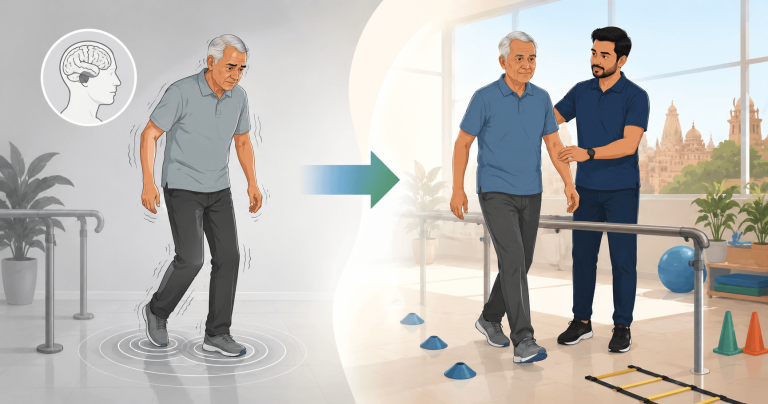
How Freezing While Walking Parkinson's Therapy Ahmedabad Helps
Physiotherapy does not “cure” Parkinson’s disease, but it can help improve locomotor dysfunction, gait rehabilitation, and safe movement patterns.
At Varia Physiotherapy Clinic, treatment plans are customized after assessing:
- Balance impairment
- Motor control issues
- Gait initiation failure
- Walking pattern correction needs
- Functional mobility limitations
- Fall risk factors
- Coordination deficits
- Posture and movement quality
1. Gait Retraining
Gait retraining focuses on improving walking rhythm, coordination, and step length in people experiencing Parkinson’s-related walking difficulties. Physiotherapists use visual and auditory cueing techniques to help reduce freezing episodes and encourage smoother walking patterns. Regular gait practice may improve walking confidence and mobility during daily activities.
2. Balance Retraining
Balance retraining helps improve postural stability and reduce the risk of falls during movement. Exercises are designed to strengthen balance reactions, improve body control, and support safer turning and standing activities. Consistent balance therapy may help patients feel more confident while walking and performing everyday tasks.
3. Functional Mobility Training
Functional mobility training focuses on improving everyday movement activities such as standing up, walking safely, climbing stairs, and turning. Therapists guide patients through practical movement exercises that support independence and safer mobility at home and in public environments. This training may help improve confidence during routine daily tasks.
4. Movement Retraining and Coordination Exercises
Movement retraining exercises help improve coordination, posture, and walking efficiency affected by Parkinson’s disease. Physiotherapists focus on correcting movement patterns and reducing stiffness that may contribute to freezing or unstable walking. Regular coordination exercises may support smoother, safer, and more controlled movement throughout daily life.

Real Patient Scenario Commonly Seen at Varia Physiotherapy Clinic
A 62-year-old retired teacher from Ahmedabad visited the clinic after experiencing freezing episodes while walking indoors. He reported difficulty starting walking, especially near doorways and during turns. Freezing While Walking Parkinson’s Therapy Ahmedabad Over time, fear of falling caused him to avoid social outings.
Parkinsonian gait
Parkinsonian gait refers to a slow, shuffling walking pattern commonly seen in Parkinson’s disease. Patients may experience reduced arm swing, difficulty turning, and trouble maintaining smooth walking movements.
Reduced Stride Length
Reduced stride length causes individuals to take smaller, shorter steps while walking. This may make movement feel slower, less stable, and more physically tiring during daily activities.
Balance Impairment
Balance impairment can affect stability while standing, walking, or changing direction. Individuals may feel unsteady during movement, increasing the risk of falls and mobility-related difficulties.
Gait Initiation Failure
Gait initiation failure occurs when a person struggles to begin walking despite intending to move forward. This hesitation may happen more frequently in crowded spaces, near doorways, or during turning movements.
Walking Instability
Walking instability refers to difficulty maintaining safe and controlled movement while walking. People may experience uneven stepping, sudden pauses, or reduced confidence during mobility activities.
Impaired Coordination
Impaired coordination affects the body’s ability to perform smooth and controlled movements. Tasks involving balance, walking, or changing direction may become slower and less coordinated over time.
A structured Parkinson’s physiotherapy program was started, including gait retraining, cueing therapy, balance therapy Ahmedabad protocols, and mobility enhancement exercises.
Within several weeks, the patient showed gradual improvement in walking confidence training and functional movement recovery. Although occasional freezing episodes still occurred, he reported improved safety during daily movement and greater confidence while walking outdoors.
Freezing While Walking Parkinson’s Therapy Ahmedabad Recovery timelines vary depending on disease progression, overall mobility, consistency with therapy, and neurological health.
Myths vs Facts About Parkinson’s Walking Problems
| Myth | Fact |
|---|---|
| Freezing while walking only happens in severe Parkinson’s disease | Freezing episodes can appear even in earlier stages |
| Rest is better than movement | Guided movement therapy is often beneficial |
| Walking aids always create dependency | Properly prescribed aids may improve safety |
| Physiotherapy only strengthens muscles | Neurological physiotherapy also improves coordination and gait |
| Falls are unavoidable in Parkinson’s disease | Fall prevention therapy may help reduce risks |
When Should You See a Physiotherapist?
It may be beneficial to seek neuro rehabilitation if you notice: Freezing While Walking Parkinson’s Therapy Ahmedabad
- Frequent freezing during walking
- Increased fall risk
- Difficulty turning safely
- Sudden movement freezing
- Shuffling gait
- Mobility dysfunction affecting daily life
- Walking hesitation indoors
- Reduced walking confidence
Early assessment can help identify abnormal walking patterns before severe mobility limitation develops.
In some situations, referral to a neurologist may be necessary if symptoms suddenly worsen, medication effectiveness changes, or new neurological symptoms appear.
Daily Tips to Manage Freezing Episodes
Patients are often advised to: Freezing While Walking Parkinson’s Therapy Ahmedabad
- Avoid rushing while walking
- Use rhythmic counting during movement
- Take larger intentional steps
- Pause before turning
- Practice posture correction
- Remove home tripping hazards
- Stay physically active safely
Home physiotherapy for Parkinson’s may also help patients continue structured mobility rehabilitation between clinic sessions.
Conclusion
Parkinson’s disease can affect walking, balance, coordination, and overall independence, making daily activities more challenging over time. However, evidence-based rehabilitation approaches may help individuals maintain mobility, improve movement confidence, and support safer participation in everyday life. Structured neurological physiotherapy focuses on practical goals such as gait improvement, balance retraining, posture correction, and functional mobility rather than temporary symptom management alone.
Organizations such as the World Health Organization and National Institutes of Health continue to highlight the importance of physical activity, rehabilitation, and movement-based care for neurological conditions. Modern Parkinson’s rehabilitation programs are designed to support long-term quality of life by helping patients stay active, reduce fall risks, and improve confidence during daily movement.
Most importantly, Parkinson’s movement therapy is not about promising unrealistic cures. Freezing While Walking Parkinson’s Therapy Ahmedabad The goal is to provide personalized, evidence-based support that helps individuals move more safely, remain functionally independent for as long as possible, and continue participating in meaningful daily activities. With early intervention, consistent therapy, and guided movement training, many patients may experience improvements in mobility, stability, and overall physical well-being.
Ethical Call-to-Action
If freezing episodes, walking instability, or balance impairment are affecting your daily activities, seeking an early physiotherapy assessment may help improve movement safety and confidence.
At Varia Physiotherapy Clinic, personalized neurological physiotherapy programs are designed around each patient’s mobility goals, balance needs, and functional challenges. Timely intervention can support safer movement and help individuals stay active with greater confidence.