
Parkinson's Walking Therapy In Ahmedabad
Walking difficulties are one of the most frustrating challenges faced by people living with Parkinson’s disease. Simple daily activities like getting out of bed, walking to the kitchen, turning around, or climbing stairs can gradually become difficult and exhausting. Many patients in Ahmedabad also describe a fear of falling, stiffness while walking, or the feeling that their feet are “stuck” to the floor.
At Varia Physiotherapy Clinic, we regularly meet patients and families who feel overwhelmed by these changes. The good news is that evidence-based Parkinson’s Walking Therapy in Ahmedabad can help improve mobility, balance, confidence, and overall quality of life when started early and followed consistently.
Physiotherapy cannot cure Parkinson’s disease, but it plays a major role in helping patients move more safely and independently for longer periods of time.
Understanding Walking Problems in Parkinson's Disease
Parkinson’s disease affects the nervous system, particularly the areas of the brain responsible for movement coordination. Over time, patients may notice changes such as: Parkinson’s Walking Therapy In Ahmedabad
- Slower walking speed
- Shorter steps
- Reduced arm swing
- Difficulty turning
- Stooped posture
- Balance problems
- Episodes of freezing while walking
These symptoms often worsen gradually. Many people initially assume they are simply “getting older,” but neurological changes are usually contributing to the problem.
According to the World Health Organization, Parkinson’s disease is one of the fastest-growing neurological disorders worldwide. Early rehabilitation and movement training are important for maintaining independence.
The National Institutes of Health also highlights that physiotherapy can improve gait, balance, mobility, and fall prevention in Parkinson’s patients.
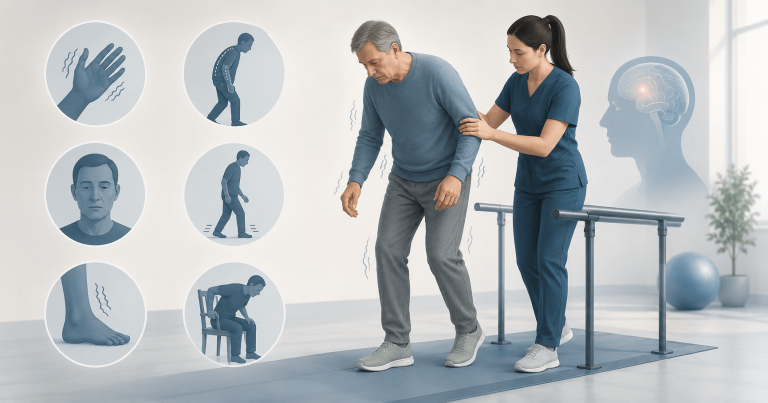
Common Signs That Indicate the Need for Parkinson's Walking Therapy in Ahmedabad
Many patients wait too long before seeking professional help. Early physiotherapy intervention often leads to better outcomes.
Walking Becoming Slower Than Before
Many Parkinson’s patients notice that their walking speed gradually decreases over time. Activities that once felt simple, such as crossing the road or walking around the house, may start taking much longer. This slowing of movement often happens because the brain struggles to coordinate smooth muscle activity. Early physiotherapy can help improve walking rhythm, posture, and movement confidence.
Frequent Loss of Balance
Balance problems are very common in Parkinson’s disease and may increase the risk of falls. Patients often feel unsteady while turning, climbing stairs, or standing up from a chair. These balance changes can make outdoor walking stressful and reduce overall confidence. Physiotherapy focuses on improving stability, coordination, and safer body movement during daily activities.
Freezing Episodes
Freezing episodes occur when the feet suddenly feel stuck to the floor for a few seconds despite the person wanting to walk forward. This commonly happens near doorways, crowded places, or while turning quickly. Freezing can feel frustrating and may increase anxiety about walking independently. With specialized Parkinson’s physiotherapy care, patients can learn gait training and movement cueing techniques that help manage these episodes more effectively and improve walking confidence.
Fear of Falling
After experiencing balance problems or near-falls, many patients develop a strong fear of falling again. This fear may cause them to avoid walking outdoors, attending social events, or moving independently at home. Reduced activity can eventually lead to muscle weakness and further mobility decline. Physiotherapy helps patients rebuild confidence through safe and supervised movement training.
Muscle Stiffness and Reduced Mobility
Parkinson’s disease often causes stiffness in the muscles and joints, especially in the legs, hips, shoulders, and back. This tightness can make walking feel slow, uncomfortable, and physically tiring. Daily activities such as getting out of bed or turning while walking may become difficult. Stretching, strengthening, and mobility exercises can help improve flexibility and overall movement comfort.

How Physiotherapy Helps Parkinson's Patients Walk Better
At Varia Physiotherapy Clinic, treatment plans are personalized after detailed clinical assessment. No two Parkinson’s patients experience symptoms in exactly the same way.
1. Detailed Gait and Balance Assessment
The first step involves understanding:
- Walking pattern
- Step length
- Balance reactions
- Muscle stiffness
- Joint mobility
- Fall risk
- Posture
- Functional limitations
Therapists may also assess how symptoms change during different times of the day, especially around medication schedules.
In some cases, patients may be referred to a neurologist if symptoms appear to be progressing rapidly or if diagnosis confirmation is required.
2. Balance Training Exercises
Balance training is an important part of recovery. Exercises are designed to improve stability during:
- Standing
- Turning
- Walking
- Reaching
- Stair climbing
Therapists gradually challenge the body in safe, controlled conditions to improve confidence and reduce fall risk.
Patients are also taught safe movement strategies for home environments.
3. Gait Re-education
Many Parkinson’s patients develop a shuffling walking pattern. Physiotherapists work on: Parkinson’s Walking Therapy In Ahmedabad
- Increasing step length
- Improving walking rhythm
- Enhancing arm swing
- Correcting posture
- Reducing freezing episodes
Visual and auditory cueing techniques are often used. For example, rhythmic counting or floor markers may help patients maintain smoother walking patterns.
4. Strengthening and Flexibility Exercises
Weak muscles and stiffness contribute significantly to mobility problems.
Treatment may include:
- Leg strengthening exercises
- Core stability training
- Stretching routines
- Postural correction exercises
- Functional mobility training
Improved muscle control can help patients walk more efficiently and with less fatigue.
5. Functional Training for Daily Activities
Physiotherapy is not only about exercises. It also focuses on real-life activities such as: Parkinson’s Walking Therapy In Ahmedabad
- Getting out of bed
- Sitting and standing safely
- Turning while walking
- Climbing stairs
- Carrying objects safely
The goal is to help patients remain as independent as possible in their daily lives.
Read More : Parkinson’s Walking Therapy In Gota Ahmedabad
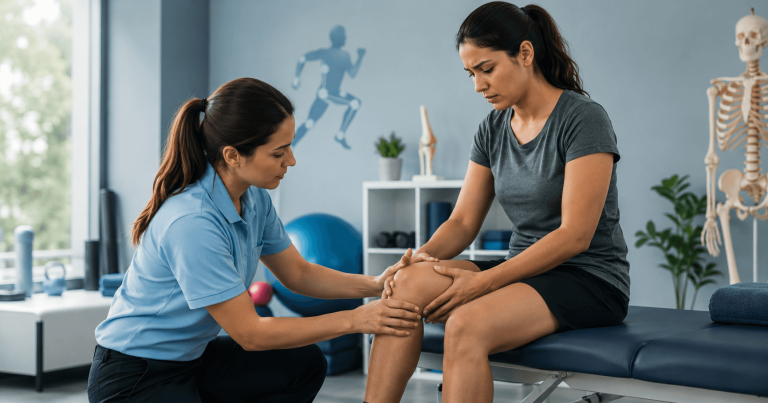
A Real Clinical Scenario Seen at Varia Physiotherapy Clinic
A 62-year-old gentleman from Ahmedabad visited our clinic after experiencing repeated balance loss while walking outdoors. His family noticed he had started taking very small steps and avoided social outings due to fear of falling.
During assessment, significant gait hesitation, reduced trunk movement, and lower limb stiffness were observed. His treatment plan included:
- Gait retraining
- Cue-based walking practice
- Balance exercises
- Strengthening
- Postural correction
- Home safety guidance
Over several weeks, he gradually became more confident walking independently inside his society compound. While Parkinson’s symptoms did not disappear completely, his mobility and confidence improved noticeably.
This is a realistic example of how structured rehabilitation can positively impact daily function.
Myths vs Facts About Parkinson's Walking Problems
| Myth | Fact |
|---|---|
| Walking difficulties are just part of normal aging | Parkinson’s-related gait problems involve neurological movement changes. |
| Exercise can worsen Parkinson’s symptoms | Properly guided physiotherapy is generally beneficial and evidence-based. |
| Patients should avoid walking to prevent falls | Safe movement training helps maintain mobility and confidence. |
| Physiotherapy works only in advanced stages | Early intervention often provides better long-term benefits. |
| Recovery happens in a few sessions | Parkinson’s rehabilitation usually requires ongoing consistency. |
When Should You See a Physiotherapist?
You should consider physiotherapy evaluation if: Parkinson’s Walking Therapy In Ahmedabad
- Walking feels slower or unsafe
- Balance problems are increasing
- You have experienced falls
- Daily mobility is becoming difficult
- Muscle stiffness affects movement
- Family members notice changes in posture or walking pattern
Early management can help reduce complications and maintain better physical function.
Lifestyle Tips That Support Better Walking
Along with physiotherapy, patients may benefit from:
- Regular walking practice
- Consistent exercise routines
- Good sleep habits
- Proper hydration
- Safe home environments
- Supportive footwear
- Medication compliance as advised by neurologists
Family support also plays a major role in maintaining patient motivation and confidence.
Conclusion
Living with Parkinson’s disease can feel physically and emotionally challenging, especially when walking becomes difficult. However, timely rehabilitation and structured movement therapy can help patients stay active, independent, and more confident in their daily lives.
At Varia Physiotherapy Clinic, our approach to Parkinson’s Walking Therapy in Ahmedabad focuses on realistic goals, patient safety, and evidence-based physiotherapy care. Every treatment plan is personalized according to the patient’s symptoms, physical condition, and daily lifestyle needs. Parkinson’s Walking Therapy In Ahmedabad
If you or a loved one has noticed changes in walking, balance, or mobility, early physiotherapy evaluation may help improve quality of life and reduce future complications.
Ethical Call-to-Action
If you’re unsure whether your symptoms need attention, it’s okay to start with a simple consultation. Understanding your condition is the first step toward recovery—no pressure, just guidance.
If you’d like to speak with a physiotherapist or book an assessment at Varia Physiotherapy Clinic, you can reach out here:
 Call: +91 95123 79555
 Email: hello.drhetalvaria@gmail.com
 Website: www.variaphysiotherapyclinic.com
Our team is here to listen, assess, and guide you toward safe and effective recovery.