
Top Early Signs Of Vestibular Balance Problems Adults Ignore
Many adults between the ages of 30 and 65 experience occasional dizziness, unsteadiness, or a strange “floating” sensation during daily activities. In a busy city like Ahmedabad, these symptoms are often dismissed as stress, fatigue, low blood pressure, or simply “getting older.” However, in many cases, these can be the top early signs of vestibular balance problems adults ignore until symptoms begin interfering with work, driving, walking, or confidence in movement.
At Varia Physiotherapy Clinic, we frequently meet adults who have spent months trying to manage these symptoms on their own. Many patients say things like:
- “I feel dizzy when I turn quickly.”
- “Crowded places suddenly make me uncomfortable.”
- “I feel unstable even though all my scans are normal.”
- “I’m not falling, but I don’t feel balanced.”
Vestibular balance disorders are more common than many people realize. According to the World Health Organization, balance dysfunction can significantly affect mobility, independence, and quality of life. The National Institutes of Health also highlights that vestibular disorders may cause dizziness, imbalance, motion sensitivity, and visual instability.
Many adults searching for the top early signs of vestibular balance problems adults ignore often do not realize that mild dizziness and imbalance may gradually worsen over time.
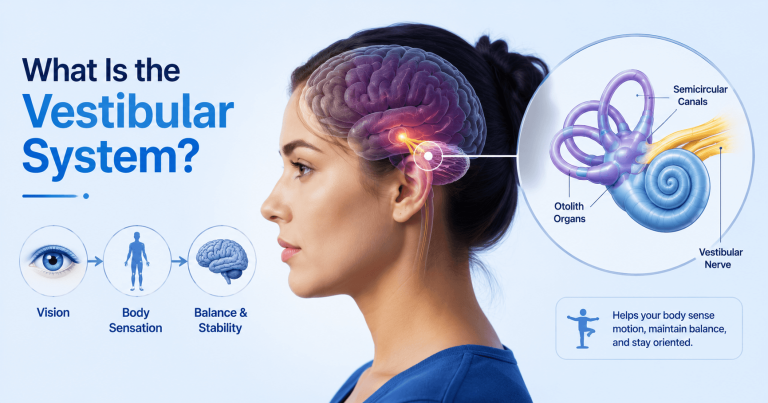
What Is the Vestibular System?
The vestibular system is part of the inner ear and brain that helps control balance, posture, eye coordination, and spatial orientation. It works together with the eyes, muscles, joints, and nervous system to keep the body stable during movement. When this system is not functioning properly, even simple activities such as walking, turning the head, climbing stairs, or shopping in crowded environments may feel uncomfortable or disorienting.
Top Early Signs of Vestibular Balance Problems Adults Ignore
1. Dizziness During Head Movements
One of the most common early symptoms is dizziness while turning the head, bending forward, or getting up from bed.
Patients often describe:
- Lightheadedness
- Spinning sensation
- Feeling “off-balance”
- Sudden disorientation
These episodes may last only a few seconds initially, so many adults ignore them until they become more frequent.
2. Difficulty Walking in Crowded Places
Difficulty navigating visually busy environments is considered one of the top early signs of vestibular balance problems adults ignore, especially in the early stages of vestibular dysfunction.
Patients commonly report:
- Feeling pulled to one side
- Needing support while walking
- Increased anxiety in visually busy environments
This happens because the brain struggles to process visual and balance information together.
3. Motion Sensitivity
Adults who previously tolerated travel comfortably may begin experiencing discomfort during:
- Car rides
- Escalators
- Fast head movements
- Watching moving screens
This symptom is frequently associated with vestibular dysfunction and sensory processing imbalance.
4. Neck Tightness Along With Imbalance
Many patients are surprised to learn that neck stiffness and posture problems can influence balance.
Poor cervical mobility affects proprioception — the body’s awareness of position and movement. Long hours of desk work, stress-related muscle tension, and forward-head posture can contribute to dizziness and coordination difficulties.
At Varia Physiotherapy Clinic, posture and cervical assessment are often included during vestibular evaluations.
5. Feeling Unsteady Without Actually Falling
Feeling unsteady without falling is one of the early signs of vestibular balance problems that many adults overlook in the beginning stages.
Patients may notice:
- Hesitation while walking
- Fear while using stairs
- Reduced confidence outdoors
- Walking slower than usual
This subtle loss of balance and confidence can gradually reduce physical activity and mobility.

Common Causes of Vestibular Balance Problems
Vestibular symptoms can develop for several reasons, including:
Inner Ear Disorders
The inner ear plays an important role in helping the body maintain balance and spatial awareness. When this system is affected, adults may experience dizziness, spinning sensations, or unsteadiness during everyday activities like walking or turning the head. Early assessment can help identify movement-related triggers and improve balance confidence safely.
Post-Viral Dizziness
Some adults continue to feel dizzy or unstable even after recovering from a viral illness. Patients commonly describe feeling “foggy,” lightheaded, or off-balance for weeks after infection. Physiotherapy may help retrain balance responses and gradually improve tolerance to movement and daily activities.
Cervical Dysfunction
Neck stiffness, poor posture, and muscle tension can influence how the brain interprets body position and movement. Adults who spend long hours at desks or experience chronic neck tightness may notice dizziness, imbalance, or discomfort during head movements. Addressing cervical mobility and posture can support better coordination and body awareness.
Neurological Conditions
Certain neurological conditions may affect coordination, walking stability, and balance control. Symptoms can vary from mild unsteadiness to difficulty with movement confidence. Because balance issues sometimes overlap with neurological disorders, proper clinical evaluation is important to determine whether referral to a neurologist is necessary.
Age-Related Sensory Changes
As adults grow older, natural changes in vision, joint sensation, muscle strength, and vestibular processing may affect balance reactions. Many people notice reduced confidence while walking on uneven surfaces or climbing stairs. Regular movement, balance training, and physiotherapy guidance can help maintain mobility and reduce fall risk over time.
Because symptoms can overlap with neurological or orthopedic conditions, proper clinical assessment is essential.
How Physiotherapy Helps Step by Step
Vestibular physiotherapy focuses on retraining the brain and body to improve balance, movement confidence, and coordination.
Step 1: Detailed Clinical Assessment
At Varia Physiotherapy Clinic, physiotherapists assess:
- Balance reactions
- Walking pattern
- Eye movement coordination
- Neck mobility
- Motion sensitivity
- Fall risk
- Functional movement confidence
In some cases, referral to a neurologist or orthopedic specialist may be recommended if symptoms suggest another underlying condition.
Step 2: Vestibular Rehabilitation Exercises
Evidence-based vestibular rehabilitation may include:
- Gaze stabilization exercises
- Balance retraining
- Habituation exercises
- Head movement coordination
- Walking drills
- Sensory integration training
These exercises help the brain adapt and improve processing of balance signals over time.
Step 3: Posture and Cervical Treatment
For patients with neck-related dizziness, treatment may involve:
- Cervical mobility exercises
- Postural correction
- Muscle release techniques
- Strengthening exercises
Improved neck function can positively influence balance control and movement confidence.
Step 4: Functional Confidence Training
Many adults reduce activity due to fear of dizziness or imbalance. Physiotherapy gradually reintroduces:
- Walking confidence
- Stair training
- Turning movements
- Community mobility exercises
Recovery is usually progressive rather than immediate. Some patients improve within a few weeks, while others with chronic symptoms may require longer rehabilitation.
A Real Patient Scenario Commonly Seen at Varia Physiotherapy Clinic
A 42-year-old office professional from Ahmedabad visited the clinic after experiencing dizziness for nearly three months. Initially, symptoms appeared only when getting out of bed quickly. Over time, crowded environments and long workdays became difficult.
The patient had already undergone medical evaluations, and serious neurological causes had been ruled out. Assessment at Varia Physiotherapy Clinic revealed:
- Reduced balance confidence
- Cervical stiffness
- Motion sensitivity
- Poor postural endurance
A personalized vestibular rehabilitation program was started, focusing on gradual balance retraining, neck mobility, gaze stabilization, and posture correction.
Within several weeks, the patient reported:
- Improved walking confidence
- Reduced dizziness episodes
- Better tolerance to busy environments
- Improved work productivity
This type of recovery is common when symptoms are identified early and managed consistently.
Myths vs Facts
Myth | Fact |
“Dizziness always means a serious brain problem.” | Many balance issues are related to vestibular dysfunction, posture, or sensory imbalance. |
“Rest is the best treatment.” | Excessive inactivity may worsen balance confidence and reduce mobility. |
“Only older adults get vestibular problems.” | Adults in their 30s, 40s, and 50s commonly experience vestibular symptoms. |
“Normal scans mean the symptoms are imaginary.” | Vestibular dysfunction often requires functional clinical assessment rather than imaging alone. |
“Balance problems improve automatically.” | Persistent symptoms may worsen if movement avoidance continues. |
When Should You See a Physiotherapist?
You should consider professional assessment if you experience:
- Frequent dizziness
- Unsteadiness while walking
- Motion sensitivity
- Difficulty turning quickly
- Fear of falling
- Balance issues lasting more than a few weeks
- Neck stiffness associated with dizziness
However, immediate medical evaluation is necessary if dizziness is associated with:
- Sudden weakness
- Speech difficulty
- Severe headache
- Vision loss
- Chest pain
- Fainting
These symptoms may indicate conditions requiring urgent medical care.
Conclusion
The top early signs of vestibular balance problems adults ignore often begin subtly with mild dizziness, motion sensitivity, neck tightness, or reduced balance confidence.
Early physiotherapy assessment can help identify contributing factors, improve balance function, and reduce movement-related anxiety through structured rehabilitation.
At Varia Physiotherapy Clinic in Ahmedabad, treatment plans are designed around each patient’s symptoms, functional limitations, and recovery goals using evidence-based physiotherapy approaches.
If persistent dizziness or imbalance is affecting your daily life, seeking timely assessment may help improve confidence, mobility, and overall quality of movement.
Book a Professional Assessment
If you’re unsure whether your symptoms need attention, it’s okay to start with a simple consultation. Understanding your condition is the first step toward recovery—no pressure, just guidance.
If you’d like to speak with a physiotherapist or book an assessment at Varia Physiotherapy Clinic, you can reach out here:
 Call: +91 95123 79555
 Email: hello.drhetalvaria@gmail.com
 Website: www.variaphysiotherapyclinic.com
Our team is here to listen, assess, and guide you toward safe and effective recovery.
Early Signs of Vestibular Balance Problems - FAQs
Can vestibular balance problems go away on their own?
Is dizziness always related to the inner ear?
How long does vestibular physiotherapy take?
Can neck posture cause dizziness?
Is vestibular physiotherapy safe for older adults?
About the Author

Dr. Hetal M Varia
After a rich experience of working in US healthcare as manager and licensed physiotherapist in US for last 11 years, she has returned home with a vision to become pioneer of Vestibular Therapy and specialized Parkinson physiotherapy in Ahmedabad. With her special skills and expertise in vertigo, Parkinson, balance and movement disorders therapy, Dr. Varia is committed to provide US standards of therapy services , compassionate and patient centered care to our people and community. With a vision of the world where everyone walks strong & steady, she intends to empower individuals with vestibular and neurological disorders through specialized care, rehabilitation & innovative therapies to improve mobility, balance & overall quality of life!