
Expert Vestibular Physiotherapist In Ahmedabad
Dizziness, vertigo, imbalance, or a constant feeling of unsteadiness can quietly affect every part of daily life. Many adults in Ahmedabad describe avoiding stairs, crowded roads, long walks, or even turning quickly because they fear losing balance. Some people stop driving. Others become anxious about falling in public or at home.
At Varia Physiotherapy Clinic, patients often share how frustrating it feels when symptoms are invisible to others but deeply disruptive in everyday life. Vestibular problems do not just affect the ears or balance system — they can affect confidence, mobility, work productivity, sleep, and emotional wellbeing.
Working with an Expert Vestibular Physiotherapist In Ahmedabad can help patients understand why symptoms occur and how evidence-based physiotherapy may improve balance, movement control, and quality of life over time.

Understanding Vestibular Problems in Simple Terms
The vestibular system is part of the inner ear and brain that helps control balance, eye movements, and body orientation. When this system is affected, people may experience:
- Vertigo (spinning sensation)
- Dizziness while walking
- Loss of balance
- Motion sensitivity
- Nausea
- Difficulty focusing visually
- Fear of falling
- Head heaviness or instability
These symptoms can happen suddenly or gradually.
Common Causes Seen in Clinical Practice
At Varia Physiotherapy Clinic, some of the most common conditions associated with vestibular dysfunction include:
- Benign Paroxysmal Positional Vertigo (BPPV)
- Vestibular neuritis
- Cervical dizziness related to neck stiffness
- Vestibular migraine
- Post-viral balance problems
- Age-related balance decline
- Neurological conditions affecting coordination
- Recovery after stroke or head injury
Many patients are surprised to learn that neck pain, poor posture, reduced activity, or prolonged stress can also contribute to feelings of imbalance.
According to the World Health Organization, falls and balance disorders are a major concern in adults and older populations worldwide. Early assessment and movement-based rehabilitation can help reduce long-term mobility limitations.
Why Symptoms Often Get Worse Over Time
One common pattern physiotherapists notice is that people begin avoiding movement because they fear triggering dizziness. While understandable, reduced movement can unintentionally worsen symptoms.
When movement decreases:
- Balance reactions become weaker
- The brain receives less movement input
- Muscles and joints stiffen
- Walking patterns change
- Confidence gradually reduces
This creates a cycle where even small movements begin to feel uncomfortable or unsafe. An Expert Vestibular Physiotherapist In Ahmedabad focuses on gently retraining the brain and body to process movement more effectively again.
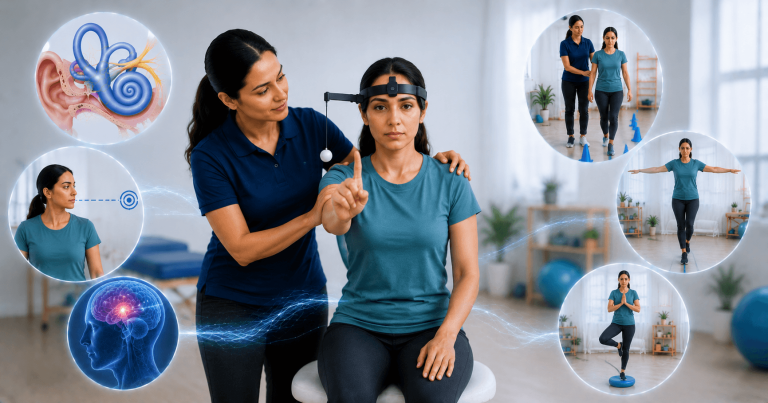
How Vestibular Physiotherapy Helps
Vestibular physiotherapy is not simply “exercise.” It is a structured rehabilitation process based on detailed clinical assessment, individualized treatment planning, and evidence-based care provided by experienced vestibular rehabilitation specialists to help patients improve balance, movement confidence, and daily function safely.
1. Detailed Clinical Assessment
At the first appointment, physiotherapists usually assess:
- Balance and gait
- Eye movement coordination
- Neck mobility
- Positional dizziness triggers
- Fall risk
- Walking confidence
- Functional movement limitations
- Neurological signs if present
This assessment helps determine whether symptoms are likely vestibular, musculoskeletal, neurological, or require referral to another specialist.
In some situations, patients may need evaluation by a neurologist, ENT specialist, or orthopedic doctor before continuing rehabilitation.
2. Identifying the Root Cause
Different causes require different treatment approaches.
For example:
- BPPV often responds to repositioning maneuvers
- Cervical dizziness may improve with neck treatment and posture correction
- Vestibular weakness may require gaze stabilization exercises
- Balance loss after stroke may require neurological rehabilitation
Evidence-based physiotherapy aims to address the underlying dysfunction instead of only masking symptoms temporarily.
The National Institutes of Health highlights that vestibular rehabilitation can improve balance, reduce dizziness, and support functional recovery in many patients.
3. Customized Vestibular Rehabilitation Exercises
Treatment plans may include:
Balance Training
Balance training focuses on helping people feel steadier and more confident during everyday movements like standing, walking, and turning. These exercises are carefully progressed based on individual ability to improve stability while reducing fear of falling.
Gaze Stabilization
Gaze stabilization exercises help the eyes and inner ear system work together more effectively during head movement. Many patients notice gradual improvement in visual focus, movement confidence, and dizziness during daily activities.
Habituation Exercises
Habituation exercises use gentle, repeated movement exposure to help the brain become less sensitive to dizziness triggers over time. The program is adjusted carefully so patients can progress safely without overwhelming symptoms.
Neck Mobility and Posture Correction
For people with neck stiffness or posture-related dizziness, treatment may include gentle mobility exercises and posture retraining. Improving neck movement and reducing muscular tension can help support better balance and daily comfort.
Walking and Functional Training
Walking and functional training help patients regain confidence with activities such as climbing stairs, walking outdoors, or moving on uneven surfaces. Exercises are designed to improve safety, coordination, and independence in real-life situations.
A Real Patient Scenario Commonly Seen at Varia Physiotherapy Clinic
A 52-year-old office professional from Ahmedabad visited the clinic after several months of dizziness while turning in bed and walking in crowded areas. He had already reduced outdoor activities because he feared falling. Initially, even quick head movements triggered imbalance. Clinical assessment suggested positional vertigo combined with neck stiffness from prolonged desk work.
Treatment included:
- Vestibular repositioning maneuvers
- Gentle neck mobility exercises
- Balance retraining
- Posture correction
- Home-based movement guidance
Within a few weeks, daily dizziness episodes reduced noticeably. Recovery was gradual rather than immediate, but the patient regained confidence walking independently and returned to regular work routines more comfortably.
Experiences like this highlight why individualized rehabilitation matters. Every patient responds differently depending on age, diagnosis, general health, and symptom duration.
Myths vs Facts About Vestibular Rehabilitation
Myth | Fact |
Dizziness is always a normal part of aging | Persistent dizziness should always be properly evaluated |
Complete bed rest helps balance disorders | Too much inactivity may worsen instability |
Balance exercises are unsafe | Properly supervised exercises are generally safe and progressive |
Surgery is always necessary | Many vestibular conditions improve with physiotherapy |
Symptoms should disappear instantly | Recovery often happens gradually over weeks or months |
Neck pain cannot affect dizziness | Cervical dysfunction can contribute to balance problems |
When Should You See an Expert Vestibular Physiotherapist In Ahmedabad?
You should consider professional assessment if you experience:
- Recurrent dizziness
- Vertigo while changing positions
- Frequent imbalance
- Falls or fear of falling
- Difficulty walking confidently
- Dizziness after viral illness
- Motion sensitivity
- Neck pain with balance issues
- Persistent unsteadiness despite medication
Early intervention may help prevent worsening movement avoidance and long-term balance decline.
However, some symptoms require urgent medical attention first, including:
- Sudden weakness
- Slurred speech
- Facial drooping
- Severe unexplained headache
- Sudden hearing loss
- Loss of consciousness
These symptoms may indicate neurological or medical emergencies and should be evaluated immediately.
Recovery Timelines: What Patients Should Realistically Expect
One of the most important parts of ethical physiotherapy care is setting realistic expectations. Some patients with BPPV improve quickly after repositioning treatment. Others with chronic vestibular dysfunction, neurological conditions, or longstanding balance issues may require several weeks or months of rehabilitation.
Recovery depends on:
- Diagnosis
- Age
- Severity of symptoms
- General fitness
- Fear of movement
- Consistency with exercises
- Associated neck or neurological involvement
Progress is usually gradual and functional. Patients often first notice:
- Improved confidence walking
- Reduced fear of movement
- Better balance during daily tasks
- Less dizziness during position changes
- Improved stamina and mobility
Helpful Lifestyle Strategies During Recovery
Patients are often encouraged to:
- Stay gently active
- Avoid prolonged bed rest unless medically advised
- Maintain hydration
- Improve sleep routines
- Reduce prolonged screen posture
- Follow prescribed home exercises consistently
- Use proper footwear for balance support
Small consistent improvements are often more sustainable than pushing too aggressively.
Related Physiotherapy Services
Patients dealing with vestibular dysfunction may also benefit from related rehabilitation approaches available at Varia Physiotherapy Clinic:
- Neurological Physiotherapy
- Balance Training Rehabilitation
- Post-Stroke Physiotherapy
- Cervical Pain Physiotherapy
- Geriatric Rehabilitation
- Postural Correction Therapy
Conclusion
Living with dizziness or balance problems can feel physically exhausting and emotionally frustrating. Many adults silently reduce activities, social outings, and movement because they fear symptoms becoming worse.
Working with an Expert Vestibular Physiotherapist In Ahmedabad can help patients better understand their condition, improve movement confidence, and gradually regain stability through evidence-based rehabilitation.
At Varia Physiotherapy Clinic, the focus remains on careful assessment, personalized treatment planning, realistic recovery expectations, and compassionate patient-centered care.
If dizziness, imbalance, or movement-related discomfort is affecting your daily life, seeking timely professional guidance may help you move more confidently and safely again.
Book a Professional Assessment
If you’re unsure whether your symptoms need attention, it’s okay to start with a simple consultation. Understanding your condition is the first step toward recovery—no pressure, just guidance.
If you’d like to speak with a physiotherapist or book an assessment at Varia Physiotherapy Clinic, you can reach out here:
 Call: +91 95123 79555
 Email: hello.drhetalvaria@gmail.com
 Website: www.variaphysiotherapyclinic.com
Our team is here to listen, assess, and guide you toward safe and effective recovery.
Vestibular Physiotherapist In Ahmedabad - FAQs
Can physiotherapy really help vertigo?
How many sessions are usually needed?
Is vestibular physiotherapy safe for older adults?
Can neck problems cause dizziness?
Should I stop walking if I feel dizzy?
About the Author

Dr. Hetal M Varia
After a rich experience of working in US healthcare as manager and licensed physiotherapist in US for last 11 years, she has returned home with a vision to become pioneer of Vestibular Therapy and specialized Parkinson physiotherapy in Ahmedabad. With her special skills and expertise in vertigo, Parkinson, balance and movement disorders therapy, Dr. Varia is committed to provide US standards of therapy services , compassionate and patient centered care to our people and community. With a vision of the world where everyone walks strong & steady, she intends to empower individuals with vestibular and neurological disorders through specialized care, rehabilitation & innovative therapies to improve mobility, balance & overall quality of life!