
Dizziness And Balance Problems Treatment In Ahmedabad:Quick Relief Guide
Feeling dizzy or unsteady can be unsettling. Many people describe it as “the room spinning,” “losing balance while walking,” or a sudden sense of lightheadedness. If this sounds familiar, you’re not alone. At Varia Physiotherapy Clinic in Ahmedabad, we frequently meet patients who are unsure whether their symptoms are serious or just temporary.
This guide focuses on dizziness and balance problems treatment in Ahmedabad, helping you understand what’s happening in your body—and more importantly—what you can do about it.
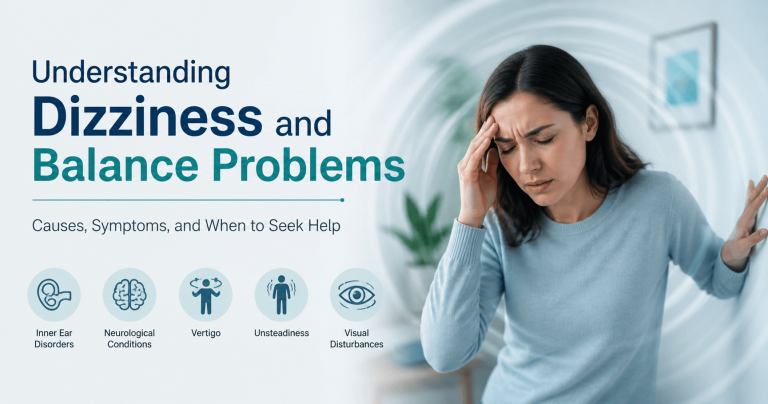
Understanding Dizziness and Balance Problems
Dizziness is not a disease—it’s a symptom. It can arise from multiple systems in your body working together: the inner ear, brain, eyes, and muscles.
Patients often describe:
- Spinning sensation (vertigo)
- Feeling off-balance while walking
- Sudden lightheadedness
- Difficulty focusing or coordinating movements
According to the World Health Organization, balance disorders are increasingly common among adults over 40, especially those with sedentary lifestyles or underlying health conditions.

Common Causes of Dizziness
At our clinic, we see a wide variety of causes behind dizziness and imbalance. Here are the most common ones explained simply:
1. Inner Ear Disorders (Vestibular Issues)
The inner ear plays a key role in maintaining balance and spatial orientation. Conditions like BPPV and vestibular neuritis disrupt this system, leading to spinning sensations or vertigo. These symptoms are often triggered by head movements and can feel sudden and intense. Proper assessment helps identify the exact vestibular cause for targeted treatment.
Your inner ear controls balance. Conditions like:
- Benign Paroxysmal Positional Vertigo (BPPV)
- Vestibular neuritis
can cause spinning sensations when you move your head.
2. Cervical (Neck-Related) Dizziness
Cervical dizziness is commonly linked to poor posture, especially in people working long hours on screens. Stiff neck muscles and cervical spine issues can interfere with signals sent to the brain about body position. This mismatch can cause dizziness, headaches, and imbalance. Addressing posture and neck mobility is essential for recovery.
Very common for office workers in Ahmedabad. Poor posture, long screen hours, and cervical spondylosis can disrupt signals between the neck and brain.
Symptoms include:
- Neck stiffness
- Dizziness when turning the head
- Headaches
3. Neurological Conditions
Neurological disorders such as stroke or Parkinson’s disease can affect the brain’s ability to control balance and coordination. Patients may experience unsteadiness, difficulty walking, or frequent falls. These cases require proper medical diagnosis along with structured physiotherapy. Early intervention plays a key role in improving functional outcomes.
4. Age-Related Balance Decline
As we age, natural changes in muscle strength, joint flexibility, and reflexes can reduce balance efficiency. This increases the risk of falls and instability during daily activities. Many older adults also experience slower reaction times and reduced coordination. Regular balance training and strengthening exercises can help maintain independence.
5. Post-Injury or Post-Surgery Imbalance
After injuries, surgeries, or long periods of rest, the body may lose coordination and strength. This can lead to difficulty walking, standing, or maintaining balance. Rehabilitation focuses on restoring muscle control, joint stability, and confidence in movement. Evidence from the National Institutes of Health supports physiotherapy in improving balance and reducing fall risk..
Read More:- Physiotherapy For Balance Problems In Ahmedabad
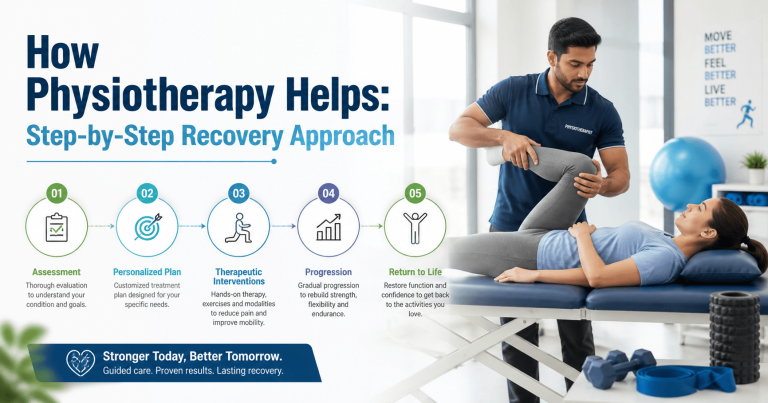
How Physiotherapy Helps: Step-by-Step Recovery Approach
When patients visit us for dizziness and balance problems treatment in Ahmedabad, we don’t just treat symptoms—we identify the root cause.
1. Detailed Assessment
We begin with:
- Posture analysis
- Balance and gait testing
- Vestibular function tests
- Neck mobility evaluation
This helps us understand whether your dizziness is vestibular, cervical, neurological, or mixed.
2. Personalized Treatment Plan
No two patients are the same. Based on findings, we create a structured plan:
Vestibular Rehabilitation Therapy (VRT)
- Eye-head coordination exercises
- Habituation exercises
- Balance retraining
These help your brain adapt and reduce dizziness.
Cervical Physiotherapy
- Neck mobility exercises
- Posture correction
- Manual therapy
Especially effective for desk workers.
Strength & Balance Training
- Core strengthening
- Proprioception exercises (body awareness)
- Walking and coordination drills
Advanced Modalities
- Dry needling (for muscle tightness)
- Electrotherapy for pain relief
Learn more about related care:
- Neck Pain Treatment
- Stroke Rehabilitation
- Dry Needling Therapy
Read More:- Physiotherapy For Balance Problems In Ahmedabad

Real Patient Experience from Our Clinic
A 48-year-old IT professional from SG Highway visited us with complaints of dizziness for 3 months. He had already undergone multiple tests, all of which were normal.
His symptoms:
- Dizziness while looking at screens
- Neck stiffness
- Occasional headaches
After assessment, we diagnosed cervical vertigo due to poor posture.
Treatment Plan:
- Posture correction training
- Deep neck muscle strengthening
- Ergonomic advice for workstation
- Gentle vestibular exercises
Outcome:
Within 3 weeks, dizziness episodes reduced by 70%.
By 6 weeks, he returned to work without discomfort.
This is a common pattern we see—when the root cause is addressed, recovery becomes much more effective.
Myth 1: “Dizziness is always a serious brain problem”
Fact: Many people immediately fear a neurological issue when they feel dizzy, but that’s not always the case. In reality, most dizziness is linked to inner ear or cervical (neck) problems. These are usually non-serious and treatable with proper care. A correct diagnosis helps avoid unnecessary fear and ensures the right treatment approach.
Myth 2: “Bed rest is the best solution”
Fact: While rest may help in the very initial phase, prolonged bed rest can actually delay recovery. The balance system needs gentle stimulation through movement to adapt and improve. Guided exercises help retrain the brain and body coordination. Physiotherapy focuses on safe, controlled activity for better outcomes.
Myth 3: “It will go away on its own”
Fact: Some mild dizziness may settle naturally, but many cases persist if left untreated. Ignoring symptoms can lead to increased imbalance or risk of falls over time. Early intervention helps identify the root cause and prevents complications. Timely physiotherapy can speed up recovery significantly.
Myth 4: “Only medicines can treat dizziness”
Fact: Medication may reduce symptoms temporarily, but it doesn’t always address the underlying cause. Physiotherapy, especially vestibular rehabilitation and posture correction, plays a crucial role in long-term recovery. It helps retrain balance systems and improve stability. Combining the right therapy with medical guidance gives the best results.
When Should You See a Physiotherapist?
Don’t ignore your symptoms if you experience:
- Frequent dizziness lasting more than a week
- Difficulty walking straight
- Falls or fear of falling
- Neck pain along with dizziness
- Dizziness triggered by head movement
When to See a Specialist
We may refer you to a neurologist or orthopedic doctor if:
- Symptoms are sudden and severe
- There is double vision or speech difficulty
- There is a history of stroke or neurological disease
At Varia Physiotherapy Clinic, we believe in collaborative care—not isolated treatment.
Recovery Timeline: What to Expect
Recovery depends on the cause:
- BPPV: Often improves within 1–2 sessions
- Cervical dizziness: 3–6 weeks with consistent therapy
- Neurological conditions: Longer-term rehabilitation
We focus on gradual, safe improvement—not quick fixes.
Conclusion:
Living with dizziness can disrupt your confidence, productivity, and even simple daily activities like walking or turning your head. The reassuring part is that most cases can be effectively managed when the root cause is properly identified. With the right combination of clinical assessment, targeted exercises, and guided rehabilitation, patients often experience steady and meaningful improvement.
If you’re searching for dizziness and balance problems treatment in Ahmedabad, physiotherapy provides a safe, evidence-based, and non-invasive path to recovery. At Varia Physiotherapy Clinic, the focus is on personalized care—helping you restore balance, move with confidence, and return to your normal routine without fear.
Ethical Call-to-Action
If you’re unsure whether your symptoms need attention, it’s okay to start with a simple consultation. Understanding your condition is the first step toward recovery—no pressure, just guidance.
If you’d like to speak with a physiotherapist or book an assessment at Varia Physiotherapy Clinic, you can reach out here:
 Call: +91 95123 79555
 Email: hello.drhetalvaria@gmail.com
 Website: www.variaphysiotherapyclinic.com
Our team is here to listen, assess, and guide you toward safe and effective recovery.
Dizziness and balance problems treatment in ahmedabad: FAQs
Physiotherapy, especially vestibular rehabilitation and cervical therapy, is highly effective depending on the cause.
Yes, cervical spine issues can disrupt balance signals and cause dizziness.
Not always, but sudden dizziness with weakness, speech issues, or vision problems needs immediate medical attention.
It varies—some patients improve in weeks, while others need longer rehabilitation.
Yes, when guided by a physiotherapist, they are safe and essential for recovery.
About the Author

Dr. Hetal M Varia
After a rich experience of working in US healthcare as manager and licensed physiotherapist in US for last 11 years, she has returned home with a vision to become pioneer of Vestibular Therapy and specialized Parkinson physiotherapy in Ahmedabad. With her special skills and expertise in vertigo, Parkinson, balance and movement disorders therapy, Dr. Varia is committed to provide US standards of therapy services , compassionate and patient centered care to our people and community. With a vision of the world where everyone walks strong & steady, she intends to empower individuals with vestibular and neurological disorders through specialized care, rehabilitation & innovative therapies to improve mobility, balance & overall quality of life!