
Physiotherapy For Balance Problems In Ahmedabad
Balance problems can slowly take over your daily life. It may begin with a slight feeling of dizziness, occasional unsteadiness, or hesitation while walking. Over time, these symptoms can lead to a deeper concern—fear of falling, avoiding social activities, or losing independence.
At Varia Physiotherapy Clinic in Ahmedabad, we regularly meet patients who say, “I feel fine sitting, but I don’t trust my balance when I walk.” If you relate to this, it’s important to understand that balance issues are not something you simply have to live with.
With the right care, Physiotherapy For Balance Problems In Ahmedabad can help you regain control, improve mobility, and restore confidence in your everyday movements.

Understanding Balance Problems: Why Do They Happen?
Balance is a complex function involving multiple systems in your body working together:
Vestibular System (Inner Ear)
This system helps you sense movement, direction, and changes in head position. When it’s not working properly, you may feel dizziness or a spinning sensation. With the right physiotherapy, your brain can learn to adapt and improve balance over time, and rehabilitation for balance problems in Ahmedabad plays an important role in restoring stability and confidence in daily activities.
Visual System (Eyes)
Your eyes guide your balance by helping you understand where you are in your surroundings. If visual input is unclear or mismatched with other systems, it can lead to unsteadiness. Strengthening coordination between your eyes and body can improve stability.
Proprioceptive System (Muscles & Joints)
This system allows you to feel where your body is without looking—like knowing your foot position while walking. Weak muscles or joint issues can reduce this awareness. With advanced rehabilitation services in Ahmedabad, targeted exercises can restore control and confidence in movement.
Central Nervous System (Brain)
Your brain processes signals from all balance systems and coordinates your movements. If this communication is disrupted, balance can be affected. Physiotherapy focuses on retraining these pathways to help your body respond more efficiently.
When any of these systems are affected, your ability to maintain stability can be compromised.
Common Causes of Balance Problems
In clinical practice at Varia Physiotherapy Clinic, we commonly see balance issues caused by:
- Vestibular disorders (like vertigo or inner ear dysfunction)
- Neurological conditions such as stroke or Parkinson’s disease
- Cervical spine problems (neck stiffness or spondylosis)
- Muscle weakness due to inactivity or aging
- Diabetic neuropathy affecting nerve function
- Post-surgical weakness or prolonged bed rest
Balance issues don’t always present as dizziness. Many patients report:
- Feeling unstable while walking
- Difficulty turning quickly
- Trouble walking on uneven surfaces
- Loss of confidence in crowded places
- Increased reliance on support (walls, railings)
Recognizing these early signs is key to preventing falls and long-term complications.
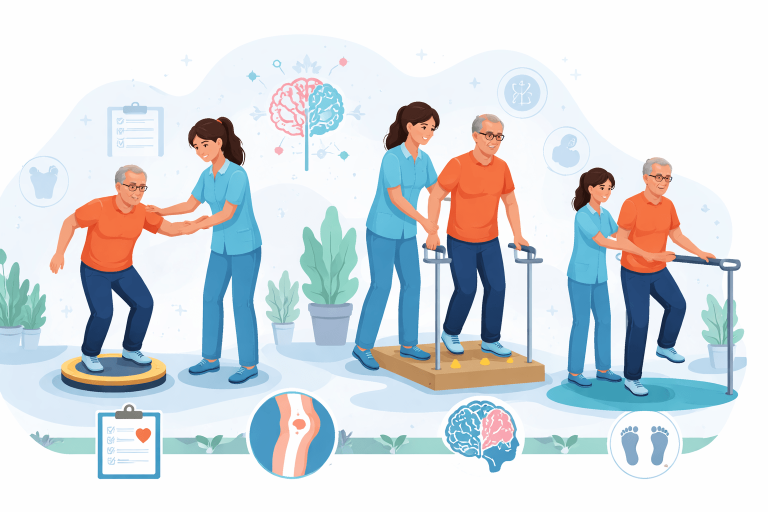
How Physiotherapy Helps: A Step-by-Step Approach
At Varia Physiotherapy Clinic, we believe in treating the root cause, not just the symptoms. That’s why every patient undergoes a structured and personalized treatment journey.
1. Detailed Clinical Assessment
Your recovery begins with understanding your condition thoroughly. Our physiotherapists assess:
- Walking pattern (gait analysis)
- Static and dynamic balance
- Muscle strength and joint mobility
- Vestibular function (if dizziness is present)
- Fall risk evaluation
This comprehensive evaluation allows us to identify the exact cause of imbalance and design a targeted treatment plan.
2. Personalized Treatment Plan
Based on your assessment, we design specialized balance rehabilitation programs that focus on improving stability, strength, and coordination for long-term recovery.
Vestibular Rehabilitation Therapy (VRT)
This is highly effective for patients experiencing dizziness or vertigo. These exercises help your brain adapt to inner ear dysfunction and reduce symptoms over time.
Balance Training Exercises
- Static balance (standing without support)
- Dynamic balance (walking, turning, shifting weight)
- Functional training (stairs, slopes, daily activities)
Strength Training
Weak muscles—especially in the legs and core—are a major contributor to instability. Strengthening these muscles improves overall control.
Gait Training
Correcting walking patterns reduces the risk of falls and improves efficiency in movement.
Proprioception Training
These exercises enhance your body’s awareness, helping you respond better to sudden movements or uneven surfaces.
3. Continuous Monitoring & Progression
Recovery is not instant—it requires consistent effort. We monitor your progress regularly and adjust exercises to match your improving capacity.
This ensures:
- Safe progression
- Reduced risk of setbacks
- Faster and sustainable recovery

Real Patient Experience From Varia Physiotherapy Clinic
A 48-year-old school teacher came to our clinic with complaints of imbalance for over three months. She described a “pulling sensation” while walking and avoided stepping out alone due to fear of falling.
Her condition worsened when:
- Walking on uneven roads
- Turning quickly
- Climbing stairs
After a detailed assessment, we identified mild vestibular dysfunction combined with lower limb weakness.
Treatment Plan:
- Vestibular exercises (gaze stabilization, head movement training)
- Strength training for lower limbs
- Balance exercises on stable and unstable surfaces
Outcome:
- Within 3 weeks: Reduced dizziness and improved walking confidence
- By 6 weeks: Able to walk independently outdoors
- By 8–10 weeks: Returned to normal daily routine without fear
This case reflects what we often see—when treatment is started early and followed consistently, recovery is highly achievable.
Read More: Affordable Physiotherapy Clinic In Ahmedabad

The Science Behind Physiotherapy For Balance
Physiotherapy is not just about exercises—it’s based on scientific principles of neuroplasticity and muscle adaptation.
- The brain has the ability to retrain itself (neuroplasticity)
- Repeated movements help create new neural pathways
- Strengthening muscles improves joint stability and control
According to the World Health Organization, falls are one of the leading causes of injury among adults, and structured balance training significantly reduces this risk.
The National Institutes of Health also emphasizes vestibular rehabilitation and physical therapy as key treatments for balance disorders.

Myths vs Facts About Balance Problems
Myth 1: Balance problems are a normal part of aging
Fact: While aging affects stability, most balance issues are treatable with physiotherapy.
Myth 2: Rest will fix the problem
Fact: Avoiding movement can actually worsen balance and muscle weakness.
Myth 3: Medication is enough
Fact: Medicines may reduce symptoms, but they don’t address the underlying cause like physiotherapy does.
Myth 4: Exercise is unsafe if I feel unsteady
Fact: Guided physiotherapy exercises are safe and essential for recovery.
When Should You See a Physiotherapist?
Many patients delay treatment until a fall occurs. However, early intervention can prevent complications.
Myth 4: Exercise is unsafe if I feel unsteady
Examples, Data & Case Studies
You should consult a physiotherapist if you experience:
- Frequent dizziness or vertigo
- Difficulty maintaining balance while walking
- Feeling unstable on stairs or uneven surfaces
- Recent fall or near-fall incidents
- Neurological conditions affecting movement
When Specialist Referral Is Necessary
Physiotherapy plays a key role, but in some cases, a multidisciplinary approach is required. We may refer you to:
Neurologist
A neurologist specializes in conditions affecting the brain, spinal cord, and nerves. If your balance problem is linked to stroke, Parkinson’s disease, or nerve damage, they help diagnose the root cause and guide medical management alongside physiotherapy.
ENT Specialist (Ear, Nose & Throat Doctor)
An ENT specialist focuses on inner ear conditions that often cause dizziness or vertigo. They assess issues like vestibular disorders or infections and work with physiotherapists to ensure the right treatment approach.
Orthopedic Doctor
An orthopedic doctor treats problems related to bones, joints, and the spine. If your balance issues are due to cervical spondylosis, joint pain, or musculoskeletal limitations, they help identify structural causes and support your recovery plan. This ensures you receive comprehensive and safe care.
Realistic Recovery Timeline
Recovery depends on the cause, severity, and consistency of treatment.
- Mild conditions: 3–6 weeks
- Moderate imbalance: 6–10 weeks
- Neurological conditions: 2–4 months (or longer for maintenance)
It’s important to understand that recovery is gradual. Small improvements each week lead to long-term stability.

Practical Tips to Improve Balance at Home
While professional physiotherapy is essential, you can support your recovery with simple habits:
- Keep your home well-lit to avoid tripping
- Remove loose rugs or obstacles
- Wear supportive footwear
- Practice basic balance exercises (as advised by your physiotherapist)
- Stay physically active
Avoid self-prescribing exercises without guidance, as incorrect techniques may worsen symptoms.
Conclusion
Balance problems can feel limiting—but they don’t have to define your life. With expert guidance, structured therapy, and consistent effort, you can regain stability and confidence.
If you are experiencing symptoms, don’t ignore them. Early treatment leads to better outcomes and reduces the risk of serious falls.
Physiotherapy For Balance Problems In Ahmedabad offers a safe, evidence-based solution tailored to your needs.
At Varia Physiotherapy Clinic, our goal is not just to treat your condition—but to help you move freely, safely, and confidently again.
Physiotherapy For Balance Problems In Ahmedabad - FAQs
1. Can balance problems be completely cured?
2. Is physiotherapy safe for older adults?
3. Do I need medical tests before starting physiotherapy?
4. How often should I attend sessions?
5. Can I continue exercises at home?
About the Author

Dr. Hetal M Varia
After a rich experience of working in US healthcare as manager and licensed physiotherapist in US for last 11 years, she has returned home with a vision to become pioneer of Vestibular Therapy and specialized Parkinson physiotherapy in Ahmedabad. With her special skills and expertise in vertigo, Parkinson, balance and movement disorders therapy, Dr. Varia is committed to provide US standards of therapy services , compassionate and patient centered care to our people and community. With a vision of the world where everyone walks strong & steady, she intends to empower individuals with vestibular and neurological disorders through specialized care, rehabilitation & innovative therapies to improve mobility, balance & overall quality of life!