
Can Vestibular Physiotherapy Improve Blurred Vision During Movement?
Many people assume blurred vision only happens because of eye problems. However, at Varia Physiotherapy Clinic in Ahmedabad, we often meet adults who describe something very different. They say:
- “My vision becomes shaky when I walk.”
- “I feel dizzy while turning my head.”
- “I cannot focus properly while moving.”
- “Crowded roads and supermarkets make me uncomfortable.”
For many adults between 30 and 65 years of age, these symptoms are not simply eye-related. They may be connected to the vestibular system — the body’s balance system located in the inner ear and brain.
When this system is affected, it can create blurred vision, dizziness, vertigo, oscillopsia, walking imbalance, and movement-triggered dizziness. Everyday activities such as driving, climbing stairs, shopping in busy places, or even turning the head quickly may become stressful.
The good news is that vestibular physiotherapy and evidence-based vestibular rehabilitation can often help improve visual stability, balance confidence, and functional mobility over time.
At Varia Physiotherapy Clinic, our physiotherapists carefully assess movement-related symptoms and create individualized treatment plans focused on safe vestibular recovery rather than temporary symptom masking.

Understanding Why Blurred Vision Happens During Movement
The human body depends on close coordination between the eyes, brain, muscles, joints, and vestibular system to maintain equilibrium and spatial orientation.
A healthy vestibulo-ocular reflex (VOR) helps keep vision stable whenever the head moves. For example, when you walk or turn your head, your eyes automatically stabilize images so the world does not appear shaky.
However, when there is vestibular hypofunction, inner ear dysfunction, vestibular migraine, post-concussion dizziness, or another sensory balance disorder, this coordination becomes disrupted.
This may lead to:
Blurred Vision During Walking
Some people notice that their surroundings appear shaky or unclear while walking, especially in busy environments or during quick movements. This can happen when the balance and visual systems are not coordinating properly.
Focus Instability
Focus instability may make it difficult to keep objects visually clear when moving the head or changing positions. Patients often describe feeling visually uncomfortable while reading signs, driving, or walking outdoors.
Head-Turn Dizziness
Turning the head quickly may trigger dizziness, imbalance, or a brief sensation of disorientation. This symptom is commonly associated with vestibular system dysfunction and should be properly assessed by a healthcare professional.
Motion Sensitivity
People with motion sensitivity may feel uncomfortable or dizzy in crowded places, moving traffic, elevators, or while scrolling on screens. These symptoms can affect confidence during everyday activities.
Dynamic Vision Problems
Dynamic vision problems occur when vision becomes less stable during body or head movement. Patients may struggle to maintain clear visual focus while walking, exercising, or changing direction.
Disequilibrium
Disequilibrium refers to a feeling of unsteadiness or poor balance without the spinning sensation of vertigo. Many adults describe it as feeling “off balance” while standing or walking.
Visual Dizziness
Visual dizziness can happen when the brain becomes overwhelmed by moving visual environments such as supermarkets, traffic, or crowded streets. This may lead to discomfort, imbalance, or difficulty concentrating.
Motion Intolerance
Motion intolerance causes symptoms like nausea, dizziness, or discomfort during movement-related activities. Even simple actions like traveling in a car or turning quickly may become difficult for some individuals.
Stability During Walking Difficulties
Some patients experience reduced confidence and control while walking, especially on uneven surfaces or in busy areas. Physiotherapy assessment can help identify balance and movement coordination issues contributing to instability.
Some people also experience visual motion sensitivity in crowded areas where there is excessive movement around them.
These symptoms can gradually reduce independence and affect work, travel, exercise, and confidence in daily life.
According to the World Health Organization, balance-related conditions and neurological impairments can significantly affect mobility and quality of life. The National Institutes of Health also highlights the importance of vestibular rehabilitation in improving balance dysfunction and movement coordination.
Can Vestibular Physiotherapy Improve Blurred Vision During Movement?
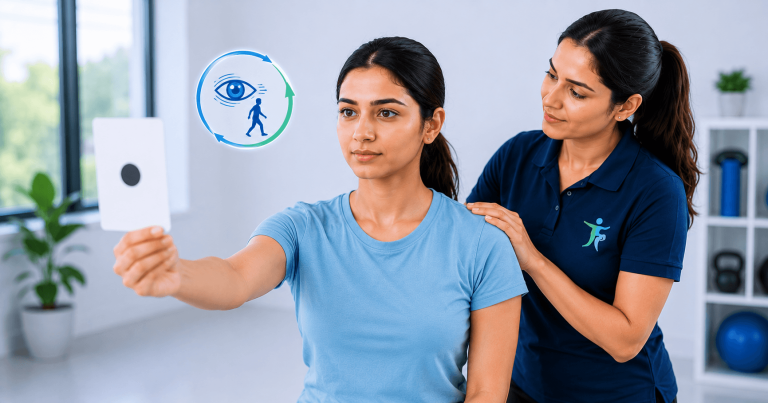
In many cases, yes — vestibular physiotherapy can help improve blurred vision related to movement-induced vision problems.
However, recovery depends on the underlying condition, symptom severity, duration, neurological involvement, and patient consistency with rehabilitation exercises.
Vestibular physiotherapy focuses on retraining how the brain processes signals from the eyes, inner ear balance system, muscles, and joints.
At Varia Physiotherapy Clinic, treatment is never “one exercise for everyone.” A detailed clinical assessment helps identify:
- Gaze stability deficits
- Eye-head coordination problems
- Vestibular adaptation limitations
- Postural control impairments
- Balance dysfunction
- Dynamic balance deficits
- Visual dependence
- Proprioception challenges
- Sensory integration difficulties
This helps create a personalized vestibular care program.

How Vestibular Rehabilitation Helps Step by Step
1. Detailed Physiotherapy Assessment
The first step involves understanding the patient’s symptoms, triggers, medical history, and movement patterns.
Our physiotherapists may assess:
- Visual tracking
- Eye movement control
- Vestibulo-ocular reflex function
- Walking balance
- Head motion tolerance
- Dynamic vision
- Neurological balance
- Functional mobility
- Balance retraining needs
If symptoms suggest serious neurological or orthopedic causes, referral to a neurologist, ENT specialist, or orthopedic doctor may be recommended.
2. Gaze Stabilization Therapy
Many patients benefit from vestibular physiotherapy for blurred vision combined with gaze stabilization and balance retraining exercises.
Common vestibular therapy exercises include:
- VOR exercises
- Head motion exercises
- Eye-head coordination drills
- Visual fixation activities
- Dynamic balance training
Patients initially perform these movements slowly and safely before progressing to more complex activities. Over time, the brain develops vestibular compensation, helping reduce blurred vision and dizziness rehabilitation symptoms.
3. Balance Therapy and Movement Retraining
Many patients with vestibular disorder symptoms also develop fear of movement due to instability.
Balance therapy may include:
- Stability during walking training
- Postural control exercises
- Movement coordination drills
- Sensory integration retraining
- Proprioception exercises
- Functional mobility practice
This improves confidence while walking, turning, bending, and navigating busy environments.
4. Gradual Vestibular Recovery
Vestibular recovery usually happens progressively rather than overnight. Some patients notice improvement within 3–6 weeks, while others with chronic dizziness or vestibular migraine may require longer rehabilitation.Consistency matters more than intensity.
At Varia Physiotherapy Clinic, we educate patients about realistic expectations and safe recovery timelines instead of promising “instant cures.”
A Real Patient Scenario Seen at Varia Physiotherapy Clinic
A 48-year-old office professional from Ahmedabad visited our clinic complaining of blurred vision while walking and difficulty focusing while crossing busy roads.
He initially believed he needed new glasses. However, his symptoms mainly appeared during movement, especially when turning his head quickly.
He also experienced:
- Motion-triggered dizziness
- Head movement intolerance
- Walking imbalance
- Visual-vestibular interaction difficulties
- Mild vertigo in crowded spaces
After assessment, our physiotherapy team identified vestibular hypofunction affecting gaze stability and dynamic balance.
His treatment plan included:
- Gaze stabilization therapy
- VOR exercises
- Vestibular adaptation exercises
- Balance retraining
- Visual motion sensitivity management
- Gradual walking progression
Within several weeks, he reported improved balance confidence and reduced blurred vision while moving. Although occasional symptoms remained during fatigue or stress, he regained confidence in driving, walking outdoors, and working comfortably.
Myths vs Facts About Vestibular Physiotherapy
Myth: Blurred vision during movement is always an eye problem.
Fact: Sometimes the issue is related to the vestibular system and eye-head coordination rather than eyesight itself.
Myth: Dizziness will disappear with bed rest alone.
Fact: Long-term inactivity may worsen balance dysfunction and vestibular compensation.
Myth: Vestibular rehabilitation is only for elderly patients.
Fact: Adults of all ages can experience vestibular disorder symptoms after infections, migraines, injuries, or neurological conditions.
Myth: Recovery is immediate.
Fact: Vestibular recovery is usually gradual and requires consistent rehabilitation exercises.
Myth: Every dizzy patient has vertigo.
Fact: Some patients experience disequilibrium, visual dizziness, or motion sensitivity without spinning sensations.
When Should You See a Physiotherapist?
Consider seeking physiotherapy assessment if you experience:
- Blurred vision during walking
- Dizziness while turning your head
- Motion intolerance in busy environments
- Frequent balance problems
- Head-turn dizziness
- Chronic dizziness
- Instability during movement
- Post-concussion dizziness
- Difficulty with spatial orientation
- Reduced balance confidence
Early assessment may help prevent worsening movement-related symptoms and improve daily functioning safely.
Conclusion
For many adults struggling with blurred vision, dizziness, or instability during movement, vestibular physiotherapy may offer meaningful improvement.
Through evidence-based vestibular rehabilitation, gaze stabilization therapy, balance retraining, and individualized treatment planning, patients can often improve visual stability, equilibrium, movement coordination, and confidence in daily life.
At Varia Physiotherapy Clinic in Ahmedabad, we focus on understanding the real cause behind symptoms rather than simply treating discomfort temporarily.
If movement-related blurred vision is affecting your work, travel, walking, or quality of life, a professional physiotherapy assessment may help identify whether the vestibular system is contributing to your symptoms.
Recovery takes patience, consistency, and the right guidance — but many patients can safely return to more comfortable and confident movement with proper care.
Book a Professional Assessment
If you’re unsure whether your symptoms need attention, it’s okay to start with a simple consultation. Understanding your condition is the first step toward recovery—no pressure, just guidance.
If you’d like to speak with a physiotherapist or book an assessment at Varia Physiotherapy Clinic, you can reach out here:
 Call: +91 95123 79555
 Email: hello.drhetalvaria@gmail.com
 Website: www.variaphysiotherapyclinic.com
Our team is here to listen, assess, and guide you toward safe and effective recovery.
Can Vestibular Physiotherapy Improve Blurred Vision During Movement - FAQs
1. Can vestibular physiotherapy really help blurred vision?
2. How long does vestibular rehabilitation take?
3. Are VOR exercises safe?
4. Can vestibular migraine cause blurred vision during movement?
5. Do I need imaging scans before physiotherapy?
About the Author

Dr. Hetal M Varia
After a rich experience of working in US healthcare as manager and licensed physiotherapist in US for last 11 years, she has returned home with a vision to become pioneer of Vestibular Therapy and specialized Parkinson physiotherapy in Ahmedabad. With her special skills and expertise in vertigo, Parkinson, balance and movement disorders therapy, Dr. Varia is committed to provide US standards of therapy services , compassionate and patient centered care to our people and community. With a vision of the world where everyone walks strong & steady, she intends to empower individuals with vestibular and neurological disorders through specialized care, rehabilitation & innovative therapies to improve mobility, balance & overall quality of life!