
Best Vestibular Rehabilitation Eye Exercises To Improve Balance Naturally
Feeling dizzy while walking, turning your head, getting out of bed, or moving through crowded places can be frustrating and frightening. Many adults between the ages of 30 and 65 experience episodes of chronic dizziness, imbalance, motion sensitivity, or a spinning sensation that affects work, travel, sleep, and confidence in daily life.
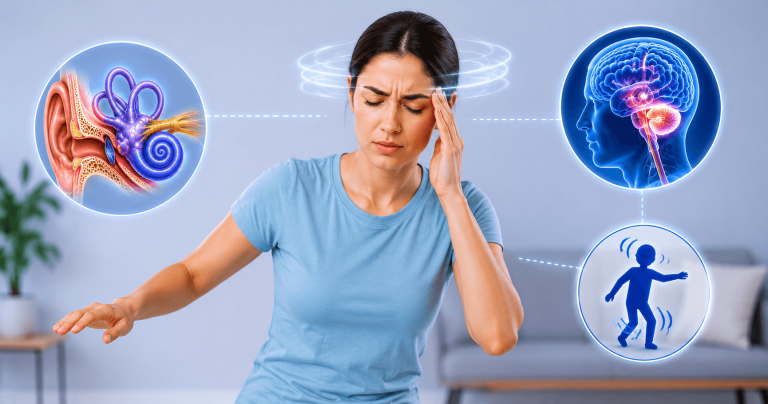
At Varia Physiotherapy Clinic in Ahmedabad, patients often describe feeling “unstable,” “foggy,” or afraid of falling during routine activities. Some avoid driving, climbing stairs, or walking in busy markets because of unsteady walking or poor body control. In many cases, these symptoms are linked to vestibular dysfunction — a problem involving the inner ear balance system and how the brain processes movement.
One of the most effective evidence-based approaches for natural balance recovery is vestibular rehabilitation combined with targeted eye movement exercises. These exercises help retrain the brain, improve visual stabilization, and restore confidence during movement.
This article explains the Best Vestibular Rehabilitation Eye Exercises To Improve Balance Naturally, how they work, who may benefit from them, and what patients can realistically expect during recovery.
Understanding Vestibular Dysfunction And Why Balance Problems Happen
The vestibular system inside the inner ear balance mechanism helps your brain understand head position, movement, and spatial orientation. It works closely with the eyes, muscles, and joints to maintain postural stability and dynamic balance.
When this system becomes disrupted, the brain may receive incorrect movement signals, leading to:
- Chronic dizziness
- Vertigo or spinning sensation
- Motion sensitivity
- Blurred vision during movement
- Poor balance improvement
- Difficulty walking confidently
- Headache-related dizziness
- Fear of falling
Common causes include:
- Vestibular migraine
- Viral inner ear infections
- Age-related balance decline
- Neck-related dizziness
- Benign positional vertigo
- Concussion-related vestibular balance disorder
- Neurological or musculoskeletal conditions affecting coordination
According to the World Health Organization, balance-related conditions significantly affect mobility and fall prevention, especially in adults over 40.
The National Institutes of Health also supports vestibular rehab therapy as an evidence-based approach for dizziness treatment and vestibular recovery.
How Vestibular Rehabilitation Helps Improve Balance Naturally
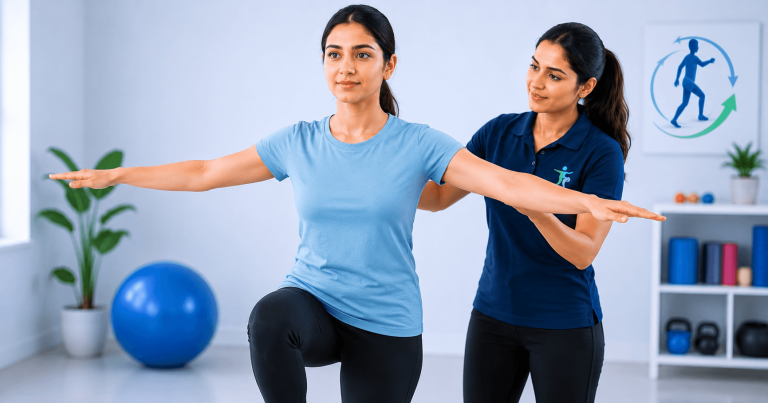
Vestibular physiotherapy is a specialized treatment approach that includes vestibular exercises for balance improvement to retrain the nervous system safely.
The goal is not simply symptom control. Instead, vestibular rehabilitation aims to improve:
- Eye-head coordination
- Sensory balance
- Vestibular reflex training
- Visual vestibular therapy adaptation
- Body balance exercises performance
- Balance correction during movement
- Confidence during daily activities
At Varia Physiotherapy Clinic, physiotherapists perform detailed clinical assessments that may include:
- Eye tracking evaluation
- Balance and gait assessment
- Cervical spine examination
- Motion sensitivity testing
- Vestibulo-ocular reflex testing
- Functional movement analysis
Treatment plans are individualized because every patient’s vestibular dysfunction presents differently.
Best Vestibular Rehabilitation Eye Exercises To Improve Balance Naturally
1. Gaze Stabilization Exercises
Gaze stabilization is one of the most important components of vestibular exercises. These exercises help improve visual focus while the head is moving. Patients with vestibular dysfunction often struggle to keep vision steady during movement. This happens because the vestibular reflex system becomes less efficient.
- Protecting healing tissue in early stages
- Restoring joint movement safely
- Re-educating muscles that protect the joint
- Preventing long-term instability and repeat injury
- Guiding a safe return to work, sport, or daily activity
Common Gaze Stabilization Exercises
- Looking at a fixed target while moving the head side to side
- Looking at a target while moving the head up and down
- Maintaining visual focus during walking
- Tracking moving objects slowly with the eyes
These visual focus exercises gradually improve visual stabilization and eye-head coordination.
2. VOR Exercises For Vestibular Recovery
The vestibulo-ocular reflex is a natural balance mechanism that helps keep vision clear and steady while the head moves during activities like walking, turning, or driving. When this reflex becomes weak due to vestibular dysfunction, people may experience dizziness, blurred vision, or unsteady walking.
Equilibrium training and balance retraining are important parts of vestibular rehabilitation that help the brain and body work together more efficiently. Through guided physiotherapy exercises, patients gradually improve postural stability, coordination, movement confidence, and overall balance during daily activities.
VOR X1 Exercises
VOR X1 exercises help improve gaze stabilization by training the eyes to stay focused on a stationary target while the head moves slowly side to side or up and down. These exercises are commonly used in vestibular rehabilitation to reduce dizziness, improve visual stability, and support safer daily movement activities like walking or turning the head.
VOR X2 Exercises
VOR X2 exercises are a more advanced form of vestibular therapy where both the head and the visual target move in opposite directions at the same time. This exercise helps strengthen eye-head coordination, improve balance during movement, and reduce motion sensitivity in patients experiencing chronic dizziness or vestibular dysfunction.
These VOR exercises help:
- Improve dizziness relief
- Enhance dynamic balance
- Reduce motion sensitivity
- Improve walking confidence
- Strengthen vestibular recovery mechanisms
Initially, mild symptoms during exercises are normal, but the intensity is carefully controlled by the physiotherapist.
3. Eye Movement Exercises For Coordination
Eye movement exercises are commonly used to improve coordination exercises and visual processing.
Examples include:
- Smooth pursuit tracking
- Saccadic eye training
- Diagonal visual tracking
- Reading stabilization exercises
These exercises are especially useful for patients experiencing:
- Blurred vision while walking
- Difficulty focusing
- Vestibular migraine symptoms
- Screen-related dizziness
- Sensory balance disturbances
4. Balance Therapy And Postural Stability Training
Balance therapy focuses on restoring confidence during standing and walking activities.
Treatment may include:
- Single-leg balance tasks
- Walking with head movement exercises
- Foam surface balance correction drills
- Dynamic balance training
- Fall prevention strategies
These rehabilitation exercises help patients safely improve postural stability and body control.
5. BPPV Exercises For Positional Vertigo
Some patients suffer from dizziness caused by tiny crystals inside the inner ear. This condition is called Benign Paroxysmal Positional Vertigo. Specialized BPPV exercises such as repositioning maneuvers may help reduce vertigo symptoms. However, these techniques should only be performed after proper clinical assessment because not all dizziness is positional vertigo.
A Real Patient Scenario Seen At Varia Physiotherapy Clinic
A 48-year-old businessman from Ahmedabad visited Varia Physiotherapy Clinic after struggling with dizziness for almost four months. He experienced imbalance while walking in crowded areas, discomfort while driving, and fear during sudden head turns.
Medical scans showed no major neurological issue, but clinical assessment revealed vestibular dysfunction combined with neck stiffness and reduced gaze stabilization ability.
His treatment plan included:
- Vestibular rehabilitation
- VOR exercises
- Head movement exercises
- Postural stability training
- Cervical mobility therapy
- Visual vestibular therapy
- Home balance retraining exercises
Within three weeks, he reported improved confidence during walking and reduced spinning sensation. By the eighth week, his motion sensitivity had significantly improved, although occasional symptoms still occurred during fatigue or stress.
This type of gradual progress is common. Vestibular recovery usually takes time and consistency rather than quick fixes.
Myths Vs Facts About Vestibular Physiotherapy
Myth | Fact |
“Dizziness always means a serious brain problem.” | Many cases are related to vestibular balance disorder or musculoskeletal dysfunction. |
“Rest is the best treatment.” | Long-term inactivity may worsen balance issues and delay recovery. |
“Eye exercises are only for vision problems.” | Vestibular eye exercises help retrain balance and movement control. |
“Recovery should happen in a few days.” | Vestibular rehab therapy often requires several weeks depending on severity. |
“All vertigo is the same.” | Different conditions require different physiotherapy approaches and assessments. |
When To See A Physiotherapist For Dizziness
You should consider physiotherapy for dizziness if you experience:
- Recurrent balance issues
- Chronic dizziness lasting weeks
- Fear of falling
- Difficulty walking confidently
- Motion sensitivity in traffic or crowds
- Spinning sensation during head movement
- Neck pain associated with dizziness
- Poor balance after viral illness or injury
Immediate medical referral to a neurologist or orthopedic specialist may be necessary if symptoms include:
- Sudden weakness
- Speech difficulty
- Loss of consciousness
- Severe headaches
- Double vision
- Progressive neurological symptoms
At Varia Physiotherapy Clinic, physiotherapists work collaboratively with medical specialists whenever needed to ensure safe and appropriate care.
Conclusion
The Best Vestibular Rehabilitation Eye Exercises To Improve Balance Naturally are not simply about moving the eyes or practicing random balance drills. They are part of a structured, evidence-based approach designed to improve gaze stabilization, vestibular reflex training, postural stability, and confidence during movement.
For adults struggling with chronic dizziness, vestibular migraine symptoms, imbalance, or motion sensitivity, vestibular physiotherapy can provide a safe and personalized path toward recovery. While improvement takes time and consistency, many patients experience meaningful progress in walking confidence, balance improvement, and daily function through guided vestibular rehab therapy.
If dizziness, imbalance, or visual instability is affecting your quality of life, seeking professional assessment early may help prevent worsening symptoms and reduce long-term limitations.
Book a Professional Assessment
If you’re unsure whether your symptoms need attention, it’s okay to start with a simple consultation. Understanding your condition is the first step toward recovery—no pressure, just guidance.
If you’d like to speak with a physiotherapist or book an assessment at Varia Physiotherapy Clinic, you can reach out here:
 Call: +91 95123 79555
 Email: hello.drhetalvaria@gmail.com
 Website: www.variaphysiotherapyclinic.com
Our team is here to listen, assess, and guide you toward safe and effective recovery.
Vestibular Rehabilitation Eye Exercises - FAQs
Can vestibular rehabilitation really improve balance naturally?
How long does vestibular recovery take?
Are vestibular exercises safe to do at home?
What is the difference between vertigo and vestibular dysfunction?
Can neck pain cause dizziness?
About the Author

Dr. Hetal M Varia
After a rich experience of working in US healthcare as manager and licensed physiotherapist in US for last 11 years, she has returned home with a vision to become pioneer of Vestibular Therapy and specialized Parkinson physiotherapy in Ahmedabad. With her special skills and expertise in vertigo, Parkinson, balance and movement disorders therapy, Dr. Varia is committed to provide US standards of therapy services , compassionate and patient centered care to our people and community. With a vision of the world where everyone walks strong & steady, she intends to empower individuals with vestibular and neurological disorders through specialized care, rehabilitation & innovative therapies to improve mobility, balance & overall quality of life!