
Goal-Oriented Spinal Cord Rehabilitation For Recovery
Recovering from a spinal cord injury is one of the most challenging journeys a person can experience. Simple daily activities such as sitting up, standing, walking, or even holding objects may suddenly become difficult. The emotional impact can be just as overwhelming as the physical changes. However, recovery is not about waiting for improvement—it is about following a structured rehabilitation plan with realistic goals, expert guidance, and consistent effort.
At Varia Physiotherapy Clinic, Ahmedabad, we have worked with many individuals recovering from spinal cord injuries, neurological conditions, and mobility disorders. While every patient’s journey is unique, one principle remains constant: meaningful recovery happens when rehabilitation focuses on clear, measurable goals rather than simply completing exercises.
Goal-Oriented Spinal Cord Rehabilitation For Recovery emphasizes personalized treatment plans that help patients regain independence step by step. Instead of chasing unrealistic expectations, this approach focuses on improving the movements and activities that matter most in daily life.
Understanding Spinal Cord Injury
The spinal cord acts as the body’s communication highway, carrying messages between the brain and the rest of the body. When it becomes injured, these signals may be disrupted partially or completely.
Depending on the severity and location of the injury, a person may experience:
- Weakness or paralysis
- Loss of sensation
- Difficulty maintaining balance
- Poor coordination
- Muscle stiffness (spasticity)
- Problems with bladder or bowel control
- Reduced endurance
- Difficulty performing daily activities
According to the World Health Organization (WHO), spinal cord injuries affect hundreds of thousands of people globally each year, with road traffic accidents, falls, sports injuries, and workplace trauma being common causes.
Recovery varies greatly between individuals, making personalized rehabilitation essential.
Why Goal-Oriented Spinal Cord Rehabilitation For Recovery Matters
Traditional rehabilitation often focuses on completing exercises without connecting them to everyday activities. Goal-oriented rehabilitation takes a different approach.
Instead of saying:
“Let’s strengthen your legs.”
The therapist asks:
“What activities do you want to return to?”
For example:
- Walking independently
- Climbing stairs safely
- Returning to work
- Driving again
- Getting in and out of bed
- Playing with grandchildren
- Cooking meals independently
Every exercise is selected because it helps achieve these meaningful goals. This keeps patients motivated while allowing therapists to objectively measure progress throughout recovery.
Common Causes of Spinal Cord Injury
Several conditions may require spinal cord rehabilitation:
Road Traffic Accidents
Road traffic accidents are one of the most common causes of spinal cord injuries and can affect mobility, strength, and sensation. Early medical care followed by structured rehabilitation can help improve function and support long-term recovery.
Falls
Falls, especially among older adults or people working at heights, can cause serious spinal injuries. Prompt assessment and physiotherapy help restore balance, mobility, and confidence while reducing the risk of future falls.
Sports Injuries
High-impact sports or improper landing during physical activities can sometimes injure the spinal cord or surrounding structures. Early diagnosis and individualized rehabilitation are important for a safe and gradual return to daily activities or sports.
Degenerative Spine Disorders
Age-related changes such as spinal stenosis or disc degeneration may place pressure on the spinal cord over time. Early physiotherapy can help improve mobility, reduce discomfort, and maintain independence in everyday life.
Tumors or Infections
Although less common, tumors or infections affecting the spine can interfere with normal spinal cord function. Medical evaluation is essential, and physiotherapy may play a key role in recovery after appropriate treatment.
Stroke and Neurological Disorders
Conditions such as stroke or other neurological disorders can cause weakness, poor coordination, and movement difficulties similar to those seen after spinal cord injuries. A personalized rehabilitation program helps improve functional abilities and supports greater independence over time.
Early physiotherapy significantly improves long-term functional outcomes regardless of the cause.
How Goal-Oriented Spinal Cord Rehabilitation For Recovery Works
Recovery begins with understanding the patient’s current abilities.
1. Comprehensive Clinical Assessment
Physiotherapists evaluate:
- Muscle strength
- Joint mobility
- Reflexes
- Balance
- Walking ability
- Functional independence
- Sensory changes
- Pain levels
- Posture
If symptoms suggest nerve compression, worsening weakness, or unexplained neurological changes, referral to an orthopedic spine specialist or neurologist may be recommended before continuing rehabilitation.
2. Setting Realistic Recovery Goals
Goals are divided into three stages.
Short-Term Goals
Examples include:
- Sitting without support
- Rolling in bed independently
- Reducing muscle stiffness
- Improving posture
Medium-Term Goals
Such as:
- Standing with assistance
- Walking using support
- Improving transfers
- Increasing endurance
Long-Term Goals
Including:
- Returning to work
- Community walking
- Independent daily activities
- Better quality of life
Goals are reviewed regularly and adjusted according to recovery.
3. Personalized Physiotherapy Treatment
Strength Training
Strength training focuses on improving muscle power, control, and endurance to support everyday movements. It helps reduce muscle weakness and makes daily activities like standing, walking, and transferring safer and easier.
Balance Rehabilitation
Balance rehabilitation uses targeted exercises to improve stability, coordination, and postural control. This helps reduce the risk of falls while increasing confidence during standing, walking, and other daily activities.
Gait Training
Gait training helps patients relearn safe and efficient walking patterns based on their individual abilities. Physiotherapists use evidence-based techniques and assistive devices when needed to improve mobility and independence.
Functional Mobility Training
Patients practice real-life activities including:
- Bed mobility
- Chair transfers
- Stair climbing
- Walking outdoors
Stretching
Regular stretching helps maintain joint flexibility, reduce muscle stiffness, and prevent contractures that may develop after a spinal cord injury. It also supports better posture and more comfortable movement during rehabilitation.
Neuromuscular Re-education
Neuromuscular re-education uses specific exercises to improve communication between the brain, spinal cord, and muscles. This evidence-based approach helps retrain movement patterns, coordination, and functional control over time.
Home Exercise Program
A personalized home exercise program allows patients to continue their rehabilitation safely between clinic visits. Consistent practice, guided by a physiotherapist, supports ongoing progress and helps maintain improvements achieved during therapy.
The Importance of Consistency
Recovery from spinal cord injury is rarely linear. Some weeks show remarkable improvement. Others feel frustratingly slow.
Consistent rehabilitation allows the nervous system to adapt over time. Research supported by the National Institutes of Health (NIH) highlights that repetitive, task-specific training promotes neuroplasticity—the brain and spinal cord’s ability to reorganize and develop new movement strategies after injury.
This is one reason why regular attendance and home exercises are essential.
A Patient Story from Varia Physiotherapy Clinic
A gentleman in his early fifties visited our clinic several weeks after spinal surgery following a road traffic accident.
Initially, he required assistance to stand and could only walk a few steps using a walker. Like many patients, his biggest concern was returning to work and supporting his family.
Following a detailed assessment, we developed a goal-oriented rehabilitation program focusing first on sitting balance, then standing, walking, endurance, and stair climbing.
Over the following months, his walking distance gradually increased. Transfers became easier, confidence improved, and he regained greater independence in everyday activities.
Although recovery continued beyond this period, achieving meaningful milestones helped keep him motivated throughout rehabilitation.
Every patient’s outcome is different, but structured goals often make the recovery journey clearer and more encouraging.
What Makes Physiotherapy Effective?
Physiotherapy is not simply about exercise. It combines evidence-based clinical decision-making with continuous assessment.
Treatment plans are adjusted according to:
- Recovery progress
- Pain levels
- Muscle performance
- Fatigue
- Balance improvements
- Functional ability
This individualized approach helps maximize recovery while minimizing complications.
Common Myths vs Facts
Myth | Fact |
Recovery only happens during the first few weeks. | Functional improvements may continue for months or even years with ongoing rehabilitation. |
Walking is the only measure of recovery. | Better balance, independence, confidence, and daily function are equally important goals. |
More exercise always means faster recovery. | Excessive training may increase fatigue. Rehabilitation should be carefully planned. |
Every spinal cord injury recovers the same way. | Recovery depends on injury severity, overall health, treatment timing, and participation in therapy. |
Physiotherapy only strengthens muscles. | It also improves coordination, mobility, posture, balance, endurance, and functional independence. |
When Should You See a Physiotherapist?
Early assessment is recommended if you experience:
- Difficulty walking
- Weakness after spinal surgery
- Loss of balance
- Muscle stiffness
- Reduced coordination
- Difficulty standing
- Changes in mobility after spinal injury
- Ongoing rehabilitation needs after hospital discharge
Immediate medical evaluation is essential if symptoms include sudden paralysis, loss of bladder or bowel control, severe back trauma, or rapidly worsening neurological symptoms.
Joint involved
Different joints heal at different speeds because of their structure and load demands. Weight-bearing joints like the knee or ankle usually take longer than smaller joints such as the wrist or fingers.
Age and health status
Healing capacity changes with age and overall health. Conditions like diabetes, poor fitness, or smoking can slow tissue repair and require a more cautious rehabilitation plan.
Quality of rehabilitation
Recovery depends not just on exercises, but on doing the right exercises at the right time. Clinically guided physiotherapy reduces re-injury risk and helps restore confidence, strength, and control safely.
Typical timelines:
- Grade 1: 2–4 weeks
- Grade 2: 6–10 weeks
- Grade 3: 3–6 months (sometimes longer, especially post-surgery)
Rushing recovery increases re-injury risk significantly.

Real-World Case Example
A middle-aged office worker came with a recurrent ankle sprain history. He had taken rest and painkillers multiple times but never underwent structured physiotherapy, including guided exercises for ligament recovery, which are essential to restore stability and prevent repeated injuries.
Clinical findings showed:
- Poor ankle balance
- Weak peroneal muscles
- Delayed reaction time
After 6 weeks of focused rehabilitation emphasizing balance retraining and joint control, his episodes of instability stopped, and he returned to walking confidently without fear. This is a common story in clinical practice.
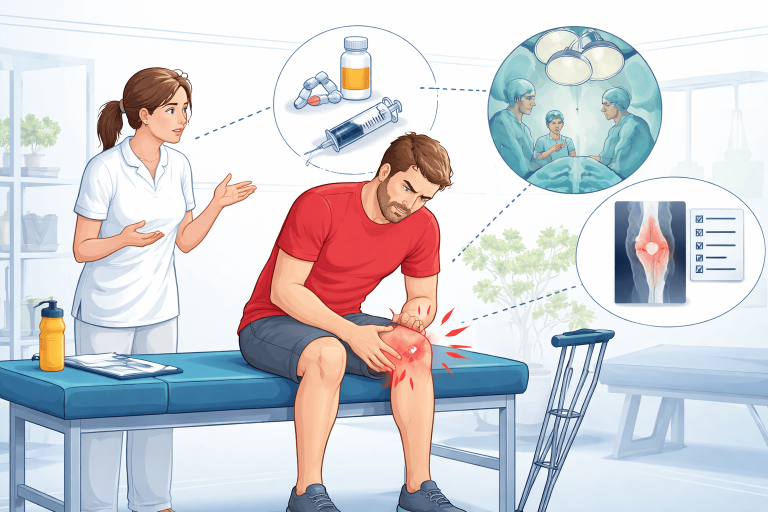
When Physiotherapy May Not Be Enough
Physiotherapy alone may not be sufficient if:
- There is a complete ligament rupture with instability
- Locking or catching is present in the joint
- Symptoms worsen despite proper rehab
- There is associated fracture or cartilage injury
In such cases, orthopedic evaluation and imaging are necessary.

Red Flags That Need Immediate Medical Attention
Seek urgent evaluation if you experience:
- Severe swelling within hours of injury
- Inability to bear weight
- Joint deformity
- Numbness or tingling
- Repeated joint “giving way”
These signs may indicate serious structural damage.
Common Home Mistakes That Delay Healing
From clinical experience, the most damaging mistakes include:
- Resuming activity as soon as pain reduces
- Overstretching a healing ligament
- Ignoring balance and control exercises
- Using heat too early
- Self-medicating without assessment
Who Is Physiotherapy Right For?
Physiotherapy is ideal for:
Mild to moderate ligament injuries
These injuries often heal well with timely, guided physiotherapy. Structured care helps reduce pain, restore joint control, and prevent the injury from becoming a long-term problem.
Post-surgical ligament reconstruction
After surgery, physiotherapy is essential to regain movement, strength, and joint stability. Rehabilitation is progressed carefully to protect the repair while helping patients return to daily activities safely.
Recurrent sprains
Repeated sprains usually mean the joint has not fully recovered or lacks proper control. Physiotherapy focuses on strengthening, balance training, and movement correction to break the cycle of re-injury.
Patients aiming to return to active life safely
For people who want to resume work, exercise, or sports, physiotherapy helps rebuild confidence and functional strength. The goal is a safe return without pushing the joint before it is ready.
It may not be suitable as the only treatment for:
Unstable complete ruptures without medical review
When a ligament is completely torn and the joint feels unstable, physiotherapy alone is not enough at the start. These cases require proper medical evaluation and imaging, as delayed or inappropriate treatment can lead to long-term instability and joint damage.
Final Clinical Advice
Ligament injuries are not just about pain relief—they are about joint stability, confidence, and long-term health.
Proper physiotherapy:
- Respects healing timelines
- Uses clinical reasoning, not protocols
- Focuses on movement quality, not machines
If managed correctly, most ligament injuries recover well. If managed poorly, they often return.