
Stages Of Spinal Cord Injury Rehabilitation: Proven Steps For Faster Recovery
Spinal cord injuries can change life in seconds.
A sudden fall, road accident, sports injury, or medical condition can affect movement, sensation, balance, and independence. For patients and families, the first few days after injury often bring fear, uncertainty, and one important question:
What happens next?
At Varia Physiotherapy Clinic in Ahmedabad, this is one of the most common concerns we hear from patients. Many arrive confused about recovery, unsure whether walking, sitting, or even simple movements will return.
The truth is that spinal cord recovery is a structured journey. It does not happen overnight. Understanding the Stages Of Spinal Cord Injury Rehabilitation helps patients set realistic expectations and stay committed to recovery.
With the right physiotherapy, medical supervision, and consistent effort, many people regain strength, improve function, and rebuild independence.
Understanding Spinal Cord Injury in Simple Terms
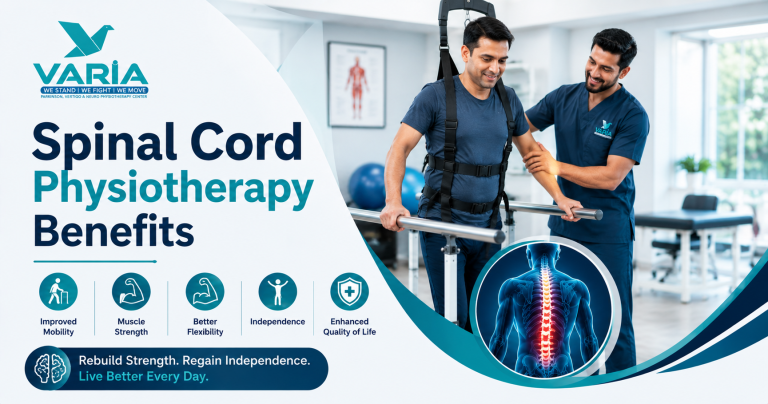
The spinal cord is the communication highway between your brain and body. It controls movement, sensation, reflexes, and organ functions. When this pathway is damaged, the signals between brain and body become interrupted.
This can affect:
- Walking
- Balance
- Hand movement
- Bladder control
- Muscle strength
- Sensation
- Breathing (in severe cases)
According to the World Health Organization, spinal cord injuries can significantly impact quality of life, but early rehabilitation improves outcomes.
Spinal cord injuries are usually divided into:
Complete Injury
A complete spinal cord injury means the brain’s signals cannot travel below the injured area, which can affect movement and sensation. Recovery may take longer, but rehabilitation can still improve strength, comfort, and daily independence through structured therapy.
Incomplete Injury
An incomplete spinal cord injury means some nerve signals are still able to pass through the affected area. This often creates more recovery opportunities, and with early physiotherapy, many patients can regain movement, balance, and functional abilities over time.
At Varia Physiotherapy Clinic, we commonly treat both categories through customized rehabilitation programs.
Common Causes of Spinal Cord Injury
Patients in Ahmedabad often come to us after:
Road Traffic Accidents
Road accidents are one of the most common causes of spinal cord injuries, especially in active adults. Sudden impact can damage the spine and affect movement, sensation, and daily independence.
Falls
Falls are a major cause of spinal injuries, particularly in older adults or those working in physically demanding environments. Even a single fall can lead to serious mobility challenges if the spine is affected.
Sports Injuries
Falls are a major cause of spinal injuries, particularly in older adults or those working in physically demanding environments. Even a single fall can lead to serious mobility challenges if the spine is affected.
Degenerative Conditions
Conditions like disc prolapse, spinal stenosis, or infections can gradually compress the spinal cord over time. Early diagnosis and physiotherapy can help reduce complications and improve mobility.
Stroke or Neurological Disorders
While not direct spinal cord injuries, stroke and neurological conditions can create similar problems such as weakness, poor balance, and difficulty walking. Rehabilitation focuses on restoring movement and improving everyday function. Each cause affects recovery differently, which is why proper assessment is critical.
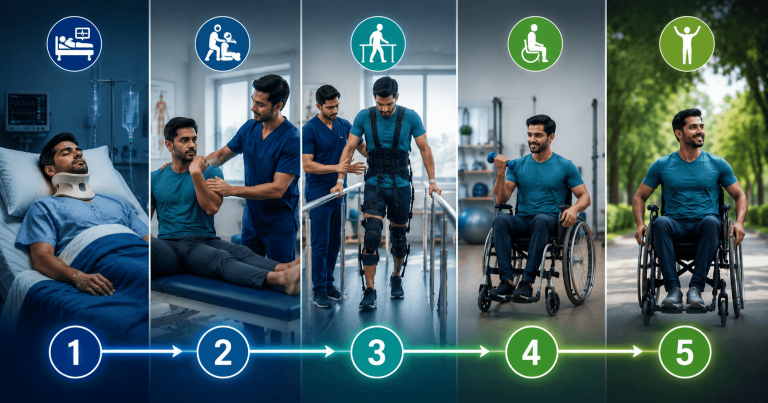
The 5 Main Stages Of Spinal Cord Injury Rehabilitation
Understanding the Stages Of Spinal Cord Injury Rehabilitation helps patients and caregivers know what to expect.
1. Acute Medical Stabilization
This stage begins immediately after injury. The focus is survival and protecting the spinal cord from further damage.
Treatment may include:
- Surgery
- Medication
- Immobilization
- ICU monitoring
Physiotherapy at this stage is usually gentle and focused on:
- Positioning
- Chest physiotherapy
- Pressure sore prevention
- Passive range-of-motion exercises
At Varia, we often start working with patients soon after hospital discharge.
Recovery timeline:
Days to weeks.
2. Early Mobility Training
This stage begins once the patient is medically stable. The goal is to prevent complications caused by bed rest.
Key physiotherapy treatments:
- Bed mobility training
- Sitting balance exercises
- Transfer training
- Muscle activation
- Breathing exercises
A common patient scenario:
A 42-year-old male came to our clinic after a road accident. After 3 weeks of bed rest, he could not sit independently and had severe trunk weakness.
Our first focus was simple:
Helping him sit without support for 5 minutes.
That small milestone built the foundation for everything ahead.
Recovery timeline:
2–8 weeks.
3. Strength and Functional Recovery
This is one of the most important parts of the step-by-step spinal cord recovery process, where strength and functional movement start improving. At this stage, physiotherapy becomes more active.
We focus on:
Strengthening Weak Muscles
Targeted resistance exercises help rebuild muscle strength that may have been lost after injury. This improves stability, supports movement, and makes daily activities easier over time.
Improving Joint Mobility
Gentle stretching and guided movement help keep joints flexible and reduce stiffness. Better joint mobility can make sitting, standing, and walking more comfortable.
Balance Retraining
Balance exercises help the body regain posture control and reduce the risk of falls. This is an important step toward safe movement and greater independence.
Coordination Exercises
These exercises improve how muscles and nerves work together, especially in incomplete spinal cord injuries. Better coordination can support smoother and more controlled movements.
Electrical Stimulation
When muscles are not activating properly, electrical stimulation can help trigger movement and maintain muscle health. It is often used as part of a structured rehabilitation plan to support recovery.
Clinical assessments may include:
- Muscle grading
- Tone assessment
- Sensory testing
- Functional Independence Measure (FIM)
At Varia Physiotherapy Clinic, treatment planning depends on these assessments—not assumptions.
Recovery timeline:
1–6 months.
Internal related treatment:
- Spinal Cord Injury Rehabilitation
- Neurological Physiotherapy
- Bedridden Patient Rehabilitation
4. Gait Training and Mobility Restoration
This stage focuses on movement independence.
Depending on injury severity, patients may learn:
- Standing with support
- Walking with parallel bars
- Walker-assisted mobility
- Stair training
- Weight shifting exercises
Evidence from the National Institutes of Health shows repetitive task-specific training improves neuroplasticity. This means the nervous system can adapt and form new pathways. One patient at our clinic—a 56-year-old female after spinal compression surgery—started with complete fear of standing.
Within 10 weeks:
- She could stand for 8 minutes
- Transfer independently
- Walk short indoor distances with support
This progress was gradual, not sudden. That is how real recovery works.
Recovery timeline:
3–12 months.
5. Long-Term Independence and Maintenance
Recovery doesn’t stop after walking starts. Long-term rehabilitation helps maintain function and prevent setbacks.
Focus areas:
- Endurance training
- Community mobility
- Fall prevention
- Home exercise plans
- Spasticity management
- Pain management
This phase is often overlooked. Many patients improve, then stop therapy too early, causing regression.
At Varia, we guide patients on sustainable recovery—not temporary improvement.
How Physiotherapy Helps in Spinal Cord Recovery (Step-by-Step)
Step 1: Detailed Clinical Assessment
We assess:
- Muscle strength
- Reflexes
- Pain patterns
- Sensation
- Balance
- Walking ability
Step 2: Goal Setting
Goals may include:
- Sitting independently
- Standing safely
- Walking
- Self-care activities
Step 3: Personalized Treatment Plan
No two injuries are the same.
Treatment may involve:
- Manual therapy
- Strengthening
- Stretching
- Gait training
- Balance drills
- Neuromuscular facilitation
Step 4: Progress Tracking
Recovery is monitored weekly. Plans are adjusted based on progress.
Real Patient Story from Varia Physiotherapy Clinic
A 48-year-old businessman from Ahmedabad came after spinal surgery due to disc compression.
He had:
- Leg weakness
- Difficulty walking
- Numbness
- Severe back pain
When he started, even standing for 2 minutes was difficult.
Over 14 weeks of structured physiotherapy:
Week 1–2:
Pain reduction and mobility work
Week 3–6:
Strength rebuilding
Week 7–10:
Balance and gait training
Week 11–14:
Functional independence, He returned to office work gradually.
Not “fully cured.” But significantly independent. That’s what ethical rehabilitation looks like
Myths vs Facts About Spinal Cord Rehabilitation
Myth: Recovery happens only in the first month.
Fact: Recovery can continue for months or years.
Myth: If you can’t walk early, you never will.
Fact: Many incomplete injuries improve over time.
Myth: Rest alone heals nerves.
Fact: Guided movement improves recovery.
Myth: Physiotherapy is only exercise.
Fact: It is a science-based treatment system.
When Should You See a Physiotherapist?
Consult early if you have:
- Weakness after spinal surgery
- Difficulty standing
- Numbness
- Loss of balance
- Muscle stiffness
- Walking problems
- Bladder or bowel dysfunction
Seek urgent referral to an orthopedic specialist or neurologist if:
- Symptoms worsen rapidly
- Severe pain develops
- Sudden paralysis occurs
- New sensory loss appears
Physiotherapy works best alongside medical care.
Conclusion:
Understanding the Stages Of Spinal Cord Injury Rehabilitation can make the journey less overwhelming. Recovery is not linear.
Some days feel encouraging. Some feel frustrated. But every movement matters.
At Varia Physiotherapy Clinic in Ahmedabad, our focus is simple:
help patients move better, feel stronger, and regain as much independence as possible—safely and realistically.
If you or a loved one is struggling after a spinal cord injury, early physiotherapy assessment can make a meaningful difference.
Book an expert evaluation and begin your recovery with the right guidance.
Book a Professional Assessment
If you’re unsure whether your symptoms need attention, it’s okay to start with a simple consultation. Understanding your condition is the first step toward recovery—no pressure, just guidance.
If you’d like to speak with a physiotherapist or book an assessment at Varia Physiotherapy Clinic, you can reach out here:
 Call: +91 95123 79555
 Email: hello.drhetalvaria@gmail.com
 Website: www.variaphysiotherapyclinic.com
Our team is here to listen, assess, and guide you toward safe and effective recovery.
Stages Of Spinal Cord Injury Rehabilitation - FAQs
1. How long does spinal cord rehabilitation take?
2. Can spinal cord injuries fully heal?
3. Is physiotherapy painful?
4. When should rehabilitation start?
5. Can older adults recover well?
About the Author

Dr. Hetal M Varia
After a rich experience of working in US healthcare as manager and licensed physiotherapist in US for last 11 years, she has returned home with a vision to become pioneer of Vestibular Therapy and specialized Parkinson physiotherapy in Ahmedabad. With her special skills and expertise in vertigo, Parkinson, balance and movement disorders therapy, Dr. Varia is committed to provide US standards of therapy services , compassionate and patient centered care to our people and community. With a vision of the world where everyone walks strong & steady, she intends to empower individuals with vestibular and neurological disorders through specialized care, rehabilitation & innovative therapies to improve mobility, balance & overall quality of life!