
Spinal Cord Physiotherapy Benefits: Improve Mobility & Strength
A spinal cord injury can change daily life in seconds.
Simple actions like sitting, standing, walking, or even turning in bed may suddenly feel difficult. For many patients at Varia Physiotherapy Clinic, the biggest concern is not just pain—it is the fear of losing independence.
One of the most important parts of recovery after spinal cord injury is physiotherapy. Understanding Spinal Cord Physiotherapy Benefits: Improve Mobility & Strength can help patients and families make informed decisions early in the recovery journey.
At our clinic in Ahmedabad, we often meet patients who feel overwhelmed after an accident, surgery, or nerve-related condition. Many ask:
“Will I walk again?”
“How long will recovery take?”
“Can physiotherapy really help?”
The answer depends on the severity of the injury, but physiotherapy plays a major role in maximizing recovery, improving function, and preventing complications.
According to the World Health Organization, rehabilitation should begin as early as possible after neurological injury to improve outcomes. Similarly, the National Institutes of Health highlights that structured rehabilitation improves physical function and quality of life.
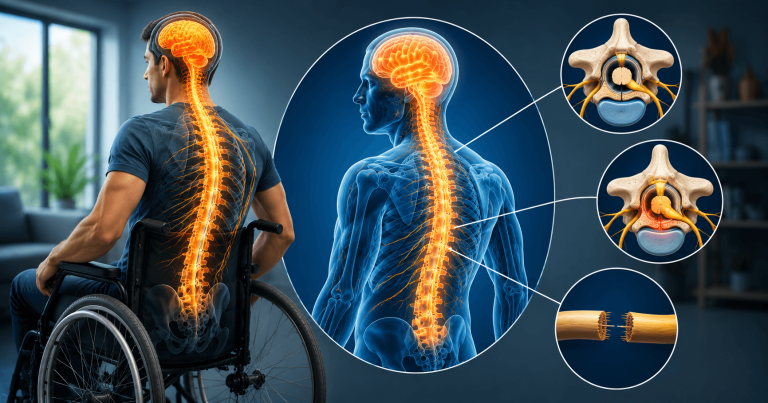
Understanding Spinal Cord Injuries in Simple Terms
The spinal cord acts like a communication highway between the brain and the body. When this pathway is damaged, signals to muscles, joints, and organs can be interrupted.
This may affect:
- Movement
- Balance
- Sensation
- Bladder control
- Muscle strength
- Coordination
At Varia Physiotherapy Clinic, we commonly see spinal cord issues caused by:
1. Road Traffic Accidents
Road accidents are one of the most common causes of spinal cord injuries, especially in working adults. The sudden impact can damage the spine, affecting movement, strength, and daily independence. Early physiotherapy often plays a key role in recovery.
2. Falls
Falls can cause serious spinal injuries, particularly in older adults or people with weak bone health. Even a simple fall at home can lead to nerve compression or fractures, making mobility difficult without proper treatment.
3. Sports Injuries
High-impact sports or improper landing can put extreme pressure on the spine. These injuries may lead to pain, weakness, or reduced coordination, especially if the spinal cord or surrounding nerves are involved.
4. Disc Problems
A slipped or prolapsed disc can sometimes press against the spinal cord or nerves, causing pain, numbness, or weakness. Without timely treatment, everyday movements like walking or bending can become challenging.
5. Post-Surgical Weakness
After spinal surgery, many patients experience weakness, stiffness, or fear of movement. Physiotherapy helps restore strength, improve confidence, and safely guide the body back to functional activities.
Not every spinal cord injury causes complete paralysis. Many patients have incomplete injuries where physiotherapy can significantly improve function.
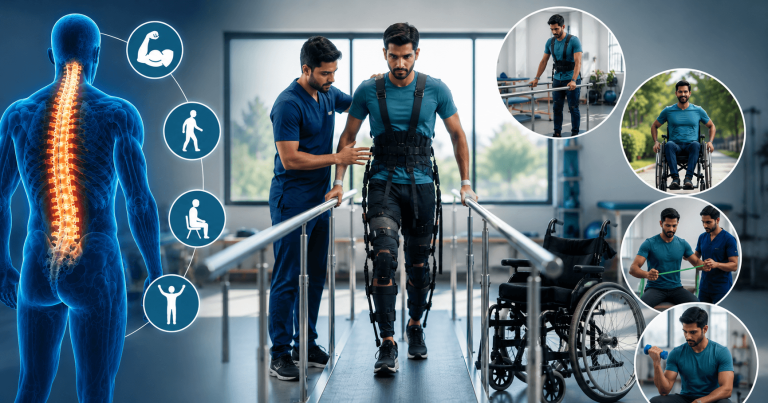
Spinal Cord Physiotherapy Benefits: Improve Mobility & Strength in Daily Life
Physiotherapy after spinal cord injury is not just about exercise. It is a structured recovery process designed to retrain the nervous system, strengthen muscles, and restore movement patterns.
Here are the most important spinal cord physiotherapy benefits:
1. Improves Muscle Strength
When the body cannot move normally after a spinal cord injury, muscles may start losing strength very quickly. This natural process, known as muscle atrophy, can begin within just a few days and may make recovery more challenging if not addressed early.
Physiotherapy uses:
- Resistance training
- Assisted movements
- Functional strengthening
- Electrical stimulation
These techniques help preserve and rebuild muscle power. At Varia, therapists assess muscle grades before planning exercises. This ensures safe progression.
2. Restores Mobility
One of the main goals of guided physiotherapy for spinal cord rehabilitation is to help patients regain movement, improve balance, and restore independence. Even small improvements in mobility can make daily activities easier and improve overall quality of life.
This may include:
- Bed mobility
- Rolling
- Sitting balance
- Standing
- Transfers
- Walking
For incomplete injuries, repetitive mobility training can stimulate neuroplasticity—the brain’s ability to create new pathways. Research supported by National Institutes of Health shows repetitive task-specific training improves motor recovery.
3. Reduces Muscle Tightness (Spasticity)
Many people recovering from a spinal cord injury develop muscle tightness and stiffness, often called spasticity. This can make simple movements uncomfortable, limit flexibility, and affect everyday activities like sitting, standing, or walking.
Physiotherapy helps through:
- Stretching
- Positioning
- Range-of-motion exercises
- Manual therapy
Reducing spasticity improves comfort and movement quality.
4. Improves Balance and Posture
Spinal injuries can weaken the muscles that support the trunk, making it harder to maintain balance and proper posture. This loss of control can affect sitting, standing, and moving safely during daily activities.
Poor posture can lead to:
- Falls
- Back pain
- Pressure sores
- Shoulder strain
Balance training includes:
- Core strengthening
- Sitting stability drills
- Weight shifting
- Standing tolerance exercises
This is one of the most practical Spinal Cord Physiotherapy Benefits: Improve Mobility & Strength because it directly impacts daily independence.
5. Prevents Secondary Complications
Without physiotherapy, spinal cord injury patients are at risk of:
- Joint stiffness
- Pressure ulcers
- Contractures
- Poor circulation
- Respiratory weakness
Early movement reduces these risks. The World Health Organization strongly recommends rehabilitation to prevent disability complications.
6. Improves Walking Potential
While not every spinal cord injury patient regains the ability to walk, many achieve meaningful improvements with consistent rehabilitation. Progress may include better balance, stronger movements, and greater independence in daily life.
Walking rehab may involve:
- Parallel bars
- Gait training
- Weight-supported walking
- Balance correction
- Assistive devices
At Varia Physiotherapy Clinic, walking goals are personalized based on injury level.
How Physiotherapy Helps Step-by-Step
Recovery after a spinal cord injury is different for every individual because it depends on the severity of the injury, overall health, and how early rehabilitation begins. Each patient follows a unique path, with progress happening at their own pace.
At Varia Physiotherapy Clinic, spinal rehab usually follows this process:
Step 1: Detailed Clinical Assessment
We evaluate:
- Muscle power
- Joint mobility
- Sensation
- Reflexes
- Balance
- Functional ability
This helps us create a realistic treatment plan.
Step 2: Early Mobility Training
Even basic movement matters:
- Turning in bed
- Sitting up
- Weight shifting
These prevent complications.
Related treatment: Neuro Physiotherapy
Step 3: Strengthening Program
Targeted strengthening focuses on:
- Core muscles
- Leg muscles
- Upper body support
This builds movement capacity.
Step 4: Functional Training
This includes:
- Transfers
- Standing
- Walking
- Stair climbing
Real-world movement matters more than isolated exercise.

A Real Patient Story from Our Clinic
A 42-year-old male patient came to Varia after a road accident. He had incomplete spinal cord compression and severe leg weakness.
When he started:
- He needed support to sit
- Standing was impossible
- Muscle strength was very low
His treatment included:
- Electrical stimulation
- Strength training
- Balance retraining
- Walking practice
After 12 weeks:
- He could sit independently
- Stand with minimal support
- Walk short distances using a walker
This is a common example of how consistent rehab can improve function. Recovery was gradual—not instant. That is important to understand.
Myths vs Facts About Spinal Cord Physiotherapy
Myth: Physiotherapy works only if started immediately.
Fact: Early rehab is ideal, but improvement can still happen months later.
Myth: If you cannot move, therapy is useless.
Fact: Physiotherapy prevents complications even before active movement returns.
Myth: Recovery always means walking again.
Fact: Sometimes the goal is improved independence, not full walking.
Myth: More pain means better therapy.
Fact: Effective rehab should challenge you, not harm you.
When Should You See a Physiotherapist?
Seek physiotherapy if you have:
- Weakness after spinal injury
- Difficulty walking
- Loss of balance
- Muscle stiffness
- Reduced coordination
- Recovery after spinal surgery
Also seek urgent medical evaluation if you notice:
- Sudden loss of bladder control
- Severe numbness
- Rapid weakness progression
- Unexplained severe back pain
In such cases, referral to an orthopedic surgeon or neurologist may be necessary. At Varia, we often coordinate care with spine specialists when needed.
Recovery Timelines: What Is Realistic?
This is one of the most common questions.
Recovery depends on:
- Injury severity
- Age
- Timing of rehab
- Overall health
- Nerve involvement
General timelines:
First 6 weeks
Pain control, mobility basics, preventing stiffness.
6–12 weeks
Strength improvement, balance retraining.
3–6 months
Functional gains become clearer.
6–12 months
Long-term progress continues in many patients. Recovery is not linear. Some weeks feel faster than others.
Consistency matters most.
Conclusion
Recovering from a spinal injury can feel uncertain, but progress is often possible with the right support.
The biggest Spinal Cord Physiotherapy Benefits: Improve Mobility & Strength include better movement, stronger muscles, reduced stiffness, improved balance, and greater independence.
At Varia Physiotherapy Clinic, our focus is simple:
To help patients move better, feel stronger, and regain confidence—step by step. Every recovery journey is different.
If you or a loved one is facing spinal weakness, difficulty walking, or post-surgery mobility issues, early assessment can make a meaningful difference.
Book an ethical consultation and understand your recovery options with expert guidance.
Book a Professional Assessment
If you’re unsure whether your symptoms need attention, it’s okay to start with a simple consultation. Understanding your condition is the first step toward recovery—no pressure, just guidance.
If you’d like to speak with a physiotherapist or book an assessment at Varia Physiotherapy Clinic, you can reach out here:
 Call: +91 95123 79555
 Email: hello.drhetalvaria@gmail.com
 Website: www.variaphysiotherapyclinic.com
Our team is here to listen, assess, and guide you toward safe and effective recovery.
Spinal Cord Physiotherapy Benefits - FAQs
1. Can physiotherapy repair spinal cord damage?
2. How often should spinal cord physiotherapy be done?
Q3. What is the average physiotherapy cost in Ahmedabad?
4. Can older adults recover from spinal cord injuries?
5. How soon should rehab start?
About the Author

Dr. Hetal M Varia
After a rich experience of working in US healthcare as manager and licensed physiotherapist in US for last 11 years, she has returned home with a vision to become pioneer of Vestibular Therapy and specialized Parkinson physiotherapy in Ahmedabad. With her special skills and expertise in vertigo, Parkinson, balance and movement disorders therapy, Dr. Varia is committed to provide US standards of therapy services , compassionate and patient centered care to our people and community. With a vision of the world where everyone walks strong & steady, she intends to empower individuals with vestibular and neurological disorders through specialized care, rehabilitation & innovative therapies to improve mobility, balance & overall quality of life!