
Walking Training for Paralysis Recovery: Improve Strength & Control
Losing the ability to walk after paralysis can change nearly every part of daily life. Simple things like getting out of bed, walking to the bathroom, climbing stairs, or stepping outside can suddenly feel impossible. For many patients and families, this is not just a physical struggle—it becomes an emotional one too.
At Varia Physiotherapy Clinic in Ahmedabad, we regularly meet patients who come with fear, uncertainty, and one important question:
“Will I ever walk normally again?”
The answer depends on many factors, but one thing is certain—structured rehabilitation can improve mobility, strength, and independence in many paralysis cases.
This is where Walking Training for Paralysis Recovery: Improve Strength & Control becomes one of the most important parts of rehabilitation.
Walking recovery is not simply about moving the legs. It involves retraining muscles, restoring nerve communication, improving balance, and teaching the brain to coordinate movement again. Recovery takes time, patience, and expert physiotherapy guidance.
In this article, we will explain the real process behind walking recovery, common challenges, how physiotherapy helps, and what patients can realistically expect.
What Is Paralysis?
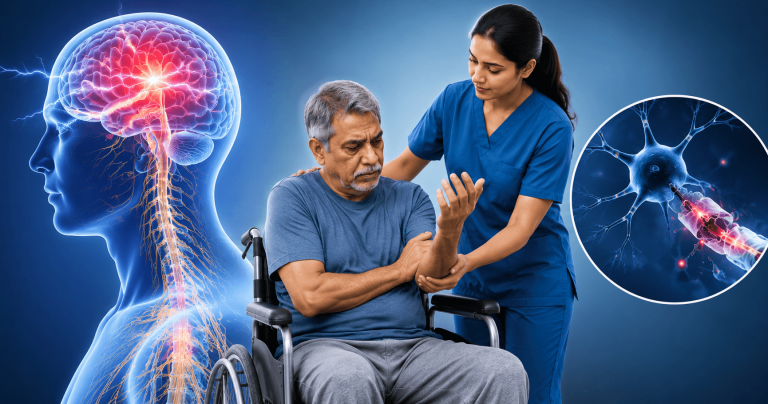
Paralysis is the loss of muscle function in part of the body. It happens when the connection between the brain and muscles is interrupted.
This can happen because of:
- Stroke
- Spinal cord injury
- Brain injury
- Nerve injury
- Neurological disorders like Parkinson’s disease
- Multiple sclerosis
Depending on the cause, paralysis may affect:
- One side of the body (hemiplegia)
- Both legs (paraplegia)
- All four limbs (quadriplegia)
At our clinic, stroke-related paralysis is one of the most common conditions we treat.
Many people think paralysis means movement is gone forever. That is not always true. In many cases, the nervous system can adapt and reorganize itself. This ability is called neuroplasticity, and it is one of the main reasons rehabilitation works.
Why Walking Becomes Difficult After Paralysis
Walking is a highly coordinated activity. It requires:
- Muscle strength
- Joint mobility
- Balance
- Sensory feedback
- Brain coordination
- Core stability
When paralysis affects any of these systems, walking becomes difficult.
At Varia Physiotherapy Clinic, patients commonly face these challenges:
1. Muscle Weakness
Weak leg muscles reduce the ability to stand or step safely.
2. Poor Balance
Patients may feel unstable or fall easily.
3. Spasticity
Muscles become stiff and tight, limiting movement.
4. Foot Drop
The front part of the foot drags while walking.
5. Reduced Coordination
The brain struggles to organize movement patterns.
6. Loss of Sensation
Patients may not feel the floor properly, increasing fall risk. These problems often happen together, making recovery complex. That is why Walking Training for Paralysis Recovery: Improve Strength & Control must be personalized.
The Importance of Early Walking Rehabilitation
One of the biggest mistakes patients make is delaying rehabilitation. Some believe rest alone will improve recovery.
But prolonged inactivity can cause:
- Muscle wasting
- Joint stiffness
- Poor circulation
- Pressure sores
- Balance loss
- Reduced confidence
According to the World Health Organization, early rehabilitation improves function, reduces disability, and increases independence.
At our clinic, we encourage early physiotherapy as soon as medically stable. Even if walking is not possible immediately, preparing the body early improves future outcomes.
How Walking Training for Paralysis Recovery: Improve Strength & Control Works
Step 1: Detailed Physiotherapy Assessment
Before starting treatment, we assess:
- Muscle strength
- Range of motion
- Reflexes
- Spasticity level
- Sensation
- Balance ability
- Postural control
- Weight-bearing ability
This assessment helps us create a treatment plan.
For example:
A stroke patient may need balance retraining. A spinal injury patient may need trunk stability first. Treatment must match the condition.
Step 2: Bed Mobility Training
Before walking, patients need basic movement control.
This includes:
- Rolling in bed
- Turning sides
- Sitting up
- Position changing
Why is this important?
Because these movements activate muscles and improve independence. Many families underestimate this stage. But it forms the foundation of walking.
Step 3: Core Strengthening
Walking starts at the center of the body. Without trunk control, leg movement becomes unstable.
Core training includes:
- Sitting balance
- Pelvic control
- Bridging exercises
- Weight shifting
At Varia Physiotherapy Clinic, we often spend weeks building trunk control before gait training. This improves long-term walking quality.
Step 4: Standing Training
Standing is the first major milestone.
Patients learn:
- Equal weight bearing
- Knee control
- Hip stability
- Posture correction
This stage may involve:
- Parallel bars
- Therapist support
- Walker support
Standing improves:
- Bone strength
- Blood circulation
- Confidence
- Balance
Step 5: Gait Re-education
This is where Walking Training for Paralysis Recovery: Improve Strength & Control truly begins.
We train:
- Step initiation
- Heel strike
- Weight transfer
- Knee bending
- Foot placement
- Walking rhythm
Tools may include:
- Parallel bars
- Walkers
- Gait belts
- Treadmills
The goal is to restore proper walking patterns through physiotherapy-guided walking recovery, helping patients regain balance, coordination, and safer movement.
Step 6: Functional Walking Practice
Walking inside a clinic is different from real life.
Patients must practice:
- Walking on uneven surfaces
- Turning
- Climbing stairs
- Getting up from chairs
- Bathroom walking
- Outdoor walking
This stage focuses on independence.
Real Patient Scenario From Clinical Practice
A 48-year-old stroke patient came to our clinic with severe weakness in his right leg, poor balance, and difficulty standing. In then beginning, he could only sit with support. Within 3 weeks, he started standing in parallel bars. By week 6, he began taking assisted steps. After 3 months, he was walking indoors with a walker, and by month 5, he could walk short distances using a stick. His recovery was gradual, consistent, and guided through structured physiotherapy.
Common Exercises Used in Walking Recovery
At Varia Physiotherapy Clinic, common exercises include:
Leg Raises
Leg raises help improve hip muscle strength, which is essential for lifting the leg while walking. For many paralysis patients, this exercise supports better movement control and makes stepping easier during recovery.
Heel Slides
Heel slides gently improve knee flexibility and help patients regain smoother leg movement. This exercise is often used in early rehabilitation to reduce stiffness and prepare the leg for standing and walking.
Sit-to-Stand Practice
Sit-to-stand training helps rebuild the strength needed for everyday movements like getting up from a chair or bed. It also improves balance and confidence, which are important for safe walking recovery.
Weight Shifting
Weight shifting teaches the body how to balance properly on both legs. This exercise helps patients feel more stable while standing and reduces the fear of falling during walking practice.
Marching Exercises
Marching exercises improve coordination by training each leg to lift and move in a controlled way. They also help the brain reconnect with movement patterns, which is important in neurological recovery.
Step-Ups
Step-up exercises strengthen the legs and improve control needed for climbing stairs and stepping over surfaces. They also support better balance and walking stability in daily life.
Resistance Band Training
Resistance band exercises build muscle endurance and improve leg strength safely with gradual resistance. This helps patients walk longer distances with less fatigue and better control over time.
Myths vs Facts
Myth: Walking recovery should be quick
Fact: Neurological recovery can take months or years.
Myth: If there is no movement in 2 weeks, recovery is impossible
Fact: Recovery timelines vary widely.
Myth: Rest is better than therapy
Fact: Controlled movement improves recovery.
Myth: Once discharged from hospital, therapy is no longer needed
Fact: Rehabilitation often continues long after discharge.
Signs You Should See a Physiotherapist
Consult a physiotherapist if you notice:
- Difficulty walking after stroke
- Frequent falls
- Leg weakness
- Foot dragging
- Balance issues
- Muscle stiffness
- Fear of walking
Early intervention matters.
When Referral to a Specialist Is Necessary
Sometimes physiotherapy alone is not enough.
We may refer patients to:
- Neurologists
- Orthopedic specialists
- Spine specialists
This may be needed if there is:
- Sudden worsening weakness
- Severe spasticity
- New numbness
- Uncontrolled pain
- Suspected fractures
- Seizures
This ensures safe recovery.
Realistic Recovery Timelines
Recovery depends on:
- Age
- Severity
- Cause of paralysis
- Treatment consistency
- General health
Typical timelines:
Mild cases:
4–12 weeks
Moderate cases:
3–6 months
Severe cases:
6–18 months or longer
According to the National Institutes of Health, stroke recovery often continues long after the initial injury. There is no “fixed timeline.”
How Families Can Help
Family support makes a huge difference.
Helpful ways:
- Encourage regular exercise
- Avoid overprotecting
- Support safe walking practice
- Celebrate small progress
- Maintain patience
Recovery is mentally exhausting. Emotional support matters.
Conclusion
Recovering the ability to walk again is one of the biggest goals for anyone living with paralysis. But walking recovery is not just about leg strength. It requires balance, coordination, endurance, confidence, and expert guidance. Walking Training for Paralysis Recovery: Improve Strength & Control is a structured rehabilitation journey designed to rebuild movement safely and progressively.
At Varia Physiotherapy Clinic, we work with patients every day who are taking these small but powerful steps toward independence.
- Some begin unable to stand.
- Some start with fear.
- Some take weeks just to balance.
- But progress happens.
- And every step matters.
If you or a loved one is recovering from paralysis, seeking timely physiotherapy can improve mobility, reduce complications, and increase independence in everyday life. Recovery may be slow—but it is often possible.
Book a Professional Assessment
If you’re unsure whether your symptoms need attention, it’s okay to start with a simple consultation. Understanding your condition is the first step toward recovery—no pressure, just guidance.
If you’d like to speak with a physiotherapist or book an assessment at Varia Physiotherapy Clinic, you can reach out here:
 Call: +91 95123 79555
 Email: hello.drhetalvaria@gmail.com
 Website: www.variaphysiotherapyclinic.com
Our team is here to listen, assess, and guide you toward safe and effective recovery.
Walking Practice For Paralysis Recovery - FAQs
Can paralysis patients walk again?
How many physiotherapy sessions are needed?
Is walking practice safe after a stroke?
Can walking improve after years?
What if my leg feels stiff?
About the Author

Dr. Hetal M Varia
After a rich experience of working in US healthcare as manager and licensed physiotherapist in US for last 11 years, she has returned home with a vision to become pioneer of Vestibular Therapy and specialized Parkinson physiotherapy in Ahmedabad. With her special skills and expertise in vertigo, Parkinson, balance and movement disorders therapy, Dr. Varia is committed to provide US standards of therapy services , compassionate and patient centered care to our people and community. With a vision of the world where everyone walks strong & steady, she intends to empower individuals with vestibular and neurological disorders through specialized care, rehabilitation & innovative therapies to improve mobility, balance & overall quality of life!