
Paralysis Rehabilitation After Stroke | Fast Recovery & Expert Care
Stroke is one of the leading causes of long-term disability in adults, and paralysis is often the most life-altering consequence patients and families face. At Varia Physiotherapy Clinic in Ahmedabad, we frequently meet individuals who arrive with fear, confusion, and one urgent question: “Will I be able to move again?”
Paralysis Rehabilitation After Stroke | Fast Recovery & Expert Care is not about quick fixes—it is about structured neuro-rehabilitation, consistent therapy, and realistic recovery goals that gradually restore independence, dignity, and quality of life.
This article explains how stroke-related paralysis happens, how physiotherapy helps, and what recovery typically looks like in real clinical practice.
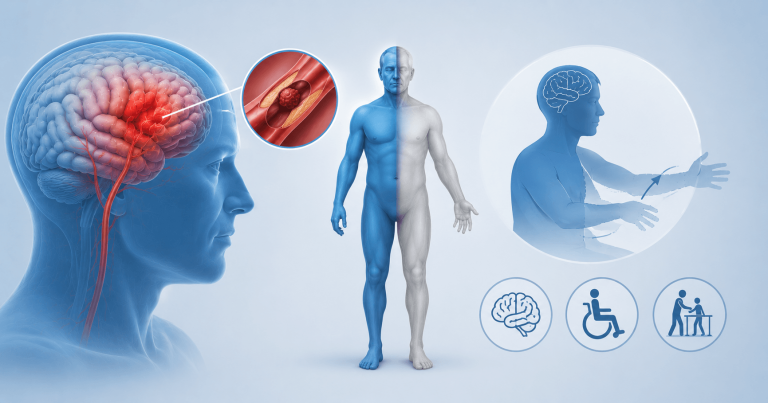
Understanding Stroke-Related Paralysis in Simple Terms
A stroke occurs when blood flow to part of the brain is interrupted, either due to a clot (ischemic stroke) or bleeding (hemorrhagic stroke). Brain cells begin to die within minutes if oxygen supply is cut off.
When areas of the brain responsible for movement are affected, patients may experience:
- Weakness or complete loss of movement on one side of the body (hemiplegia)
- Partial weakness (hemiparesis)
- Difficulty in walking, balancing, or standing
- Loss of coordination in hands or legs
- Muscle stiffness (spasticity)
According to the World Health Organization (WHO), stroke is a major cause of long-term disability worldwide, but early and structured rehabilitation significantly improves functional outcomes.
Common Causes and Risk Factors We See in Patients
At our physiotherapy clinic in Ahmedabad, most stroke patients with paralysis often have one or more underlying risk factors:
High Blood Pressure (Hypertension)
High blood pressure is one of the strongest risk factors for stroke. Over time, it damages blood vessel walls, making them more likely to rupture or get blocked. Managing it with medication, diet, and regular monitoring is essential to reduce stroke risk.
Diabetes Mellitus
Diabetes affects blood circulation by damaging small and large blood vessels. High sugar levels over time can increase the risk of clot formation and stroke. Proper glucose control through diet, medication, and activity helps protect brain and nerve health.
High Cholesterol Levels
Excess cholesterol can build up inside arteries, narrowing them and reducing blood flow to the brain. This increases the chance of blockage-related stroke. A balanced diet, exercise, and prescribed medication help maintain healthy cholesterol levels.
Smoking or Tobacco Use
Smoking damages blood vessels and reduces oxygen supply to the brain, significantly increasing stroke risk. It also promotes clot formation and artery narrowing. Quitting tobacco improves circulation and begins reducing risk almost immediately.
Sedentary Lifestyle
Lack of physical activity weakens the heart and slows blood circulation, increasing the likelihood of obesity, diabetes, and vascular disease. Regular movement and guided exercise improve overall cardiovascular and brain health.
Heart Diseases like Atrial Fibrillation
Irregular heart rhythms can cause blood to pool and form clots in the heart. These clots may travel to the brain and trigger a stroke. Early diagnosis and proper cardiac treatment greatly reduce this risk.
Previous Mini-Strokes (TIAs)
Transient Ischemic Attacks (TIAs) are brief warning episodes where blood flow to the brain is temporarily reduced. They often resolve quickly but signal a high risk of a future major stroke. Immediate medical evaluation and prevention strategies are crucial.
While medical management is handled by neurologists, physiotherapy plays a crucial role in restoring movement after the acute phase is stabilized.
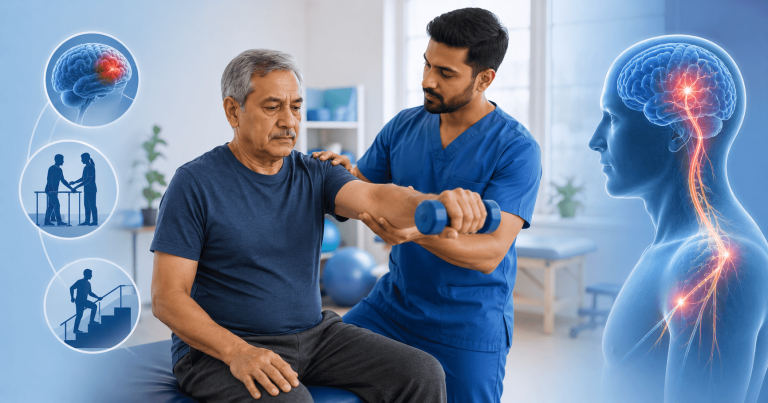
How Physiotherapy Helps in Paralysis Recovery
Physiotherapy is not just exercise—it is a scientifically structured neuro-rehabilitation process that helps the brain re-learn movement through a concept called neuroplasticity (the brain’s ability to reorganize itself).
At Varia Physiotherapy Clinic, treatment is based on detailed neurological assessment, including:
- Muscle strength testing
- Tone and spasticity evaluation
- Balance and gait analysis
- Functional independence measurement
Step-by-Step Rehabilitation Approach
At Varia Physiotherapy Clinic, stroke recovery physiotherapy support is structured into progressive rehabilitation stages based on patient condition.
1. Early Stage: Preventing Complications
In the early phase after stroke, patients may be bedridden. Physiotherapy focuses on:
- Positioning to prevent pressure sores
- Passive joint movements to avoid stiffness
- Breathing exercises to prevent lung complications
- Gentle stimulation of affected limbs
This stage is critical even when active movement is not possible.
2. Recovery Stage: Relearning Movement
Once the patient is medically stable, therapy becomes more active:
- Assisted range-of-motion exercises
- Strength training of weak muscles
- Balance retraining in sitting and standing
- Weight-bearing exercises to stimulate neural pathways
Techniques like task-oriented training are used, where patients practice real-life movements such as sitting, standing, and reaching.
3. Functional Training Stage
This stage focuses on independence:
- Walking re-education (gait training)
- Stair climbing practice
- Hand coordination exercises
- Daily activity training (eating, dressing, bathing)
Advanced tools like balance boards, parallel bars, and neuromuscular facilitation techniques are used depending on patient condition.
4. Long-Term Maintenance
Recovery continues even after discharge:
- Home exercise programs
- Family training for assisted care
- Fall prevention strategies
- Regular follow-up assessments
Real Patient Scenario (From Clinical Experience)
A 58-year-old male from Ahmedabad was referred to our clinic after suffering a left-sided ischemic stroke. He presented with:
- Right side hemiparesis (arm and leg weakness)
- Difficulty standing without support
- Severe muscle stiffness in the hand
- Loss of balance and confidence in walking
Initial Phase (Week 1–2)
He was unable to stand independently. We began with:
- Passive mobilization
- Bed mobility training
- Sitting balance exercises
- Breathing and trunk activation exercises
Mid Phase (Week 3–6)
Gradual improvement was observed:
- He could stand with minimal support
- Began assisted walking with parallel bars
- Hand grip exercises were introduced
Later Phase (Week 7–12)
- Independent walking with a walker
- Improved hand function for basic tasks
- Increased confidence in daily movement
Recovery was not linear—there were good days and difficult days. However, consistent therapy and family involvement played a major role in progress.
This reflects a realistic outcome: complete recovery may not always be possible, but significant functional independence often is achievable with structured rehabilitation.
Myths vs Facts About Stroke Paralysis Recovery
Myth 1: Recovery happens within a few weeks
Fact: Neurological recovery often takes months and continues for years in some cases.
Myth 2: If there is no improvement early, recovery is impossible
Fact: The brain continues to adapt through neuroplasticity even later in recovery.
Myth 3: Only medicines are enough
Fact: Medication stabilizes the condition, but physiotherapy restores function.
Myth 4: Bed rest is best after stroke
Fact: Early, guided movement prevents complications and improves outcomes.
When Should You See a Physiotherapist?
You should consult a physiotherapist immediately after medical stabilization if the patient has:
- Weakness in arms or legs after stroke
- Difficulty standing or walking
- Muscle stiffness or involuntary tightness
- Loss of coordination or balance issues
- Difficulty performing daily activities
Early rehabilitation is strongly recommended by National Institutes of Health (NIH) guidelines to improve long-term functional outcomes.
How We Assess and Plan Treatment at Varia Physiotherapy Clinic
Every patient undergoes a structured evaluation before treatment begins:
- Neurological examination
- Muscle tone and reflex assessment
- Functional mobility scoring
- Fall risk evaluation
- Home environment assessment (if needed)
Based on this, a personalized rehabilitation plan is created. No two stroke patients receive identical treatment because brain injury patterns differ significantly.
Conclusion
Recovering from stroke-related paralysis is not a single event—it is a gradual, structured journey that requires medical stability, consistent physiotherapy, and strong patient participation. While every individual heals at a different pace, the brain’s ability to adapt through neuroplasticity offers real hope for meaningful recovery.
At Varia Physiotherapy Clinic in Ahmedabad, our focus is not on unrealistic promises, but on helping patients regain the maximum possible independence through safe, evidence-based rehabilitation. From early bed mobility to advanced walking and hand function training, each stage is carefully designed to match the patient’s condition and progress.
Families also play an important role in recovery, especially in maintaining exercises at home and supporting emotional confidence. In many cases, patients continue to improve for months and even years with the right guidance and consistency.
If you or someone you care about is dealing with post-stroke paralysis, early physiotherapy intervention can make a significant difference in long-term outcomes and quality of life.
Book a Professional Assessment
If you’re unsure whether your symptoms need attention, it’s okay to start with a simple consultation. Understanding your condition is the first step toward recovery—no pressure, just guidance.
If you’d like to speak with a physiotherapist or book an assessment at Varia Physiotherapy Clinic, you can reach out here:
 Call: +91 95123 79555
 Email: hello.drhetalvaria@gmail.com
 Website: www.variaphysiotherapyclinic.com
Our team is here to listen, assess, and guide you toward safe and effective recovery.
Paralysis Rehabilitation After Stroke - FAQs
1. Can paralysis after stroke be fully cured?
2. How long does stroke rehabilitation take?
3. Is physiotherapy painful after a stroke?
4. Can elderly patients recover from paralysis?
5. What happens if physiotherapy is delayed?
About the Author

Dr. Hetal M Varia
After a rich experience of working in US healthcare as manager and licensed physiotherapist in US for last 11 years, she has returned home with a vision to become pioneer of Vestibular Therapy and specialized Parkinson physiotherapy in Ahmedabad. With her special skills and expertise in vertigo, Parkinson, balance and movement disorders therapy, Dr. Varia is committed to provide US standards of therapy services , compassionate and patient centered care to our people and community. With a vision of the world where everyone walks strong & steady, she intends to empower individuals with vestibular and neurological disorders through specialized care, rehabilitation & innovative therapies to improve mobility, balance & overall quality of life!