
Vestibulo-Ocular Reflex (VOR) Exercises Explained: Benefits, Steps & Recovery Guide
Have you ever turned your head while walking and felt that the environment briefly shifted, bounced, or became blurry? For many people dealing with vestibular disorders, this sensation can be frustrating and sometimes frightening.
At Varia Physiotherapy Clinic in Ahmedabad, we regularly meet adults between the ages of 30 and 65 who describe symptoms such as dizziness, imbalance, motion sensitivity, blurred vision during movement, and difficulty navigating crowded places. These symptoms often interfere with work, driving, shopping, exercising, and daily household activities.
One of the body’s most important systems for maintaining clear vision during movement is the Vestibulo-Ocular Reflex (VOR). When this system is not functioning properly, simple head movements can trigger dizziness or visual disturbances.
This guide explains Vestibulo-Ocular Reflex (VOR) exercises in simple terms, their benefits, how they are performed, and what patients can realistically expect during recovery.
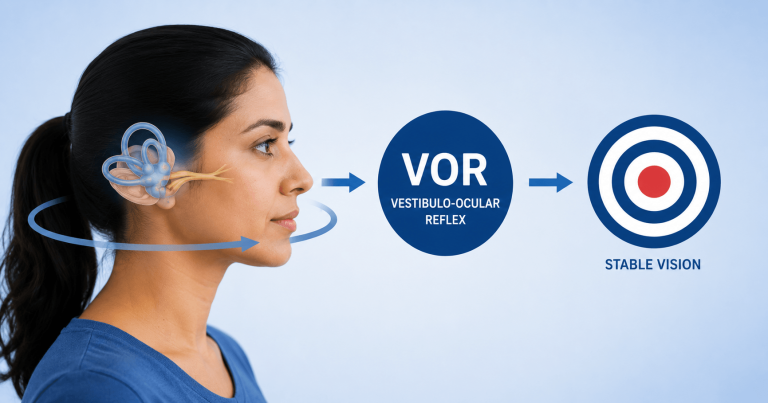
What Is the Vestibulo-Ocular Reflex (VOR)?
The Vestibulo-Ocular Reflex is a natural mechanism that helps keep your vision stable while your head moves.
Imagine reading a street sign while walking. Your head naturally moves with every step, yet the sign remains relatively clear. This happens because your inner ear and eye muscles work together through the VOR system.
According to the National Institutes of Health (NIH), the Vestibulo-Ocular Reflex (VOR) helps stabilize vision by coordinating eye movements with head movements, allowing people to maintain clear vision during daily activities.
When the vestibular system is affected by conditions such as:
- Vestibular neuritis
- Labyrinthitis
- Benign Paroxysmal Positional Vertigo (BPPV)
- Post-viral vestibular dysfunction
- Concussion-related dizziness
- Age-related vestibular decline
the VOR may not function efficiently. As a result, patients may experience:
- Blurred vision while moving
- Difficulty focusing during head movements
- Dizziness when turning quickly
- Feeling off-balance while walking
- Motion sensitivity in busy environments
Common Symptoms That May Indicate VOR Dysfunction
Many patients are unaware that their visual symptoms may actually originate from the vestibular system.
Common complaints include:
- The room appears to move when turning the head
- Difficulty reading signs while walking
- Dizziness in supermarkets or shopping malls
- Feeling unsteady in crowds
- Problems walking in low-light environments
- Increased symptoms during driving
At Varia Physiotherapy Clinic, comprehensive vestibular assessments help determine whether VOR dysfunction is contributing to these symptoms.

How Physiotherapists Assess Vestibulo-Ocular Reflex Problems
Effective treatment begins with identifying the source of symptoms.
A vestibular physiotherapy assessment may include:
Detailed Medical History
A thorough discussion about your symptoms helps the physiotherapist understand when the problem started, what triggers it, and how it affects your daily life. Information about previous illnesses, injuries, medications, and medical conditions helps guide an accurate assessment and personalized treatment plan.
Balance Assessment
Balance testing evaluates how your body maintains stability during standing, walking, turning, and changing positions. This assessment helps identify specific balance deficits that may be contributing to dizziness, unsteadiness, or an increased risk of falls.
Eye Movement Testing
The vestibular system and eyes work closely together to keep vision clear during movement. Eye movement testing helps identify abnormalities in this coordination, providing valuable information about how the inner ear and nervous system are functioning.
Gait Analysis
Walking patterns can reveal important clues about balance and movement control. By observing how you walk, turn, and respond to different environments, the physiotherapist can identify compensatory movements that may be affecting your confidence and mobility.
Functional Activity Assessment
Symptoms do not affect everyone in the same way, which is why understanding real-life challenges is important. This assessment examines how dizziness, imbalance, or visual disturbances impact activities such as working, driving, exercising, shopping, and other everyday tasks.
Based on the assessment findings, a personalized program of VOR rehabilitation exercises may be prescribed to address specific vestibular deficits and functional limitations.
Vestibulo-Ocular Reflex (VOR) Exercises Explained: Step-by-Step
VOR exercises are a key component of vestibular rehabilitation therapy. Their purpose is to help the brain adapt, improve gaze stability, and reduce dizziness during movement.
Exercise 1: VOR x1 Gaze Stabilization
Steps:
- Sit or stand comfortably.
- Hold a target such as a letter card at eye level.
- Keep your eyes focused on the target.
- Slowly move your head side-to-side.
- Maintain visual focus throughout the movement.
Patients typically begin with short durations and gradually increase speed as tolerated.
Exercise 2: Vertical VOR Training
The same principle is applied using up-and-down head movements. This helps improve visual stability during activities such as climbing stairs or looking at shelves.
Exercise 3: Walking with Head Movements
As symptoms improve, exercises become more functional.
Examples include:
- Walking while turning the head left and right
- Walking while looking up and down
- Navigating around obstacles
These exercises help prepare patients for real-world environments.
Exercise 4: Dynamic Balance Training
Balance exercises may be combined with VOR training to improve overall vestibular function.
Examples include:
- Tandem walking
- Single-leg standing
- Foam surface balance training
- Dual-task activities
Benefits of Vestibulo-Ocular Reflex (VOR) Exercises
When prescribed appropriately, VOR exercises can provide several important benefits.
Improved Visual Stability
Many people with vestibular disorders notice that their vision becomes blurry or unstable when they move their head. VOR exercises help retrain the connection between the eyes and inner ear, making it easier to keep objects in focus during everyday activities such as walking, reading signs, or driving.
Reduced Dizziness
Persistent dizziness can make daily tasks feel challenging and unpredictable. Through gradual and structured practice, VOR exercises encourage the brain to adapt to vestibular changes, helping many patients experience fewer dizziness episodes over time.
Better Balance
Good balance depends on the body’s ability to combine information from the eyes, inner ear, and muscles. VOR exercises support this coordination, which can improve stability and reduce the feeling of being unsteady during movement.
Increased Confidence
Many patients begin avoiding activities because they fear dizziness or losing balance. As symptoms improve through rehabilitation, individuals often feel more confident returning to driving, shopping, social events, and other important parts of daily life.
Enhanced Daily Function
Simple activities such as turning quickly, walking in crowded places, or climbing stairs can become difficult when vestibular symptoms are present. By improving visual and balance control, VOR exercises can help patients perform everyday tasks with greater comfort and independence.
A Real Patient Scenario from Clinical Practice
A 48-year-old office professional visited Varia Physiotherapy Clinic after recovering from a viral infection. Although the infection had resolved, she continued experiencing dizziness while walking, difficulty focusing on moving objects, and discomfort in busy environments. Clinical assessment revealed impaired gaze stability and vestibular dysfunction.
A structured rehabilitation program was designed that included:
- VOR exercises
- Balance retraining
- Walking drills
- Gradual exposure to symptom-triggering activities
Within several weeks, she reported noticeable improvement in visual stability and confidence during daily activities. Recovery was gradual rather than immediate, but consistent practice played a significant role in her progress. Individual outcomes vary, and treatment plans are always tailored to the patient’s specific needs.
Myths vs Facts About VOR Exercises
Myth: Dizziness means the exercises are harmful.
Fact: Mild temporary symptom provocation can occur during vestibular rehabilitation and is often part of the adaptation process.
Myth: Rest alone will solve vestibular problems.
Fact: Prolonged avoidance of movement may delay recovery in some vestibular conditions.
Myth: All dizziness is caused by low blood pressure.
Fact: Vestibular dysfunction, neurological conditions, vision problems, and other medical issues may contribute to dizziness.
Myth: VOR exercises work instantly.
Fact: Improvement usually occurs gradually over several weeks or months depending on the condition.
How Long Does Recovery Take?
Recovery timelines vary significantly.
Factors influencing recovery include:
- Underlying diagnosis
- Symptom severity
- Duration of symptoms
- Age
- General health
- Consistency with exercises
General timelines may include:
- Mild cases: 2–6 weeks
- Moderate cases: 6–12 weeks
- Complex vestibular disorders: Several months
Patients should understand that progress is rarely perfectly linear. Some days may feel better than others, which is normal during rehabilitation.
When Should You See a Physiotherapist?
Consider seeking professional assessment if you experience:
- Persistent dizziness lasting more than a few days
- Blurred vision during head movement
- Recurrent balance problems
- Difficulty walking confidently
- Motion sensitivity affecting daily life
- Symptoms following a viral illness or concussion
The World Health Organization recognizes rehabilitation as an essential healthcare service that helps individuals improve function, independence, and quality of life.
When Referral to a Specialist May Be Necessary
Physiotherapy plays an important role in vestibular rehabilitation, but some situations require further medical evaluation.
Referral to an orthopedic specialist, neurologist, or ENT specialist may be recommended if there are:
- Sudden neurological symptoms
- Severe headaches
- Unexplained falls
- Progressive weakness
- Significant hearing changes
- Persistent symptoms despite treatment
Collaborative care helps ensure patients receive the most appropriate management.
Conclusion
Understanding Vestibulo-Ocular Reflex (VOR) exercises explained in simple terms can help patients feel more confident about their recovery journey. These exercises are designed to improve gaze stability, reduce dizziness, enhance balance, and support a return to normal daily activities.
At Varia Physiotherapy Clinic in Ahmedabad, treatment begins with a detailed assessment and personalized rehabilitation plan tailored to each patient’s symptoms and goals. Recovery takes time, consistency, and professional guidance, but many individuals experience meaningful improvements in function and quality of life through evidence-based vestibular rehabilitation.
If dizziness, imbalance, or visual instability is affecting your daily routine, consulting a qualified vestibular physiotherapist can help determine the most appropriate path forward.
Book a Professional Assessment
If you’re unsure whether your symptoms need attention, it’s okay to start with a simple consultation. Understanding your condition is the first step toward recovery—no pressure, just guidance.
If you’d like to speak with a physiotherapist or book an assessment at Varia Physiotherapy Clinic, you can reach out here:
 Call: +91 95123 79555
 Email: hello.drhetalvaria@gmail.com
 Website: www.variaphysiotherapyclinic.com
Our team is here to listen, assess, and guide you toward safe and effective recovery.
Vestibulo-Ocular Reflex (VOR) Exercises - FAQs
1. Do VOR exercises make dizziness worse initially?
2. Can I perform VOR exercises at home?
3. How often should VOR exercises be performed?
4. Are VOR exercises useful after a viral infection?
5. Can VOR exercises help older adults?
About the Author

Dr. Hetal M Varia
After a rich experience of working in US healthcare as manager and licensed physiotherapist in US for last 11 years, she has returned home with a vision to become pioneer of Vestibular Therapy and specialized Parkinson physiotherapy in Ahmedabad. With her special skills and expertise in vertigo, Parkinson, balance and movement disorders therapy, Dr. Varia is committed to provide US standards of therapy services , compassionate and patient centered care to our people and community. With a vision of the world where everyone walks strong & steady, she intends to empower individuals with vestibular and neurological disorders through specialized care, rehabilitation & innovative therapies to improve mobility, balance & overall quality of life!