
Gaze Stabilization Therapy: A Powerful Vestibular Treatment For Dizziness Relief
Dizziness can quietly disrupt everyday life. For many adults in their 30s, 40s, 50s, and beyond, even simple activities like turning their head while driving, walking through a crowded market, climbing stairs, or getting out of bed can trigger discomfort, imbalance, or a spinning sensation. At times, people describe feeling “off balance,” “foggy,” or as if the ground is moving beneath them.
At Varia Physiotherapy Clinic, many patients come to believe dizziness is only related to low blood pressure or weakness. However, clinical assessment often reveals underlying vestibular dysfunction involving the inner ear and the brain’s balance system. This is where Gaze Stabilization Therapy: A Powerful Vestibular Treatment For Dizziness Relief becomes an important part of recovery.
Modern vestibular rehabilitation focuses on helping the brain and body relearn balance control through targeted movement strategies, visual stabilization, and progressive balance retraining. With evidence-based vestibular physiotherapy, many patients gradually regain confidence in walking, driving, working, and daily movement without constant fear of dizziness.
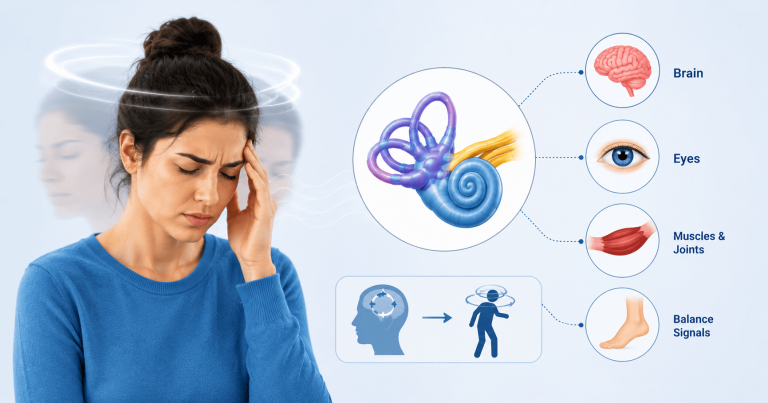
Understanding Vestibular Dysfunction And Why Dizziness Happens
The vestibular system inside the inner ear helps your brain understand motion, head position, and balance. When this system is affected, patients may experience:
- Chronic dizziness
- Vertigo or spinning sensation
- Walking imbalance
- Motion sensitivity
- Unsteady walking
- Visual dizziness
- Head movement dizziness
- Postural instability
- Difficulty focusing while moving
- Motion intolerance in busy environments
These symptoms may develop due to:
- Vestibular neuritis
- Inner ear infections
- Age-related balance decline
- Migraine-related vestibular issues
- Cervical spine problems
- Concussion or head injury
- Neurological conditions
- Long-term inactivity after illness
Some patients also develop a sensory balance disorder where the brain struggles to coordinate information coming from the eyes, muscles, joints, and inner ear.
According to the World Health Organization, balance disorders and dizziness significantly affect mobility, independence, and quality of life, especially in middle-aged and older adults. Research from the National Institutes of Health also supports vestibular rehabilitation as an evidence-based approach for many vestibular conditions.

What Is Gaze Stabilization Therapy?
Gaze Stabilization Therapy: A Powerful Vestibular Treatment For Dizziness Relief is a specialized form of vestibular therapy designed to improve how the eyes and inner ear work together during movement.
A healthy vestibulo ocular reflex (VOR) allows your eyes to stay focused on an object even when your head moves. When this reflex becomes impaired, patients may feel blurred vision, imbalance, or dizziness during daily activities.
Vestibular rehabilitation uses specific gaze control exercises and eye movement exercises to retrain this system gradually.
Common techniques include:
VOR X1 Exercises
VOR X1 exercises help retrain the connection between the eyes and inner ear balance system. Patients focus on a fixed target while gently moving the head, which may gradually reduce dizziness during daily activities like walking, reading, or turning.
VOR X2 Exercises
VOR X2 exercises are a more advanced form of vestibular rehabilitation where both the target and head move in opposite directions. These exercises are carefully introduced to improve visual stability, coordination, and confidence during movement.
Visual Stabilization Training
Visual stabilization training is designed to help patients maintain clear vision while the body or head is moving. It can be especially helpful for individuals who experience blurred vision, motion sensitivity, or visual dizziness in busy environments.
Dynamic Balance Training
Dynamic balance training combines controlled movement, posture correction, and walking exercises to improve overall balance and mobility. This approach helps patients feel safer and more stable during everyday activities such as climbing stairs or walking outdoors.
Balance Retraining
Balance retraining focuses on restoring stability and reducing the fear of falling. Through guided exercises, patients gradually improve coordination, body awareness, and confidence during standing, turning, and walking movements.
These vestibular exercises are carefully progressed based on the patient’s symptoms and tolerance.
How Vestibular Physiotherapy Helps Step By Step
At Varia Physiotherapy Clinic, vestibular care begins with a detailed clinical assessment rather than a one-size-fits-all approach.
1. Comprehensive Assessment
The physiotherapist evaluates:
- Eye movement coordination
- Vestibulo ocular reflex function
- Balance and gait
- Cervical spine mobility
- Neurological signs
- Postural control
- Motion sensitivity triggers
Special attention is given to identifying whether symptoms arise from vestibular dysfunction, neurological balance therapy needs, cervical involvement, or another medical condition.
If warning signs such as sudden hearing loss, severe neurological symptoms, double vision, or unexplained weakness are present, referral to a neurologist or ENT specialist may be recommended immediately.
2. Personalized Vestibular Rehabilitation Plan
Personalized vestibular exercises for dizziness relief are often included to improve balance control, visual stability, and confidence during movement.
- Vestibular exercises
- Gaze stabilization drills
- Balance therapy
- Visual stabilization techniques
- Walking coordination training
- Balance improvement strategies
- Vestibular compensation exercises
- Neck mobility correction
- Postural correction
The goal is gradual vestibular recovery without excessively aggravating symptoms.
3. Functional Training For Daily Activities
Many patients struggle most during real-life movement. Physiotherapy for dizziness often includes:
- Walking with head turns
- Stair training
- Turning practice
- Standing on uneven surfaces
- Busy visual environment exposure
- Dynamic balance training
These strategies help improve confidence in everyday situations like shopping malls, traffic-heavy roads, workplaces, and public spaces.

A Real Patient Scenario Seen At Varia Physiotherapy Clinic
A 48-year-old office professional from Ahmedabad visited the clinic after experiencing chronic dizziness and walking imbalance for nearly three months following a viral infection.
He described:
- A spinning sensation while turning quickly
- Difficulty focusing while walking
- Fear of falling in crowded areas
- Motion intolerance while driving
- Visual dizziness during screen work
Medical evaluation ruled out serious neurological conditions, and vestibular physiotherapy assessment indicated vestibular hypofunction affecting his vestibulo ocular reflex.
His treatment included:
- VOR exercises
- Gaze stabilization
- Balance retraining
- Eye movement exercises
- Walking coordination practice
- Vestibular compensation drills
Initially, symptoms increased slightly during exercises, which is common during early vestibular rehabilitation. Over six weeks, he gradually reported improved balance, reduced head movement dizziness, and greater confidence during work and travel.
While recovery timelines vary, many patients notice progressive improvement over several weeks with consistent therapy and home exercise adherence.
Common Myths Vs Facts About Vestibular Therapy
Myth | Fact |
“Dizziness always means a serious brain problem.” | Many balance disorders are linked to vestibular dysfunction or inner ear treatment needs. |
“Complete bed rest is best.” | Prolonged inactivity can slow vestibular recovery and worsen postural instability. |
“Dizziness exercises make symptoms worse permanently.” | Mild temporary symptom provocation is often part of vestibular adaptation and rehabilitation. |
“Only elderly people need vestibular therapy.” | Adults aged 30–65 commonly experience dizziness management challenges related to stress, infections, migraines, or neck issues. |
“Vertigo treatment only involves medication.” | Vestibular physiotherapy and balance therapy often play a major role in long-term recovery. |
When Should You See A Physiotherapist For Dizziness?
Consider seeking professional evaluation if you experience:
- Frequent dizziness lasting more than a few days
- Recurrent spinning sensation
- Unsteady walking
- Difficulty focusing during movement
- Balance problems after illness
- Motion sensitivity in crowds or vehicles
- Persistent head movement dizziness
- Falls or near-falls
- Difficulty turning quickly
- Visual instability during walking
Early vestibular rehabilitation may help prevent worsening balance dysfunction and improve daily confidence.
How Physiotherapy Supports Long-Term Balance Improvement
Successful vestibular care is not only about symptom reduction. It also focuses on restoring confidence, independence, and movement quality.
Evidence-based vestibular rehabilitation may help patients:
- Improve balance improvement during walking
- Reduce motion sensitivity
- Enhance visual stabilization
- Build safer mobility patterns
- Reduce fear of movement
- Improve postural control
- Support long-term dizziness relief
Consistency with home exercises, gradual progression, and professional guidance remain essential parts of recovery.
Conclusion
Gaze Stabilization Therapy: A Powerful Vestibular Treatment For Dizziness Relief can help individuals experiencing chronic dizziness, balance disorders, motion sensitivity, and unsteady walking regain confidence in daily life. Through personalized vestibular rehabilitation, balance retraining, and visual stabilization exercises, physiotherapy supports safer movement and gradual vestibular recovery. At Varia Physiotherapy Clinic, treatment focuses on evidence-based care, realistic recovery goals, and improving long-term balance and quality of life.
Book a Professional Assessment
If you’re unsure whether your symptoms need attention, it’s okay to start with a simple consultation. Understanding your condition is the first step toward recovery—no pressure, just guidance.
If you’d like to speak with a physiotherapist or book an assessment at Varia Physiotherapy Clinic, you can reach out here:
 Call: +91 95123 79555
 Email: hello.drhetalvaria@gmail.com
 Website: www.variaphysiotherapyclinic.com
Our team is here to listen, assess, and guide you toward safe and effective recovery.
Gaze Stabilization Therapy - FAQs
Is gaze stabilization therapy safe?
How long does vestibular recovery take?
Can physiotherapy completely cure vertigo?
Do vestibular exercises increase dizziness initially?
What is the role of the vestibulo ocular reflex?
About the Author

Dr. Hetal M Varia
After a rich experience of working in US healthcare as manager and licensed physiotherapist in US for last 11 years, she has returned home with a vision to become pioneer of Vestibular Therapy and specialized Parkinson physiotherapy in Ahmedabad. With her special skills and expertise in vertigo, Parkinson, balance and movement disorders therapy, Dr. Varia is committed to provide US standards of therapy services , compassionate and patient centered care to our people and community. With a vision of the world where everyone walks strong & steady, she intends to empower individuals with vestibular and neurological disorders through specialized care, rehabilitation & innovative therapies to improve mobility, balance & overall quality of life!