
Professional Vestibular Rehab Exercises Ahmedabad For Faster Recovery
Dizziness can feel frightening, unpredictable, and exhausting. Many adults in Ahmedabad describe it as “the room spinning,” while others feel unsteady when walking, turning their head, or getting out of bed. For some people, these symptoms begin after an ear infection, migraine, injury, or prolonged stress. Others notice gradual balance problems that interfere with daily life.
At Varia Physiotherapy Clinic, patients often arrive after weeks or months of avoiding movement because they fear triggering dizziness again. Unfortunately, reduced activity can make balance problems worse over time.
This is where Vestibular Rehab Exercises Ahmedabad programs can play an important role. Vestibular rehabilitation is a specialized form of physiotherapy designed to improve balance, reduce dizziness, and help the brain adapt to changes in the inner ear and nervous system.
Rather than promising “instant cures,” experienced physiotherapists focus on careful assessment, gradual recovery, and evidence-based treatment planning tailored to each patient’s condition.

Understanding the Vestibular System in Simple Terms
The vestibular system is located inside the inner ear and works closely with the eyes, brain, muscles, and joints to maintain balance and spatial awareness.
When this system is disrupted, patients may experience:
- Vertigo or spinning sensations
- Loss of balance while walking
- Nausea during movement
- Difficulty focusing while moving the head
- Motion sensitivity
- Fear of falling
- Fatigue caused by constant dizziness
Many patients assume dizziness always means low blood pressure or weakness. In reality, vestibular disorders can have multiple causes and require proper clinical evaluation.
Common conditions seen at Varia Physiotherapy Clinic include:
- Benign Paroxysmal Positional Vertigo (BPPV)
- Vestibular neuritis
- Cervicogenic dizziness
- Vestibular migraine
- Age-related balance decline
- Post-concussion dizziness
- Neurological balance disorders
According to the World Health Organization, balance disorders and fall-related mobility issues significantly affect quality of life in older adults. The National Institutes of Health also recognizes vestibular rehabilitation as an evidence-based approach for many vestibular conditions.
Common Causes of Dizziness and Balance Problems
Inner Ear Dysfunction
The inner ear helps your brain understand movement, balance, and body position. When this system is disturbed, even simple activities like turning in bed or bending forward may trigger dizziness or spinning sensations. Many patients feel anxious because symptoms appear suddenly, but proper assessment can help identify the underlying vestibular problem and guide safe treatment.
Neck-Related Dizziness
Long hours of desk work, poor posture, and cervical stiffness can sometimes contribute to dizziness and imbalance. Patients often describe a feeling of heaviness, unsteadiness, or discomfort during neck movement. Physiotherapy assessment helps determine whether restricted neck mobility or muscle tension may be affecting balance signals sent to the brain.
Vestibular Migraine
Vestibular migraine can cause dizziness, motion sensitivity, and balance problems even when headache pain is mild or absent. Many patients notice symptoms during stress, poor sleep, dehydration, or prolonged screen exposure. Because symptoms vary from person to person, individualized evaluation is important for proper management and recovery planning.
Neurological Conditions
Certain neurological conditions may interfere with the brain’s ability to process balance and movement information. Patients may experience persistent unsteadiness, coordination difficulty, or walking instability that affects daily confidence and safety. In these situations, physiotherapists often work alongside neurologists or other medical specialists to support comprehensive care.
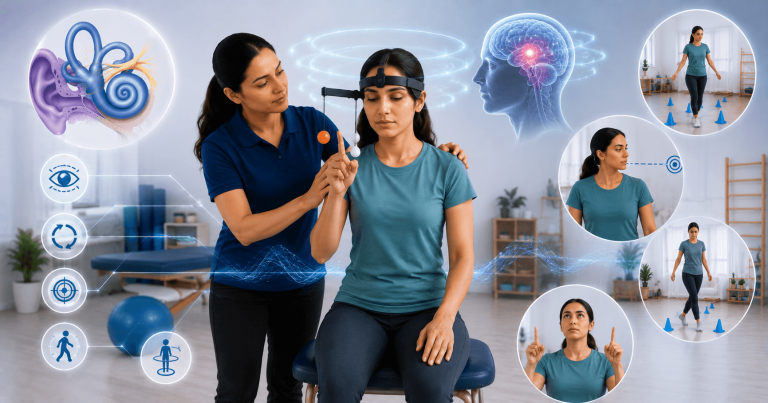
How Vestibular Rehab Exercises Ahmedabad Programs Work
Vestibular rehabilitation is not a single exercise routine copied from the internet. Effective treatment begins with a detailed assessment to identify the root cause of symptoms.
At Varia Physiotherapy Clinic, physiotherapists typically evaluate:
- Eye movement coordination
- Balance reactions
- Walking stability
- Head movement tolerance
- Neck mobility
- Fall risk
- Symptom triggers
- Functional limitations in daily life
Based on findings, a personalized rehabilitation plan is created.
1. Habituation Exercises
Habituation exercises are designed to help the brain gradually adapt to movements that trigger dizziness. Patients often feel uncomfortable during quick head turns, bending, or crowded visual environments, so these exercises are introduced slowly and safely. With consistent practice, many people notice reduced motion sensitivity and improved confidence during daily activities.
2. Gaze Stabilization Training
Many vestibular patients struggle to keep their vision clear while moving their head, which can affect walking, reading, or using screens. Gaze stabilization exercises help improve coordination between the eyes and inner ear balance system. Over time, patients often experience better visual focus and smoother movement during routine tasks.
3. Balance Retraining
Balance retraining focuses on improving body stability, coordination, and walking confidence. Exercises may include controlled standing activities, walking drills, turning practice, and functional movement training based on the patient’s condition. These programs are especially important for reducing fall risk and helping patients feel safer during daily movement.
4. Canal Repositioning Maneuvers
For patients with BPPV, specific repositioning techniques may help move displaced inner ear crystals back into their correct position. Many people experience dizziness when turning in bed or changing head position, and these maneuvers are often used after detailed vestibular assessment. Because symptoms can worsen with incorrect technique, treatment should always be guided by a trained physiotherapist or healthcare professional.
5. Cervical Physiotherapy
When dizziness is associated with neck stiffness or posture-related strain, cervical physiotherapy may help improve movement and reduce discomfort. Treatment often includes gentle manual therapy, posture correction, mobility exercises, and muscle strengthening tailored to the patient’s needs. Patients with prolonged desk work or chronic neck tension commonly benefit from a structured rehabilitation approach.
A Real Patient Scenario Commonly Seen at Varia Physiotherapy Clinic
A 52-year-old office professional visited the clinic after experiencing dizziness for nearly four months. She avoided quick movements, stopped evening walks, and became anxious while climbing stairs.
Initially, she believed the issue was simply “weakness” or age-related fatigue. However, detailed assessment revealed vestibular dysfunction combined with cervical stiffness caused by prolonged desk work.
Her rehabilitation program included:
- Gaze stabilization exercises
- Balance retraining
- Neck mobility treatment
- Gradual walking progression
- Home exercise guidance
During the first two weeks, symptoms reduced only slightly. By the fourth week, she reported improved confidence during daily activities. After approximately eight weeks of consistent therapy and home exercise compliance, she was able to return to regular walking without significant dizziness.
This example reflects a realistic recovery pattern. Vestibular rehabilitation often requires patience, repetition, and gradual nervous system adaptation, which is why many patients benefit from specialized vestibular recovery exercises designed to improve balance and support steady progress over time.
Myths vs Facts About Vestibular Rehabilitation
Myth: Complete bed rest is the best solution for dizziness.
Fact: Prolonged inactivity may worsen balance adaptation and physical conditioning. Controlled movement is often essential for recovery.
Myth: Vestibular exercises work instantly.
Fact: Some BPPV patients improve quickly, but many vestibular conditions require several weeks of consistent rehabilitation.
Myth: Dizziness always comes from low blood pressure.
Fact: Vestibular disorders, migraines, neurological conditions, neck dysfunction, and medication side effects can also contribute.
Myth: Online exercises are safe for everyone.
Fact: Different vestibular conditions require different treatment strategies. Incorrect exercises may aggravate symptoms.
When Should You See a Physiotherapist?
Consider professional assessment if you experience:
- Recurrent dizziness
- Loss of balance while walking
- Fear of falling
- Vertigo triggered by head movement
- Persistent unsteadiness
- Motion sensitivity
- Difficulty focusing while moving
However, some symptoms require immediate medical evaluation rather than self-treatment.
Read More: How Vestibular Physiotherapy Works?
Seek urgent medical attention if dizziness occurs with:
- Sudden weakness
- Slurred speech
- Facial drooping
- Severe headache
- Loss of consciousness
- Chest pain
- Sudden vision loss
In such cases, referral to a neurologist, ENT specialist, or orthopedic doctor may be necessary.
Recovery Expectations: What Patients Should Know
One of the most important parts of vestibular rehabilitation is setting realistic expectations.
Recovery timelines vary depending on:
- Duration of symptoms
- Age and overall health
- Severity of vestibular dysfunction
- Anxiety and fear of movement
- Consistency with home exercises
- Associated neurological or cervical issues
Some patients improve within 2–3 sessions, especially in uncomplicated BPPV cases. Others may require several weeks of progressive rehabilitation. The goal is not simply symptom reduction but improving functional independence, movement confidence, and long-term balance stability.
Conclusion
Living with dizziness and balance problems can affect confidence, mobility, work, and overall quality of life. Many people gradually limit movement because they fear triggering symptoms again, but avoiding activity often prolongs recovery.
With proper clinical assessment and individualized treatment planning, Vestibular Rehab Exercises Ahmedabad programs can help many patients improve balance, reduce dizziness, and return to daily activities more safely.
At Varia Physiotherapy Clinic Ahmedabad, physiotherapy care focuses on evidence-based rehabilitation, realistic recovery expectations, and patient-centered treatment rather than exaggerated promises.
If dizziness or balance issues are interfering with your daily routine, early assessment may help identify the underlying cause and guide appropriate treatment.