
How Vestibular Physiotherapy Works?
Feeling dizzy while walking, unsteady during daily activities, or experiencing sudden spinning sensations can be frightening. Many adults in Ahmedabad ignore these symptoms initially, assuming they are due to weakness, stress, or age-related changes. However, persistent dizziness and balance problems may indicate an issue within the vestibular system — the part of the inner ear and brain responsible for maintaining balance and spatial orientation.
At Varia Physiotherapy Clinic, patients commonly visit with complaints such as vertigo, imbalance while walking, motion sensitivity, neck-related dizziness, or fear of falling. These symptoms can affect work, driving, sleep, and confidence in everyday movement.
Understanding How Vestibular Physiotherapy Works? can help patients make informed decisions about treatment and recovery. Vestibular physiotherapy is a specialized form of rehabilitation designed to improve balance, reduce dizziness, and help the brain adapt to vestibular dysfunction through evidence-based exercises and movement training.
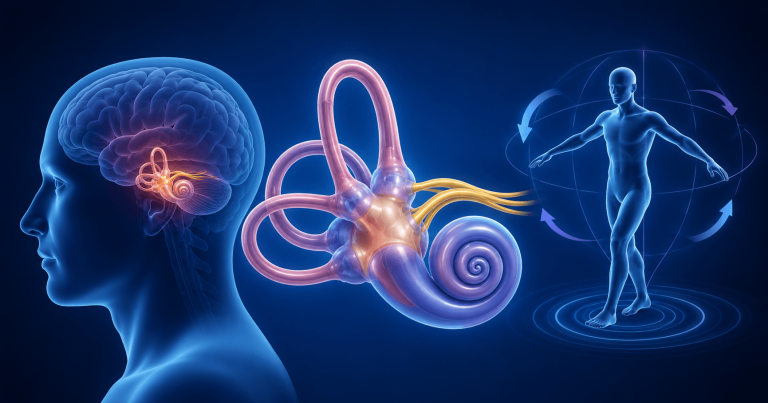
Understanding the Vestibular System in Simple Terms
The vestibular system is located inside the inner ear and communicates with the brain, eyes, muscles, and joints to maintain balance. When this system is disturbed, patients may experience:
- Vertigo (spinning sensation)
- Lightheadedness
- Unsteadiness while walking
- Difficulty focusing while moving
- Nausea during head movement
- Motion sensitivity
- Frequent falls or fear of falling
Vestibular disorders can develop suddenly or gradually and may affect adults of any age, although they are more commonly seen after age 30.
According to the World Health Organization, balance-related disorders significantly affect mobility, independence, and quality of life, especially in aging populations. The National Institutes of Health also recognizes vestibular rehabilitation as an evidence-based approach for many balance disorders.
Common Causes of Vestibular Problems
Many patients are surprised to learn that dizziness is not always caused by low blood pressure or weakness. Some common causes include:
Benign Paroxysmal Positional Vertigo (BPPV)
BPPV is a common inner ear condition that may cause sudden spinning sensations when turning in bed, looking up, or changing head position. It happens when tiny crystals inside the inner ear move out of place, affecting balance signals sent to the brain.
Vestibular Neuritis or Labyrinthitis
These conditions involve inflammation of the inner ear, often after a viral infection, and may lead to sudden dizziness, imbalance, nausea, or difficulty walking. Many patients feel anxious during the first episode because symptoms can appear unexpectedly and interfere with daily activities.
Cervicogenic Dizziness
Cervicogenic dizziness is dizziness associated with neck stiffness, poor posture, or cervical spine problems. Patients commonly describe feeling lightheaded or unsteady, especially after long hours of desk work, prolonged sitting, or neck movement.
Age-Related Balance Decline
As people age, the body’s balance system may become less efficient due to reduced coordination between the eyes, inner ear, muscles, and joints. This can increase unsteadiness while walking and may raise the risk of falls if not addressed early.
Neurological Conditions
Certain neurological conditions such as Parkinson’s disease, stroke, or multiple sclerosis may affect movement control, balance, and walking stability. In these cases, physiotherapy often focuses on improving safety, coordination, and confidence during daily activities.
Migraine-Associated Vertigo
Some individuals experience dizziness or spinning sensations linked with migraine activity, even without severe headache pain. Symptoms may worsen with bright lights, stress, lack of sleep, or sudden movement, affecting concentration and routine activities.
In some cases, symptoms may require further medical evaluation by an ENT specialist, neurologist, or orthopedic doctor, especially if dizziness is associated with sudden hearing loss, severe headaches, fainting, weakness, or vision changes.
How Vestibular Physiotherapy Works?
Vestibular physiotherapy focuses on retraining the brain and body to adapt to balance disturbances. Treatment is not simply about “exercise”; it involves a structured clinical assessment and personalized rehabilitation plan.
1. Detailed Clinical Assessment
At Varia Physiotherapy Clinic, assessment often includes:
- Balance testing
- Gait analysis
- Eye movement examination
- Positional testing for vertigo
- Cervical spine evaluation
- Functional movement assessment
- Fall risk screening
The goal is to identify the actual source of dizziness rather than only treating symptoms.
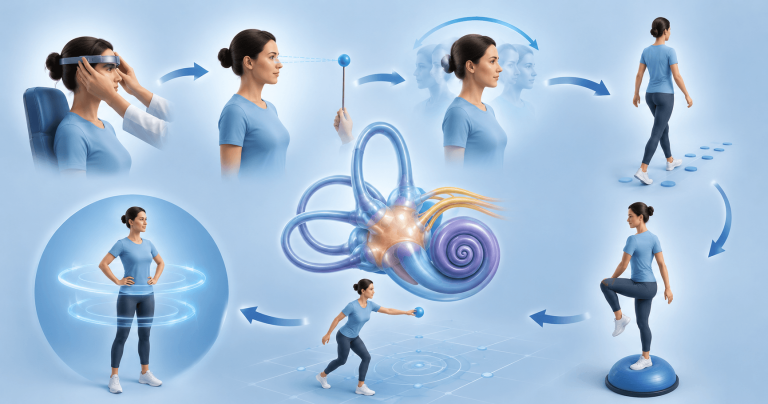
Step-by-Step: How Vestibular Physiotherapy Helps
Vestibular Adaptation Exercises
These exercises help the brain adapt to abnormal vestibular signals. Patients gradually improve tolerance to head movements and visual motion.
Example:
A patient may practice controlled head turning while focusing on a fixed object to improve visual stability.
Balance Retraining
Patients often lose confidence while walking due to instability. Physiotherapists use progressive balance exercises to improve coordination and reduce fall risk.
Exercises may include:
- Standing balance drills
- Weight shifting
- Walking pattern correction
- Surface balance training
Gaze Stabilization Training
Some individuals experience blurred vision while moving. Gaze stabilization exercises improve coordination between the eyes and vestibular system.
Canalith Repositioning Maneuvers
For BPPV patients, specialized maneuvers such as the Epley maneuver may help reposition displaced crystals within the inner ear. These techniques should only be performed after proper clinical diagnosis.
Cervical Spine Physiotherapy
Patients with neck-related dizziness may benefit from:
- Postural correction
- Cervical mobility exercises
- Muscle release techniques
- Strengthening exercises
Functional Rehabilitation
Treatment eventually progresses toward daily activities such as:
- Stair climbing
- Walking outdoors
- Turning quickly
- Returning to work routines
Recovery timelines vary depending on the condition, severity, age, and consistency with rehabilitation.
Real Patient Scenario Seen at Varia Physiotherapy Clinic
A 48-year-old office professional from Ahmedabad visited the clinic with complaints of dizziness while turning in bed and fear of falling during morning walks. The symptoms had been present for nearly three weeks.
Initially, the patient believed the issue was related to blood pressure fluctuations. However, clinical vestibular assessment suggested positional vertigo (BPPV).
A structured rehabilitation plan was started that included:
- Canalith repositioning maneuvers
- Balance exercises
- Head movement retraining
- Home safety guidance
Within two to three sessions, spinning sensations reduced significantly. Balance confidence improved gradually over the next few weeks with continued exercises and a structured vestibular physiotherapy treatment approach tailored to the patient’s symptoms and movement limitations. Not every patient improves at the same speed, but early intervention often helps prevent chronic imbalance and anxiety related to dizziness.
Myths vs Facts About Vestibular Physiotherapy
| Myth | Fact |
|---|---|
| Dizziness always comes from weakness or low BP | Vestibular dysfunction is a common cause of dizziness |
| Bed rest is the best solution | Prolonged inactivity may worsen balance adaptation |
| Vertigo medicines alone permanently solve the issue | Rehabilitation is often important for long-term improvement |
| Balance problems only affect older adults | Vestibular disorders can occur at any age |
| Physiotherapy is only for muscles and joints | Neurological and vestibular physiotherapy also address balance systems |
Signs You Should See a Physiotherapist
You should consider professional evaluation if you experience:
- Recurrent dizziness
- Vertigo during head movement
- Frequent imbalance
- Fear of falling
- Difficulty walking in crowded areas
- Motion sickness-like symptoms
- Neck pain associated with dizziness
- Unsteadiness after illness or injury
Early assessment may help prevent worsening symptoms and improve daily functioning.
When Referral to a Specialist May Be Necessary
Physiotherapists also recognize situations requiring medical referral.
Patients may be advised to consult a neurologist or ENT specialist if symptoms include:
- Sudden hearing loss
- Facial weakness
- Severe headaches
- Double vision
- Fainting episodes
- Sudden difficulty speaking
- Progressive neurological symptoms
Collaborative care is often important for accurate diagnosis and safe treatment planning.
How Vestibular Physiotherapy Supports Long-Term Recovery
One of the most important aspects of vestibular rehabilitation is consistency. The brain gradually learns to adapt through repeated movement exposure and sensory retraining.
Most patients require:
- Regular supervised sessions
- Home exercise programs
- Gradual activity progression
- Lifestyle and posture guidance
Some individuals notice improvement within days, while others may require several weeks depending on the underlying condition.
The focus is always on improving:
- Safety
- Functional mobility
- Confidence during movement
- Independence in daily life
Conclusion
Understanding How Vestibular Physiotherapy Works? can help patients recognize that dizziness and balance issues are often treatable with structured rehabilitation. Vestibular physiotherapy focuses on identifying the root cause of symptoms and helping the brain and body regain movement confidence through evidence-based treatment strategies.
At Varia Physiotherapy Clinic in Ahmedabad, treatment plans are tailored to each patient’s condition, movement limitations, and recovery goals. Rather than promising instant results, the focus remains on safe rehabilitation, gradual improvement, and long-term functional recovery.
If dizziness, imbalance, or fear of falling is affecting your daily life, early physiotherapy assessment may help you move more confidently and safely again.
Book a Professional Assessment
If you’re unsure whether your symptoms need attention, it’s okay to start with a simple consultation. Understanding your condition is the first step toward recovery—no pressure, just guidance.
If you’d like to speak with a physiotherapist or book an assessment at Varia Physiotherapy Clinic, you can reach out here:
 Call: +91 95123 79555
 Email: hello.drhetalvaria@gmail.com
 Website: www.variaphysiotherapyclinic.com
Our team is here to listen, assess, and guide you toward safe and effective recovery.
How Vestibular Physiotherapy Works - FAQs
Is vestibular physiotherapy safe?
How many sessions are usually required?
Can vestibular physiotherapy help cervical dizziness?
Does dizziness always mean an ear problem?
Can older adults benefit from vestibular rehabilitation?
About the Author

Dr. Hetal M Varia
After a rich experience of working in US healthcare as manager and licensed physiotherapist in US for last 11 years, she has returned home with a vision to become pioneer of Vestibular Therapy and specialized Parkinson physiotherapy in Ahmedabad. With her special skills and expertise in vertigo, Parkinson, balance and movement disorders therapy, Dr. Varia is committed to provide US standards of therapy services , compassionate and patient centered care to our people and community. With a vision of the world where everyone walks strong & steady, she intends to empower individuals with vestibular and neurological disorders through specialized care, rehabilitation & innovative therapies to improve mobility, balance & overall quality of life!