
Vestibular Neuritis Physiotherapy In Ahmedabad
Feeling dizzy while walking, turning your head, or even getting out of bed can be frightening. Many people describe it as “the room spinning,” while others feel unsteady, nauseous, or mentally exhausted from constantly trying to maintain balance. At times, these symptoms may appear suddenly after a viral infection or illness, making everyday activities difficult.
At Varia Physiotherapy Clinic, one of the most common balance-related conditions we see is vestibular neuritis. Patients often arrive worried that they may have a serious neurological problem, especially when dizziness interferes with work, driving, walking, or sleep. In many cases, proper assessment and evidence-based physiotherapy can help improve balance, reduce dizziness, and restore confidence gradually and safely.
This guide explains how Vestibular Neuritis Physiotherapy In Ahmedabad works, what recovery realistically looks like, and when professional medical care is necessary.

Understanding Vestibular Neuritis in Simple Terms
Vestibular neuritis is an inner ear condition that affects the vestibular nerve — the nerve responsible for sending balance signals from the inner ear to the brain. When this nerve becomes inflamed, the brain receives mixed signals about body position and movement.
As a result, patients may experience:
- Sudden spinning sensation (vertigo)
- Loss of balance
- Nausea or vomiting
- Difficulty focusing vision while moving
- Unsteadiness while walking
- Increased dizziness during head movement
- Fatigue or “brain fog”
Unlike some other vestibular disorders, vestibular neuritis usually does not cause hearing loss. However, the dizziness can be intense enough to disrupt daily life for days or even weeks.
According to the World Health Organization, balance disorders can significantly affect mobility, mental well-being, and quality of life, particularly in middle-aged and older adults.
Common Causes of Vestibular Neuritis
Vestibular neuritis is often linked to viral infections or inflammation affecting the inner ear nerve. Some common triggers include:
- Viral upper respiratory infections
- Seasonal flu or fever
- Reduced immune function
- Severe stress and fatigue
- Sudden inner ear inflammation
In Ahmedabad’s fast-paced urban lifestyle, many adults delay seeking treatment because they assume dizziness will resolve on its own. While mild symptoms may improve naturally, persistent imbalance often requires rehabilitation to help the brain adapt properly.
At Varia Physiotherapy Clinic, we frequently see patients who initially ignored symptoms and later developed:
- Fear of walking independently
- Anxiety during movement
- Reduced physical activity
- Neck stiffness from avoiding head movement
- Increased fall risk
Early physiotherapy intervention may help prevent these secondary complications.

How Vestibular Neuritis Physiotherapy In Ahmedabad Helps
Vestibular rehabilitation is a specialized vestibular rehabilitation program designed to retrain the brain and body to manage dizziness and balance problems more effectively. Rather than simply “treating vertigo,” physiotherapy focuses on improving the body’s natural adaptation mechanisms to support safer and more confident movement.
1. Detailed Clinical Assessment
A physiotherapist first performs a thorough evaluation, which may include:
- Balance testing
- Gait assessment
- Eye movement examination
- Head movement tolerance testing
- Positional dizziness evaluation
- Neurological screening
This step is extremely important because dizziness may sometimes be related to:
- Stroke
- Cervical spine disorders
- Benign paroxysmal positional vertigo (BPPV)
- Neurological conditions
- Migraine-related dizziness
If symptoms suggest a more serious neurological or medical condition, referral to a neurologist or ENT specialist may be recommended immediately.
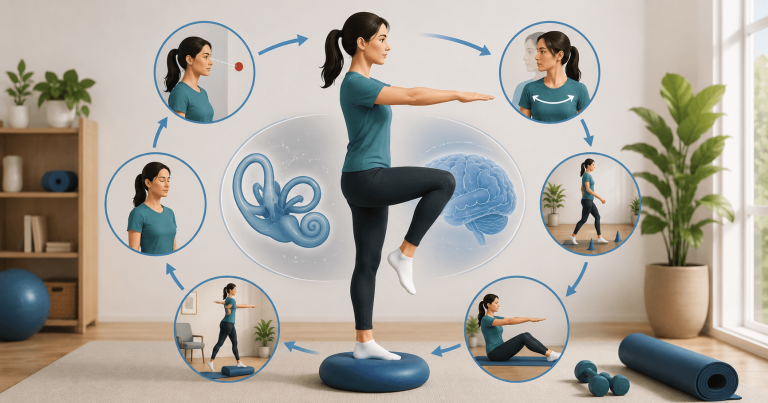
Step-by-Step Vestibular Rehabilitation Treatment
Gaze Stabilization Exercises
Many patients with vestibular neuritis struggle to focus visually while moving. Physiotherapists use controlled eye-head coordination exercises to improve visual stability. These exercises help the brain reprocess balance signals more effectively over time.
Balance Retraining
Balance retraining helps patients feel safer and more confident during everyday activities like standing, walking, and changing direction. At Varia Physiotherapy Clinic, exercises are progressed gradually based on each patient’s comfort level to improve stability, coordination, and reduce fear of falling.
Habituation Exercises
Certain head or body movements may repeatedly trigger dizziness after vestibular neuritis. Habituation exercises gently expose the body to these movements in a controlled way, helping the brain adapt over time and making daily activities feel more manageable.
Neck Mobility and Posture Correction
Many people develop neck stiffness and poor posture because they avoid moving during dizzy episodes. Gentle mobility exercises and posture correction techniques may help reduce tension, improve movement confidence, and support better overall balance control.
Functional Walking Training
Simple activities like walking in busy places, climbing stairs, or turning quickly can feel difficult after vestibular neuritis. Functional walking training focuses on improving real-life movement skills safely so patients can return to daily routines with greater confidence and independence.
Read More: How Vestibular Physiotherapy Works?
A Real Patient Scenario from Clinical Practice
A 48-year-old office professional visited Varia Physiotherapy Clinic after experiencing sudden severe dizziness following a viral fever. He reported difficulty walking without support and felt anxious every time he turned his head.
Initially, even basic activities such as getting out of bed or looking at a computer screen increased symptoms. After medical evaluation ruled out serious neurological causes, treatment for Vestibular Neuritis Physiotherapy In Ahmedabad began through a structured vestibular physiotherapy program.
The treatment plan included:
- Gentle gaze stabilization exercises
- Progressive walking drills
- Balance retraining
- Gradual head movement exposure
- Home exercise guidance
Within two weeks, his walking confidence improved noticeably. By six to eight weeks, he was able to return to work comfortably with only occasional mild imbalance during rapid movements. Every patient responds differently, but this gradual recovery pattern is commonly seen when rehabilitation is started consistently and early.
Realistic Recovery Expectations
One of the biggest concerns patients ask is:
“How long will recovery take?”
The answer depends on several factors:
- Severity of vestibular nerve inflammation
- Age and general health
- Early vs delayed treatment
- Anxiety levels
- Exercise consistency
- Presence of other neurological conditions
Some patients improve within a few weeks, while others may need several months of vestibular rehabilitation. Evidence from the National Institutes of Health supports vestibular rehabilitation as an effective non-surgical approach for improving dizziness, balance, and mobility in vestibular disorders. Physiotherapy is not a “quick fix,” but a structured recovery process that helps the nervous system adapt safely.
Myths vs Facts About Vestibular Neuritis
Myth: Complete bed rest is the best treatment
Fact: Prolonged inactivity may delay the brain’s natural adaptation process. Guided movement is often important for recovery.
Myth: Dizziness always means a brain problem
Fact: Many dizziness cases are related to vestibular dysfunction rather than serious neurological disease. However, professional assessment is still necessary.
Myth: Vestibular exercises make the condition worse
Fact: Temporary mild symptom increase can occur during rehabilitation, but carefully supervised exercises are designed to improve long-term adaptation.
Myth: Medication alone can cure vestibular neuritis
Fact: Medicines may help manage acute symptoms, but rehabilitation exercises often play a major role in functional recovery.
When Should You See a Physiotherapist?
You should consider professional evaluation if you experience:
- Persistent dizziness lasting more than a few days
- Balance problems while walking
- Fear of falling
- Motion sensitivity
- Difficulty focusing during movement
- Recurrent vertigo episodes
- Neck stiffness associated with dizziness
Seek urgent medical attention immediately if dizziness occurs with:
- Sudden weakness
- Slurred speech
- Severe headache
- Double vision
- Facial drooping
- Loss of consciousness
These symptoms may indicate a more serious neurological condition requiring emergency care.
Lifestyle Tips That May Support Recovery
Along with physiotherapy, patients are often advised to:
- Stay physically active within safe limits
- Avoid sudden prolonged bed rest
- Sleep adequately
- Manage stress levels
- Maintain hydration
- Gradually resume daily activities
Many patients also benefit emotionally when they understand that recovery is usually gradual rather than immediate.
Conclusion
Living with dizziness and balance problems can feel physically exhausting and emotionally overwhelming. Many adults limit movement, avoid social activities, or lose confidence because they fear symptoms returning unexpectedly.
The good news is that evidence-based Vestibular Neuritis Physiotherapy In Ahmedabad can help many patients gradually regain stability, mobility, and independence through structured rehabilitation and personalized care.
At Varia Physiotherapy Clinic, treatment focuses on careful assessment, realistic recovery planning, and patient-centered rehabilitation rather than exaggerated promises. Every patient’s condition is different, which is why individualized physiotherapy programs are essential for safe and effective recovery.
If persistent dizziness or imbalance is affecting your daily life, seeking early professional guidance may help you return to normal activities with greater confidence and comfort.
Book a Professional Assessment
If you’re unsure whether your symptoms need attention, it’s okay to start with a simple consultation. Understanding your condition is the first step toward recovery—no pressure, just guidance.
If you’d like to speak with a physiotherapist or book an assessment at Varia Physiotherapy Clinic, you can reach out here:
 Call: +91 95123 79555
 Email: hello.drhetalvaria@gmail.com
 Website: www.variaphysiotherapyclinic.com
Our team is here to listen, assess, and guide you toward safe and effective recovery.
Vestibular Neuritis Physiotherapy In Ahmedabad - FAQs
Is vestibular neuritis permanent?
Can physiotherapy completely cure dizziness?
Is vestibular neuritis dangerous?
How many physiotherapy sessions are usually needed?
Can stress worsen vestibular symptoms?
About the Author

Dr. Hetal M Varia
After a rich experience of working in US healthcare as manager and licensed physiotherapist in US for last 11 years, she has returned home with a vision to become pioneer of Vestibular Therapy and specialized Parkinson physiotherapy in Ahmedabad. With her special skills and expertise in vertigo, Parkinson, balance and movement disorders therapy, Dr. Varia is committed to provide US standards of therapy services , compassionate and patient centered care to our people and community. With a vision of the world where everyone walks strong & steady, she intends to empower individuals with vestibular and neurological disorders through specialized care, rehabilitation & innovative therapies to improve mobility, balance & overall quality of life!