
Parkinson's Posture Correction Physiotherapy Ahmedabad
Living with Parkinson’s disease can gradually change the way a person stands, walks, and performs daily activities. Many patients begin noticing a stooped posture, shuffling gait, stiffness, reduced arm swing, and difficulty maintaining upright spinal alignment. These physical changes can affect mobility, balance, confidence, and overall independence.
At Varia Physiotherapy Clinic in Ahmedabad, we frequently meet patients who initially ignore subtle posture-related symptoms, assuming they are part of normal aging. However, Parkinson’s-related postural dysfunction is often linked to neurological movement changes, muscle rigidity, reduced flexibility, and impaired motor-control. Early physiotherapy intervention may help patients maintain better physical-function, improve movement-patterns, and support safer daily-activities.
This article explains how Parkinson’s Posture Correction Physiotherapy Ahmedabad may help improve posture, walking ability, coordination, and functional independence through evidence-based rehabilitation and supportive therapeutic care.
Why Posture Changes Occur in Parkinson's Disease
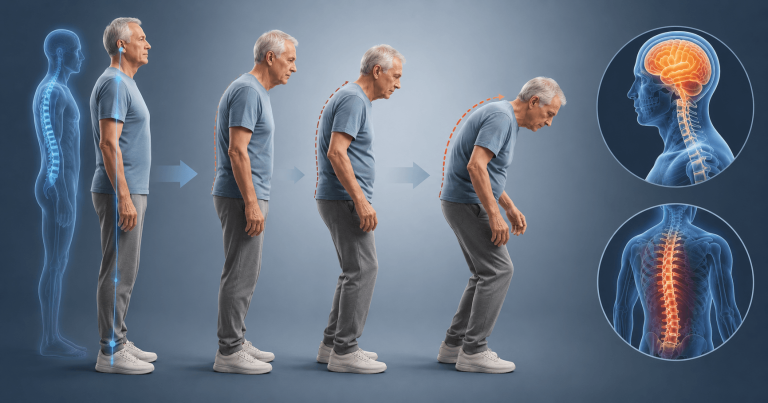
Parkinson’s disease is a progressive neurological condition that affects movement regulation within the brain. Over time, patients may develop postural instability, muscle stiffness, tremors, and reduced body coordination.
One of the most noticeable symptoms is a flexed or stooped posture. Patients may gradually lean forward while standing or walking due to rigidity in the spine, hips, and muscles. This slouching posture often alters body-mechanics and affects symmetry during movement.
Common ligament injuries include:
Stooped or Flexed Posture
Many people with Parkinson’s disease gradually develop a forward-bending or stooped posture due to muscle rigidity and reduced postural control. This change can make standing upright feel tiring and may affect balance, walking confidence, and daily comfort over time.
Shuffling Walking Pattern
A shuffling gait often causes steps to become shorter, slower, and less coordinated. Patients may feel as though their feet are “dragging” or difficult to lift properly, which can increase fatigue and reduce mobility during routine activities.
Reduced Balance and Stability
Parkinson’s disease can affect the body’s ability to maintain balance during standing, turning, or walking movements. Many patients begin feeling unsteady while moving around the home or outdoors, which may increase fear of falling and reduce confidence.
Freezing Episodes While Walking
Some individuals experience sudden moments where their feet feel temporarily “stuck” to the floor, especially while turning or walking through narrow spaces. These freezing episodes can feel frustrating and may interfere with safe movement and independence.
Neck and Back Stiffness
Muscle stiffness in the neck, shoulders, and back is common in Parkinson’s disease and may make movement feel restricted or uncomfortable. Persistent stiffness can also affect posture, flexibility, and the ability to perform daily activities comfortably.
Reduced Spinal-Mobility
Limited spinal mobility may make bending, turning, or changing positions more difficult over time. Reduced movement in the spine can contribute to posture-related discomfort and may affect overall walking mechanics and body coordination. These movement difficulties can increase fall risk and reduce confidence while performing normal activities such as walking outdoors, climbing stairs, or getting out of bed.
According to the World Health Organization, rehabilitation plays an important role in maintaining mobility and functional independence in neurological conditions. Similarly, the National Institutes of Health recognizes physiotherapy as an important component of Parkinson’s disease management.
How Parkinson's Posture Correction Physiotherapy Ahmedabad Helps
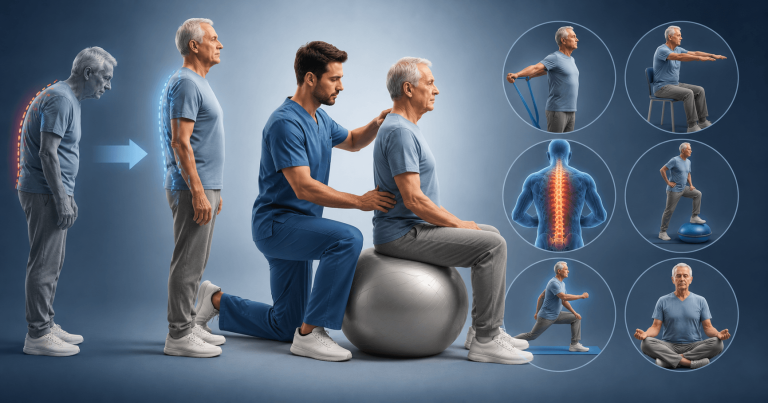
At Varia Physiotherapy Clinic, physiotherapy treatment begins with a detailed clinical assessment. Every Parkinson’s patient presents differently depending on disease progression, muscle rigidity, balance dysfunction, and movement limitations.
Our physiotherapy approach focuses on improving:
- Postural alignment
- Mobility
- Stability
- Balance-training
- Walking mechanics
- Functional independence
- Flexibility
- Core strengthening
- Neuromuscular coordination
- Fall-prevention strategies
1. Detailed Clinical Assessment
The first step involves understanding the patient’s movement difficulties and physical limitations. Physiotherapists evaluate:
- Walking pattern and gait
- Spine alignment
- Balance and stability
- Muscle stiffness and rigidity
- Functional-movement ability
- Coordination and mobility
- Tremors affecting posture
- Daily-activities performance
- Muscle strength and endurance
This assessment helps create a personalized rehabilitation and therapeutic treatment plan.
Postural Correction Exercises for Parkinson's Disease
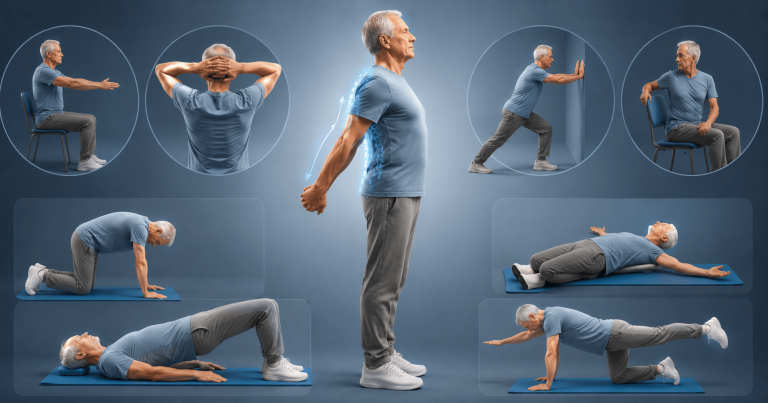
Many Parkinson’s patients develop forward bending posture because the muscles responsible for maintaining upright posture gradually weaken or become stiff.
Physiotherapy may include:
- Postural correction exercise routines
- Stretching for tight chest and hip muscles
- Spine mobility exercises
- Core strengthening
- Shoulder alignment training
- Functional-movement retraining
- Upright standing practice
- Neuromuscular posture training
These exercises aim to improve postural awareness, reduce slouching, and enhance physical-function during walking and standing. Patients are also educated about proper sitting posture, supportive positioning, and body-mechanics during everyday tasks.
Balance and Mobility-Training in Parkinson's Rehabilitation
Reduced balance and postural instability are common reasons Parkinson’s patients experience falls. Balance-training helps improve coordination, stability, and confidence during movement.
Physiotherapy sessions may involve:
- Weight-shifting exercises
- Controlled walking drills
- Stability training
- Step training
- Turning practice
- Functional mobility-training
- Gait correction techniques
- Walking endurance conditioning
These rehabilitation techniques are carefully adapted according to the patient’s age, mobility level, and neurological symptoms.
At our Ahmedabad clinic, many patients report feeling more confident while walking indoors and outdoors after consistent therapeutic exercise programs.
Gait Training and Movement Correction
Parkinson’s disease often changes natural walking movement-patterns. Patients may begin taking shorter steps, dragging their feet, or experiencing freezing episodes.
Gait training focuses on improving:
- Step length
- Walking rhythm
- Coordination
- Balance
- Muscle activation
- Movement confidence
- Upright walking posture
Visual cues, rhythmic movement exercises, and motor-control strategies are often used during therapy sessions to improve mobility and reduce instability.
Real Patient Scenario from Varia Physiotherapy Clinic
A 58-year-old businessman from Ahmedabad visited Varia Physiotherapy Clinic after noticing progressive posture changes and walking difficulty over the previous year. He reported slouching posture, stiffness in the spine, shuffling gait, and fear of falling while walking outside.
During clinical assessment, significant postural dysfunction, reduced spinal-mobility, impaired balance, and muscle rigidity were identified. His confidence during daily-activities had also decreased.
A structured physiotherapy rehabilitation plan was started, including:
- Postural correction exercises
- Stretching therapy
- Core strengthening
- Balance-training
- Functional-movement retraining
- Walking and gait therapy
- Neuromuscular coordination drills
After several weeks of consistent treatment and home exercise adherence, the patient showed noticeable improvements in walking confidence, upright posture, mobility, and endurance. Although Parkinson’s disease itself cannot currently be cured, supportive physiotherapy care helped improve his physical-function and daily independence.
Myths vs Facts About Parkinson's Physiotherapy
| Myth | Fact |
|---|---|
| Parkinson’s posture problems cannot improve | Physiotherapy may help improve alignment, mobility, and movement confidence. |
| Exercise worsens Parkinson’s symptoms | Structured therapeutic exercise is generally beneficial when supervised appropriately. |
| Only medications help Parkinson’s disease | Rehabilitation and physiotherapy also support mobility and functional independence. |
| Falls are unavoidable in Parkinson’s disease | Fall-prevention training may help reduce fall risk. |
| Physiotherapy is only useful in advanced stages | Early intervention often supports better long-term physical-function. |
When Should You See a Physiotherapist?
Many patients delay treatment until movement problems become severe. However, early physiotherapy intervention and specialized Parkinson’s posture physiotherapy may help maintain better mobility, balance, and posture for longer periods.
Consider consulting a physiotherapist if you experience:
- Stooped posture
- Slouching while standing
- Shuffling walking pattern
- Frequent stiffness
- Reduced balance
- Freezing episodes
- Difficulty turning while walking
- Reduced coordination
- Fear of falling
- Decline in daily mobility
In some situations, referral to a neurologist or orthopedic specialist may also be necessary, especially if symptoms rapidly worsen, severe tremors develop, or additional musculoskeletal pain is present.
Role of Home Exercise and Long-Term Recovery
Parkinson’s rehabilitation is usually an ongoing process rather than a short-term treatment. Recovery timelines vary depending on disease progression, physical condition, mobility level, and treatment consistency.
Most patients benefit from:
- Regular physiotherapy sessions
- Daily stretching
- Mobility exercises
- Balance practice
- Functional strengthening
- Walking routines
- Postural awareness training
Long-term supportive exercise helps maintain flexibility, stability, endurance, and independence.
At Varia Physiotherapy Clinic, patients are educated about safe home exercises and realistic rehabilitation expectations rather than temporary symptom-focused approaches.
Conclusion
Living with Parkinson’s disease can be physically and emotionally challenging, especially when posture changes begin affecting mobility and confidence. However, supportive physiotherapy rehabilitation may help many patients maintain movement quality, independence, and better physical-function over time.
At Varia Physiotherapy Clinic in Ahmedabad, treatment plans are designed around realistic goals, evidence-based physiotherapy methods, and compassionate patient care. Parkinson’s Posture Correction Physiotherapy Ahmedabad focuses not only on posture and movement, but also on helping patients safely participate in daily life with greater confidence and comfort.
If you or a loved one is experiencing posture-related movement difficulties, early clinical assessment and rehabilitation support may help improve long-term mobility and overall wellness.
Book a Parkinson's Physiotherapy Consultation
If you’re unsure whether your symptoms need attention, it’s okay to start with a simple consultation. Understanding your condition is the first step toward recovery—no pressure, just guidance.
If you’d like to speak with a physiotherapist or book an assessment at Varia Physiotherapy Clinic, you can reach out here:
 Call: +91 95123 79555
 Email: hello.drhetalvaria@gmail.com
 Website: www.variaphysiotherapyclinic.com
Our team is here to listen, assess, and guide you toward safe and effective recovery.