
Parkinson's Walking Therapy In Gota Ahmedabad
Living with Parkinson’s disease can slowly change the way a person walks, balances, and moves through daily life. Many patients at Varia Physiotherapy Clinic in Ahmedabad describe feeling unsure while walking, taking shorter steps, or struggling to turn without losing balance. For some, even simple activities like walking to the kitchen or crossing a road become stressful.
If you or your loved one is searching for Parkinson’s Walking Therapy In Gota Ahmedabad, it’s important to understand that physiotherapy can play a major role in improving mobility, reducing fall risk, and helping patients stay independent for longer.
Parkinson’s disease is a progressive neurological condition, but with structured physiotherapy, guided movement training, and regular exercise, many people continue to lead active and meaningful lives. The goal is not to promise a “cure,” but to help patients move more safely, confidently, and comfortably.
At Varia Physiotherapy Clinic, treatment plans are designed after detailed clinical assessments and tailored to each patient’s stage of Parkinson’s disease, mobility level, balance ability, and daily lifestyle needs.
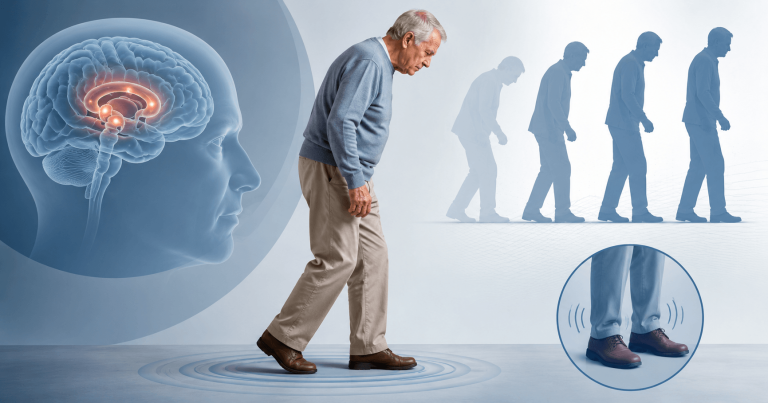
Understanding Walking Problems in Parkinson's Disease
Parkinson’s disease affects the nervous system, especially the areas of the brain responsible for movement coordination. As the condition progresses, patients commonly develop walking-related difficulties.
Common walking symptoms include:
- Shuffling gait
- Small, slow steps
- Difficulty initiating movement
- Freezing episodes while walking
- Poor balance
- Stooped posture
- Reduced arm swing
- Increased risk of falls
Many patients initially think these problems are simply part of aging. However, persistent walking difficulty should never be ignored, especially when it affects confidence and daily activities.
According to the World Health Organization, Parkinson’s disease is one of the fastest-growing neurological disorders worldwide. Early rehabilitation and exercise are strongly encouraged to improve quality of life.
Similarly, the highlights the importance of physical activity and rehabilitation in managing Parkinson’s symptoms.
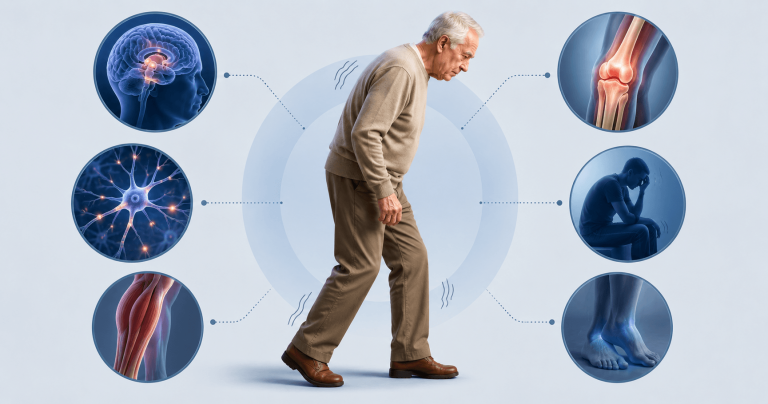
Common Causes of Walking Difficulty in Parkinson's
Muscle Rigidity
Muscle stiffness is very common in Parkinson’s disease and can make walking feel tight, slow, or uncomfortable. Many patients describe feeling as though their legs are “heavy” or difficult to move naturally, especially in the morning or after sitting for long periods.
Bradykinesia (Slowness of Movement)
Bradykinesia causes everyday movements to become slower and less automatic over time. Patients may notice delayed reactions while walking, turning, or getting up from a chair, which can affect confidence and daily independence.
Balance Impairment
Parkinson’s disease can reduce the body’s ability to maintain stable posture during movement. This often increases the risk of imbalance, particularly while turning, walking on uneven surfaces, or changing direction suddenly.
Reduced Coordination
Movements that once happened naturally may start requiring greater concentration and effort. Patients often feel mentally and physically tired because even simple walking tasks demand more attention and control.
Fear of Falling
After experiencing imbalance or a previous fall, many patients become anxious while walking outdoors or in crowded places. This fear can sometimes lead to reduced activity levels, slower walking patterns, and loss of confidence in daily movement.
At Varia Physiotherapy Clinic, therapists carefully evaluate all these contributing factors before starting a personalized balance and walking rehabilitation for Parkinson’s patients program designed to improve mobility, stability, and daily movement confidence.
How Parkinson's Walking Therapy In Gota Ahmedabad Helps Patient
Physiotherapy for Parkinson’s disease focuses on improving movement efficiency, balance, posture, strength, and walking confidence.
1. Detailed Clinical Assessment
Treatment begins with a thorough physiotherapy assessment, including:
- Walking pattern analysis
- Balance evaluation
- Fall risk assessment
- Posture examination
- Muscle strength testing
- Functional mobility assessment
The therapist also studies how symptoms affect daily activities like climbing stairs, getting out of bed, or walking outdoors. This step is essential because no two Parkinson’s patients experience symptoms in exactly the same way.
2. Gait Training Exercises
One of the most important parts of Parkinson’s Walking Therapy In Gota Ahmedabad is gait retraining.
Therapists use evidence-based movement strategies to help patients:
- Take longer steps
- Improve walking rhythm
- Increase foot clearance
- Improve turning movements
- Reduce freezing episodes
Patients are often trained using visual cues, rhythmic counting, floor markers, and movement sequencing techniques. These methods help the brain create better movement patterns despite neurological limitations.
3. Balance Rehabilitation
Balance exercises are carefully introduced to reduce fall risk.
These may include:
- Weight-shifting activities
- Static balance exercises
- Dynamic balance training
- Directional stepping practice
- Controlled reaching activities
The exercises are progressed gradually based on patient safety and confidence.
4. Strengthening and Flexibility Training
Weak muscles and stiffness can worsen walking problems.
Physiotherapy programs commonly include:
- Lower limb strengthening
- Core stability exercises
- Hip mobility work
- Postural correction exercises
- Stretching routines
Improving strength helps patients maintain better walking stability and endurance.
5. Functional Mobility Training
Therapy also focuses on practical daily activities such as:
- Getting up from a chair
- Bed mobility
- Stair climbing
- Walking in crowded spaces
- Safe turning techniques
This makes rehabilitation meaningful for real-life situations.
6. Breathing and Endurance Exercises
Many Parkinson’s patients develop reduced stamina over time.
Therapists may include:
- Walking endurance training
- Controlled breathing exercises
- Low-impact aerobic activity
These exercises help improve overall physical conditioning.
A Real Patient Scenario Seen at Varia Physiotherapy Clinic
A 62-year-old gentleman from Gota visited Varia Physiotherapy Clinic after experiencing repeated imbalance while walking outdoors. His family noticed he had started taking very small steps and occasionally “froze” while turning.
Initially, he avoided morning walks because he feared falling.
After a detailed physiotherapy assessment, a structured rehabilitation plan was created focusing on:
- Gait retraining
- Balance correction
- Step-length improvement
- Postural exercises
- Cue-based walking practice
Within several weeks, he reported feeling more confident while walking indoors and outdoors. His family also noticed improved posture and smoother movement transitions.bIt is important to understand that Parkinson’s rehabilitation usually requires ongoing consistency. Recovery timelines vary depending on disease stage, fitness level, and overall neurological involvement.
Myths vs Facts About Parkinson's Physiotherapy
| Myth | Fact |
|---|---|
| Parkinson’s patients should avoid movement | Regular guided movement is highly beneficial |
| Walking problems cannot improve | Physiotherapy often helps improve mobility and safety |
| Only medicines help Parkinson’s disease | Rehabilitation plays an important supportive role |
| Falls are unavoidable | Balance training can reduce fall risk |
| Physiotherapy is only for severe cases | Early intervention is often more effective |
When Should You See a Physiotherapist?
You should consider physiotherapy if you notice:
- Difficulty walking normally
- Frequent imbalance
- Slower movements
- Shuffling gait
- Freezing while walking
- Repeated falls
- Difficulty turning
- Reduced confidence during movement
Early physiotherapy intervention is usually more beneficial than waiting for symptoms to worsen.
At times, physiotherapists may also recommend consultation with a neurologist or orthopedic specialist if symptoms change suddenly, worsen rapidly, or involve severe pain, dizziness, or other neurological concerns.
What Makes Physiotherapy Important in Parkinson's Care?
Parkinson’s disease affects much more than walking alone. Over time, reduced mobility can impact emotional well-being, independence, social participation, and overall quality of life.
Physiotherapy helps by:
- Encouraging safe movement
- Supporting independence
- Reducing physical deconditioning
- Improving confidence
- Helping patients remain active longer
Evidence-based rehabilitation is now considered an important part of multidisciplinary Parkinson’s management worldwide.
Lifestyle Tips for Better Mobility in Parkinson's Disease
Patients often benefit from simple daily habits such as:
- Staying physically active regularly
- Following medication timing properly
- Using supportive footwear
- Avoiding cluttered walking areas
- Practicing posture awareness
- Maintaining regular sleep habits
- Continuing home exercises consistently
Small lifestyle changes can make movement safer and more manageable.
Related Physiotherapy Services at Varia Physiotherapy Clinic
Patients interested in Parkinson's rehabilitation may also benefit from:
- Balance rehabilitation therapy
- Neurological physiotherapy
- Gait training programs
- Fall prevention therapy
- Vestibular rehabilitation
You can internally link to pages such as:
- Neurological Physiotherapy Services
- Balance & Fall Prevention Therapy
- Vestibular Rehabilitation
- Home Physiotherapy Services in Ahmedabad
Conclusion
Living with Parkinson’s disease can be physically and emotionally challenging, especially when walking becomes difficult or unsafe. However, structured rehabilitation and movement-focused care can make a meaningful difference.
If you are searching for Parkinson’s Walking Therapy In Gota Ahmedabad, physiotherapy may help improve balance, mobility, posture, confidence, and day-to-day independence through safe and evidence-based techniques.
At Varia Physiotherapy Clinic, treatment plans are designed around individual patient needs, realistic goals, and long-term movement support rather than quick promises or temporary fixes.
Early assessment and consistent therapy often provide the best opportunity to maintain mobility and quality of life.
Ethical Call-to-Action
If you’re unsure whether your symptoms need attention, it’s okay to start with a simple consultation. Understanding your condition is the first step toward recovery—no pressure, just guidance.
If you’d like to speak with a physiotherapist or book an assessment at Varia Physiotherapy Clinic, you can reach out here:
 Call: +91 95123 79555
 Email: hello.drhetalvaria@gmail.com
 Website: www.variaphysiotherapyclinic.com
Our team is here to listen, assess, and guide you toward safe and effective recovery.