
Parkinson’s Physiotherapy In Satellite Ahmedabad
Living with Parkinson’s disease can feel overwhelming—not only for the person diagnosed but also for family members who witness the gradual changes in movement, balance, walking, and daily independence. Many patients in Ahmedabad initially believe stiffness, tremors, or slow walking are simply part of aging. However, early physiotherapy intervention can play a significant role in maintaining mobility and quality of life.
At Varia Physiotherapy Clinic, we regularly meet adults in their 40s, 50s, and 60s who are struggling with balance problems, shuffling gait, reduced coordination, or fear of falling. Through structured rehabilitation programs, many patients gradually regain confidence in movement and daily activities.
This article explains how Parkinson’s Physiotherapy in Satellite Ahmedabad can help patients manage symptoms safely and realistically using evidence-based rehabilitation approaches.

Understanding Parkinson's Disease in Simple Terms
Parkinson’s disease is a progressive neurological condition that mainly affects movement. It develops when certain brain cells responsible for producing dopamine gradually reduce in function. Dopamine helps coordinate smooth and controlled body movements.
Common symptoms may include:
- Tremors or shaking
- Slow body movements
- Muscle stiffness
- Balance difficulties
- Shuffling while walking
- Reduced arm swing
- Difficulty getting up from a chair
- Fatigue and reduced physical confidence
According to the World Health Organization, Parkinson’s disease affects millions of people worldwide, especially older adults. The condition progresses differently in every individual, which is why personalized rehabilitation becomes important.
Some patients experience mild symptoms for years, while others notice quicker changes in balance and mobility. Early physiotherapy often helps patients remain active and independent longer.

Common Challenges Faced by Parkinson's Patients
Many people do not seek treatment immediately because symptoms often start gradually.
At Varia Physiotherapy Clinic in Ahmedabad, common concerns reported by patients include:
Difficulty Walking in Crowded Areas
Many Parkinson’s patients feel uncomfortable walking in crowded markets, malls, or busy streets because sudden movements and uneven surfaces can affect balance. Some individuals may experience “freezing,” where the feet temporarily stop moving despite trying to walk. This can increase fear, anxiety, and hesitation during outdoor activities. Over time, patients may begin avoiding social situations due to reduced confidence in mobility.
Fear of Falling
Fear of falling is very common in people with Parkinson’s disease, especially after experiencing even a small slip or imbalance episode. Patients may become overly cautious while walking, climbing stairs, or moving on uneven ground. This fear can gradually reduce physical activity levels and independence. Physiotherapy often focuses on improving balance and restoring movement confidence safely.
Morning Stiffness
Morning stiffness can make simple movements difficult after waking up or sitting for long periods. Patients often report tight muscles, slower walking, and difficulty getting out of bed or chairs. This stiffness usually affects flexibility and overall comfort during daily activities. Regular movement exercises and physiotherapy may help improve mobility and reduce muscle rigidity over time.
Reduced Hand Coordination
Parkinson’s disease can affect fine motor control, making everyday hand movements more challenging. Tasks such as buttoning clothes, writing, holding utensils, or using a mobile phone may become slower and less accurate. Reduced coordination can impact independence and daily routine activities. Hand mobility exercises and functional training are often included in physiotherapy programs.
Poor Posture and Neck Tightness
Many patients with Parkinson’s develop a forward-bending posture due to muscle stiffness and reduced body control. Poor posture can place additional stress on the neck, shoulders, and lower back, leading to discomfort and fatigue. Over time, posture changes may also affect walking balance and breathing efficiency. Physiotherapy helps improve posture awareness, flexibility, and muscle support for better daily function.
Parkinson's Physiotherapy In Satellite Ahmedabad
Physiotherapy for Parkinson’s disease is not only about exercises. A structured rehabilitation plan focuses on improving movement efficiency, balance, flexibility, coordination, and overall confidence. Parkinson’s Physiotherapy Treatment Ahmedabad programs are designed to help patients improve mobility, functional independence, and daily movement safety through personalized rehabilitation approaches.
At Varia Physiotherapy Clinic, physiotherapists typically begin with a detailed assessment that may include:
- Walking pattern analysis
- Balance evaluation
- Muscle stiffness assessment
- Functional mobility testing
- Postural assessment
- Fall-risk screening
- Coordination testing
Based on findings, an individualized treatment plan is created.
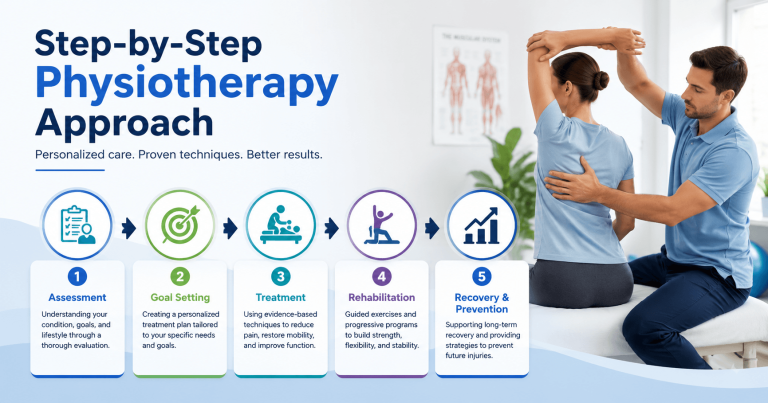
Step-by-Step Physiotherapy Approach
1. Mobility Training
Mobility training helps Parkinson’s patients improve slow and restricted body movements that affect daily activities. Physiotherapists use guided exercises and functional movement practice to encourage smoother and more controlled motion. Activities such as bed mobility and sit-to-stand training can help patients move more confidently. Regular mobility exercises may also reduce stiffness and improve overall independence.
Therapists may use:
- Guided movement exercises
- Repetitive mobility drills
- Functional movement retraining
- Bed mobility practice
- Sit-to-stand training
These exercises aim to improve movement initiation and reduce stiffness.
2. Balance Rehabilitation
Balance rehabilitation focuses on improving body stability and reducing the risk of falls during daily movement. Patients practice controlled exercises that challenge balance safely under physiotherapy supervision. These exercises are gradually progressed based on the patient’s physical condition and confidence level. Better balance often helps patients feel safer while walking indoors and outdoors.
Balance-focused physiotherapy may include:
- Static balance training
- Dynamic balance exercises
- Weight-shifting drills
- Fall prevention training
- Walking on different surfaces
These exercises progress gradually depending on the patient’s safety and physical capacity.
3. Gait Training
Gait training is designed to improve walking patterns commonly affected by Parkinson’s disease, such as shuffling or short-step walking. Physiotherapists work on walking rhythm, step length, turning control, and arm coordination. Special cueing techniques may be used to improve movement flow and reduce freezing episodes. Consistent gait training can help improve walking confidence and mobility.
Physiotherapists often work on:
- Step length improvement
- Rhythm training
- Walking speed control
- Turning safely
- Arm swing coordination
Visual and auditory cueing techniques are sometimes used to improve walking rhythm.
4. Strength and Flexibility Exercises
Strengthening and flexibility exercises help improve muscle support, posture, and movement control in Parkinson’s patients. Weakness and stiffness can make daily activities more physically demanding over time. Physiotherapy programs often include stretching, posture correction, and functional strengthening exercises. Improved muscle function may help reduce fatigue and support safer movement.
A physiotherapy program may include:
- Core strengthening
- Leg strengthening
- Postural correction exercises
- Stretching routines
- Functional strengthening
Improved muscle control often supports better walking and reduced fatigue.
5. Breathing and Endurance Training
Breathing and endurance training helps patients maintain stamina and physical activity levels as Parkinson’s symptoms progress. Reduced movement can gradually affect cardiovascular fitness and energy levels. Low-impact exercises are used to improve walking tolerance, breathing efficiency, and overall endurance safely. Better physical conditioning may support improved participation in daily activities.
Low-impact endurance exercises can help improve:
- Energy levels
- Cardiovascular fitness
- Walking tolerance
- Daily activity participation
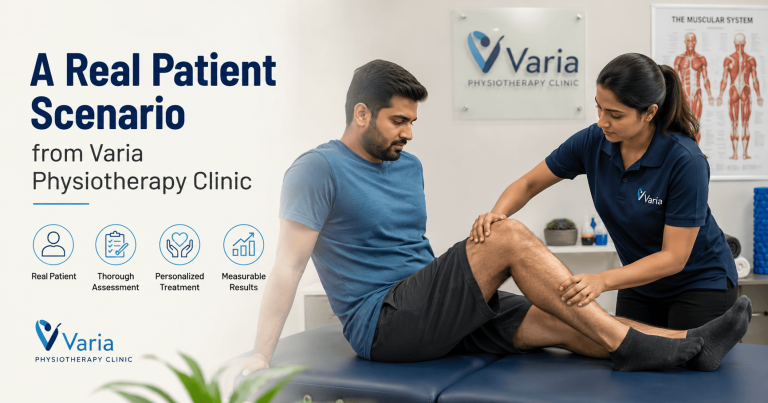
A Real Patient Scenario from Varia Physiotherapy Clinic
A 58-year-old businessman from Satellite, Ahmedabad visited Varia Physiotherapy Clinic after noticing worsening balance problems and slow walking over the previous year. He reported difficulty climbing stairs and fear of falling while walking outdoors.
During assessment, the physiotherapy team identified: Parkinson’s Physiotherapy In Satellite Ahmedabad
- Reduced gait speed
- Forward-flexed posture
- Poor balance reactions
- Lower limb stiffness
- Limited trunk mobility
A structured rehabilitation plan was started involving balance retraining, gait correction, posture exercises, and functional mobility practice.
Over approximately 8–10 weeks of regular therapy and home exercises, the patient reported:
- Better walking confidence
- Reduced freezing episodes
- Improved posture
- Easier stair climbing
- Increased participation in social activities
While Parkinson’s disease itself cannot currently be cured, physiotherapy often helps patients maintain independence and improve movement quality significantly.
Myths vs Facts About Parkinson's Physiotherapy
| Myth | Fact |
|---|---|
| Parkinson’s only affects elderly people | Symptoms may begin earlier in some adults. |
| Physiotherapy is useful only in advanced stages | Early intervention is often more beneficial. |
| Rest is better than movement | Safe movement helps maintain mobility and flexibility. |
| Tremors are the only symptom | Balance, posture, stiffness, and gait issues are also common. |
| Exercise may worsen Parkinson’s symptoms | Evidence-based physiotherapy is generally considered safe and beneficial. |
When Should You See a Physiotherapist?
You should consider physiotherapy assessment if you notice: Parkinson’s Physiotherapy In Satellite Ahmedabad
- Increasing balance problems
- Slower walking
- Frequent stiffness
- Difficulty turning while walking
- Reduced confidence outdoors
- Falls or near-falls
- Difficulty standing from sitting
- Reduced physical activity due to fear
Early assessment can help identify movement limitations before they significantly affect independence.
When Referral to a Neurologist May Be Necessary
Physiotherapists also recognize situations requiring medical referral.
Patients may need neurological evaluation if they experience:
- Sudden worsening of symptoms
- Severe tremors
- Loss of consciousness
- Significant memory changes
- Rapid decline in mobility
- Unexplained weakness
- Difficulty swallowing
Collaborative care between physiotherapists and neurologists often provides the best outcomes for Parkinson’s management.
Lifestyle Tips for Parkinson's Patients
Along with physiotherapy, certain lifestyle habits may support daily function:
- Stay physically active regularly
- Avoid prolonged sitting
- Use supportive footwear
- Keep home pathways clutter-free
- Practice posture awareness
- Maintain hydration
- Follow prescribed medications consistently
Consistency matters more than intensity. Small daily improvements often lead to better long-term function.
Evidence-Based Physiotherapy Matters
Modern neurological physiotherapy emphasizes individualized treatment rather than generic exercise routines. At Varia Physiotherapy Clinic, rehabilitation plans are designed according to: Parkinson’s Physiotherapy In Satellite Ahmedabad
- Functional limitations
- Balance capacity
- Mobility goals
- Safety considerations
- Disease progression stage
Research supported by the National Institutes of Health highlights the importance of exercise and rehabilitation in improving quality of life for people living with Parkinson’s disease.
Conclusion
Living with Parkinson’s can affect mobility, confidence, and independence, but early rehabilitation often makes a meaningful difference. Through structured exercises, balance retraining, gait correction, and personalized care, Parkinson’s Physiotherapy in Satellite Ahmedabad can help many individuals continue daily activities more safely and confidently.
At Varia Physiotherapy Clinic, the focus remains on realistic, patient-centered care—not quick fixes or exaggerated promises. With consistent therapy, medical guidance, and active participation, many patients gradually improve movement quality and maintain better independence in everyday life.
Ethical Call-to-Action
If you’re unsure whether your symptoms need attention, it’s okay to start with a simple consultation. Understanding your condition is the first step toward recovery—no pressure, just guidance.
If you’d like to speak with a physiotherapist or book an assessment at Varia Physiotherapy Clinic, you can reach out here:
 Call: +91 95123 79555
 Email: hello.drhetalvaria@gmail.com
 Website: www.variaphysiotherapyclinic.com
Our team is here to listen, assess, and guide you toward safe and effective recovery.