Neck Pain Treatment In Ahmedabad | Fast Relief By Expert Physiotherapists
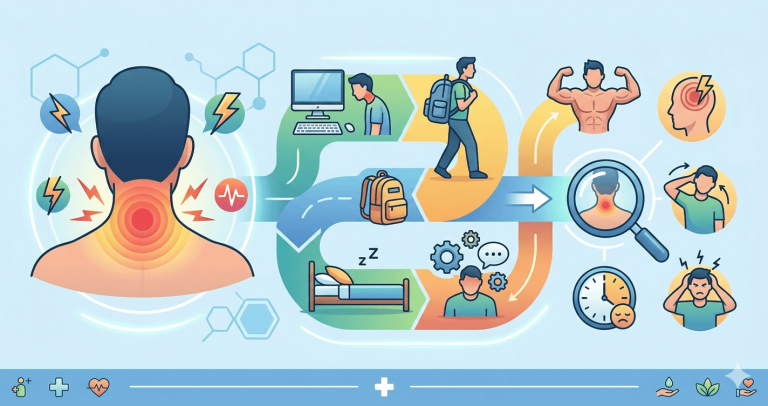
Neck pain is one of those conditions that often begins quietly—maybe as a mild stiffness after a long workday or a slight discomfort while checking your phone. But over time, it can evolve into something much more disruptive, affecting your sleep, productivity, and even your mood.
At Varia Physiotherapy Clinic in Ahmedabad, we frequently meet adults between the ages of 30 and 65 who come in saying, “I thought it would go away on its own.” Unfortunately, for many, it doesn’t. Instead, it gradually worsens, limiting movement and impacting daily life.
If you’re experiencing persistent discomfort, restricted neck movement, or pain radiating to your shoulders or arms, this guide is designed to help you understand what’s happening in your body—and how Neck Pain Treatment In Ahmedabad | Fast Relief By Expert Physiotherapists can support your recovery safely and effectively.
Understanding Neck Pain: More Than Just a Minor Issue
The neck, or cervical spine, is a complex structure made up of vertebrae, discs, muscles, ligaments, and nerves. It supports the weight of your head while allowing flexibility and movement in multiple directions.Because of this complexity, even small imbalances can lead to pain.
According to the World Health Organization, musculoskeletal disorders are a leading cause of disability worldwide, and neck pain is one of the most common contributors—especially in urban populations with sedentary lifestyles.
Common Causes of Neck Pain in Adults
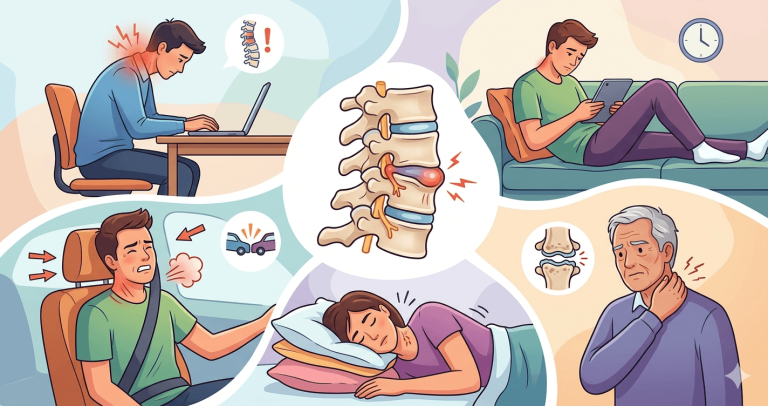
Understanding the root cause of your pain is essential for effective treatment. At our clinic, we often identify a combination of the following factors:
1. Prolonged Poor Posture
Modern lifestyles—long hours at a desk, excessive screen time, and frequent mobile use—lead to what is commonly called “forward head posture.” This places excessive strain on neck muscles and joints.
2. Muscle Imbalance and Weakness
When some muscles become tight and others weak, the neck loses its natural alignment, leading to discomfort and stiffness.
3. Cervical Spondylosis
Age-related wear and tear in the cervical spine can cause reduced flexibility, stiffness, and chronic pain. This is especially common after the age of 40.
4. Disc Problems and Nerve Compression
Conditions such as herniated discs can press on nearby nerves, leading to:
Radiating Arm Pain
This type of pain often starts in the neck and travels down into the shoulder or arm. It usually indicates that a nerve is being irritated or compressed, and many patients describe it as a sharp, burning, or electric-like sensation that worsens with certain movements.
Tingling or Numbness
A “pins and needles” feeling or loss of sensation in the arm or fingers can occur when nerve signals are disrupted. Patients often notice this while using their phone or sitting for long periods, and it’s a sign that the nerve needs proper assessment and care. In many cases, this is also closely related to neck pain treatment in Ahmedabad.
Weakness in the Upper Limb
Some patients experience reduced strength in the arm or hand, making it difficult to grip objects or perform daily tasks. This can happen when nerve compression affects muscle function, and early physiotherapy can help restore strength and prevent further decline.
5. Stress and Tension
Emotional stress often leads to unconscious tightening of neck and shoulder muscles, contributing to pain.
6. Sudden Movements or Injuries
Even minor incidents like sudden jerks, improper lifting, or sleeping in an awkward position can trigger acute neck pain.
How Neck Pain Treatment In Ahmedabad | Fast Relief By Expert Physiotherapists Helps
Step 1: Comprehensive Clinical Assessment
Every patient undergoes a detailed evaluation that includes:
- Postural analysis
- Range of motion testing
- Muscle strength assessment
- Neurological examination (if needed)
This helps identify whether the pain is muscular, joint-related, or nerve-related.
Step 2: Pain Relief and Muscle Relaxation
In the early phase, treatment focuses on reducing pain and inflammation using:
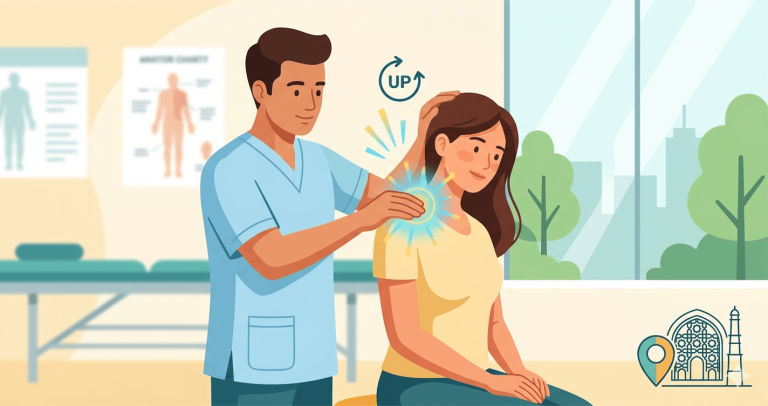
- Manual therapy techniques
- Soft tissue mobilization
- Trigger point release
- Electrotherapy (if clinically indicated)
These methods improve circulation and reduce muscle tension.
Step 3: Restoring Movement
Once pain begins to reduce, gentle mobility exercises are introduced to:
- Improve flexibility
- Restore normal joint movement
- Reduce stiffness
Controlled movement is essential—complete rest can actually delay recovery.
Step 4: Strengthening and Stabilization
Weak muscles are strengthened to support the cervical spine. This includes:
- Deep neck flexor strengthening
- Scapular stabilization exercises
- Functional movement training
Research supported by the National Institutes of Health shows that targeted exercise therapy significantly improves outcomes in chronic neck pain.
Step 5: Posture and Lifestyle Correction
One of the most important aspects of recovery is correcting daily habits. Patients are guided on:
- Proper sitting posture
- Ergonomic workstation setup
- Safe lifting techniques
- Sleep positioning
These changes help prevent recurrence.
A Real Patient Experience from Ahmedabad
A 52-year-old businessman visited our clinic with severe neck pain radiating to his right arm. He also reported tingling in his fingers and difficulty working for long hours.
After assessment, we identified:
- Cervical disc involvement
- Nerve irritation
- Poor sitting posture
His treatment plan included:
- Pain management through manual therapy
- Nerve mobilization techniques
- Gradual strengthening exercises
- Ergonomic corrections at work
Within 3 weeks, his arm pain reduced significantly. Over 8–10 weeks, he regained strength and returned to his daily routine with minimal discomfort.
This case reflects a common pattern we see—where early intervention leads to better outcomes.
Myths vs Facts About Neck Pain
Myth 1: Neck pain is a normal part of aging
Fact: While age-related changes occur, persistent pain is not normal and should be evaluated.
Myth 2: Bed rest is the best treatment
Fact: Prolonged rest can worsen stiffness. Guided movement is essential.
Myth 3: Surgery is the only solution for severe pain
Fact: Most cases improve with conservative physiotherapy treatment.
Myth 4: Painkillers are enough
Fact: They only provide temporary relief and do not address the root cause.
When Should You Seek Physiotherapy?
You should consider visiting a physiotherapist if:
Pain Lasts More Than a Week
If your neck pain continues beyond a few days without improvement, it may indicate an underlying issue rather than simple muscle strain. Persistent pain deserves proper assessment to prevent it from becoming chronic.
Movement Becomes Restricted
When turning your head or looking up and down feels stiff or limited, it’s often a sign that joints or muscles are not functioning properly. Early care can help restore normal movement and prevent further stiffness.
Pain Spreads to Shoulders or Arms
Pain that travels beyond the neck may suggest nerve involvement. Many patients describe this as discomfort moving down the shoulder or arm, which should not be ignored.
You Experience Numbness or Tingling
A tingling or “pins and needles” sensation can indicate nerve irritation or compression. This is your body’s way of signaling that something needs attention.
Daily Activities Become Difficult
If simple tasks like working, driving, or even sleeping become uncomfortable, it’s a clear sign that the pain is affecting your quality of life and needs professional care.
In certain situations—such as severe trauma, progressive neurological symptoms, or suspected structural damage—referral to an orthopedic doctor or neurologist may be necessary. A responsible physiotherapy approach always prioritizes patient safety.
The Importance of Consistency In Recovery
One of the most important factors in rehabilitation is consistency. Recovery is not achieved through occasional effort, but through regular, guided practice that allows the body and brain to adapt over time.
When therapy is followed consistently:
- Improvements become more stable
- Progress is easier to track
- The risk of recurrence is significantly reduced
Patients who actively participate in their treatment tend to experience better and longer-lasting outcomes.
Conclusion
Living with neck pain can affect every part of your life—from how you work to how well you sleep. But the good news is that with the right approach, recovery is not only possible—it is sustainable.
At Varia Physiotherapy Clinic, we combine clinical expertise, evidence-based treatment, and personalized care to help patients move better, feel stronger, and regain control of their daily lives.
Neck Pain Treatment In Ahmedabad | Fast Relief By Expert Physiotherapists is not about quick fixes—it’s about understanding your body, addressing the root cause, and guiding you toward long-term wellness.
If your symptoms have been persistent or worsening, seeking timely physiotherapy care can make a meaningful difference. A structured, professional approach today can help prevent long-term complications tomorrow.
Ethical Call-to-Action
If you’re unsure whether your symptoms need attention, it’s okay to start with a simple consultation. Understanding your condition is the first step toward recovery—no pressure, just guidance.
If you’d like to speak with a physiotherapist or book an assessment at Varia Physiotherapy Clinic, you can reach out here:
 Call: +91 95123 79555
 Email: hello.drhetalvaria@gmail.com
 Website: www.variaphysiotherapyclinic.com
Our team is here to listen, assess, and guide you toward safe and effective recovery.
Neck Pain Treatment In Ahmedabad - FAQs