
Which Exercises Help Parkinson’s Patients Walk Better?
Walking difficulties are among the most frustrating challenges faced by people living with Parkinson’s disease. Many patients in Ahmedabad who visit Varia Physiotherapy Clinic describe similar concerns: “My feet feel stuck,” “I walk slower than before,” or “I’m afraid I may fall while turning.”
If you are wondering which exercises help Parkinson’s patients walk better?, the answer depends on the person’s balance, muscle stiffness, posture, walking pattern, and stage of the condition. Evidence-based physiotherapy exercises can improve walking confidence, mobility, balance reactions, and overall independence when performed consistently under professional guidance.
At Varia Physiotherapy Clinic in Ahmedabad, physiotherapists commonly work with Parkinson’s patients who struggle with shuffling gait, freezing episodes, reduced arm swing, poor posture, and fear of falling. Treatment is always individualized after detailed clinical assessment rather than using a one-size-fits-all approach.
According to the World Health Organization, maintaining mobility and physical activity plays an important role in preserving quality of life in neurological conditions. Similarly, the National Institutes of Health highlights the importance of exercise and rehabilitation in Parkinson’s management.
Why Walking Becomes Difficult in Parkinson’s Disease
Parkinson’s disease affects movement control because of changes in dopamine-producing brain cells. Over time, this can interfere with smooth and coordinated body movements.
Patients may notice:
- Smaller and slower steps
- Difficulty initiating walking
- Freezing episodes
- Reduced balance reactions
- Stooped posture
- Reduced arm movement while walking
- Muscle stiffness
- Fatigue during movement
Many people also develop anxiety around walking outdoors or climbing stairs because they fear losing balance.
At Varia Physiotherapy Clinic, therapists carefully evaluate all these factors before planning rehabilitation exercises. Sometimes walking issues are not caused by Parkinson’s alone. Joint arthritis, muscle weakness, cervical problems, or previous falls may also contribute to poor mobility.
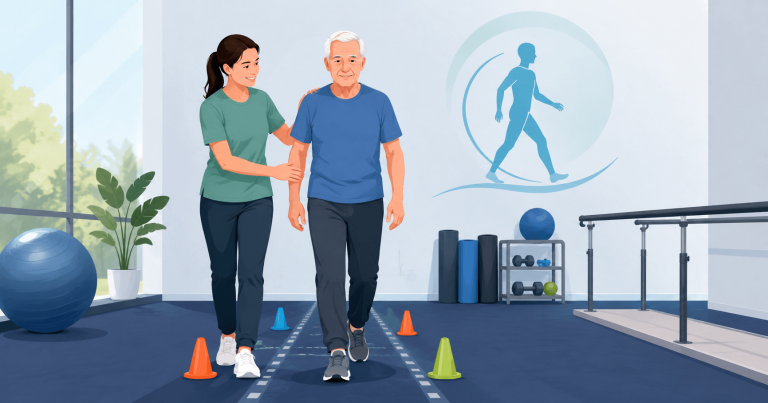
Which Exercises Help Parkinson’s Patients Walk Better?
The most effective exercises usually focus on improving balance, step length, posture, flexibility, strength, and movement coordination.
1. Gait Training Exercises
Gait training exercises help Parkinson’s patients improve walking rhythm, step length, and overall movement coordination. Many patients experience shuffling steps, reduced arm swing, or difficulty turning safely during daily activities. Physiotherapists use structured walking drills and movement cueing techniques to encourage smoother and more confident walking patterns. With regular supervised practice, patients often develop better balance, mobility, and walking confidence over time.
Common gait exercises include:
- Walking with longer intentional steps
- Heel-to-toe walking practice
- Rhythmic walking using counting cues
- Walking with arm swing coordination
- Turning practice in controlled environments
- Obstacle navigation training
Physiotherapists may use external cues such as clapping rhythms, floor markings, or metronome beats to improve walking rhythm and reduce freezing episodes.
Patients often notice gradual improvements in walking confidence after several weeks of consistent supervised training.
For patients requiring home-based neurological rehabilitation, internal support pages such as Home Physiotherapy Services Ahmedabad can also be useful.
2. Balance and Stability Exercises
Balance and stability exercises are important for reducing fall risk in Parkinson’s disease. These exercises help improve body control, posture, and the ability to maintain stability during standing and walking movements. Physiotherapists providing Specialized Parkinson’s Physiotherapy Ahmedabad gradually train patients through safe balance activities based on their physical ability and confidence level. Consistent balance training can help patients move more safely during routine activities at home and outdoors.
Exercises may include:
- Weight-shifting exercises
- Single-leg standing with support
- Tandem standing
- Controlled reaching activities
- Step-up exercises
- Dynamic balance drills
These exercises help train the body’s postural reactions and improve stability during movement.
At Varia Physiotherapy Clinic, therapists progress exercises gradually depending on patient safety and confidence levels.
3. Stretching for Muscle Stiffness
Muscle stiffness is a common symptom of Parkinson’s disease and can make walking feel slow, tight, and uncomfortable. Stretching exercises help improve flexibility in the legs, hips, chest, neck, and shoulders, allowing smoother body movement. Regular stretching may also help improve posture and reduce discomfort caused by muscle rigidity. Many patients benefit from gentle morning stretching routines to reduce stiffness after waking up.
Stretching exercises commonly target:
- Calf muscles
- Hamstrings
- Hip flexors
- Chest muscles
- Neck and shoulders
Improving flexibility often helps patients stand straighter and walk with smoother movement patterns.
Morning stiffness is particularly common in Parkinson’s disease, so therapists may recommend gentle mobility routines after waking up.
4. Strengthening Exercises
Strengthening exercises help improve muscle support, balance control, and walking endurance in Parkinson’s patients. Weakness in the legs and core muscles can make standing, walking, and climbing stairs more difficult over time. Physiotherapists use safe strengthening programs to improve lower-body stability and support functional daily movement. Consistent exercise can help patients feel more confident and physically active during routine tasks.
Physiotherapy strengthening programs may include:
- Sit-to-stand exercises
- Mini squats
- Step climbing practice
- Resistance band exercises
- Core strengthening
- Hip and leg strengthening drills
These exercises improve lower-limb stability and help patients move more confidently during daily activities.
5. Cueing Strategies for Freezing Episodes
Freezing episodes can suddenly interrupt walking and make patients feel temporarily stuck while trying to move forward. Cueing strategies are designed to help restart movement using rhythmic sounds, visual markers, or step-by-step movement guidance. Physiotherapists teach these techniques to improve walking initiation and reduce anxiety related to freezing episodes. With regular practice, many patients learn to manage freezing situations more effectively in daily life.
Physiotherapists teach movement cueing techniques such as:
- Counting aloud while walking
- Stepping over visual markers
- Using rhythmic auditory cues
- Breaking movements into smaller steps
- Practicing deliberate weight shifting before stepping
These strategies may reduce freezing frequency and improve movement initiation.
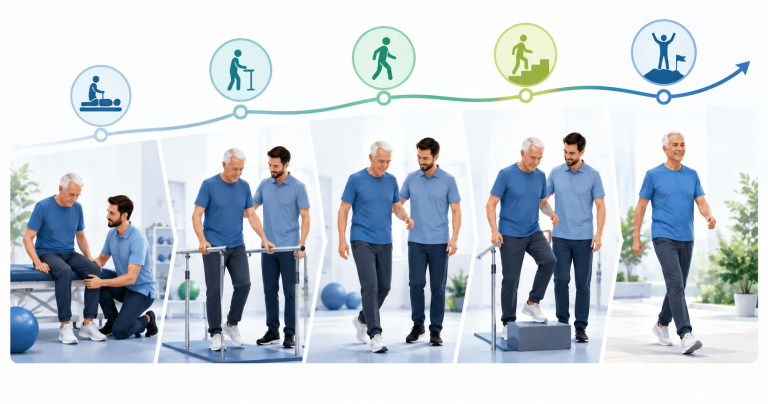
How Physiotherapy Helps Step-by-Step
Detailed Clinical Assessment
Every Parkinson’s patient experiences movement difficulties differently, which is why a detailed clinical assessment is an important first step in physiotherapy treatment. Physiotherapists carefully evaluate walking ability, balance, posture, flexibility, coordination, and daily functional movement. Understanding these factors helps identify the main causes affecting mobility and fall risk. In some cases, patients may also be referred to a neurologist if symptoms appear severe or rapidly progressive.
Every Parkinson’s patient presents differently. Physiotherapists first assess:
- Walking pattern
- Balance reactions
- Muscle tightness
- Joint mobility
- Functional independence
- Fall history
- Posture
- Coordination
- Fatigue levels
If symptoms appear unusually severe or progress rapidly, referral to a neurologist may be recommended for further medical evaluation.
Personalized Treatment Planning
Personalized treatment planning allows physiotherapists to create exercise programs based on the patient’s specific physical condition and daily challenges. Factors such as age, mobility level, balance problems, home safety, and stage of Parkinson’s disease are carefully considered during planning. Some patients may need focused gait retraining, while others benefit more from strengthening or balance rehabilitation. Individualized care helps improve safety, comfort, and long-term movement outcomes.
Treatment plans are customized based on:
- Age
- Mobility level
- Stage of Parkinson’s
- Home environment
- Fall risk
- Existing orthopedic conditions
Some patients benefit more from balance retraining, while others require intensive gait cueing or strengthening exercises.
Progressive Rehabilitation
Progressive rehabilitation focuses on gradual and consistent improvement rather than quick results. Parkinson’s patients usually require regular physiotherapy sessions combined with ongoing home exercise routines to maintain mobility and balance. Treatment programs are adjusted over time based on the patient’s progress, physical endurance, and changing movement needs. With consistent rehabilitation, many patients notice improvements in walking confidence, posture, and overall functional independence.
Most patients require:
- Regular supervised physiotherapy
- Consistent home exercise practice
- Long-term movement maintenance
- Periodic reassessment
Patients often begin noticing small improvements in walking confidence, posture, or balance within a few weeks, although long-term consistency is essential.

Real Patient Scenario from Clinical Practice
A man in his early 60s visited Varia Physiotherapy Clinic after experiencing increasing difficulty while walking outdoors. His family noticed shorter steps, reduced arm swing, and occasional freezing while turning.
He had gradually stopped going for evening walks because he feared falling in crowded areas.
After detailed assessment, physiotherapists identified reduced balance reactions, lower-limb stiffness, and gait initiation difficulty. His rehabilitation program included:
- Gait retraining
- Rhythmic cueing exercises
- Balance drills
- Postural correction exercises
- Lower-limb strengthening
- Functional walking practice
Over several weeks, he became more confident walking inside his residential society and resumed short outdoor walks with better step control.
While Parkinson’s symptoms cannot be completely reversed through physiotherapy, structured rehabilitation often helps patients maintain independence and mobility for longer periods.
Myths vs Facts About Parkinson’s Exercises
Myth: Rest is better than exercise for Parkinson’s disease.
Fact: Many people believe Parkinson’s patients should avoid movement to prevent fatigue or falls. In reality, safe and supervised exercises help maintain flexibility, balance, strength, and walking ability more effectively.
Myth: Walking problems only happen in advanced Parkinson’s disease.
Fact: Walking and balance difficulties can begin even during the early stages of Parkinson’s disease. Small changes such as slower walking speed or shorter steps are often early warning signs.
Myth: Physiotherapy provides instant recovery.
Fact: Physiotherapy is designed to support gradual improvement through structured rehabilitation and regular practice. Most patients notice progress over time with consistent treatment and exercise routines.
Myth: Falls are unavoidable in Parkinson’s disease.
Fact: Although Parkinson’s disease can increase fall risk, many falls can be prevented with proper balance training, gait rehabilitation, and home safety modifications. Early physiotherapy intervention often helps improve movement safety and confidence.
When Should You See a Physiotherapist?
You should consider physiotherapy if you notice:
- Slower walking speed
- Frequent imbalance
- Difficulty turning
- Shuffling gait
- Muscle stiffness
- Fear of falling
- Reduced walking endurance
- Difficulty getting up from chairs
- Freezing episodes
Early physiotherapy intervention may help patients remain active and independent longer.
For neurological rehabilitation support, patients may also explore related services like Neuro Physiotherapy Ahmedabad and Parkinson’s Physiotherapy Treatment Ahmedabad.
Conclusion:
If you are asking which exercises help Parkinson’s patients walk better?, the most effective approach usually combines gait training, balance exercises, stretching, strengthening, and movement cueing strategies tailored to the individual patient.
At Varia Physiotherapy Clinic in Ahmedabad, physiotherapists focus on realistic, patient-centered rehabilitation aimed at improving safety, confidence, and functional independence. Progress may take time, but consistent therapy and guided exercise can make meaningful differences in daily mobility.
If you or a family member has started experiencing walking difficulty related to Parkinson’s disease, early physiotherapy assessment may help identify movement problems before they significantly interfere with everyday life.
Which exercises help Parkinson’s patients walk better: FAQs
Can exercise really improve walking in Parkinson’s disease?
Which exercise is best for freezing of gait?
How often should Parkinson’s patients exercise?
Is walking alone enough exercise for Parkinson’s disease?
Can physiotherapy help prevent falls?
About the Author

Dr. Hetal M Varia
After a rich experience of working in US healthcare as manager and licensed physiotherapist in US for last 11 years, she has returned home with a vision to become pioneer of Vestibular Therapy and specialized Parkinson physiotherapy in Ahmedabad. With her special skills and expertise in vertigo, Parkinson, balance and movement disorders therapy, Dr. Varia is committed to provide US standards of therapy services , compassionate and patient centered care to our people and community. With a vision of the world where everyone walks strong & steady, she intends to empower individuals with vestibular and neurological disorders through specialized care, rehabilitation & innovative therapies to improve mobility, balance & overall quality of life!