What Makes Vestibular Rehabilitation Different From General Physiotherapy?
Many people assume that all physiotherapy treatments are the same. If you experience dizziness, balance problems, vertigo, or difficulty walking confidently, you may wonder whether regular physiotherapy can help or if you need something more specialized.
At Varia Physiotherapy Clinic in Ahmedabad, many adults between the ages of 30 and 65 visit us after weeks or even months of feeling “off-balance.” Some have already tried general exercises or medications but still struggle with symptoms while walking through crowded markets, driving, turning quickly, or using stairs.
One of the most common questions patients ask is:
“What makes vestibular rehabilitation different from general physiotherapy?”
The answer lies in the source of the problem. While general physiotherapy primarily focuses on muscles, joints, ligaments, and movement patterns, vestibular rehabilitation specifically targets disorders of the balance system located within the inner ear and its connection to the brain.
Understanding this difference can help patients receive the right treatment sooner and improve their quality of life.
Understanding the Vestibular System in Simple Terms
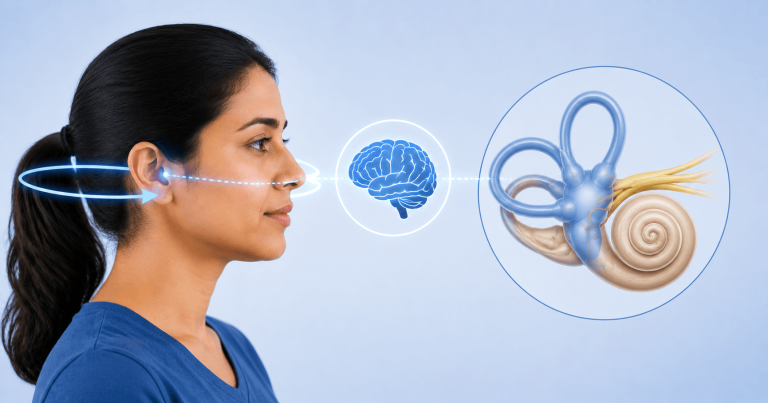
The vestibular system is a specialized balance system located inside the inner ear. It constantly sends information to the brain about head position, movement, and spatial orientation.
When this system is not functioning properly, patients may experience:
- Dizziness
- Vertigo (spinning sensation)
- Unsteadiness while walking
- Motion sensitivity
- Blurred vision during movement
- Difficulty focusing while turning the head
- Increased risk of falls
Unlike muscle or joint injuries, vestibular disorders affect how the brain processes balance information. This is why treatment requires a different approach than traditional physiotherapy.
What Makes Vestibular Rehabilitation Different From General Physiotherapy?
General Physiotherapy Focuses on Muscles and Joints
General physiotherapy is designed to address conditions such as:
- Neck pain
- Back pain
- Knee pain
- Shoulder injuries
- Arthritis
- Post-surgical rehabilitation
- Sports injuries
Treatment may include:
- Strengthening exercises
- Stretching programs
- Manual therapy
- Posture correction
- Mobility training
- Pain management strategies
These interventions improve movement, reduce pain, and restore physical function.
Vestibular Rehabilitation Focuses on the Brain-Inner Ear Connection
Vestibular rehabilitation is a specialized form of physiotherapy that helps the brain adapt to balance-related dysfunction.
Instead of primarily targeting muscles and joints, treatment focuses on:
- Eye movement control
- Head movement tolerance
- Balance retraining
- Walking stability
- Sensory integration
- Motion sensitivity reduction
- Vestibulo-ocular reflex (VOR) training
The goal is to help the brain compensate for faulty balance signals and improve overall stability.
Research supported by organizations such as the National Institutes of Health has shown that vestibular rehabilitation can significantly improve balance, reduce dizziness, and enhance daily function in many vestibular conditions.
Conditions That Often Require Vestibular Rehabilitation
Patients may benefit from vestibular rehabilitation if they have:
- Benign Paroxysmal Positional Vertigo (BPPV)
- Vestibular neuritis
- Labyrinthitis
- Persistent Postural-Perceptual Dizziness (PPPD)
- Vestibular migraine
- Age-related balance decline
- Post-concussion dizziness
- Chronic imbalance
- Motion sensitivity
In these cases, traditional strengthening exercises alone may not fully address symptoms.
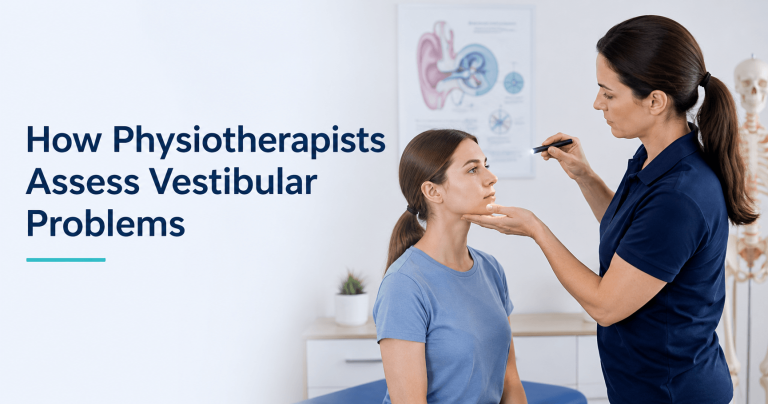
How Physiotherapists Assess Vestibular Problems
A detailed assessment is one of the most important differences between vestibular rehabilitation and general physiotherapy.
At Varia Physiotherapy Clinic, evaluation typically includes:
Detailed Medical History
A detailed discussion about your symptoms helps the physiotherapist understand when the problem started, what triggers it, and how it affects your daily life. Reviewing previous illnesses, injuries, medications, and functional limitations provides valuable information for accurate assessment and treatment planning.
Balance Assessment
Balance testing evaluates how your body maintains stability during everyday movements such as standing, walking, turning, and reaching. This helps identify specific balance deficits and areas that may require focused rehabilitation.
Eye Movement Testing
Because the eyes and vestibular system work together to maintain clear vision and balance, assessing eye movements is an important part of vestibular rehabilitation. Tests may examine visual tracking, gaze stability, head-eye coordination, and the vestibulo-ocular reflex to identify underlying dysfunction.
Gait Analysis
Observing how you walk can reveal subtle changes in movement patterns that may contribute to instability or dizziness. Gait analysis helps identify compensatory strategies and guides the development of a more effective rehabilitation program.
Functional Activity Assessment
Vestibular symptoms can affect many aspects of daily life, from work and driving to exercise and social activities. Understanding these challenges helps create a personalized treatment plan focused on improving the activities that matter most to you.
Individualized Treatment Planning
The information gathered during the assessment allows the physiotherapist to design a treatment program based on your specific symptoms, goals, and functional needs. This personalized approach supports more meaningful progress than a one-size-fits-all exercise plan.
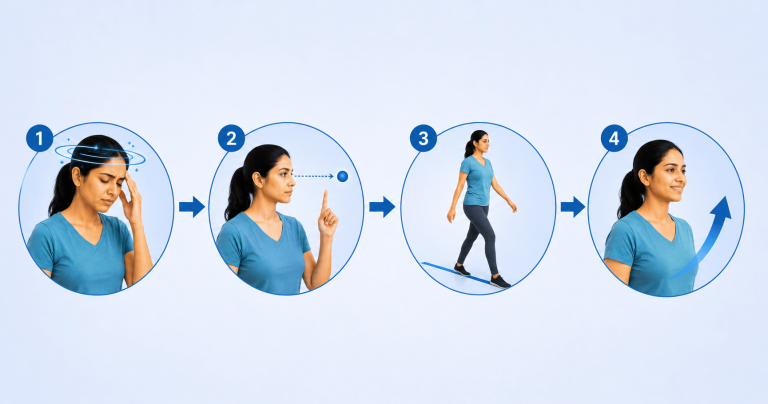
How Vestibular Rehabilitation Helps: Step by Step
1. Identifying the Cause
Not all dizziness has the same underlying cause. A thorough physiotherapy assessment helps identify the specific factors contributing to your symptoms, allowing treatment to be tailored to your individual needs rather than relying on a generic exercise program.
2. Reducing Sensitivity to Movement
Many people start avoiding certain movements because they trigger dizziness or discomfort. Through carefully guided exercises, the brain can gradually adapt to these movements, helping patients feel more comfortable and confident during everyday activities.
3. Improving Eye-Head Coordination
The eyes and vestibular system work together to keep vision clear during movement. Specialized gaze stabilization exercises help improve this connection, making activities such as walking, turning, and navigating busy environments feel more manageable.
4. Retraining Balance
Balance problems can affect confidence, mobility, and independence. Targeted balance exercises challenge the body’s stability in a safe and controlled way, helping reduce the risk of falls and improving overall movement confidence.
These may include:
- Standing on different surfaces
- Weight-shifting activities
- Dynamic balance tasks
- Functional movement training
5. Restoring Confidence
As symptoms improve, patients gradually return to activities they previously avoided. This can significantly improve independence and quality of life.
A Real Patient Scenario from Clinical Practice
A 52-year-old office professional visited Varia Physiotherapy Clinic after several months of dizziness while walking through busy shopping areas in Ahmedabad. She had undergone medical evaluations and serious neurological causes had already been ruled out.
Her symptoms included:
- Feeling unstable in crowds
- Difficulty turning quickly
- Motion sensitivity while traveling
- Anxiety related to balance loss
Assessment revealed vestibular dysfunction affecting gaze stability and balance control.
A structured vestibular rehabilitation program was prescribed, including:
- Gaze stabilization exercises
- Balance retraining
- Walking progression activities
- Gradual exposure to challenging environments
Over several weeks, she reported improved confidence, reduced dizziness, and better participation in daily activities.
While recovery timelines vary for every patient, this example highlights how targeted vestibular treatment differs from general strengthening exercises alone.
Common Myths vs Facts
Myth: Dizziness always means a serious neurological problem.
Fact: Many dizziness cases are related to treatable vestibular conditions, although medical evaluation may be necessary to rule out serious causes.
Myth: Rest is the best treatment for dizziness.
Fact: Prolonged inactivity can sometimes slow recovery. Carefully prescribed movement often helps the brain adapt.
Myth: General physiotherapy and vestibular rehabilitation are identical.
Fact: Vestibular rehabilitation uses specialized assessment and treatment techniques specifically designed for balance disorders.
Myth: Recovery should happen in a few days.
Fact: Recovery varies depending on the condition, severity, age, and adherence to treatment.
When Should You See a Physiotherapist?
Consider seeking assessment if you experience:
- Recurrent dizziness
- Balance difficulties
- Frequent falls or near-falls
- Motion sensitivity
- Blurred vision during movement
- Difficulty walking confidently
- Symptoms persisting for several weeks
Early assessment can help identify whether specialized vestibular rehabilitation, general physiotherapy, or further medical evaluation is most appropriate.
When Referral to a Specialist May Be Necessary
Physiotherapists work closely with other healthcare professionals when required.
Referral to an orthopedic specialist, ENT specialist, or neurologist may be recommended if symptoms include:
- Sudden hearing loss
- Significant neurological symptoms
- Unexplained weakness
- Persistent severe headaches
- New onset double vision
- Signs of serious underlying conditions
Collaborative care ensures patients receive the most appropriate treatment.
Conclusion
Understanding what makes vestibular rehabilitation different from general physiotherapy can help patients receive more targeted and effective care.
While general physiotherapy focuses primarily on muscles, joints, strength, and mobility, vestibular rehabilitation addresses the complex relationship between the inner ear, eyes, brain, and balance system.
For individuals experiencing dizziness, imbalance, motion sensitivity, or vestibular disorders, specialized assessment and evidence-based rehabilitation can play an important role in improving daily function and confidence.
If symptoms are affecting your work, mobility, driving, or quality of life, seeking professional assessment can help determine the most appropriate path toward recovery.
Book a Professional Assessment
If you’re unsure whether your symptoms need attention, it’s okay to start with a simple consultation. Understanding your condition is the first step toward recovery—no pressure, just guidance.
If you’d like to speak with a physiotherapist or book an assessment at Varia Physiotherapy Clinic, you can reach out here:
 Call: +91 95123 79555
 Email: hello.drhetalvaria@gmail.com
 Website: www.variaphysiotherapyclinic.com
Our team is here to listen, assess, and guide you toward safe and effective recovery.
What Makes Vestibular Rehabilitation Different From General Physiotherapy - FAQs