
What Happens If Vertigo Is Ignored?
Vertigo is more than just a fleeting sense of dizziness. For many adults in Ahmedabad, especially between the ages of 30 and 65, it can feel like the room is spinning, balance is unreliable, and everyday activities suddenly become challenging. At Varia Physiotherapy Clinic, we often meet patients who have quietly lived with vertigo for months—or even years—hoping it will go away on its own.
But what happens if vertigo is ignored?
This is an important question—not just medically, but personally. Because untreated vertigo doesn’t just affect your body—it impacts your confidence, your independence, and your quality of life.

Understanding Vertigo: More Than Just Dizziness
Vertigo is a symptom, not a condition itself. It usually points to a problem in the inner ear (vestibular system) or the brain.
Common causes include:
Benign Paroxysmal Positional Vertigo (BPPV):
Small calcium particles in the inner ear become displaced. Many patients describe this as a sudden spinning sensation when turning in bed or looking up—something we frequently assess and treat effectively with specific repositioning techniques.
Vestibular neuritis or labyrinthitis:
Often linked to viral infections. Patients may experience intense dizziness along with nausea, making even simple movements difficult in the early stages, but guided rehabilitation can gradually restore balance.
Cervical vertigo:
Related to neck stiffness or injury. This is commonly seen in individuals with prolonged desk work or poor posture, where addressing both neck mobility and muscle strength plays a key role in recovery.
Migraine-associated vertigo:
Some individuals experience vertigo even without a headache. Identifying triggers and combining medical management with physiotherapy can help reduce the frequency and severity of episodes.
Neurological conditions:
Such as stroke or multiple sclerosis (less common but serious). These cases require timely medical evaluation, and physiotherapy works alongside neurological care to improve balance, coordination, and safety in daily life.
According to global health bodies like the World Health Organization and research supported by the National Institutes of Health, balance disorders significantly increase the risk of falls, particularly in adults over 40.

What Happens If Vertigo Is Ignored?
Ignoring vertigo can lead to a cascade of physical and psychological consequences. Here’s what we commonly observe in patients at our clinic:
1. Increased Risk of Falls and Injury
Even mild vertigo affects your balance. Patients often report:
Missing steps while walking:
Many patients share that they feel unsure while walking, especially on stairs or uneven surfaces, which can make them slow down or avoid movement altogether due to fear of falling.
Difficulty getting out of bed:
A common early sign, especially in conditions like BPPV, where even simple movements like turning or sitting up can trigger a spinning sensation, making mornings particularly challenging.
Sudden loss of balance in crowded places:
Busy environments can feel overwhelming, and patients often report needing support or stopping suddenly to regain stability, which can affect confidence in public spaces. Falls can lead to fractures, especially in older adults.
2. Worsening of Underlying Conditions
If vertigo is caused by conditions like BPPV or cervical dysfunction, ignoring it allows the root issue to persist or worsen. Over time:
Episodes may become more frequent:
What may start as occasional dizziness can gradually turn into repeated episodes, affecting your ability to plan daily activities with confidence.
Symptoms may last longer:
Patients often notice that each episode doesn’t pass as quickly as before, with lingering imbalance or heaviness that can continue for hours or even days.
Recovery becomes slower:
When vertigo is not addressed early, the body takes more time to adapt and heal, which can prolong the overall recovery journey and require more structured rehabilitation.
3. Neck Pain and Muscle Stiffness
Many patients unknowingly adapt their posture to avoid triggering vertigo. This leads to:
Chronic neck tightness:
Many patients begin to hold their neck stiffly to avoid triggering dizziness, which gradually leads to persistent tightness and discomfort.
Reduced mobility:
Over time, this stiffness can limit how freely you move your neck, making everyday activities like driving or looking around more difficult.
Tension headaches:
Ongoing muscle strain in the neck and upper back often contributes to headaches, adding another layer of discomfort alongside vertigo symptoms.
4. Anxiety and Reduced Confidence
Vertigo is unpredictable. Patients often develop:
Fear of walking alone:
Many patients begin to feel unsafe without support, especially in unfamiliar places, which can gradually reduce their independence.
Avoidance of travel or social situations:
To prevent uncomfortable or embarrassing episodes, people often start declining outings, leading to isolation and reduced quality of life.
Anxiety about sudden attacks:
The unpredictability of vertigo can create constant worry, with patients staying alert for the next episode, which can be mentally exhausting over time. This emotional burden is real and often underestimated.
5. Reduced Productivity and Daily Function
Simple activities like driving, working, or even using a phone can feel overwhelming. Over time, this affects:
Work performance:
Many patients find it harder to concentrate, use screens, or move confidently at work, which can affect productivity and create additional stress.
Household responsibilities:
Simple daily tasks like cooking, cleaning, or bending can feel overwhelming, leading to increased reliance on family members.
Overall independence:
Over time, untreated vertigo can limit your ability to move freely and make decisions confidently, impacting your sense of control over daily life.
Read More: Affordable Physiotherapy Clinic In Ahmedabad
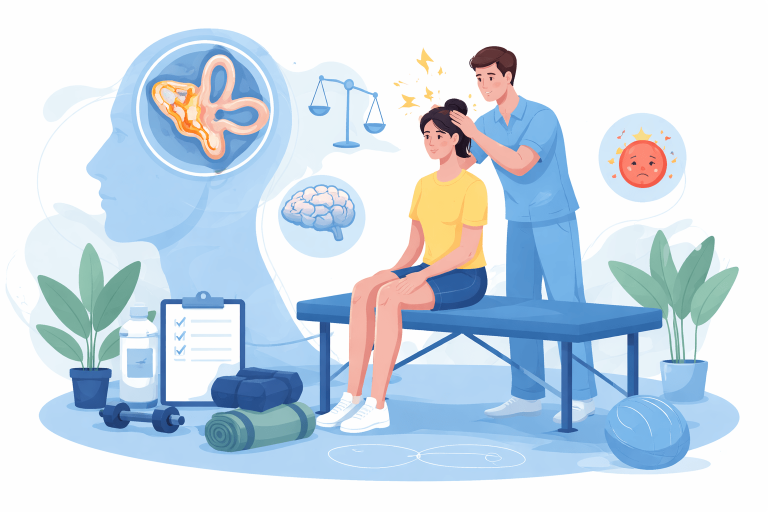
How Physiotherapy Helps Manage Vertigo
At Varia Physiotherapy Clinic, we approach vertigo with a structured, evidence-based plan. Treatment is tailored to the cause—not just the symptoms—focusing on treatment for balance and coordination issues, helping patients regain balance and stability, and supporting therapy for everyday activity improvement.
Step 1: Detailed Clinical Assessment
We begin with:
- Balance and gait analysis
- Vestibular function tests
- Neck mobility evaluation
- Positional testing (like Dix-Hallpike test for BPPV)
If needed, we coordinate with ENT specialists, neurologists, or orthopedic doctors for further diagnosis.
Step 2: Vestibular Rehabilitation Therapy (VRT)
This is the cornerstone of physiotherapy for vertigo.
It includes:
- Canalith repositioning maneuvers (for BPPV)
- Gaze stabilization exercises
- Balance retraining
- Habituation exercises to reduce sensitivity to motion
These exercises help the brain adapt and compensate for inner ear dysfunction.
Step 3: Cervical Spine Treatment
For patients with neck-related vertigo:
- Manual therapy improves joint mobility
- Postural correction reduces strain
- Strengthening exercises stabilize the neck
Step 4: Functional Training
We gradually reintroduce daily activities:
- Walking on uneven surfaces
- Turning movements
- Stair climbing
This restores confidence and independence.
Step 5: Home Exercise Program
Recovery doesn’t end at the clinic. Patients are guided with:
- Simple daily exercises
- Lifestyle modifications
- Ergonomic advice

A Real Patient Story from Our Clinic
A 48-year-old working professional from Ahmedabad visited us after experiencing dizziness for nearly 6 months. She initially ignored her symptoms, assuming it was “just weakness.”
Over time:
- She stopped driving due to fear of sudden spinning
- Developed severe neck stiffness
- Began avoiding social gatherings
After assessment, she was diagnosed with BPPV combined with cervical dysfunction.
Within 3 sessions:
- Her spinning episodes reduced significantly
- Neck mobility improved
Over 3–4 weeks:
- She regained confidence in walking and driving
- Anxiety reduced noticeably
Her case is not unique. Many patients delay treatment—and suffer longer than necessary.

Myths vs Facts About Vertigo
Myth: Vertigo will go away on its own
Fact: Some cases may resolve, but many require targeted treatment for lasting relief
Myth: It’s just low blood pressure or weakness
Fact: Vertigo often involves the inner ear or nervous system—not just general weakness
Myth: Bed rest is the best solution
Fact: Controlled movement and guided exercises are essential for recovery
Myth: Medication alone is enough
Fact: Medicines may reduce symptoms temporarily, but physiotherapy addresses the root cause

When Should You See a Physiotherapist?
You should not ignore vertigo if you experience:
- Recurrent spinning sensation
- Loss of balance or frequent falls
- Dizziness triggered by head movement
- Neck pain along with dizziness
- Difficulty focusing or walking straight
Immediate medical referral is needed if:
- Vertigo is accompanied by vision loss
- Difficulty speaking
- Sudden weakness in limbs
These could indicate neurological emergencies.
Conclusion
So, what happens if vertigo is ignored?
It doesn’t just stay the same—it often worsens. It affects your balance, your confidence, and your ability to live freely. The good news is that most causes of vertigo are treatable with the right care at the right time.
At Varia Physiotherapy Clinic in Ahmedabad, our goal is not just to treat symptoms—but to help you regain control of your life safely and confidently by understanding what happens if vertigo is ignored and addressing the root cause early.
If you or someone you know is experiencing vertigo, consider seeking an expert assessment. Early intervention can make recovery faster, easier, and more complete.
Ethical Call to Action
If you’re unsure whether your symptoms need attention, it’s okay to start with a simple consultation. Understanding your condition is the first step toward recovery—no pressure, just guidance.
If you’d like to speak with a physiotherapist or book an assessment at Varia Physiotherapy Clinic, you can reach out here:
📞 Call: +91 95123 79555
📧 Email: hello.drhetalvaria@gmail.com
🌐 Website: www.variaphysiotherapyclinic.com
Our team is here to listen, assess, and guide you toward safe and effective recovery.
What Happens If Vertigo Is Ignored - FAQs
Q1. Can vertigo be permanently cured?
Q2.How long does physiotherapy take for vertigo?
Q3. Is vertigo related to neck problems?
Q4.Is it safe to exercise during vertigo?
Q5. Do I need scans or MRI for vertigo?
About the Author

Dr. Hetal M Varia
After a rich experience of working in US healthcare as manager and licensed physiotherapist in US for last 11 years, she has returned home with a vision to become pioneer of Vestibular Therapy and specialized Parkinson physiotherapy in Ahmedabad. With her special skills and expertise in vertigo, Parkinson, balance and movement disorders therapy, Dr. Varia is committed to provide US standards of therapy services , compassionate and patient centered care to our people and community. With a vision of the world where everyone walks strong & steady, she intends to empower individuals with vestibular and neurological disorders through specialized care, rehabilitation & innovative therapies to improve mobility, balance & overall quality of life!