
Vestibular Rehabilitation Exercises At Home
Dizziness, imbalance, and a spinning sensation can quietly disrupt everyday life. Many people in Ahmedabad ignore these symptoms at first, hoping they will disappear on their own. But over time, simple activities like walking in crowded areas, climbing stairs, turning the head quickly, or even getting out of bed may become stressful and exhausting.
At Varia Physiotherapy Clinic in Ahmedabad, patients frequently describe feeling “unsteady,” “foggy,” or afraid of falling. These symptoms are often related to vestibular dysfunction — a condition affecting the inner ear and balance system.
This article explains how Vestibular Rehabilitation Exercises At Home can support recovery, improve confidence, and help patients regain better balance safely. We will also discuss when professional physiotherapy assessment becomes important and what realistic recovery looks like.

Understanding the Vestibular System in Simple Terms
The vestibular system is located inside the inner ear and works closely with the brain, eyes, and muscles to maintain balance and body orientation.
When this system is disrupted, patients may experience:
- Vertigo (spinning sensation)
- Dizziness while walking
- Loss of balance
- Motion sensitivity
- Nausea
- Difficulty focusing vision during movement
- Feeling unstable in crowded or busy environments
According to the World Health Organization and the National Institutes of Health, balance disorders can significantly affect mobility, confidence, and quality of life, especially in middle-aged and older adults.
Some common conditions linked to vestibular problems include:
- Vestibular neuritis
- Labyrinthitis
- Benign Paroxysmal Positional Vertigo (BPPV)
- Migraine-associated vertigo
- Age-related balance decline
- Post-viral dizziness
- Neurological conditions affecting coordination
Why Many Patients Delay Treatment
At Varia Physiotherapy Clinic, many patients initially believe dizziness is caused only by weakness, low blood pressure, cervical pain, or stress. While these can contribute, persistent balance issues often involve the vestibular system itself.
One common patient scenario involves adults between 40–60 years who begin avoiding outdoor walking because they feel unsteady in busy marketplaces or while turning quickly. Others stop driving due to sudden dizziness episodes.
Delaying treatment may lead to:
- Reduced physical activity
- Fear of falling
- Anxiety during movement
- Poor posture and muscle stiffness
- Increased dependency in daily activities
Early assessment can help identify whether the symptoms are vestibular, neurological, orthopedic, or related to another medical condition.
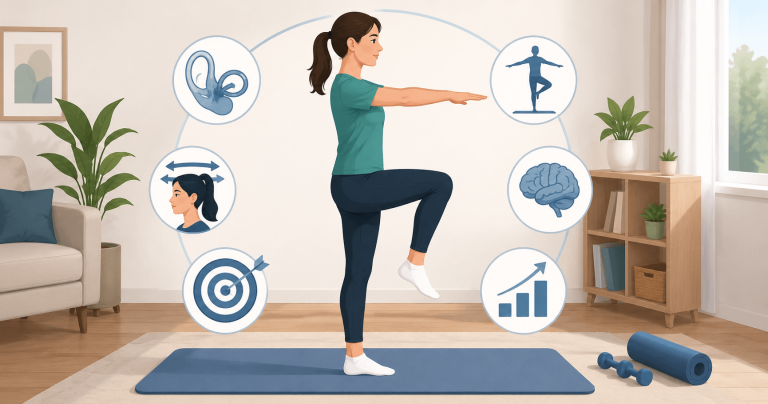
How Vestibular Rehabilitation Exercises At Home Help
Vestibular rehabilitation is an evidence-based physiotherapy approach designed to retrain the brain and body to adapt to balance disturbances. These exercises do not simply “stop dizziness instantly.” Instead, they gradually improve the brain’s ability to process balance signals more efficiently.
A physiotherapist typically designs a personalized program after assessing:
- Eye movements
- Head movement tolerance
- Walking balance
- Postural stability
- Cervical mobility
- Fall risk
- Vestibular reflex responses
The goal is to improve adaptation, coordination, and confidence during movement.
Common Components of Home-Based Vestibular Exercises
1. Gaze Stabilization Exercises
These exercises help improve visual focus during head movement.
Example:
A patient keeps their eyes focused on a fixed target while slowly turning the head side to side.
Benefits may include:
- Better visual stability
- Reduced dizziness during walking
- Improved coordination
2. Balance Retraining
Balance exercises challenge the body gradually in safe positions.
Examples include:
- Standing with feet together
- Tandem standing
- Heel-to-toe walking
- Controlled weight shifting
These exercises help improve:
- Postural control
- Confidence while walking
- Fall prevention
3. Habituation Exercises
Certain movements may repeatedly trigger dizziness. Habituation exercises carefully expose patients to these movements in a controlled way so the brain becomes less sensitive over time.
These are often useful for:
- Motion sensitivity
- Position-related dizziness
- Mild chronic vestibular dysfunction
4. Walking and Functional Mobility Training
Some patients feel dizzy mainly while moving in busy environments or changing directions quickly.
Functional vestibular physiotherapy may include:
- Walking with head turns
- Stair training
- Direction changes
- Outdoor gait confidence training
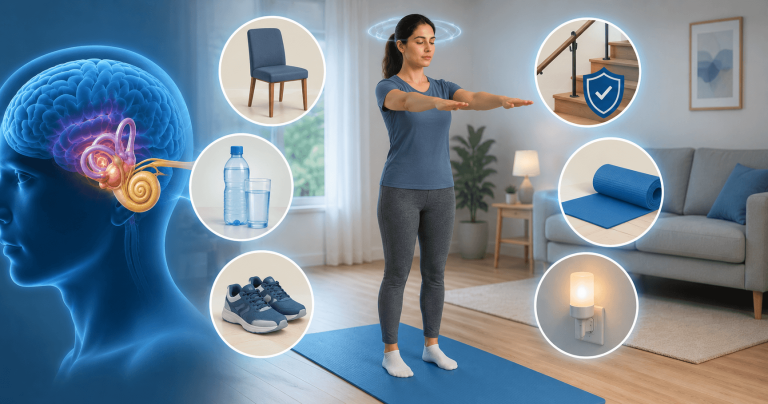
Important Safety Tips Before Starting Vestibular Rehabilitation Exercises At Home
Although home exercises are beneficial, not every dizziness condition should be self-treated, which is why a properly guided home-based vestibular rehabilitation program is important for safe and effective recovery.
Patients should seek professional evaluation if they experience:
- Sudden hearing loss
- Severe headache
- Facial weakness
- Double vision
- Slurred speech
- Frequent falls
- Loss of consciousness
- Progressive neurological symptoms
In such cases, referral to a neurologist or ENT specialist may be necessary before beginning physiotherapy. Patients with cervical spine disorders, stroke history, Parkinson’s disease, or severe migraines may also require modified rehabilitation plans.
A Real Patient Scenario Seen at Varia Physiotherapy Clinic
A 52-year-old office professional from Ahmedabad visited Varia Physiotherapy Clinic after experiencing dizziness for nearly three months. He avoided crowded areas because turning quickly triggered imbalance and nausea.
Initially, he assumed the symptoms were caused by neck stiffness and stress from long working hours. However, vestibular assessment revealed reduced gaze stability and impaired balance responses.
His physiotherapy program included:
- Gaze stabilization drills
- Gradual balance retraining
- Walking coordination exercises
- Cervical mobility work
- Home-based vestibular rehabilitation exercises
Over approximately six weeks, he reported:
- Improved confidence while walking
- Reduced motion sensitivity
- Better stability during daily activities
Importantly, recovery was gradual rather than immediate. Like many vestibular conditions, improvement occurred progressively with consistency and proper supervision.
The Role of Evidence-Based Physiotherapy
Modern vestibular physiotherapy is based on neuroplasticity — the brain’s ability to adapt and reorganize itself after vestibular dysfunction.
Research supported by the National Institutes of Health (NIH) shows that vestibular rehabilitation can improve balance, mobility, and dizziness-related disability in many patients.
Similarly, the World Health Organization (WHO) highlights the importance of rehabilitation in improving functional independence and quality of life.
At Varia Physiotherapy Clinic, rehabilitation programs are individualized because:
Every Patient’s Triggers Differ
Some patients feel dizzy when turning their head quickly, while others struggle in crowded places, while bending forward, or during sudden position changes. A detailed physiotherapy assessment helps identify individual triggers so exercises can be planned safely and more effectively for daily life activities.
Balance Deficits Vary
Not all balance problems look the same. One patient may have difficulty walking outdoors, while another may feel unstable only on stairs or uneven surfaces. Personalized rehabilitation focuses on the specific movement and balance challenges affecting the patient’s confidence and mobility.
Neurological Involvement May Change Treatment Planning
Certain vestibular symptoms may be linked with neurological conditions such as migraine, Parkinson’s disease, stroke, or nerve-related disorders. In these situations, physiotherapists carefully modify exercise intensity, monitor symptoms closely, and coordinate referral to a neurologist when needed.
Age and Activity Levels Influence Exercise Progression
A physically active adult and an older patient with limited mobility will recover at different speeds. Vestibular rehabilitation exercises are progressed gradually based on strength, endurance, balance confidence, and overall functional ability to ensure safe and realistic improvement.
Myths vs Facts About Vestibular Problems
| Myth | Fact |
|---|---|
| “Dizziness will disappear completely with rest.” | Long-term inactivity may worsen balance confidence and mobility. |
| “Vertigo only happens in older adults.” | Vestibular disorders can affect adults of various age groups. |
| “Home remedies alone can cure balance disorders.” | Some cases require structured physiotherapy and medical assessment. |
| “Vestibular exercises should cause severe dizziness.” | Mild temporary symptoms may occur, but exercises should remain safe and controlled. |
| “All dizziness comes from cervical pain.” | Vestibular, neurological, cardiovascular, and medical causes must also be considered. |
When Should You See a Physiotherapist?
You should consider professional vestibular assessment if you experience:
- Persistent dizziness lasting more than a few days
- Fear of falling while walking
- Motion sensitivity
- Difficulty turning quickly
- Imbalance in crowded environments
- Unsteadiness after viral illness
- Recurrent vertigo episodes
- Reduced confidence during daily movement
Early physiotherapy may help reduce long-term movement avoidance and improve overall functional independence.
Conclusion
Living with dizziness or balance problems can affect much more than physical movement. Many patients gradually lose confidence in walking, working, traveling, and participating in social activities.
The good news is that evidence-based physiotherapy and properly guided Vestibular Rehabilitation Exercises At Home may help improve balance control, movement confidence, and day-to-day function over time.
At Varia Physiotherapy Clinic in Ahmedabad, rehabilitation programs are designed around careful assessment, realistic goals, and patient safety rather than quick-fix promises.
If dizziness, imbalance, or motion sensitivity is interfering with your daily life, seeking professional evaluation early may help you move more confidently and safely again.
Book a Professional Assessment
If you’re unsure whether your symptoms need attention, it’s okay to start with a simple consultation. Understanding your condition is the first step toward recovery—no pressure, just guidance.
If you’d like to speak with a physiotherapist or book an assessment at Varia Physiotherapy Clinic, you can reach out here:
 Call: +91 95123 79555
 Email: hello.drhetalvaria@gmail.com
 Website: www.variaphysiotherapyclinic.com
Our team is here to listen, assess, and guide you toward safe and effective recovery.
Vestibular Rehabilitation Exercises At Home - FAQs
1. Can vestibular exercises be done safely at home?
2. How long does vestibular rehabilitation take?
3. Do vestibular exercises cure vertigo permanently?
Q4. Can vertigo be cured permanently?
Q5. How do I verify a physiotherapist’s credentials?
About the Author

Dr. Hetal M Varia
After a rich experience of working in US healthcare as manager and licensed physiotherapist in US for last 11 years, she has returned home with a vision to become pioneer of Vestibular Therapy and specialized Parkinson physiotherapy in Ahmedabad. With her special skills and expertise in vertigo, Parkinson, balance and movement disorders therapy, Dr. Varia is committed to provide US standards of therapy services , compassionate and patient centered care to our people and community. With a vision of the world where everyone walks strong & steady, she intends to empower individuals with vestibular and neurological disorders through specialized care, rehabilitation & innovative therapies to improve mobility, balance & overall quality of life!