
Vertigo Due To Long Sitting: Causes & Simple Fix
If you’ve ever stood up after hours at your desk and felt the room spin, you’re not alone. Many working professionals in Ahmedabad experience vertigo due to sitting, especially those with desk jobs or work-from-home routines.
At Varia Physiotherapy Clinic, we frequently see patients complaining of:
dizziness after sitting long hours
vertigo while working at desk
unexplained imbalance or lightheadedness
This isn’t just “normal tiredness.” It’s often linked to vertigo due to long sitting causes, which can involve posture, neck health, and even your inner ear balance system.
Understanding Vertigo Due To Long Sitting Causes
Vertigo is not just dizziness—it’s a sensation that you or your surroundings are spinning. When it occurs after prolonged sitting, it usually stems from a combination of physical and neurological factors.
Common contributing issues include:
sedentary lifestyle vertigo
poor posture dizziness
blood circulation issues dizziness
inner ear imbalance
According to the World Health Organization, prolonged inactivity is a growing risk factor for musculoskeletal and neurological problems.

Common Causes of Vertigo While Sitting
1. Poor Posture & Cervical Spine Stress
One of the biggest long sitting vertigo causes is poor posture. Poor posture puts continuous strain on the cervical spine, affecting nerves and blood flow to the brain. This can lead to imbalance signals, resulting in dizziness or cervical vertigo, especially after long hours of sitting.
- Slouching compresses neck structures
- Leads to cervical vertigo
- Causes neck pain and vertigo
This is often called posture-related dizziness, where spinal misalignment affects balance signals.
2. Screen Time & Laptop Posture
Many patients report laptop posture dizziness due to: Working on a laptop often encourages forward head posture and slouched shoulders. Over time, this creates muscle tension and disrupts normal balance coordination, leading to frequent dizziness during or after work.
- Forward head posture
- Rounded shoulders
- Eye strain
These contribute to screen time vertigo causes and desk job health issues.
3. Reduced Blood Circulation
Sitting for long periods can reduce blood flow to the brain, leading to: Prolonged sitting slows circulation, which may reduce oxygen supply to the brain. This can cause lightheadedness, fatigue, and a spinning sensation when you stand or move suddenly.
- reduced blood flow to brain
- muscle stiffness and dizziness
- sitting too long dizziness
4. Inner Ear & Vestibular Issues
Sometimes, vertigo is linked to: Vertigo can also arise from inner ear issues like vestibular dysfunction or BPPV. These conditions affect the body’s balance system and may worsen when combined with inactivity or poor posture.
- vestibular dysfunction
- BPPV symptoms sitting
- inner ear imbalance
Research supported by National Institutes of Health shows that balance disorders often worsen with inactivity.
5. Lack of Movement & Muscle Tightness
Prolonged sitting leads to: Long hours of sitting cause muscle stiffness, especially in the neck and upper back. This tightness can affect spinal alignment and trigger dizziness, particularly in people with sedentary lifestyles.
- tight neck muscles
- weak core stability
- spinal alignment and vertigo issues
This explains why dizziness after long sitting is so common in office workers.
6. Symptoms You Shouldn’t Ignore
- Spinning sensation after standing
- neck stiffness dizziness
- blurred vision
- imbalance while walking
- nausea
If these persist, it’s time to seek help.
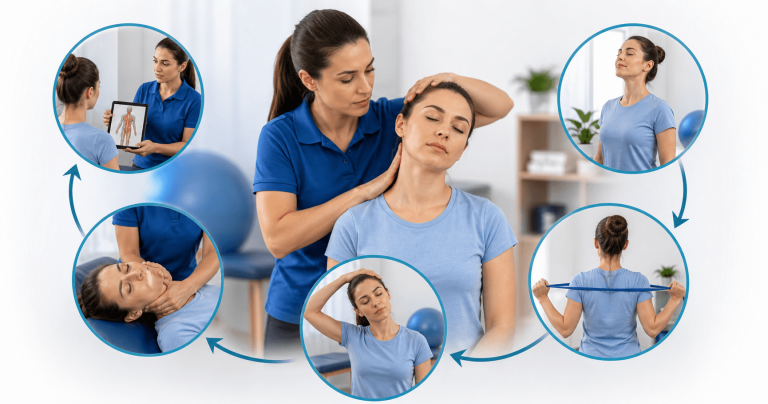
How Physiotherapy Helps (Step-by-Step)
At Varia Physiotherapy Clinic, we focus on root cause treatment, not just symptom relief.
1. Detailed Assessment
We evaluate:
- posture
- neck mobility
- vestibular function
- spinal alignment
2. Targeted Treatment Plan
Posture Correction
- ergonomic sitting posture
- workstation modifications
Manual Therapy
- reduces neck stiffness
- improves joint mobility
Vestibular Rehabilitation
- retrains balance system
- effective for vestibular dysfunction
Exercise Therapy
- neck exercises for dizziness
- stretches for desk workers
- simple exercises for vertigo
3. Home Guidance
Patients are educated on:
- how to fix vertigo from sitting
- daily movement routines
- vertigo home remedies

Real Patient Scenario
A 42-year-old IT professional visited us with complaints of:
- dizziness from prolonged sitting
- neck pain
- imbalance after work
He worked 9–10 hours daily on a laptop.
Diagnosis:
- cervical vertigo
- posture-related dysfunction
Treatment Plan:
- 2 weeks of physiotherapy
- posture correction
- neck strengthening
Result:
Within 3 weeks:
- dizziness reduced significantly
- posture improved
- no spinning sensation
This is a typical case of office work dizziness problems we manage regularly.
Myths vs Facts
Myth: Vertigo only happens due to ear problems
Fact: It can be caused by posture and neck issues
Myth: Rest is the best solution
Fact: Movement and physiotherapy are essential
Myth: It will go away on its own
Fact: Ignoring it can worsen the condition
When to See a Physiotherapist
1. Dizziness lasts more than a few days:
If dizziness continues for several days, it may indicate an underlying issue beyond simple fatigue. Persistent symptoms should be evaluated to rule out vestibular, cervical, or neurological causes.
2. You experience vertigo while working at desk regularly:
Frequent vertigo during desk work often points to posture-related problems or cervical strain. Ignoring it can worsen symptoms and affect your work performance over time.
3. Neck pain accompanies dizziness:
When dizziness occurs along with neck pain, it is commonly linked to cervical vertigo. Tight or misaligned neck structures can disrupt balance signals sent to the brain.
4. Symptoms affect daily activities:
If dizziness interferes with walking, working, or routine tasks, it should not be ignored. Early treatment can prevent progression and improve overall quality of life.
In some cases, referral to a neurologist or ENT specialist may be needed—especially if symptoms are severe or persistent.
Conclusion
Vertigo due to long sitting causes are more common than most people realize—especially in today’s sedentary work culture.
The good news? It’s treatable.
With the right combination of:
- posture correction
- physiotherapy
- movement habits
you can significantly reduce symptoms.
If you’re struggling with:
- dizziness after sitting long hours
- sedentary lifestyle vertigo
- or posture-related dizziness
it’s worth getting evaluated.
Ethical Call-to-Action
If you’re unsure whether your symptoms need attention, it’s okay to start with a simple consultation. Understanding your condition is the first step toward recovery—no pressure, just guidance.
If you’d like to speak with a physiotherapist or book an assessment at Varia Physiotherapy Clinic, you can reach out here:
 Call: +91 95123 79555
 Email: hello.drhetalvaria@gmail.com
 Website: www.variaphysiotherapyclinic.com
Our team is here to listen, assess, and guide you toward safe and effective recovery.
Vertigo Due To Long Sitting Causes : FAQs
Ans: Yes, prolonged sitting can contribute to vertigo. It often leads to reduced blood circulation, poor posture, and neck strain, all of which can affect your balance system and trigger dizziness.
Ans: Take short breaks every 30–45 minutes to move and stretch your body. Simple desk exercises and maintaining proper posture can significantly reduce dizziness after long working hours.
Ans: Neck mobility exercises, balance training, and posture correction exercises are highly effective. These help improve blood flow, reduce stiffness, and restore normal balance function.
Ans: Set up an ergonomic workstation, stay well hydrated, and avoid sitting continuously for long periods. Following simple movement routines during the day can help prevent vertigo.
Ans: Yes, physiotherapy is very effective—especially for cervical vertigo and posture-related dizziness. It focuses on treating the root cause through targeted exercises and posture correction.
About the Author

Dr. Hetal M Varia
After a rich experience of working in US healthcare as manager and licensed physiotherapist in US for last 11 years, she has returned home with a vision to become pioneer of Vestibular Therapy and specialized Parkinson physiotherapy in Ahmedabad. With her special skills and expertise in vertigo, Parkinson, balance and movement disorders therapy, Dr. Varia is committed to provide US standards of therapy services , compassionate and patient centered care to our people and community. With a vision of the world where everyone walks strong & steady, she intends to empower individuals with vestibular and neurological disorders through specialized care, rehabilitation & innovative therapies to improve mobility, balance & overall quality of life!