
Sciatica Treatment In Ahmedabad – Symptoms & Recovery Plan
A 38-year-old IT professional walks in with an MRI report showing L4-L5 disc bulge. He has already searched everything online. Someone told him surgery might be needed. He has been on painkillers for 3 months. He tried YouTube “sciatica stretches.” His colleague recovered in 2 weeks — so now he thinks something is seriously wrong with him.
In my clinical practice in Ahmedabad, the biggest mistake I see in sciatica patients is this:
They treat the MRI, not the movement problem.
Most online sciatica content fails because it:
- Gives exercise lists without clinical reasoning
- Doesn’t explain recovery timelines
- Doesn’t clarify red flags
- Encourages aggressive nerve stretching in acute pain
- Ignores fear and load mismanagement
Sciatica is not just a disc issue. It is often a load tolerance + nerve sensitivity + movement behavior problem. And that requires judgment not random exercises.
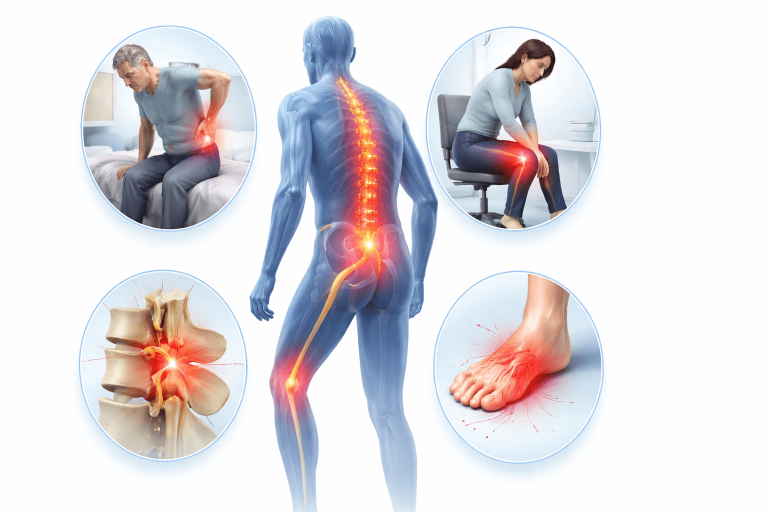
Real Problems I See In Sciatica Patients Here
1. “Stretch the nerve” in acute phase
Many patients aggressively stretch hamstrings because they feel tight. But when the nerve is irritated, tensioning it can worsen inflammation. Nerves don’t like forceful stretching during flare-ups.
2. Complete Bed Rest
In Ahmedabad, families still advise strict rest. This increases stiffness, fear, and sensitivity. Short rest during severe pain is okay. Prolonged rest delays recovery.
3. Fear of Bending Forward
“I was told never to bend again.” Avoidance creates long-term weakness and movement anxiety. Gradual re-exposure is safer than permanent restriction.
4. Over-Reliance on MRI
Disc bulges are common even in people without pain.
Pain depends more on:
- Nerve irritation level
- Inflammation
- Mechanical compression
- Movement control
- Load tolerance
MRI findings alone don’t decide surgery.
5. Returning to Gym Too Early
Gym-goers often resume deadlifts when pain reduces by 50%. Pain reduction ≠ tissue recovery. Premature loading causes relapse.
6. Passive Therapy Dependence
Daily traction, heat, massage — but no strength progression. Pain reduces temporarily. Function does not improve. Long-term recovery requires load building, not just pain relief, which is why it’s important to find the right physiotherapy care for your condition instead of relying only on passive treatments.

Step-by-Step Clinical Action Plan
Step 1: Proper Diagnosis & Red Flag Screening
First question I ask:
Is this true nerve root involvement or referred pain?
We screen for:
Progressive weakness
If you notice your leg is becoming weaker over days or weeks — for example, your foot is slapping the ground while walking or you struggle to lift your toes — this is not just “pain.” It may indicate worsening nerve compression and needs urgent medical evaluation, not just exercises.
Loss of reflexes
If a doctor tests your knee or ankle reflex and it has reduced or disappeared compared to the other side, it can signal nerve root involvement. Reflex changes are clinical findings — they aren’t something you can self-diagnose, which is why proper neurological assessment matters.
Bowel/bladder symptoms
Difficulty controlling urination, inability to pass urine, or sudden loss of bowel control alongside back/leg pain is a medical emergency. This can indicate serious nerve compression and requires immediate hospital care — do not wait for physiotherapy.
Severe numbness
Persistent or worsening numbness in the leg, especially in the inner thigh, groin, or around the buttocks (“saddle area”), is not typical sciatica discomfort. If sensation feels significantly reduced or spreading, seek urgent medical evaluation before starting rehabilitation.
Why this matters:
Some cases need medical management before physiotherapy.
Step 2: Pain Control Without Passive Dependence
Goal:
Calm irritation, not suppress it blindly.
We use:
- Directional movement testing
- Modified positions (not strict rest)
- Gentle unloading strategies
- Controlled walking dosage
Common mistake:
Overstretching or doing random YouTube exercises.
Biological reasoning:
Reducing nerve compression and inflammatory stress allows desensitization.
Step 3: Nerve Mobility & Controlled Movement
Gliding.
Gentle nerve sliders improve mobility without increasing tension.
Why it works:
Improves neural circulation and reduces mechanosensitivity.
Common mistake:
Forcing range until pain increases. Pain spike = nerve irritation, not progress.
Step 4: Strength & Load Tolerance Development
Focus areas:
- Deep trunk control
- Hip strength
- Gradual bending exposure
- Controlled lumbar loading
Why it works:
Discs and nerves tolerate progressive load. Avoidance weakens support structures.
Common mistake:
Jumping from rehab to heavy lifting.
Step 5: Functional Reintegration
We measure:
- Sitting tolerance
- Driving tolerance
- Work endurance
- Walking distance
Ahmedabad reality:
Long sitting hours are unavoidable. So we train tolerance instead of banning sitting.
Step 6: Long-Term Recurrence Prevention
Focus:
- Load management education
- Gym technique correction
- Workstation modification
- Weekly strength maintenance
WHO physical activity guidance supports ongoing strengthening for spine health.

Real Ahmedabad Case Examples
Case 1: 36-Year-Old IT Professional
Duration: 4 months
MRI: L4-L5 disc bulge
Symptoms: Leg pain till calf, sitting <15 min
Failed attempts: Bed rest + YouTube stretching
Treatment Plan:
Week 1–2:
- Pain calming strategy
- Nerve sliders
- Walking dosage
Week 3–6:
- Core activation
- Gradual forward bending
- Sitting exposure training
Setback at Week 4 after a long car drive. We adjusted the load instead of restarting.
Outcome:
8 weeks → Sitting tolerance improved to 60 minutes
12 weeks → Returned to full work schedule
Residual mild stiffness in mornings is common—no miracle, just structured progression with physiotherapy for sciatica in Ahmedabad to support steady and lasting recovery.
Case 2: 29-Year-Old Gym Enthusiast (Bopal)
Goal: Return to deadlifts
Issue: Relapse after early gym return
Movement Deficit: Poor hip hinge, lumbar overloading
Plan:
- 4-week load rebuild
- Deadlift regression
- Eccentric strength progression
- Volume control
At 10 weeks:
- Returned to 70% previous load
- No leg pain
- Mild back fatigue only
Remaining limitation:
Still building endurance.

What Patients Commonly Say
- “I was scared I would need surgery immediately.”
- “I thought bending was dangerous forever.”
- “I didn’t know recovery takes weeks, not days.”
- Education reduces fear.
- Fear reduction improved movement confidence.
What Research Actually Suggests
International spine guidelines show:
- Most sciatica improves with structured conservative care.
- Surgery is typically considered if progressive weakness or persistent disabling pain continues after structured rehabilitation.
- Pain does not always equal damage.
But research is only helpful when translated into practical steps.
This Guide Is NOT For
Do not rely on this guide if you have:
- Loss of bladder or bowel control
- Progressive leg weakness
- Severe numbness worsening
- Suspected fracture
- Fever with back pain
Recent major trauma
This guide also does not:
- Replace medical diagnosis
- Provide medication advice
- Guarantee recovery
- Replace in-person evaluation
If I Were Treating Sciatica In Ahmedabad Today
I would:
- Prioritize accurate diagnosis before exercises
- Focus on load progression, not stretching
- Educate about realistic recovery timelines
- Train sitting tolerance gradually
I avoid completely:
- Aggressive hamstring stretching in acute phase
- Long-term passive therapy dependence
- Telling patients to avoid bending forever
One mistake I repeatedly see:
Jumping back to gym or sitting too long sitting too quickly.
One red flag I never ignore:
Progressive motor weakness.
I refer to a spine specialist when:
Neurological signs worsen or pain remains disabling despite structured rehabilitation.
Read More: Best Physiotherapy Clinic in Ahmedabad
Conclusion
If you are dealing with sciatica in Ahmedabad:
- Don’t panic after the MRI.
- Don’t overstretch the nerve.
- Don’t depend only on painkillers.
- Don’t return to full activity too early.
- Start with proper assessment.
- Track symptoms.
- Progress load gradually.
Consider using a sciatica rehab checklist or symptom tracker to guide recovery.
Sciatica Treatment In Ahmedabad - FAQs
Q1. Will my sciatica fully heal?
Q2.Is pain during exercise normal?
Q3.Do I need an MRI before physiotherapy?
Q4. When should I consider surgery?
Q5.Why does pain shift from back to leg?
References
About the Author

Dr. Hetal M Varia
After a rich experience of working in US healthcare as manager and licensed physiotherapist in US for last 11 years, she has returned home with a vision to become pioneer of Vestibular Therapy and specialized Parkinson physiotherapy in Ahmedabad. With her special skills and expertise in vertigo, Parkinson, balance and movement disorders therapy, Dr. Varia is committed to provide US standards of therapy services , compassionate and patient centered care to our people and community. With a vision of the world where everyone walks strong & steady, she intends to empower individuals with vestibular and neurological disorders through specialized care, rehabilitation & innovative therapies to improve mobility, balance & overall quality of life!