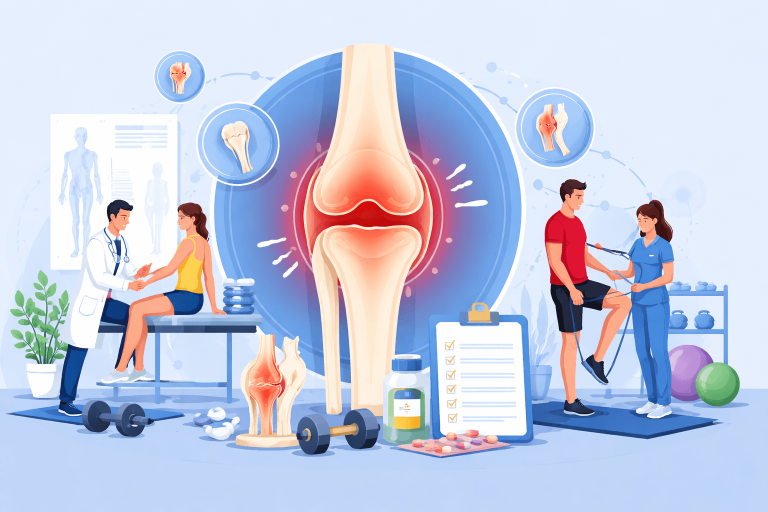
Physiotherapist In Ahmedabad For Knee Pain
Knee pain is one of the most common reasons patients walk into a physiotherapy clinic in Ahmedabad — and also one of the most misunderstood.
In my clinical experience, most people don’t come on day one. They come after months of pain, multiple painkillers, home remedies, advice from friends, and often a confusing MRI report.
By then, the real question isn’t “Why does my knee hurt?” It’s “Why isn’t it getting better?”
This guide is written to answer that honestly and help you decide whether physiotherapy is the right next step for your knee pain.
Why Knee Pain Is So Common In Ahmedabad
From young adults to senior citizens, knee pain shows up for different reasons, but the patterns are familiar:
- Long hours of sitting with weak leg muscles
- Sudden increase in walking, gym, or sports activity
- Old ligament or meniscus injuries that never fully healed
- Early knee arthritis due to lifestyle and weight changes
- Post-surgery stiffness after knee replacement or arthroscopy
Many patients tell me:
“Doctor, the pain reduces with medicines, but the moment I walk more, it comes back.” That’s because pain relief is not the same as recovery, which is why structured knee rehabilitation for better mobility is essential to restore strength, stability, and long-term joint function.
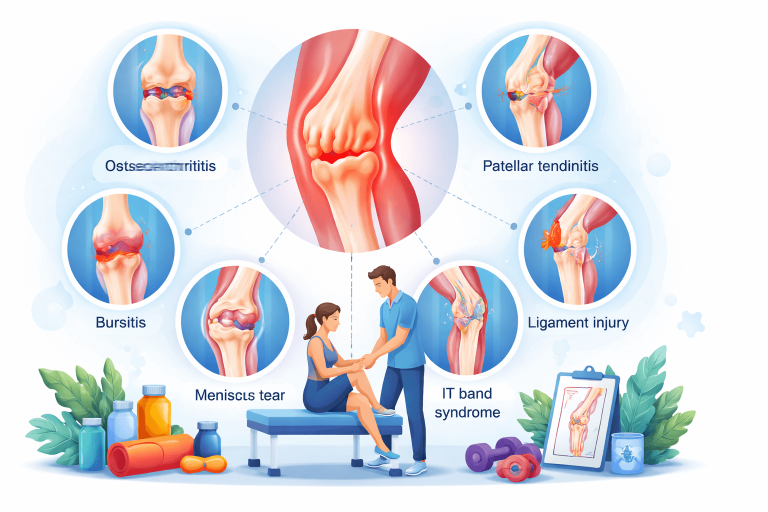
Common Knee Pain Conditions We Treat in Physiotherapy
Not all knee pain is the same, and treating every knee with the same exercises is a mistake.
Anterior Knee Pain (Kneecap Pain)
Often seen in:
- Office workers
- Students
- Gym beginners
Usually linked to weak thigh and hip muscles, not the kneecap itself.
Osteoarthritis of the Knee
Common in middle-aged and older adults.
Physiotherapy focuses on:
- Reducing load on the joint
- Improving movement confidence
- Delaying or avoiding surgery when possible
Ligament Injuries (ACL, MCL)
Pain, instability, fear of movement. Rehab must be progressive and precise, not rushed.
Meniscus Injuries
Locking, catching, pain while squatting. Many cases improve without surgery when rehab is done correctly.
Post-Surgical Knee Rehab
After:
- Knee replacement
- Arthroscopy
Physiotherapy is not optional — it determines your final outcome.
What Most Knee Pain Treatments Miss
This is where patients lose time and money.
- Only focusing on the knee
- Ignoring hip and ankle strength
- Generic exercise charts
- Too much rest or too much pushing
- No explanation of the condition
Knee pain is rarely just a knee issue. It’s a movement and load-management problem.
How a Good Physiotherapist In Ahmedabad Approaches Knee Pain
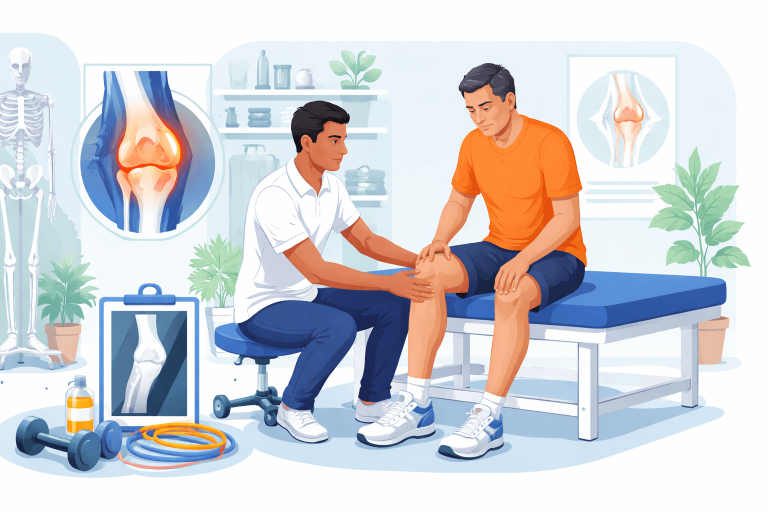
Step 1: Detailed Clinical Assessment
Before any treatment, we assess:
Walking and movement pattern
We observe how you walk, climb stairs, and change direction to see how forces travel through the knee. Small movement habits often place repeated stress on the joint and contribute to pain.
Knee range of motion
Limited bending or straightening can increase strain on surrounding tissues. Restoring safe movement helps reduce stiffness and allows the knee to function more naturally during daily activities.
Muscle strength (quads, hamstrings, hips, calves)
Knee pain is often linked to weakness or imbalance in nearby muscles. Strength testing helps identify which muscles are not supporting the knee properly during movement.
Joint stability
We assess how well the knee maintains control during weight-bearing and direction changes. Poor stability can create a sense of insecurity and increase the risk of further irritation or injury.
Daily activity and work demands
Your routine—sitting, standing, walking, lifting, or exercise—directly affects knee load. Understanding these demands helps tailor treatment to real-life needs, not just clinic exercises.
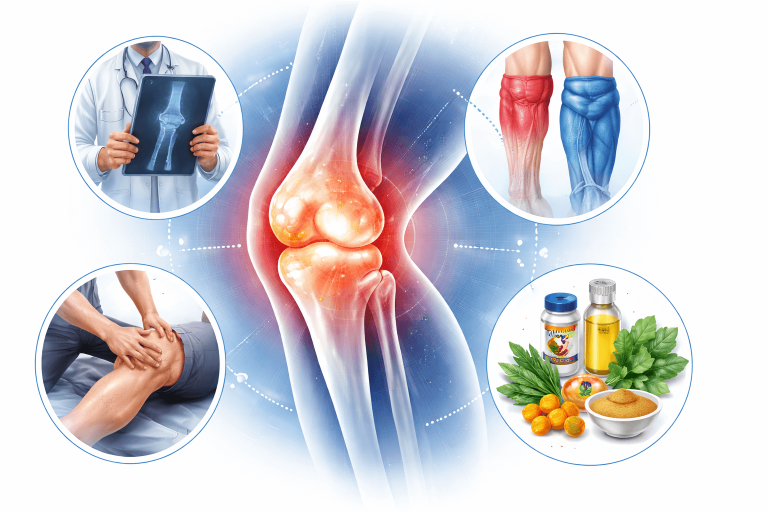
Step 2: Pain & Swelling Control (When Needed)
This phase is supportive, not the solution:
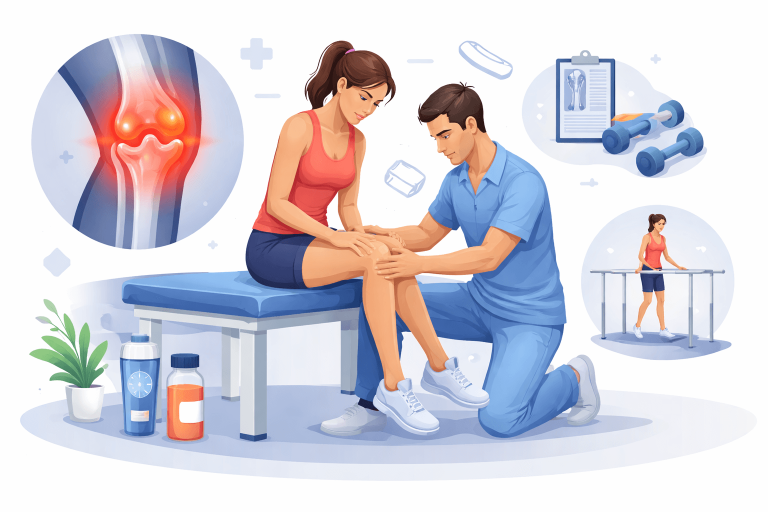
Manual therapy
Hands-on techniques are used to reduce muscle tension and improve joint movement. This helps calm pain-sensitive tissues and prepares the knee for safe, active rehabilitation—helping patients discover expert rehab care in Ahmedabad that supports faster and more effective recovery.
Ice or electrotherapy (selectively)
These methods may be used short-term to manage pain or swelling when needed. They support recovery but are never a replacement for movement and strengthening.
Gentle movement
Early, controlled movement keeps the knee from becoming stiff and weak. The goal is to restore confidence in movement without overloading irritated tissues.
Step 3: Strengthening & Movement Retraining (Core Phase)
This is where recovery actually happens.
Focus areas include:
Quadriceps and hamstring strength
These muscles help control knee bending, straightening, and shock absorption. Weakness here often increases joint stress and makes everyday movements like walking or stairs painful.
Hip and glute stability
The hips guide how the knee tracks during movement. Poor hip control can overload the knee, even if the knee itself is structurally healthy.
Balance and control
Balance training improves how the knee responds to uneven surfaces and sudden changes in direction. This reduces fear of movement and lowers the risk of re-injury.
Gradual load progression
The knee needs time to adapt to increasing demands. Slowly building load helps tissues strengthen safely without triggering pain or flare-ups.
Patients often say:
I never realized my hip strength affected my knee.
Step 4: Activity & Lifestyle Modification
We guide patients on:
- Walking and stair technique
- Sitting habits
- Exercise progression
- Weight and load management
Ignoring this is one of the biggest reasons knee pain returns.
Step 5: Return to Function & Prevention
Before discharge, patients should know:
- Which exercises to continue
- Which movements to avoid temporarily
- Early warning signs
How to prevent flare-ups
Real Case Example from Practice
Case: 52-year-old Male, Ahmedabad
Complaint: Knee pain while walking and climbing stairs for 1 year
Diagnosis: Early knee osteoarthritis
Issues found:
- Weak thigh muscles
- Poor walking mechanics
- Fear of movement
Treatment:
- Progressive strengthening
- Gait correction
- Load management education
Outcome:
- Pain reduced significantly in 4 weeks
- Improved walking confidence
- Avoided unnecessary injections
- Maintained results at follow-up
How Long Does Physiotherapy Take for Knee Pain?
It depends on:
- Cause of pain
- Duration
- Consistency with exercises
General timelines:
- Mild knee pain: 2–3 weeks
- Chronic pain: 4–8 weeks
- Post-surgery rehab: several months
Be cautious of anyone promising “instant permanent relief.”
When Should You See a Physiotherapist for Knee Pain?
Don’t wait if:
- Pain lasts more than a week
- Knee feels unstable
- Swelling keeps returning
- Pain affects sleep or daily activities
- You’re avoiding movement due to fear
Early rehab prevents long-term damage.
Why Physiotherapy Is Preferred Over Long-Term Medication
- Addresses root cause
- Improves strength and confidence
- Reduces dependency on painkillers
- Supports joint health long-term
- Backed by global clinical guidelines
Physiotherapy is not about “pushing through pain” — it’s about restoring function safely.
How to Choose the Right Physiotherapist in Ahmedabad for Knee Pain
Before starting, ask:
- Is the treatment plan explained clearly?
- Are exercises customized?
- Is there focus beyond just the knee?
- Is progress reviewed regularly?
Good physiotherapy is about clinical thinking, not just machines.
Final Thoughts from a Practicing Physiotherapist
Knee pain doesn’t mean you must stop moving — it means you need to move better. In my experience, patients recover best when:
- They understand their condition
- Treatment is progressive, not aggressive
- Rehab is consistent, not rushed
If you’re looking for a physiotherapist in Ahmedabad for knee pain, choose someone who treats you, not just your MRI report.
Physiotherapist In Ahmedabad For Knee Pain
- FAQs
References