
Expert Comparison: Online vs In-Clinic Neuro Physiotherapy Which Approach Truly Supports Recovery?
A senior physiotherapist’s honest, patient-first explanation, When patients or caregivers ask me whether online neuro physiotherapy is as effective as in-clinic treatment, my answer is never a simple yes or no.
The real question is what stage of recovery you’re in, what neurological problem you have, and what your body currently needs.
Let’s walk through this the same way I would explain it in my clinic — clearly, safely, and without exaggeration.
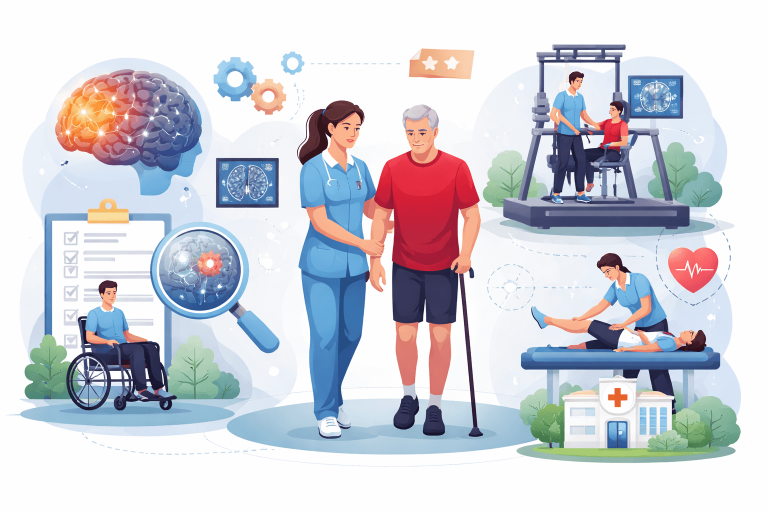
Understanding Neuro Physiotherapy (Before Choosing the Setting)
Neuro physiotherapy focuses on retraining the brain and nervous system after conditions such as:
Stroke
A stroke occurs when blood flow to part of the brain is interrupted, leading to weakness, balance problems, speech difficulty, or loss of coordination. Physiotherapy focuses on retraining movement, balance, and daily function as the brain heals and adapts.
Parkinson’s disease
Parkinson’s disease is a progressive neurological condition that affects movement control, causing stiffness, slowness, balance issues, and walking difficulty. Physiotherapy helps maintain mobility, posture, and independence for as long as possible—this is where neuro physiotherapy care in Ahmedabad plays an important role in supporting better movement control and daily function.
Brain or spinal cord injury
Injuries to the brain or spinal cord can disrupt movement, sensation, and coordination. Neuro physiotherapy supports recovery by improving strength, control, and safe movement through guided, repetitive training.
Neuropathy or balance disorders
These conditions affect nerve signals or balance systems, leading to numbness, unsteadiness, or frequent falls. Physiotherapy improves balance, confidence, coordination, and safety through targeted exercises and retraining.
Recovery depends on:
Correct movement patterns
Learning the right way to move is the foundation of recovery. Correct patterns prevent compensation, reduce strain, and help the brain relearn safe, efficient movement.
Repetition with precision
Repeating movements helps the brain form new connections, but only if they are done correctly. Poor-quality repetition can reinforce wrong habits and slow recovery.
Sensory feedback
Touch, position sense, and visual cues help the brain understand how the body is moving. Good sensory feedback improves control, balance, and confidence during movement.
Progressive challenges
Exercises must gradually become more challenging as ability improves. This controlled progression helps build strength, coordination, and independence without causing overload or injury.
Where this therapy is delivered — online or in-clinic — directly affects how much guidance, safety, and correction a patient receives.

What Online Neuro Physiotherapy Does Well
Online neuro physiotherapy works best when coaching, monitoring, and progression are the main needs — not hands-on correction. This is especially important when patients want to understand how online and in-person therapy compare for neurological recovery, so they can choose the approach that best fits their condition and goals.
Suitable for patients who:
- Are medically stable
- Can sit, stand, or walk with minimal assistance
- Have predictable symptoms
- Can follow instructions reliably
- Have caregiver support if needed
What works online:
- Balance confidence training
- Gait cueing for Parkinson’s (verbal + visual cues)
- Strength and endurance programs
- Posture correction
- Home-based functional practice (bed mobility, transfers)
Clinical insight:
Many chronic stroke and Parkinson’s patients already know what movements to do they struggle with consistency and progression, which online therapy can support well.
Read More: Home-Based Neuro Rehabilitation Exercises

Where Online Neuro Physiotherapy Falls Short
Online care has clear limitations — and ignoring them can delay recovery.
Less effective when:
- Muscle tone is changing rapidly
- Balance is unsafe without physical guarding
- Sensation is poor and feedback is needed
Movements are compensatory and hard to detect on screen
Doctor’s reality check:
A screen cannot feel resistance, detect subtle spasticity, or physically prevent a fall.
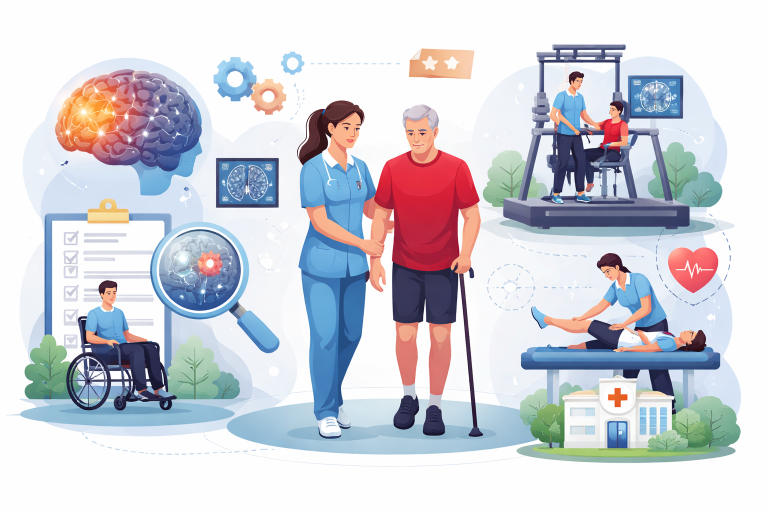
What In-Clinic Neuro Physiotherapy Does Better
In-clinic therapy allows direct assessment, tactile input, and hands-on correction, which are crucial in many neurological cases.
Best for patients who:
- Are in the early or sub-acute stage after stroke
- Have severe balance loss or frequent falls
- Show abnormal muscle tone (spasticity or flaccidity)
Need facilitation, manual guidance, or physical support
What works better in clinic:
- Early stroke rehabilitation
- Gait retraining with physical cueing
- Spasticity management
- Postural control retraining
Vestibular and balance challenges requiring safety harnessing
Clinical experience:
Early in recovery, the nervous system needs accurate sensory input, which hands-on therapy provides far more effectively.

Common Patient Fears — Addressed Honestly
“Is online therapy unsafe for neuro patients?”
It can be — if started too early or without proper screening. Safety depends on therapist judgment, not the platform.
“Is in-clinic therapy always better?”
Not always. Once movements are learned and safety improves, home-based repetition often matters more than location.

Step-by-Step: How to Choose the Right Approach
Step 1: Start with a proper neurological assessment
This should ideally be in-person, especially after stroke, surgery, or new symptoms.
Step 2: Match therapy type to recovery stage
- Early stage: In-clinic
- Stable / chronic stage: Hybrid or online
Maintenance phase: Online with periodic review
Step 3: Reassess every 2–4 weeks
Lack of progress is a sign to change the approach, not push harder.
Realistic Case Examples (Anonymized)
Case 1: Stroke (3 months post-event)
Initial in-clinic therapy focused on balance and gait safety. After stability improved, online sessions maintained strength and walking confidence at home.
Case 2: Parkinson’s disease (early stage)
Online physiotherapy helped improve posture, walking rhythm, and daily activity confidence — with periodic clinic visits for reassessment.
When Physiotherapy Alone Is Not Enough
Neuro physiotherapy supports recovery — it does not replace medical care.
Seek medical referral if you notice:
Sudden Worsening Weakness
A rapid increase in weakness, especially on one side of the body, can signal a new neurological problem or complication. This needs urgent medical evaluation, not exercise adjustment.
New speech or swallowing difficulty
Changes in speech clarity or trouble swallowing may indicate brain or nerve involvement. These symptoms should be assessed immediately by a doctor, as delays can be risky.
Repeated Unexplained Falls
Frequent falls without a clear reason suggest worsening balance, strength, or sensory control. This requires medical review to rule out neurological or cardiovascular causes.
Severe Dizziness With Vomiting
Intense dizziness accompanied by vomiting may indicate a serious vestibular or neurological condition. This is not typical exercise-related dizziness and needs urgent medical attention.
Home Mistakes That Slow Neuro Recovery
- Overdoing exercises despite fatigue
- Skipping rest and recovery
- Practicing incorrect movements repeatedly
- Avoiding difficult tasks due to fear
How Long Does Recovery Take — Realistically?
- Neuro recovery is gradual and individual.
- Early gains often occur in weeks
- Functional improvements take months
- Maintenance is long-term
Any therapist promising fast or guaranteed recovery is not being honest.
Final Clinical Advice
The best results often come from a hybrid approach:
- In-clinic therapy for assessment and correction
- Online therapy for consistency and independence
The right question isn’t: “Which is better — online or in-clinic?”
It’s: “What does my nervous system need right now to recover safely?”
That answer — when chosen wisely — protects both your recovery and your trust.
Online vs In-Clinic Neuro Physiotherapy - FAQs
Q1. Is online physiotherapy safe for neurological conditions?
Q2.When should neuro physiotherapy be started after a stroke or brain injury?
Q3. Can physiotherapy slow progression in Parkinson’s disease?
Q4. How long does neuro physiotherapy recovery usually take?
Q5. When should a patient stop physiotherapy and see a doctor?
References
About the Author

Dr. Hetal M Varia
After a rich experience of working in US healthcare as manager and licensed physiotherapist in US for last 11 years, she has returned home with a vision to become pioneer of Vestibular Therapy and specialized Parkinson physiotherapy in Ahmedabad. With her special skills and expertise in vertigo, Parkinson, balance and movement disorders therapy, Dr. Varia is committed to provide US standards of therapy services , compassionate and patient centered care to our people and community. With a vision of the world where everyone walks strong & steady, she intends to empower individuals with vestibular and neurological disorders through specialized care, rehabilitation & innovative therapies to improve mobility, balance & overall quality of life!