
How To Manage Vertigo During Office Work (Simple Guide)
If you’ve ever felt a sudden spinning sensation, lightheadedness, or imbalance while sitting at your desk, you’re not alone. Many working professionals in Ahmedabad experience vertigo during office work, especially those who spend long hours in front of screens.
At Varia Physiotherapy Clinic, we frequently meet patients aged 30–65 who describe symptoms like:
- “The room feels like it’s moving while I’m working”
- “I feel dizzy when I get up from my chair”
- “My neck stiffness is followed by imbalance”
Understanding how to manage vertigo during office work is crucial—not just for comfort, but for safety, productivity, and long-term health.
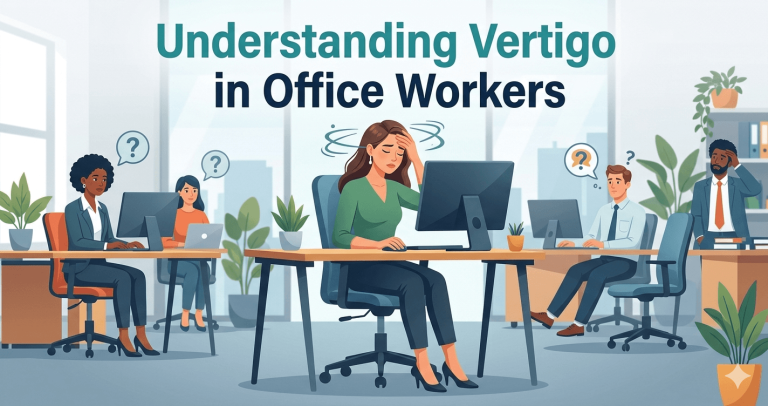
Understanding Vertigo in Office Workers
Vertigo is not just “feeling dizzy.” It is a false sensation of movement, often described as spinning or swaying. In office environments, it is commonly linked to:
- Prolonged sitting
- Poor posture
- Screen overuse
- Neck stiffness (cervical issues)
According to the World Health Organization, musculoskeletal conditions and postural problems are among the leading contributors to disability worldwide—many of which can indirectly trigger dizziness.

Common Causes of Vertigo During Office Work
1. Cervical Vertigo (Neck-Related Dizziness)
Cervical vertigo occurs due to stiffness or dysfunction in the neck, often caused by prolonged desk work and poor posture. The neck plays a key role in sending balance signals to the brain, and any disruption can lead to dizziness. Patients commonly experience symptoms when turning their head or after long sitting hours. Addressing neck mobility and posture is essential for relief.
2. Screen Time Dizziness
Extended screen exposure can strain your eyes and affect how your brain processes visual information. This mismatch between visual input and body balance may lead to dizziness or lightheadedness. It is especially common in individuals working long hours on computers. Regular breaks and eye relaxation techniques can help reduce symptoms.
3. Poor Ergonomics
An improperly set workstation can place unnecessary stress on your spine and muscles, leading to discomfort and imbalance. Sitting in awkward positions for long periods affects posture and blood circulation. Over time, this can contribute to dizziness and fatigue. Correct ergonomic setup is crucial for preventing such issues.
4. Stress and Fatigue
Mental stress and physical fatigue can impact the nervous system, making you more prone to dizziness and imbalance. High stress levels may also increase muscle tension, especially in the neck and shoulders. This combination can worsen vertigo symptoms during work. Managing stress through relaxation and proper rest is important.
5. Inner Ear Issues
Inner ear conditions like BPPV affect the body’s balance system and can trigger sudden spinning sensations. These episodes are often linked to specific head movements, even during routine office tasks. Such conditions require proper diagnosis and targeted treatment. Early management can significantly reduce symptoms and recurrence.
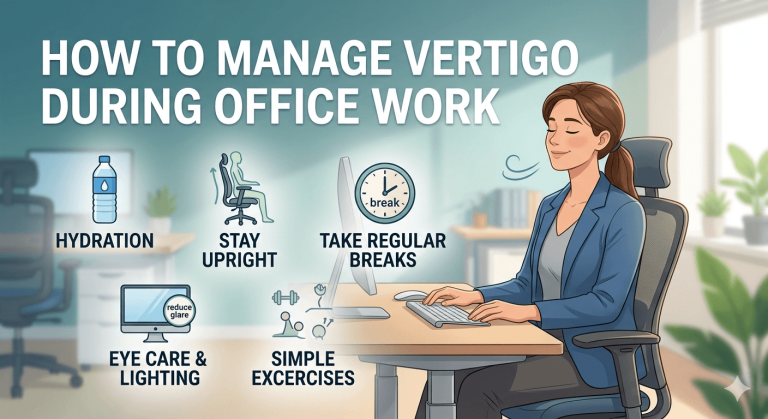
How To Manage Vertigo During Office Work
Managing vertigo at your workplace doesn’t always require medication. Small, consistent changes can make a big difference.
1. Correct Your Posture
Maintaining proper posture while working helps reduce strain on your neck and spine. Keeping your screen at eye level and sitting with adequate back support ensures better alignment. Poor posture can disrupt balance signals and trigger dizziness. Small posture corrections can significantly improve comfort and stability.
2. Take Regular Breaks
Continuous screen exposure can overload your eyes and brain, leading to dizziness. Following the 20-20-20 rule allows your eyes and mind to reset regularly. Short breaks also improve circulation and reduce fatigue. This simple habit plays a key role in preventing vertigo during work.
3. Do Simple Desk Exercises
Gentle movements like neck rotations and shoulder shrugs help relieve stiffness caused by prolonged sitting. Eye focus exercises support better coordination between vision and balance. These exercises improve blood flow and reduce muscle tension. Practicing them regularly can ease dizziness symptoms.
4. Stay Hydrated
Dehydration can affect blood pressure and reduce oxygen supply to the brain, leading to dizziness. Drinking enough water throughout the day helps maintain proper body function. It also supports concentration and energy levels. Staying hydrated is a simple yet effective way to manage vertigo.
5. Move Slowly
Sudden movements can trigger or worsen vertigo symptoms, especially when standing up quickly. Moving slowly allows your body to adjust and maintain balance. This is particularly important for people experiencing frequent dizziness. Controlled movements help prevent sudden spinning sensations.
6. Optimize Your Workspace
A well-organized workspace reduces physical strain and supports better posture. Using ergonomic furniture and proper lighting minimizes stress on your body and eyes. Adjusting screen brightness and position improves visual comfort. These changes create a more stable and dizziness-free working environment.
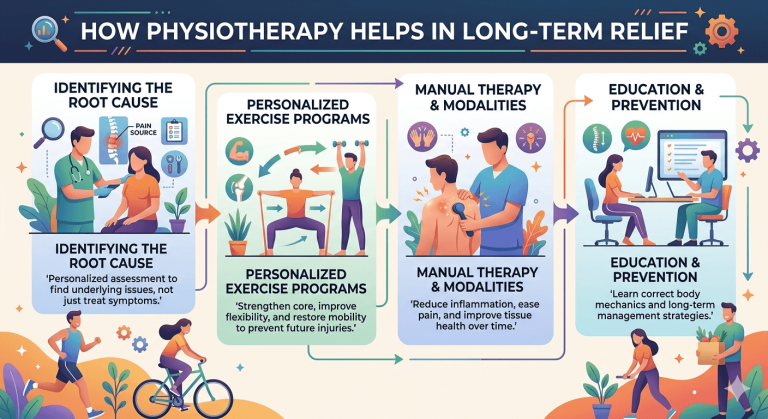
How Physiotherapy Helps in Long-Term Relief
At Varia Physiotherapy Clinic, we don’t just treat symptoms—we identify the root cause.
Step 1: Detailed Assessment
A thorough assessment is the foundation of effective treatment. It includes posture analysis, neck mobility testing, and evaluation of balance and vestibular function. This helps identify the exact cause of dizziness. Based on these findings, a targeted treatment plan is created.
- Posture analysis
- Neck mobility testing
- Balance and vestibular evaluation
Step 2: Customized Treatment Plan
Treatment is tailored to each patient depending on their condition and symptoms. It may include vestibular rehabilitation exercises, cervical spine mobilization, and balance training. Posture correction is also a key part of recovery. This personalized approach ensures safe and effective results.
Depending on the cause, treatment may include:
- Vestibular rehabilitation exercises
- Cervical spine mobilization
- Balance training
- Posture correction therapy
Step 3: Functional Recovery
The final goal is to help patients return to their normal routine without discomfort or dizziness. Therapy focuses on improving strength, coordination, and confidence in movement. Progress is gradual and monitored closely. This step ensures long-term relief and prevents recurrence.
You can explore more here:
- Physiotherapy for Vertigo
- Cervical Pain Treatment
- Balance Disorder Rehabilitation
Real Patient Experience from Our Clinic
A 42-year-old IT professional visited our clinic with complaints of spinning sensation while working and neck stiffness.
He had:
- 8–10 hours of daily screen time
- Poor sitting posture
- Frequent dizziness when standing
Treatment Approach:
- Postural correction
- Cervical mobilization
- Vestibular exercises
Outcome:
Within 3–4 weeks, his dizziness reduced significantly, and he returned to work comfortably.
This is a common pattern we see—office-related vertigo is manageable with the right care.
Myths vs Facts About Vertigo
Myth: Vertigo is always due to ear problems
Fact: While inner ear problems are a common cause, vertigo is not always related to the ear. Poor posture and cervical spine issues can also disrupt balance signals to the brain. Many office workers experience neck-related dizziness due to prolonged sitting. Identifying the exact cause is important for effective treatment.
Myth: Bed rest is the best solution
Fact: Complete bed rest may actually slow down recovery in many vertigo cases. Controlled movements and specific exercises help retrain the balance system. Physiotherapy-guided activity improves blood flow and reduces stiffness. Active rehabilitation is often more beneficial than inactivity.
Myth: It will go away on its own
Fact: Some mild dizziness may resolve naturally, but persistent vertigo should not be ignored. Delayed treatment can lead to worsening symptoms and affect daily life. Early intervention helps identify the root cause and prevents complications. Seeking timely care ensures faster and safer recovery.
When Should You See a Physiotherapist?
You should seek professional help if:
- Dizziness lasts more than a few days
- You feel imbalance while walking
- Neck pain accompanies vertigo
- Symptoms interfere with work
Referral May Be Needed If:
- Severe headaches
- Vision problems
- Neurological symptoms
In such cases, collaboration with a neurologist or orthopedic specialist is essential.
Conclusion:
Understanding how to manage vertigo during office work is essential for maintaining both your productivity and overall well-being. While occasional dizziness may seem harmless, recurring symptoms often underlying issues such as poor posture, cervical strain, or vestibular imbalance that should not be ignored.
The good news is that most office-related vertigo can be effectively managed with simple workplace adjustments, regular movement, and targeted physiotherapy. With a structured, evidence-based approach—focusing on posture correction, neck care, and balance training—many patients experience noticeable improvement within a few weeks.
At Varia Physiotherapy Clinic, we believe in treating the root cause, not just the symptoms. Every patient receives a personalized assessment and care plan designed to ensure safe, gradual, and long-lasting recovery.
If your dizziness is persistent, affecting your work, or accompanied by other symptoms, seeking timely professional guidance is important. Early intervention can prevent the condition from worsening and help you return to a stable, confident, and comfortable work routine.
Ethical Call-to-Action
If you’re unsure whether your symptoms need attention, it’s okay to start with a simple consultation. Understanding your condition is the first step toward recovery—no pressure, just guidance.
If you’d like to speak with a physiotherapist or book an assessment at Varia Physiotherapy Clinic, you can reach out here:
 Call: +91 95123 79555
 Email: hello.drhetalvaria@gmail.com
 Website: www.variaphysiotherapyclinic.com
Our team is here to listen, assess, and guide you toward safe and effective recovery.
How To Manage Vertigo During Office Work :FAQs
Yes, poor posture and prolonged screen time can trigger vertigo.
Take breaks, hydrate, and perform simple neck and eye exercises.
Yes, especially for cervical and vestibular-related vertigo.
Most patients improve within 2–6 weeks, depending on the cause.
Yes, stress can worsen dizziness symptoms.
About the Author

Dr. Hetal M Varia
After a rich experience of working in US healthcare as manager and licensed physiotherapist in US for last 11 years, she has returned home with a vision to become pioneer of Vestibular Therapy and specialized Parkinson physiotherapy in Ahmedabad. With her special skills and expertise in vertigo, Parkinson, balance and movement disorders therapy, Dr. Varia is committed to provide US standards of therapy services , compassionate and patient centered care to our people and community. With a vision of the world where everyone walks strong & steady, she intends to empower individuals with vestibular and neurological disorders through specialized care, rehabilitation & innovative therapies to improve mobility, balance & overall quality of life!