How Does Physiotherapy Help Avoid Surgery?
When patients walk into my clinic, one sentence comes up again and again:
“Doctor, the doctor said surgery may be needed… is there any other option?”
That question is never about fear alone. It’s about risk, recovery time, cost, and long-term outcome.
Physiotherapy does not replace surgery in every case. But in many musculoskeletal, neurological, and balance-related conditions, proper physiotherapy can delay, reduce, or completely avoid unnecessary surgical procedures.
This article explains how, when, and why—based on real clinical experience, not theory or marketing.
Why Surgery Is Often Suggested Too Early
In modern healthcare, imaging findings (MRI, X-ray) often drive decisions.
The problem?
- Images show structure, not function.
Many people have:
Disc bulges without pain
Many people have disc bulges on MRI but feel no pain or limitation. Clinical assessment often shows that movement, strength, and nerve function are well-preserved, meaning surgery is not needed, and physiotherapy helps avoid surgery by addressing the underlying issues and restoring function safely.
Meniscus tears without locking
Not all meniscus tears cause mechanical locking or instability. When the knee moves smoothly and strength is maintained, structured rehabilitation can reduce pain and restore function without surgical intervention.
Degenerative changes without disability
Age-related changes on scans are common and don’t always correlate with symptoms. When daily activities remain comfortable, physiotherapy focuses on movement efficiency and load management rather than treating imaging findings alone. But once a report is seen, surgery becomes the default conversation—even when function can still be restored non-surgically.
What Physiotherapy Actually Does That Surgery Doesn’t
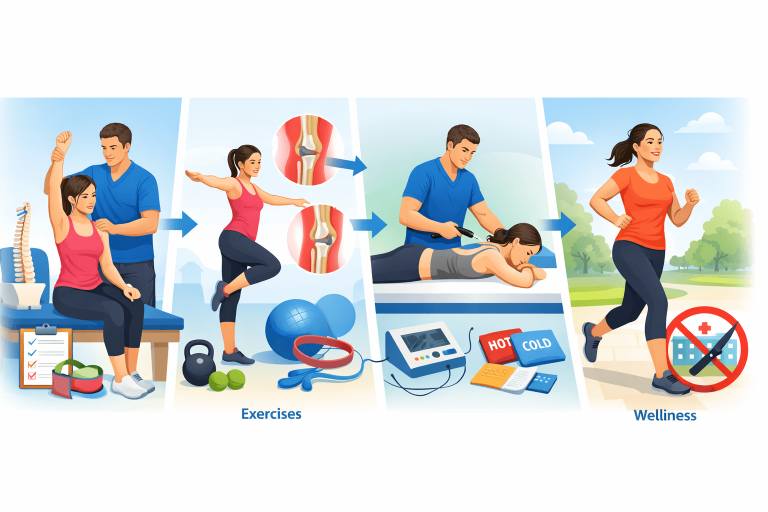
Surgery corrects structure. Physiotherapy restores movement, control, strength, and confidence.
Most pain and disability come from:
- Poor movement patterns
- Muscle weakness or imbalance
- Joint overload
- Fear of movement
- Loss of coordination
These problems cannot be fixed with surgery alone.
Step-by-Step: How Physiotherapy Helps Avoid Surgery
Step 1: Functional Assessment (Not Just Reports)
Physiotherapy begins by asking:
- How do you move?
- What activities trigger pain?
- What has changed in your daily routine?
Often, we find that symptoms don’t match the scan severity. This step alone prevents many unnecessary procedures.
Step 2: Reducing Pain Without Immobilizing the Body
Instead of long rest or heavy medication, physiotherapy:
- Calms irritated tissues
- Maintains safe movement
- Prevents stiffness and weakness
This protects the body while recovery begins.
Step 3: Restoring Strength and Load Tolerance
Weak muscles shift load to joints, discs, and ligaments.
By improving:
- Muscle strength
- Joint control
- Movement efficiency
Physiotherapy reduces stress on damaged structures—often enough to remove the need for surgery.
Step 4: Correcting the Cause, Not Just the Symptom
Common examples:
- Knee pain improves when hip strength improves
- Back pain reduces when movement fear decreases
- Shoulder pain settles when posture and load are corrected
Surgery rarely addresses these contributors.
Step 5: Monitoring Progress Before Escalation
Physiotherapy allows:
- Measurable improvement tracking
- Clear time-based decision points
- Safe trial of conservative care
If progress stalls, surgery can still be considered—with better outcomes.
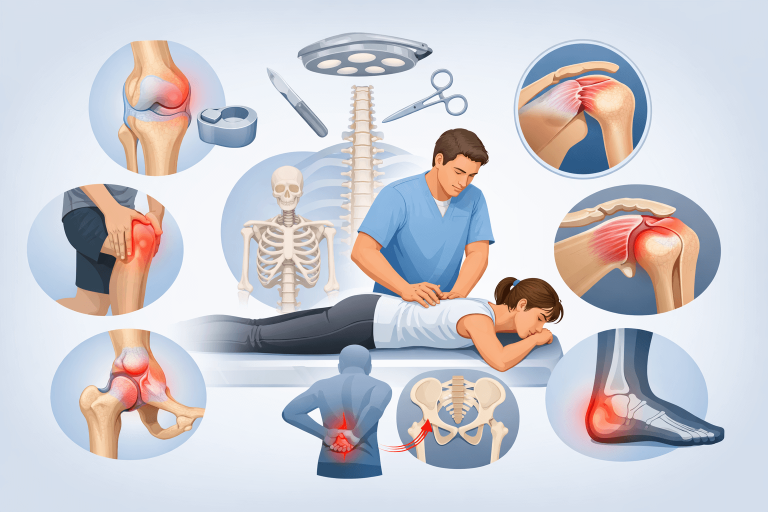
Conditions Where Physiotherapy Often Prevents Surgery
Knee osteoarthritis
Many people with knee arthritis can reduce pain and delay or avoid surgery through strength training, load management, and movement correction rather than injections or early replacement.
Meniscus tears (without locking)
If the knee doesn’t catch or lock, physiotherapy often restores function by improving strength and control, making surgery unnecessary in many everyday cases.
Disc bulges and sciatica
Disc bulges frequently settle with guided movement, nerve mobility work, and education, especially when there is no progressive weakness or bowel/bladder involvement.
Frozen shoulder
Most frozen shoulders improve over time with the right phase-based physiotherapy, helping patients regain function without surgical manipulation.
Rotator cuff pain
Many rotator cuff problems are load-related rather than tear-related, and respond well to structured strengthening instead of injections or surgery.
ACL-deficient knees (selected cases)
With good muscle control and stability training, some individuals can return to daily activities and even sports without immediate ACL reconstruction.
Balance disorders and vertigo
Targeted vestibular rehabilitation often resolves dizziness and imbalance, avoiding unnecessary scans, medications, or invasive procedures.
Early Parkinson’s mobility decline
Targeted vestibular rehabilitation often resolves dizziness and imbalance, avoiding unnecessary scans, medications, or invasive procedures.
Real Case Examples From Practice
Case 1: Knee Pain With Meniscus Tear
- MRI showed tear
- Patient advised surgery
Physiotherapy focused on:
- Strength
- Load control
- Movement confidence
Outcome:
Pain reduced, function restored, surgery avoided.
Case 2: Disc Bulge With Leg Pain
- Severe pain, fear of movement
- Surgical opinion suggested
Physiotherapy addressed:
- Nerve sensitivity
- Gradual movement exposure
- Core control
Outcome:
Symptoms settled over weeks, no surgery required.
Case 3: Shoulder Pain Labeled “Surgical”
- Limited overhead movement
- Night pain
Treatment included:
- Mobility restoration
- Strength progression
Outcome:
Full functional recovery without surgical intervention.
When Surgery Is Still the Right Choice
Physiotherapy is not anti-surgery.
Surgery is appropriate when:
- There is progressive nerve damage
- Structural instability is severe
- Conservative care fails despite proper effort
- Quality of life continues to decline
The goal is right timing, not blind avoidance.
Why Trying Physiotherapy First Is Usually Safer
Non-invasive
Physiotherapy works with movement, exercise, and education—avoiding cuts, implants, or hospital stays while still addressing the root cause of pain or dysfunction.
Lower risk
Compared to surgery, physiotherapy carries minimal medical risk, making it a safer first-line option for many musculoskeletal and neurological conditions.
Cost-effective
Rehabilitation often reduces the need for expensive scans, injections, or procedures, helping patients recover function without escalating healthcare costs.
Improves surgical outcomes if surgery is later needed
Patients who undergo physiotherapy before surgery typically recover faster and regain strength more efficiently if an operation becomes necessary.
Builds long-term body resilience
Beyond pain relief, physiotherapy improves strength, control, and movement confidence—reducing future injury risk and dependence on repeated treatments.
How to Know If Physiotherapy Is Working
Signs include:
- Reduced pain frequency
- Improved daily function
- Increased movement confidence
- Better tolerance to activity
Progress doesn’t need to be fast—it needs to be steady.
Final Thoughts From A Practicing Physiotherapist
Surgery can be life-changing when necessary. But many surgeries are done simply because physiotherapy was never given a fair trial.
In my experience, the best outcomes come when:
- Patients understand their condition
- Conservative care is tried properly
- Decisions are made based on function, not fear
Physiotherapy doesn’t promise miracles. It offers a smart, evidence-based chance to heal without irreversible intervention.
How Does Physiotherapy Help Avoid Surgery?
- FAQs
References