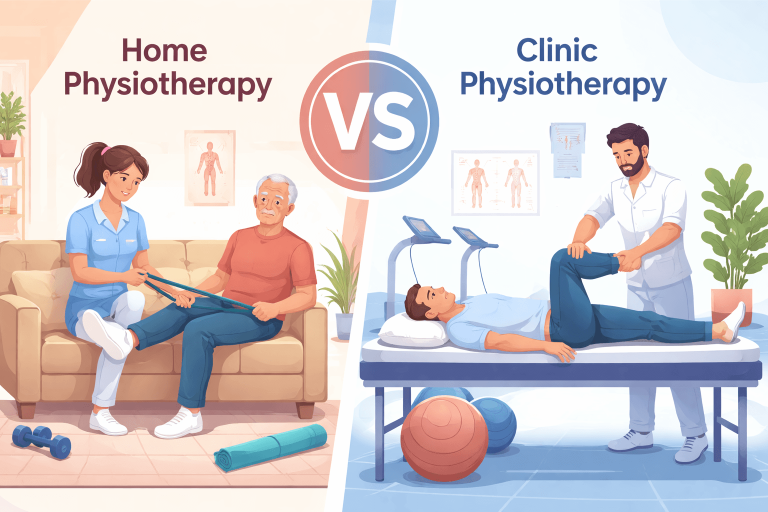
Home Physiotherapy vs Clinic Physiotherapy: Which Is Better for Faster Recovery?
If you’re dealing with persistent back pain, knee stiffness, or recovering from a stroke, one question naturally comes up:
“Should I choose home physiotherapy or visit a clinic for faster recovery?”
At Varia Physiotherapy Clinic in Ahmedabad, we hear this almost every day from patients aged 30–65 who are balancing work, family, and health challenges. The truth is—there’s no one-size-fits-all answer. The right choice depends on your condition, mobility, lifestyle, and recovery goals.
In this article, we’ll walk you through Home Physiotherapy vs Clinic Physiotherapy: Which Is Better for Faster Recovery?—based on real patient experiences, clinical expertise, and evidence-based practices.
Understanding the Root of Pain
Before choosing the treatment setting, it’s important to understand why pain occurs.
Common causes we see at Varia Physiotherapy Clinic:
Sedentary lifestyle leading to lower back and neck pain
Sitting for long hours whether at a desk or on the phone puts continuous strain on your spine and surrounding muscles. Over time, this leads to stiffness, poor posture, and persistent back or neck pain that can affect daily comfort and productivity.
Osteoarthritis causing knee and hip stiffness
Osteoarthritis is a gradual wear-and-tear condition where joint cartilage breaks down, causing pain and stiffness. Many patients notice difficulty in walking, climbing stairs, or getting up after sitting for long periods.
Post-surgical weakness (ACL, joint replacement)
After surgeries like ACL reconstruction or joint replacement, muscles around the joint become weak and stiff due to reduced movement. Proper rehabilitation is essential to safely regain strength, stability, and confidence in movement.
Neurological conditions like stroke or Parkinson’s
Conditions such as stroke or Parkinson’s affect the brain’s control over movement, leading to weakness, balance issues, or slowed coordination. Early and guided physiotherapy plays a crucial role in improving independence and quality of life.
Work-related posture issues
Poor sitting habits, improper workstation setup, or repetitive movements can gradually strain muscles and joints. This often shows up as neck pain, shoulder tightness, or lower back discomfort that worsens by the end of the day.
How Physiotherapy Helps: A Step-by-Step Approach
Regardless of setting—home or clinic—good physiotherapy follows a structured process:
1. Detailed Assessment
- Pain location, intensity, and duration
- Movement limitations
- Posture and muscle strength
- Functional ability (walking, sitting, lifting)
2. Diagnosis & Goal Setting
We identify the root cause—not just symptoms—and set realistic goals like:
- Pain reduction in 2–4 weeks
- Improved mobility in 4–8 weeks
- Return to normal activity in 6–12 weeks
3. Treatment Plan
Evidence-based techniques may include:
- Manual therapy (joint mobilization, soft tissue release)
- Therapeutic exercises
- Electrotherapy (IFT, TENS, ultrasound)
- Posture correction and ergonomic advice
4. Progress Monitoring
Recovery is tracked weekly and adjusted based on improvement.
Home Physiotherapy vs Clinic Physiotherapy: Which Is Better for Faster Recovery?
Let’s break it down practically.
Home Physiotherapy: Comfort Meets Personalization
Home physiotherapy is ideal when:
You have limited mobility (post-surgery, stroke)
After surgery or a neurological event like a stroke, even simple movements can feel difficult and exhausting. In such cases, receiving care at home ensures you get the support you need without the added strain of travel.
Pain is severe and travel is difficult
When pain is intense, commuting to a clinic can worsen discomfort and delay recovery. Home-based care allows you to begin treatment early, in a safe and comfortable environment.
You need functional training in your daily environment
Recovery isn’t just about exercises—it’s about getting back to your daily routine. Home physiotherapy helps you practice real-life activities like walking, climbing stairs, or getting out of bed more confidently.
Real Scenario (from Varia Clinic)
A 62-year-old patient recovering from knee replacement surgery struggled to visit the clinic due to pain and swelling. With home physiotherapy, we focused on enhancing physical recovery safely through bed mobility exercises, gradual weight-bearing, and stair practice in their own home. Within 6 weeks, the patient regained independence by walking indoors.
Clinical Insight:
Home sessions allow therapists to customize exercises based on your real-life setup, which is especially useful for elderly patients.
Clinic Physiotherapy: Structured & Equipment-Based Recovery
Clinic physiotherapy is recommended when:
You require advanced equipment
Some conditions benefit from specialized machines and tools that are only available in a clinic setting. These help target specific muscles and joints more precisely, supporting more effective and measurable progress.
You’re recovering from sports or ligament injuries
Injuries like ligament tears or sports-related strains need structured rehabilitation to restore strength, flexibility, and stability. A clinic environment allows for closely monitored, progressive training to safely return to activity.
Faster, intensive rehabilitation is needed
When your goal is quicker recovery—especially for work or active lifestyles—clinic-based physiotherapy offers a more intensive approach. With supervised sessions and advanced techniques, progress can often be accelerated safely.
Real Scenario (from Varia Clinic)
A 38-year-old IT professional with chronic back pain visited our clinic. Treatment included:
- Spinal mobilization
- Core strengthening using gym-based rehab
- Posture correction using mirrors and feedback
In 4 weeks, pain reduced significantly, and posture improved.
Clinical Insight:
Clinic settings provide access to specialized machines and controlled environments, which can accelerate recovery in certain conditions.
Key Differences That Affect Recovery Speed
Myths vs Facts
Myth 1: Home physiotherapy is less effective
Fact: It is equally effective for many conditions, especially neurological and post-surgical rehab.
Myth 2: Clinic therapy always gives faster results
Fact: Only when advanced equipment or intensive rehab is required.
Myth 3: Physiotherapy is only for severe pain
Fact: Early intervention prevents chronic issues.
When Should You See a Physiotherapist?
You should consult a physiotherapist if you experience:
Pain lasting more than 7 days
If your pain doesn’t improve within a week, it may indicate an underlying issue rather than simple muscle strain. Early assessment can help prevent it from becoming a long-term problem.
Difficulty in movement or stiffness
Struggling to bend, walk, or move freely is often a sign that your joints or muscles need attention. Addressing stiffness early can restore mobility and reduce discomfort in daily activities.
Post-surgical weakness
After surgery, it’s common to feel weak or unstable around the affected area. Guided physiotherapy helps rebuild strength safely and supports a smoother recovery process.
Numbness or tingling
Sensations like pins and needles may point to nerve involvement or compression. It’s important to get this evaluated early to avoid worsening symptoms or loss of function.
Balance issues after stroke
After a stroke, balance and coordination can be affected, increasing the risk of falls. Targeted rehabilitation helps improve stability and confidence in everyday movements.
Important:
In some cases, we may refer you to a specialist:
- Orthopedic doctor (for fractures, severe joint damage)
- Neurologist (for nerve-related symptoms)
This ensures you receive complete and safe care.
Ethical Call-to-Action
If you or a loved one is struggling with pain or mobility issues, don’t ignore it. Early physiotherapy can prevent long-term complications.
Reach out to Varia Physiotherapy Clinic for a professional assessment and a personalized recovery plan tailored to your needs.
Contact Varia Physiotherapy Clinic
 Call: +91 95123 79555
 Website: www.variaphysiotherapy.com
The team is here to help you understand your condition and support you with effective, evidence-based physiotherapy tailored to your needs.
Conclusion
When considering Home Physiotherapy vs Clinic Physiotherapy: Which Is Better for Faster Recovery?, the answer lies in your individual needs, condition severity, and recovery goals.
At Varia Physiotherapy Clinic in Ahmedabad, we believe in a patient-first approach. Whether you choose home visits or clinic sessions, what truly matters is:
- Accurate diagnosis
- Evidence-based treatment
- Consistency and patient commitment
Recovery is not instant—but with the right guidance, it is absolutely achievable.
Home Physiotherapy vs Clinic Physiotherapy- FAQs