
Home Physiotherapy For Parkinson's Patients Ahmedabad
Parkinson’s disease affects much more than movement. Many patients gradually notice slower walking, stiffness, balance problems, fatigue, and difficulty performing routine daily activities. Simple tasks like getting out of bed, walking to the bathroom, turning while standing, or climbing stairs may start feeling physically exhausting and emotionally stressful.
For many families in Ahmedabad, regular travel to a clinic is not always practical, especially for elderly individuals or patients experiencing freezing episodes, tremors, or reduced confidence while walking. This is where Home Physiotherapy For Parkinson’s Patients Ahmedabad becomes valuable. Receiving professional physiotherapy at home can help patients continue movement training safely in a familiar environment while reducing the risk of falls and unnecessary strain.
At Varia Physiotherapy Clinic, physiotherapists work closely with Parkinson’s patients and their families to improve mobility, balance, posture, and independence using evidence-based rehabilitation approaches tailored to each patient’s stage and symptoms.
Understanding Parkinson's Disease in Everyday Life
Parkinson’s disease is a progressive neurological condition that affects the brain’s ability to control movement efficiently. Symptoms often develop gradually and may vary from one person to another.
Common symptoms include:
- Tremors in hands or legs
- Muscle stiffness
- Slow body movements (bradykinesia)
- Shuffling gait
- Balance difficulties
- Reduced arm swing while walking
- Freezing episodes
- Postural instability
- Fatigue and reduced endurance
Many patients also experience emotional stress because movement becomes unpredictable. Some begin avoiding outdoor walking or social gatherings due to fear of falling.
According to the World Health Organization, Parkinson’s disease is one of the fastest-growing neurological disorders worldwide. Physiotherapy plays an important role in maintaining mobility, independence, and quality of life.
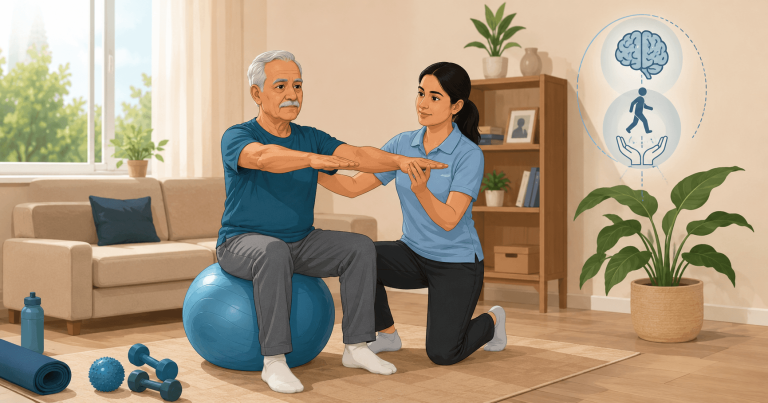
Why Many Families Choose Home Physiotherapy For Parkinson's Patients Ahmedabad
Travelling to a rehabilitation center can become physically demanding for Parkinson’s patients, particularly when symptoms fluctuate during the day. Home-based physiotherapy offers several practical advantages:
Comfortable and Familiar Environment
Patients often move more confidently at home because they are familiar with the surroundings. Therapists can also identify real-life mobility challenges such as narrow passages, slippery floors, unsafe bathroom setups, or stair-related difficulties.
Personalized Functional Training
Instead of only performing exercises on a treatment table, therapy focuses on meaningful daily activities such as:
- Bed mobility
- Safe standing practice
- Walking inside the house
- Chair transfers
- Stair navigation
- Turning movements
- Bathroom safety
Reduced Fall Risk
Falls are a major concern in Parkinson’s disease. Home physiotherapy helps improve balance reactions while teaching safer movement strategies for daily life.
Better Family Participation
Family members learn how to assist the patient safely without increasing dependency unnecessarily.
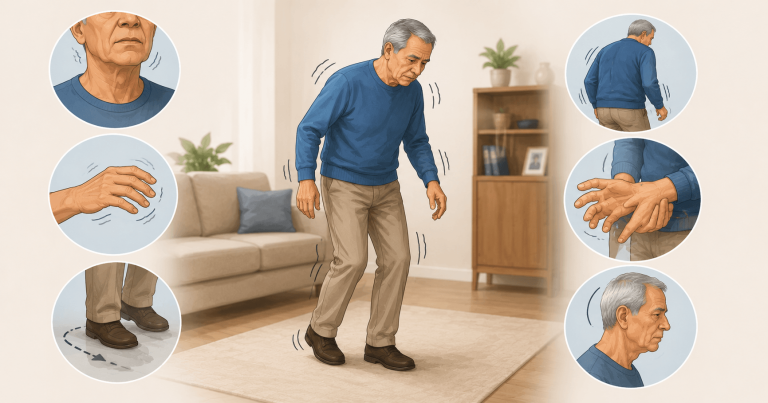
Common Movement Problems Seen in Parkinson's Patients
At Varia Physiotherapy Clinic, therapists commonly see patients struggling with movement-related difficulties that gradually interfere with routine life, which is why many individuals benefit from gait and balance therapy at home for Parkinson’s disease to improve walking confidence, mobility safety, and daily independence.
Walking Becoming Slower
Many people with Parkinson’s disease notice that routine walking gradually takes more effort and time than before. Shorter steps, reduced arm movement, and slower body coordination can make even familiar distances feel tiring and frustrating during daily activities.
Freezing Episodes
Some patients experience sudden “freezing” while walking, where the feet temporarily feel unable to move forward. These episodes commonly happen during turning, entering narrow spaces, or walking in crowded environments and may increase anxiety about mobility.
Poor Balance While Turning
Turning movements often become less stable because the body’s balance reactions slow down in Parkinson’s disease. Patients may feel unsteady while changing direction, especially in tight indoor spaces, which can increase the risk of falls at home.
Stooped Posture and Stiffness
Muscle stiffness around the neck, shoulders, back, and hips can gradually lead to a bent-forward posture. This posture may reduce walking efficiency, affect breathing comfort, and make everyday movements feel more physically demanding.
Fear of Falling
After experiencing imbalance or near-falls, many patients begin avoiding walking or outdoor activities due to fear of injury. Reduced activity can unfortunately contribute to further weakness, stiffness, and loss of confidence over time.
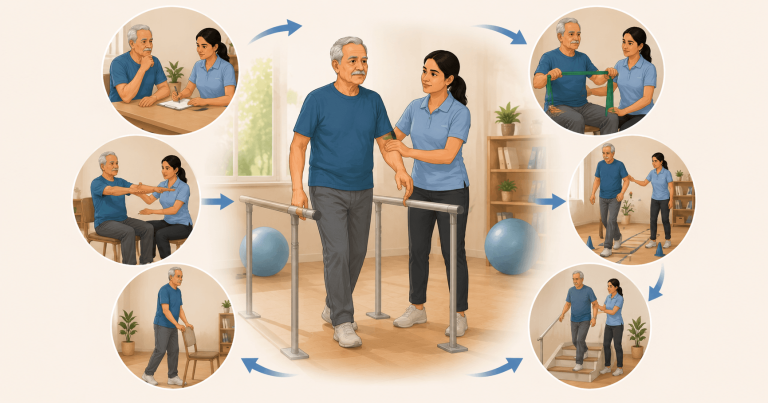
How Physiotherapy Helps Parkinson's Patients Step-by-Step
Effective physiotherapy is not simply “exercise.” A structured rehabilitation program begins with detailed clinical assessment and individualized planning.
Clinical Assessment Before Starting Treatment
Before beginning treatment, physiotherapists evaluate: Home Physiotherapy For Parkinson’s Patients Ahmedabad
- Walking pattern
- Balance reactions
- Muscle tightness
- Functional mobility
- Fall history
- Joint stiffness
- Postural alignment
- Coordination
- Endurance levels
- Ability to perform daily activities independently
If therapists notice symptoms requiring additional medical evaluation—such as sudden weakness, severe dizziness, rapid neurological decline, or medication-related complications—a referral to a neurologist may be recommended.
Home Physiotherapy For Parkinson's Patients Ahmedabad: Treatment Approaches Used
Balance and Gait Training
Balance retraining helps improve body control during standing and walking. Therapists use evidence-based gait training techniques to improve step length, walking rhythm, turning ability, and stability. Cueing strategies such as rhythmic counting or visual markers may help patients overcome freezing episodes more effectively.
Strengthening Exercises
Weak muscles increase mobility limitations. Strengthening exercises focus on:
- Leg muscles
- Core stability
- Hip strength
- Postural muscles
Improved strength supports safer walking and transfers.
Flexibility and Mobility Exercises
Parkinson’s-related stiffness can restrict movement significantly. Gentle stretching and mobility exercises help improve trunk rotation, posture, and walking efficiency.
Functional Training
Therapy focuses heavily on real-life movement practice, including:
- Sit-to-stand transfers
- Bed mobility
- Turning safely
- Walking in narrow spaces
- Stair practice
- Bathroom safety
Breathing and Endurance Training
Reduced activity levels may lower stamina over time. Controlled breathing exercises and graded endurance training help patients maintain functional independence.
Fall Prevention Education
Patients and caregivers receive guidance regarding:
- Safe footwear
- Home modifications
- Walking aids if needed
- Proper transfer techniques
- Energy conservation
The National Institutes of Health also recognizes physiotherapy and exercise as important components of Parkinson’s management for maintaining mobility and physical function Home Physiotherapy For Parkinson’s Patients Ahmedabad.
A Real Patient Scenario from Clinical Practice
A 67-year-old retired gentleman from Ahmedabad contacted the clinic after experiencing repeated balance loss inside his home. His family noticed he had become hesitant while walking, especially during turns and while getting up from bed at night. Initially, he required support for short-distance walking and avoided outdoor activity completely because of fear of falling.
After clinical assessment, the treatment plan focused on:
- Balance retraining
- Gait correction
- Strengthening exercises
- Turning practice
- Functional mobility training
- Fall prevention strategies
Over several weeks of consistent home physiotherapy, his walking confidence gradually improved. Home Physiotherapy For Parkinson’s Patients Ahmedabad He became more independent during household movement and could walk longer distances safely with reduced hesitation.
While Parkinson’s disease cannot currently be cured, physiotherapy often helps patients maintain mobility, confidence, and independence more effectively over time.
Myths vs Facts About Parkinson's Physiotherapy
Myth: Physiotherapy is only needed in severe stages.
Fact: Early physiotherapy often helps patients maintain mobility and function longer.
Myth: Rest is better than movement.
Fact: Excessive inactivity may worsen stiffness, weakness, and balance problems.
Myth: Tremors are the only symptom of Parkinson’s disease.
Fact: Many patients struggle more with walking difficulty, stiffness, posture, and balance than tremors.
Myth: Home physiotherapy is less effective than clinic therapy.
Fact: For many Parkinson’s patients, home-based rehabilitation can be highly practical because treatment directly targets real-life functional activities.
When Should You See a Physiotherapist?
You should consider physiotherapy evaluation if you notice:
- Slower walking
- Repeated imbalance
- Difficulty standing from a chair
- Shuffling gait
- Frequent near-falls
- Reduced confidence while walking
- Stiffness affecting daily activities
- Freezing episodes
- Difficulty turning safely
Early intervention may help reduce future mobility complications.
When Physiotherapy May Not Be Enough
Physiotherapy alone may not be sufficient if:
- There is a complete ligament rupture with instability
- Locking or catching is present in the joint
- Symptoms worsen despite proper rehab
- There is associated fracture or cartilage injury
In such cases, orthopedic evaluation and imaging are necessary.
Conclusion
Living with Parkinson’s disease can feel physically and emotionally challenging, especially when movement becomes slower and less predictable. However, timely rehabilitation often helps patients remain active, independent, and safer during daily activities.
Through structured Home Physiotherapy For Parkinson’s Patients Ahmedabad, physiotherapists can address balance problems, walking difficulties, stiffness, and fall risk within the comfort of the patient’s own home. At Varia Physiotherapy Clinic, treatment plans are designed around practical daily needs, realistic goals, and compassionate long-term care rather than unrealistic promises.
If you or a loved one is noticing increasing mobility difficulties, early physiotherapy assessment may help improve confidence, movement quality, and overall quality of life.
Ethical Call-to-Action
If you’re unsure whether your symptoms need attention, it’s okay to start with a simple consultation. Understanding your condition is the first step toward recovery—no pressure, just guidance.
If you’d like to speak with a physiotherapist or book an assessment at Varia Physiotherapy Clinic, you can reach out here:
 Call: +91 95123 79555
 Email: hello.drhetalvaria@gmail.com
 Website: www.variaphysiotherapyclinic.com
Our team is here to listen, assess, and guide you toward safe and effective recovery.
Home Physiotherapy For Parkinson's Patients Ahmedabad - FAQs
Is home physiotherapy safe for Parkinson’s patients?
How many physiotherapy sessions are usually required?
Can physiotherapy stop Parkinson’s disease progression?
What exercises help Parkinson’s patients most?
When should a neurologist referral be considered?
About the Author

Dr. Hetal M Varia
After a rich experience of working in US healthcare as manager and licensed physiotherapist in US for last 11 years, she has returned home with a vision to become pioneer of Vestibular Therapy and specialized Parkinson physiotherapy in Ahmedabad. With her special skills and expertise in vertigo, Parkinson, balance and movement disorders therapy, Dr. Varia is committed to provide US standards of therapy services , compassionate and patient centered care to our people and community. With a vision of the world where everyone walks strong & steady, she intends to empower individuals with vestibular and neurological disorders through specialized care, rehabilitation & innovative therapies to improve mobility, balance & overall quality of life!