
Hand Movement Rehabilitation In Ahmedabad | Expert Physiotherapy Care
Imagine struggling to button your shirt, hold a cup of tea, write your name, or use your mobile phone. These simple daily activities often become frustrating challenges when hand movement is affected by injury, stroke, nerve conditions, or neurological disorders.
At Varia Physiotherapy Clinic in Ahmedabad, we regularly meet individuals who feel discouraged because they can no longer use their hands the way they once could. Whether the problem started after a stroke, a wrist fracture, nerve injury, Parkinson’s disease, or prolonged immobilization, the impact goes far beyond physical limitations—it affects confidence, independence, and quality of life.
This article explains how Hand Movement Rehabilitation In Ahmedabad | Expert Physiotherapy Care can help patients regain strength, coordination, and functional independence through evidence-based physiotherapy.
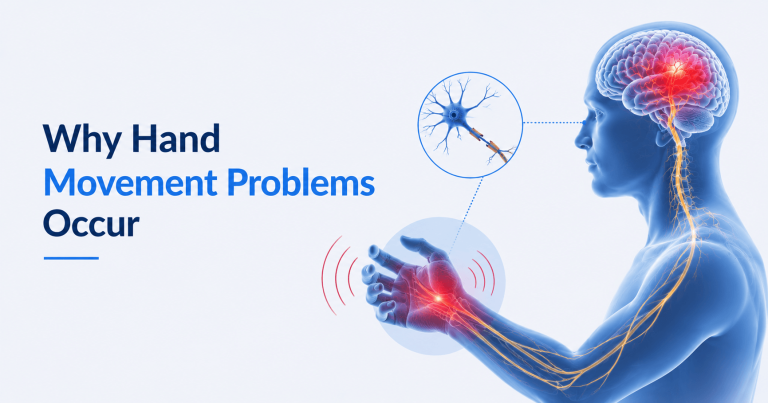
Why Hand Movement Problems Occur
The hand is one of the most complex parts of the human body. It relies on the coordinated function of bones, muscles, tendons, nerves, and the brain. When any part of this system is affected, hand function can become impaired.
Common causes include:
Stroke
A stroke can disrupt communication between the brain and muscles, causing weakness, stiffness, poor coordination, or paralysis in the hand and arm.
Nerve Injuries
Conditions such as radial nerve injury, ulnar nerve damage, or median nerve compression can affect grip strength and finger movement.
Fractures and Orthopedic Injuries
Wrist fractures, hand fractures, tendon injuries, and post-surgical stiffness can limit movement and reduce function.
Parkinson's Disease
People with Parkinson’s often experience tremors, rigidity, and reduced hand dexterity.
Cervical Spine Problems
Neck conditions such as cervical radiculopathy can cause numbness, weakness, or reduced hand control.
Peripheral Neuropathy
Diabetes and other neurological conditions may affect sensation and motor control in the hands.
How Hand Movement Problems Affect Daily Life
Many patients initially seek treatment because of difficulties such as:q
- Holding objects securely
- Writing or typing
- Using kitchen utensils
- Buttoning clothes
- Opening jars or bottles
- Personal grooming activities
- Carrying bags
- Using smartphones
What may seem like minor limitations often create significant challenges in daily independence.
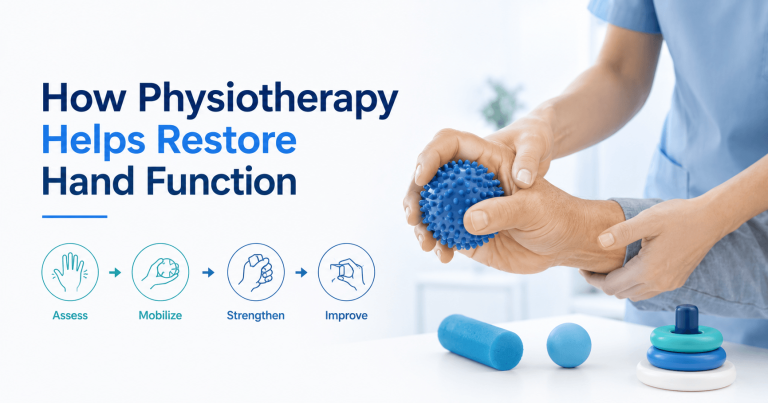
How Physiotherapy Helps Restore Hand Function
A successful rehabilitation program begins with understanding why the hand is not functioning properly. At Varia Physiotherapy Clinic, every treatment plan starts with a detailed assessment.
Step 1: Comprehensive Clinical Evaluation
The physiotherapist assesses:
- Muscle strength
- Joint mobility
- Grip strength
- Coordination
- Fine motor skills
- Sensation
- Nerve involvement
- Functional limitations
This evaluation helps identify the underlying causes and guides treatment planning.
Step 2: Improving Mobility
Stiff joints and tight muscles often limit movement.
Treatment may include:
- Joint mobilization
- Stretching exercises
- Range-of-motion training
- Soft tissue techniques
The goal is to restore normal movement patterns while minimizing discomfort.
Step 3: Strengthening Weak Muscles
Muscle weakness is common after injury or neurological conditions.
Evidence-based strengthening exercises help improve:
- Grip strength
- Finger control
- Wrist stability
- Functional hand use
Exercises progress gradually according to individual recovery levels.
Step 4: Neurological Re-Education
For patients recovering from stroke or neurological disorders, retraining the brain is an important part of rehabilitation.
Techniques may include:
- Task-specific training
- Mirror therapy
- Repetitive functional exercises
- Motor relearning strategies
- Sensory stimulation exercises
Research supported by the National Institutes of Health (NIH) highlights the importance of repetitive, task-oriented practice in improving upper limb recovery after neurological injuries.
Step 5: Functional Activity Training
This stage is especially important in neuro physiotherapy for hand recovery, where the focus shifts from clinical exercises to real-world functional independence.
Patients practice activities such as:
- Grasping objects
- Writing tasks
- Self-care activities
- Household activities
- Work-related hand functions
This helps bridge the gap between clinic exercises and everyday life.
A Real Patient Scenario We Commonly See
A gentleman in his late fifties visited Varia Physiotherapy Clinic several weeks after a stroke. His biggest concern was not walking—it was being unable to hold a spoon properly while eating.
Initially, his hand remained stiff and weak, and he struggled to open and close his fingers voluntarily.
After a structured rehabilitation program involving mobility exercises, neuromuscular retraining, strengthening, and daily functional practice, he gradually improved his ability to grasp objects and perform self-feeding activities independently.
His recovery did not happen overnight. Progress occurred over several months through consistent effort, supervised therapy, and home exercise compliance.
This reflects the reality of neurological rehabilitation: meaningful improvements are often gradual but achievable with the right guidance.
Hand Movement Rehabilitation In Ahmedabad | Expert Physiotherapy Care: What Makes Early Intervention Important?
Many people wait months before seeking help, assuming recovery will happen naturally.
Unfortunately, prolonged inactivity may lead to:
- Muscle weakness
- Joint stiffness
- Reduced coordination
- Learned non-use of the affected hand
Early physiotherapy intervention often helps maintain mobility, prevent complications, and maximize recovery potential.
Common Myths vs Facts
Myth: Hand weakness will automatically improve with time.
Fact: Some recovery may occur naturally, but structured rehabilitation often plays a crucial role in restoring optimal function.
Myth: Stroke recovery stops after a few months.
Fact: Research shows meaningful improvements can continue months or even years with appropriate rehabilitation.
Myth: Pain during exercise means treatment is working.
Fact: Effective physiotherapy focuses on safe progression rather than excessive pain.
Myth: Surgery is always required for hand movement problems.
Fact: Many conditions respond well to conservative physiotherapy management. However, some cases require orthopedic or neurological consultation.
Myth: Hand rehabilitation is only about strengthening exercises.
Fact: Recovery often requires mobility training, coordination exercises, sensory retraining, and functional practice.
When Should You See a Physiotherapist?
Consider seeking professional assessment if you experience:
- Persistent hand weakness
- Difficulty gripping objects
- Hand stiffness after injury
- Reduced finger movement
- Numbness or tingling
- Post-stroke hand dysfunction
- Tremors affecting daily activities
- Difficulty performing routine tasks
Prompt evaluation may help identify issues before they become more severe.
When Specialist Referral May Be Necessary
Physiotherapy is often highly effective, but certain situations require additional medical evaluation.
Referral to an orthopedic specialist or neurologist may be recommended when:
- Progressive neurological symptoms occur
- Severe nerve compression is suspected
- Fractures require surgical management
- Sudden unexplained weakness develops
- Symptoms suggest an underlying neurological condition
Collaborative care helps ensure patients receive the most appropriate treatment.
Recovery Timelines: What Is Realistic?
Recovery depends on factors such as:
- Underlying condition
- Severity of injury
- Age and overall health
- Treatment consistency
- Home exercise participation
Typical expectations may include:
- Mild orthopedic conditions: several weeks
- Moderate injuries: several months
- Stroke rehabilitation: months to longer-term rehabilitation
- Neurological disorders: ongoing management and maintenance
Every patient progresses differently, and treatment goals should be individualized.
Conclusion
Loss of hand movement can affect independence, confidence, work, and everyday quality of life. The good news is that many individuals can improve their function through a structured, evidence-based rehabilitation program.
At Varia Physiotherapy Clinic, our approach to Hand Movement Rehabilitation In Ahmedabad | Expert Physiotherapy Care focuses on thorough assessment, individualized treatment planning, and realistic recovery goals. Whether hand dysfunction results from stroke, injury, nerve damage, or neurological conditions, early intervention and consistent rehabilitation can play an important role in restoring meaningful function.
If you are experiencing persistent hand weakness, stiffness, or difficulty performing daily activities, seeking professional physiotherapy guidance may be an important step toward recovery.
Book a Professional Assessment
If you’re unsure whether your symptoms need attention, it’s okay to start with a simple consultation. Understanding your condition is the first step toward recovery—no pressure, just guidance.
If you’d like to speak with a physiotherapist or book an assessment at Varia Physiotherapy Clinic, you can reach out here:
 Call: +91 95123 79555
 Email: hello.drhetalvaria@gmail.com
 Website: www.variaphysiotherapyclinic.com
Our team is here to listen, assess, and guide you toward safe and effective recovery.
Hand Movement Rehabilitation In Ahmedabad - FAQs
1. Can hand function improve after a stroke?
2. How long does hand rehabilitation take?
3. Is hand rehabilitation painful?
4. Can physiotherapy help nerve-related hand weakness?
5. Do I need a doctor's referral before seeing a physiotherapist?
About the Author

Dr. Hetal M Varia
After a rich experience of working in US healthcare as manager and licensed physiotherapist in US for last 11 years, she has returned home with a vision to become pioneer of Vestibular Therapy and specialized Parkinson physiotherapy in Ahmedabad. With her special skills and expertise in vertigo, Parkinson, balance and movement disorders therapy, Dr. Varia is committed to provide US standards of therapy services , compassionate and patient centered care to our people and community. With a vision of the world where everyone walks strong & steady, she intends to empower individuals with vestibular and neurological disorders through specialized care, rehabilitation & innovative therapies to improve mobility, balance & overall quality of life!