
Geriatric Physiotherapy In Ahmedabad | Pain Relief & Better Mobility
Aging is a natural process, but pain, stiffness, and reduced mobility should not become a “normal part of life.” At Varia Physiotherapy Clinic in Ahmedabad, we often meet individuals who silently adjust their lifestyle around discomfort—avoiding stairs, reducing walks, or depending on family members for basic activities.
This is where Geriatric Physiotherapy In Ahmedabad plays a life-changing role. It is not just about treating pain; it is about restoring independence, confidence, and dignity in daily living.
Whether it is knee arthritis, balance issues, stroke recovery, or general age-related weakness, physiotherapy offers a safe, structured, and evidence-based approach to help seniors live better—not just longer.
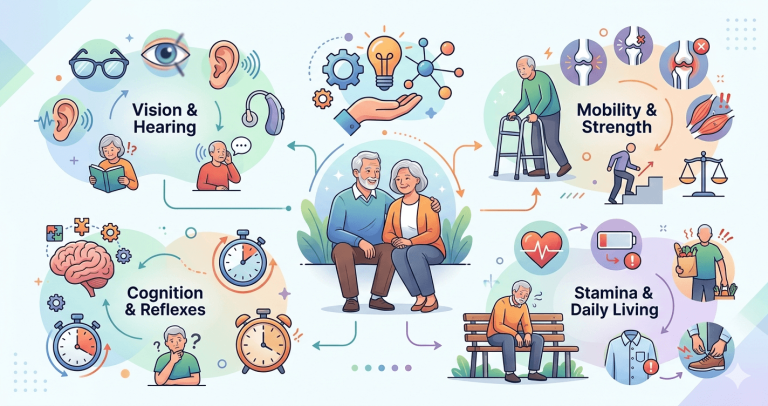
Understanding Age-Related Physical Challenges
With age, the human body undergoes natural physiological changes:
- Muscle mass gradually decreases (sarcopenia)
- Joint cartilage wears down, leading to arthritis
- Bone density reduces, increasing fracture risk
- Balance and coordination decline
- Recovery time becomes slower
At our clinic, many patients aged 60+ come with complaints such as:
- Difficulty walking without support
- Morning stiffness in knees or back
- Fear of falling
- Post-surgical weakness (hip/knee replacement)
- Neurological conditions like Parkinson’s or stroke effects
These issues are common—but they are not untreatable.
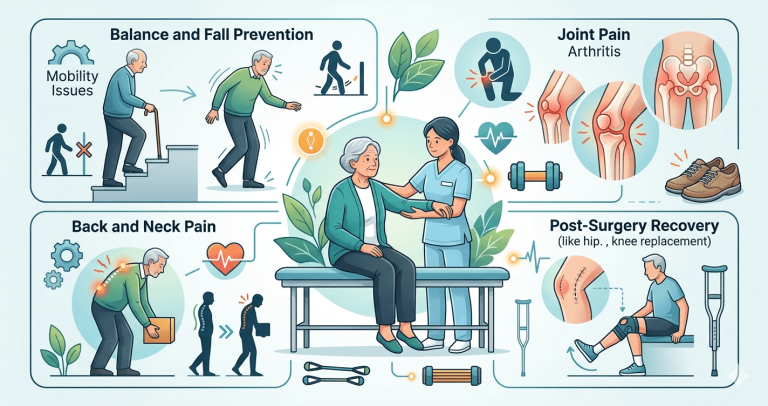
Common Causes That Bring Seniors to Physiotherapy
Understanding the root cause is essential before starting treatment. Some of the most frequent conditions we see include:
1. Osteoarthritis and Joint Degeneration
Osteoarthritis is one of the most common reasons seniors experience long-term joint pain, especially in the knees and hips. It happens gradually as the protective cartilage wears down over time. Patients often describe morning stiffness, difficulty standing up, or pain while walking short distances. With guided physiotherapy, movement can become more comfortable and daily activities more manageable without over-reliance on painkillers.
2. Post-Fracture or Surgery Weakness
After a fracture or joint replacement surgery, many patients feel that the bone has healed but the body still feels weak. This is because muscles around the affected area lose strength and coordination during rest periods. Patients often struggle with basic activities like climbing stairs or standing for long. Structured rehabilitation helps rebuild strength safely and restores functional independence step by step.
3. Neurological Conditions
Conditions such as stroke, Parkinson’s disease, or peripheral neuropathy can affect how the brain communicates with muscles. Patients may experience imbalance, slowed movement, or difficulty coordinating simple tasks. These changes can feel frustrating and emotionally challenging for both patients and families. Neurological physiotherapy focuses on retraining movement patterns and improving safety, independence, and confidence in daily life.
4. Age-Related Muscle Loss
As people age, natural muscle loss can occur, especially if physical activity decreases over time. This leads to reduced strength, slower movement, and difficulty performing everyday tasks like standing from a chair or carrying light objects. Many patients assume this is unavoidable, but it can be improved significantly with targeted strength and mobility exercises. Physiotherapy helps rebuild functional strength in a safe and controlled way.
5. Balance Disorders and Fall Risk
Balance issues are a major concern for older adults and often develop due to weakness, vision changes, or neurological decline. Patients may feel unsteady while walking or avoid movement due to fear of falling. This fear can further reduce activity levels and worsen physical condition over time. Physiotherapy focuses on improving stability, coordination, and confidence to help patients move safely in their daily environment.
How Geriatric Physiotherapy In Ahmedabad Helps Seniors
At Varia Physiotherapy Clinic, we focus on providing physiotherapy for senior citizens in Ahmedabad to restore mobility and reduce age-related physical limitations.
Step 1: Comprehensive Evaluation
We assess:
- Pain intensity and location
- Joint range of motion
- Muscle strength
- Balance and walking pattern
- Functional independence (standing, sitting, stair climbing)
Step 2: Personalized Treatment Plan
Based on findings, we design a structured rehabilitation plan that may include:
- Manual therapy for joint stiffness
- Strength training exercises
- Balance and coordination training
- Gait (walking) training
- Pain management techniques (electrotherapy, heat therapy)
- Postural correction exercises
Step 3: Functional Rehabilitation
We focus on real-life activities:
- Walking safely indoors and outdoors
- Climbing stairs independently
- Getting up from a chair without support
- Improving confidence in movement
Step 4: Education for Patients & Families
We also guide caregivers on:
- Safe home modifications
- Fall prevention strategies
- Exercise continuation at home
According to the World Health Organization (WHO), rehabilitation is essential in ensuring healthy aging and maintaining independence in older adults.
Real Patient Experience from Our Clinic
One of our patients, a 72-year-old retired teacher, visited us with severe knee pain and difficulty walking even short distances. She had stopped going to morning walks due to fear of falling.
After a detailed assessment, we diagnosed advanced knee osteoarthritis combined with muscle weakness.
Her treatment included:
- Low-impact strengthening exercises
- Balance training on stable surfaces
- Pain management therapy
- Gradual walking progression plan
Within 8 weeks, she reported:
- Reduced knee pain
- Improved walking confidence
- Ability to climb stairs with minimal support
- Resumption of morning walks (with supervision initially)
This is a common outcome when physiotherapy is consistent and guided properly. However, we always set realistic expectations—complete “reversal” of arthritis is not possible, but pain control and mobility improvement are achievable goals.
Myths vs Facts About Geriatric Physiotherapy
Myth 1: “Pain is normal in old age”
Fact: Pain is common but not normal. It always has a treatable cause.
Myth 2: “Rest is better than exercise”
Fact: Excess rest can worsen stiffness and weakness. Controlled movement is essential.
Myth 3: “Physiotherapy is only for post-surgery patients”
Fact: It is equally important for chronic pain, balance issues, and prevention.
Myth 4: “Recovery is not possible after 60+”
Fact: Age is not a barrier. Improvement depends on condition severity and consistency.
When Should You See a Physiotherapist?
You should consider Geriatric Physiotherapy In Ahmedabad if you or your loved one experiences:
- Persistent joint or back pain lasting more than 2–3 weeks
- Difficulty walking or climbing stairs
- Frequent falls or imbalance
- Weakness after surgery or hospitalization
- Stroke-related movement issues
- Reduced independence in daily activities
Most patients delay treatment until they actively start searching for a physiotherapy clinic for pain and mobility support, usually after pain begins affecting independence.
Treatment Approach at Varia Physiotherapy Clinic
At Varia Physiotherapy Clinic, we follow a structured, evidence-based approach:
Patient-first assessment model
Every treatment begins with understanding the patient’s pain, limitations, and daily challenges in detail. This ensures care is based on individual needs, not a generic approach.
Individualized rehabilitation planning
Each patient receives a tailored recovery plan based on their condition, age, and functional goals. This helps ensure safer and more effective progress in daily movement and independence.
Regular progress tracking
Recovery is closely monitored through routine assessments and functional improvements. This allows timely adjustments in treatment for better and more consistent outcomes.
Safe, supervised exercise progression
Exercises are introduced gradually under professional supervision to avoid strain or injury. Patients are guided step-by-step to build strength and confidence safely.
Collaboration with orthopedic or neurological specialists when required
If a case needs advanced medical input, coordination with specialists is done promptly. This ensures patients receive complete, evidence-based care for better recovery outcomes.
In some cases, if symptoms suggest underlying complications (such as severe nerve compression or progressive neurological disease), we recommend consultation with an orthopedic surgeon or neurologist for further evaluation.
Conclusion
Geriatric Physiotherapy In Ahmedabad is not just a medical service—it is a pathway to restoring independence, reducing pain, and improving quality of life for older adults.
At Varia Physiotherapy Clinic, we believe that every senior deserves the ability to move freely, safely, and confidently. With structured rehabilitation, expert clinical assessment, and compassionate care, meaningful recovery is always possible.
Aging may change the body—but with the right physiotherapy, it does not have to limit life.
Ethical & Patient-Centered Call to Action
If you’re unsure whether your symptoms need attention, it’s okay to start with a simple consultation. Understanding your condition is the first step toward recovery—no pressure, just guidance.
If you’d like to speak with a physiotherapist or book an assessment at Varia Physiotherapy Clinic, you can reach out here:
 Call: +91 95123 79555
 Email: hello.drhetalvaria@gmail.com
 Website: www.variaphysiotherapyclinic.com
Our team is here to listen, assess, and guide you toward safe and effective recovery.
Geriatric Physiotherapy In Ahmedabad - FAQs
Yes. When properly assessed and guided, physiotherapy is completely safe and highly beneficial for seniors.
Most patients notice improvement within 3–6 weeks, depending on condition severity and consistency.
In many cases of early or moderate arthritis, physiotherapy can delay or reduce the need for surgery.
Not always. Frequency depends on the condition. Many patients benefit from 2–3 sessions per week with home exercises.
Mild discomfort is normal, but sharp or worsening pain should be reported immediately for adjustment.
About the Author

Dr. Hetal M Varia
After a rich experience of working in US healthcare as manager and licensed physiotherapist in US for last 11 years, she has returned home with a vision to become pioneer of Vestibular Therapy and specialized Parkinson physiotherapy in Ahmedabad. With her special skills and expertise in vertigo, Parkinson, balance and movement disorders therapy, Dr. Varia is committed to provide US standards of therapy services , compassionate and patient centered care to our people and community. With a vision of the world where everyone walks strong & steady, she intends to empower individuals with vestibular and neurological disorders through specialized care, rehabilitation & innovative therapies to improve mobility, balance & overall quality of life!