Early Home Recovery After Brain Stroke | Home Rehabilitation Tips
Recovering from a brain stroke does not end when a patient is discharged from the hospital. In many ways, that is where the real journey begins. Families in Ahmedabad often feel relieved when their loved one returns home, but soon they are faced with uncertainty—how to help safely, what exercises to do, and how much recovery is actually possible.
At Varia Physiotherapy Clinic, Ahmedabad, we see this phase every day. Some patients show rapid improvement in the first few weeks, while others struggle with basic mobility and confidence. The difference is almost always linked to early structured rehabilitation at home, guided by physiotherapy.
This article on Early Home Recovery After Brain Stroke | Home Rehabilitation Tips is written to help families understand what truly matters in the early phase of recovery, how physiotherapy supports brain healing, and what realistic progress looks like.
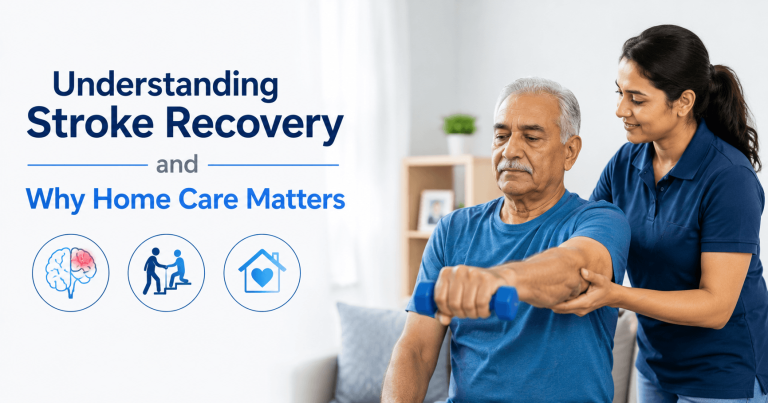
Understanding Stroke Recovery and Why Home Care Matters
A stroke happens when blood supply to the brain is interrupted, either due to a blockage (ischemic stroke) or bleeding (hemorrhagic stroke). According to the World Health Organization, stroke is one of the leading causes of long-term disability worldwide and requires ongoing rehabilitation even after hospital treatment.
Once the patient is stable and discharged, the brain enters a phase called neuroplasticity, where it begins to reorganize itself and form new neural connections. This ability is strongest in the early weeks and months after a stroke.
This is why Early Home Recovery After Brain Stroke | Home Rehabilitation Tips are so important. Without guided movement and therapy:
- Muscles begin to weaken rapidly
- Joints become stiff and painful
- Balance problems worsen
- Risk of falls increases
- Independence reduces over time
Home recovery is not just about rest—it is about structured, safe movement that retrains the brain and body together.
Common Problems Seen in Early Home Recovery
At Varia Physiotherapy Clinic, we frequently observe similar challenges when patients return home after stroke:
1. Weakness on One Side (Hemiplegia)
After a stroke, one side of the body may become weak or difficult to move, making daily tasks like sitting, standing, or eating challenging. This happens due to disrupted brain signals to the muscles. With early physiotherapy, gradual movement training helps restore function and improve independence.
2. Loss of Balance and Coordination
Patients often feel unstable while sitting or standing, increasing fear of falling and dependence on others. This is due to impaired brain control of posture and movement. Balance-focused physiotherapy helps improve stability and rebuild confidence in safe movement.
3. Muscle Tightness (Spasticity)
Muscles may become stiff and tight after a stroke, limiting movement and causing discomfort. If untreated, it can lead to long-term joint stiffness. Gentle stretching and guided physiotherapy help reduce tightness and maintain mobility.
4. Fatigue and Low Energy
Stroke patients often feel tired quickly even after small activities because the brain is working harder during recovery. This is a normal part of healing, not weakness. Proper pacing and rehabilitation help gradually improve energy levels.
5. Emotional Changes
Feelings of anxiety, sadness, or frustration are common after a stroke due to sudden lifestyle changes and reduced independence. These emotions are part of the recovery process. Supportive care and steady progress in therapy help rebuild confidence over time. These challenges are normal—but they must be addressed early to prevent long-term disability.
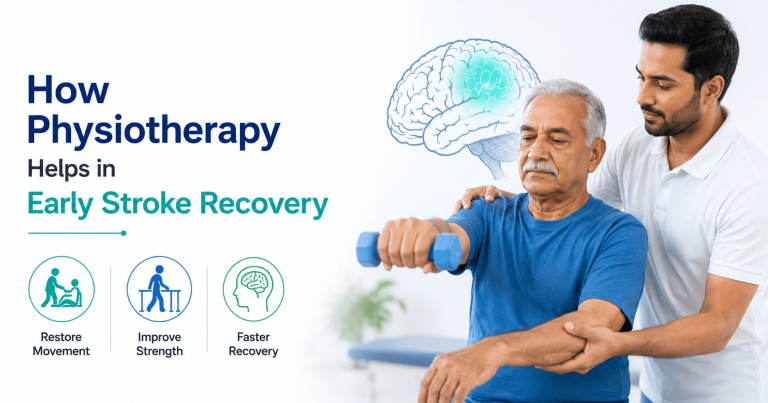
How Physiotherapy Helps in Early Stroke Recovery
Physiotherapy is not just exercise—it is structured neurological rehabilitation based on brain recovery principles. At Varia Physiotherapy Clinic, each patient undergoes a detailed assessment before treatment begins.
Clinical Assessment Includes:
- Muscle strength testing
- Balance and posture evaluation
- Walking pattern (gait) analysis
- Functional independence scoring
- Joint mobility and spasticity measurement
Based on this, a personalized rehabilitation plan is created for Early Home Recovery After Brain Stroke | Home Rehabilitation Tips.
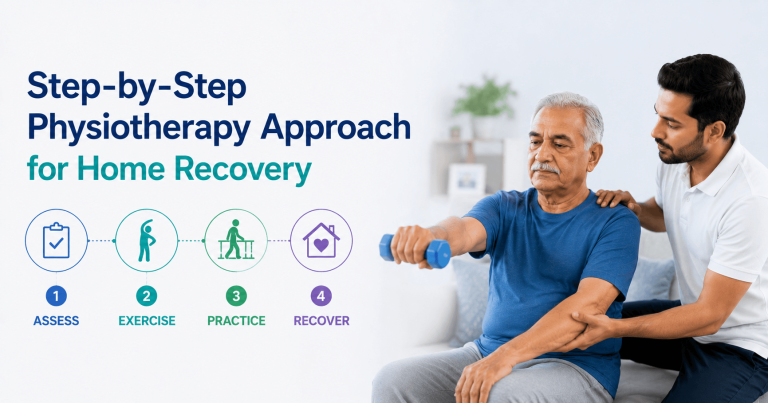
Step-by-Step Physiotherapy Approach for Home Recovery
1. Positioning and Early Movement (First Stage)
In the early phase, the goal is to prevent complications and prepare the body for movement.
- Proper bed positioning to avoid stiffness
- Passive range-of-motion exercises
- Assisted limb movement
- Prevention of bed sores
This stage is essential because immobility can cause rapid physical decline.
2. Sitting Balance and Core Activation
Once the patient is stable, therapy focuses on trunk control.
- Assisted sitting practice
- Weight shifting exercises
- Core muscle activation
- Maintaining upright posture
Sitting independently is a major milestone in recovery.
3. Standing and Transfer Training
Standing is introduced gradually under supervision.
- Bed-to-chair transfer training
- Supported standing exercises
- Weight-bearing on affected limb
- Balance correction techniques
This stage builds confidence and reduces fear of falling.
4. Walking (Gait) Rehabilitation
Walking recovery is often the most important goal for families.
- Parallel bar walking
- Step initiation training
- Gait correction techniques
- Use of walker or support devices if needed
The focus is not speed—it is safe, correct movement patterns.
5. Functional Independence Training
The final stage of early recovery focuses on real-life activities:
- Eating independently
- Dressing and grooming
- Toilet transfers
- Moving safely inside the home
This is where patients regain dignity and confidence.
Real Patient Experience from Varia Physiotherapy Clinic
A 62-year-old female patient from Ahmedabad came to us after a moderate ischemic stroke affecting her left side. She was unable to sit without support and completely dependent on family for daily activities.
During the first assessment:
- Severe weakness in left arm and leg
- Poor sitting balance
- Fear of falling
- Low confidence and emotional distress
We initiated a structured Early Home Recovery After Brain Stroke | Home Rehabilitation Tips program focusing on:
- Daily assisted limb movements
- Trunk stability exercises
- Gradual sitting and standing practice
- Family caregiver training
- Home safety modifications
After 8 weeks:
- She could sit independently
- Started standing with minimal support
- Began walking short distances with assistance
- Showed improved emotional confidence
This case demonstrates an important truth: recovery is possible, but it requires consistency, patience, and guided physiotherapy—not guesswork.
Myths vs Facts About Stroke Recovery
Myth 1: Complete rest is best after stroke
Fact: Controlled movement is essential for brain and muscle recovery.
Myth 2: Recovery happens only in the hospital
Fact: Most functional recovery happens during home rehabilitation.
Myth 3: Older patients cannot improve
Fact: Age does not stop neuroplasticity; structured therapy improves outcomes at all ages.
Myth 4: Walking should be forced quickly
Fact: Safe progression is more important than speed.
When Should You See a Physiotherapist?
Early physiotherapy is essential if:
- Patient cannot sit or stand independently
- One side of the body is weak or paralyzed
- Walking is unsafe or impossible
- Severe stiffness or spasticity is present
- Daily activities require full assistance
If needed, physiotherapists may also collaborate with neurologists or orthopedic doctors for comprehensive care. Delaying therapy often leads to preventable complications such as joint stiffness, contractures, and long-term disability.
Starting a stroke recovery physiotherapy program at the right time helps prevent complications like stiffness, contractures, and long-term disability.
Creating a Safe Home Environment for Recovery
A supportive home environment is critical for Early Home Recovery After Brain Stroke | Home Rehabilitation Tips:
- Remove loose carpets and obstacles
- Install grab bars in bathroom areas
- Ensure good lighting in all rooms
- Use supportive chairs with armrests
- Keep frequently used items within reach
- Encourage supervised mobility only
Family members play a key role in safety and motivation.
Conclusion
Early Home Recovery After Brain Stroke | Home Rehabilitation Tips is not just about exercises—it is about rebuilding life step by step. At Varia Physiotherapy Clinic, Ahmedabad, we focus on helping patients regain independence through structured, safe, and evidence-based rehabilitation.
Recovery is not instant. It is gradual, sometimes slow, but always possible with the right approach. Every small movement—sitting, standing, or taking a step—represents progress in brain healing.
Families should remember that consistency matters more than intensity. With proper physiotherapy guidance, emotional support, and a safe home environment, stroke recovery becomes a journey of steady improvement rather than uncertainty.
If your loved one has recently experienced a stroke, early professional rehabilitation can make a meaningful difference in long-term outcomes.
Book a Professional Assessment
If you’re unsure whether your symptoms need attention, it’s okay to start with a simple consultation. Understanding your condition is the first step toward recovery—no pressure, just guidance.
If you’d like to speak with a physiotherapist or book an assessment at Varia Physiotherapy Clinic, you can reach out here:
 Call: +91 95123 79555
 Email: hello.drhetalvaria@gmail.com
 Website: www.variaphysiotherapyclinic.com
Our team is here to listen, assess, and guide you toward safe and effective recovery.
Early Home Recovery After Brain Stroke - FAQs