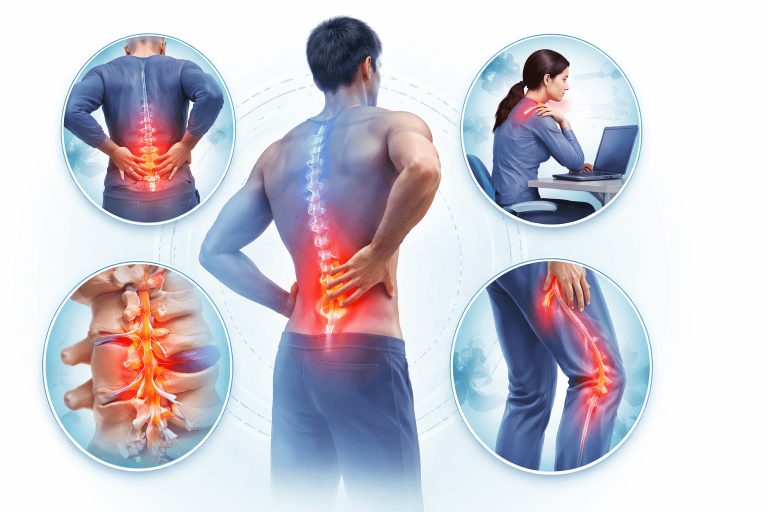
Back Pain Treatment in Ahmedabad – Causes & Physiotherapy Solutions
In my clinical practice treating back pain patients in Ahmedabad, the biggest mistake I see is panic-driven decisions after an MRI report.
A patient walks into the clinic with a scan from a local diagnostic center showing:
- “Disc bulge”
- “Degeneration”
- “Spondylosis”
They’ve already been:
- Advised surgery “before it worsens”
- On painkillers for weeks
- Resting completely at home
- Trying random YouTube exercises
- Comparing their recovery to a friend’s
And they’re scared that their spine is permanently damaged.
Most online content fails because it:
- Jumps straight to exercises
- Ignores red flag screening
- Over-promises quick relief
- Doesn’t explain why pain keeps coming back
- Doesn’t reflect real working patterns in Ahmedabad (long sitting, business stress, inconsistent gym habits)
This guide is not about ranking for “Back Pain Treatment in Ahmedabad.” It is about helping you avoid unnecessary fear, wrong treatment, and costly decisions.
Real Back Pain Patterns I See in Ahmedabad Clinics
1. MRI Overuse & “Scan Panic”
Many patients get imaging within the first week of pain. Most mechanical back pain does not require MRI initially unless red flags exist.
Result:
- Fear of movement
- Avoiding bending
- Belief that spine is fragile
2. Long Sitting (IT & Business Owners)
Ahmedabad has a large population of:
- IT professionals
- CA firms
- Business owners
- Traders working 10–12 hours seated
Common pattern:
- Tight hips
- Poor trunk endurance
- Deconditioned glute muscles
- Flare-ups after travel or long drives
3. Gym Overcorrection
Some young patients:
- Ignore pain for months
- Then suddenly start heavy deadlifts or aggressive core workouts
- Follow Instagram rehab trends
4. Cultural Rest & Medication Dependence
“Don’t move. Take a rest for 2–3 weeks.” Complete rest beyond a few days:
- Reduces spinal endurance
- Increases stiffness
- Prolongs recovery
5. Fear Avoidance
Many patients stop:
- Bending
- Lifting
- Walking long distances
The spine becomes weaker, not safer. Back pain recovery stalls not because the spine is damaged, but because load management is wrong. This is where effective pain relief treatments in Ahmedabad combined with proper movement strategies can help restore balance and support long-term recovery.
Step-By-Step Clinical Action Plan
Step 1: Proper Diagnosis & Red Flag Screening
Before exercises, I always screen for:
Red Flags:
- Unexplained weight loss
- Fever
- Trauma
- Progressive leg weakness
- Bowel/bladder changes
- Severe night pain
Why it matters:
Many patients assume all back pain is “slip disc.” It isn’t.
Step 2: Pain Control Without Passive Dependence
Goal:
Reduce sensitivity — not numb pain.
Tools:
- Education about pain science
- Controlled movement
- Short-term modalities if required (not long-term reliance)
Common mistake:
- Heat packs
- Tens
- Massage
- Painkillers
These do not rebuild spinal capacity.
Step 3: Mobility Restoration
Focus areas:
- Thoracic spine mobility
- Hip rotation
- Controlled lumbar movement
Why it works:
Stiff surrounding joints overload the lower back.
Common mistake:
Aggressive stretching into pain. Mobility must be gradual and symptom-guided.
Step 4: Strength & Load Tolerance Development
Core strengthening is not about planks alone.
We train:
- Trunk endurance
- Hip strength
- Anti-rotation control
- Load progression
Why:
The spine tolerates load when muscles distribute force effectively.
Red flag during this phase:
Increasing neurological symptoms (numbness, weakness).
Step 5: Functional Reintegration
We retrain:
Sit-to-stand mechanics
Many back pain flare-ups happen during simple transitions like getting up from a chair. We train you to shift weight through the hips, maintain neutral spine control, and use leg strength instead of straining the lower back. Our expert back pain treatment in Ahmedabad programs help reduce repeated micro-stress that often goes unnoticed in daily life.
Lifting Groceries Safely
Grocery bags are uneven loads, which can irritate a sensitive back if lifted with poor control. In clinic, we teach hip-dominant lifting, controlled breathing, and load distribution so your spine shares the effort with stronger muscles. The goal is confidence in daily tasks — not fear of bending.
Office Posture Endurance
Posture isn’t about sitting “perfectly straight” — it’s about endurance and movement variability. We build trunk stamina and teach micro-break strategies so your back tolerates long sitting hours without stiffness or flare-ups. Sustainable posture beats forced positioning every time.
If you’re an athlete:
We simulate sport-specific loading gradually.
Step 6: Long-Term Relapse Prevention
Back pain relapse is common if:
- Sleep is poor
- Stress is high
- Exercise consistency drops
- Work ergonomics remain unchanged
Back pain management is load management over time.
Real Ahmedabad Case Examples
Case 1: 38-Year-Old IT Professional
- 8 months recurring back pain
- MRI showed mild disc bulge
- Avoided bending completely
- Tried online core exercises → flare-ups
Problem:
Deconditioned trunk + fear of movement.
Plan:
- Education first
- Gradual mobility
- Trunk endurance work
- Structured sitting breaks
Setbacks:
2 flare-ups during progression.
Timeline:
Improvement started at 4 weeks.
Functional recovery around 12 weeks.
Outcome:
Not pain-free 100% always.
But confident, functional, no panic.
Case 2: 29-Year-Old Recreational Cricketer
- cute back strain during bowling
- Continued playing
- Pain worsened over 6 weeks
Deficits:
- Poor hip rotation
- Weak glute control
- Overextension mechanics
Rehab:
- Load reduction phase
- Rotational control training
- Gradual bowling simulation
Return to sport:
At 10 weeks with structured warm-up protocol.
Limitation:
Needs ongoing conditioning. No miracle just structured rehab.
Honest Patient Reflections
Business Owner, 45
“I thought MRI meant surgery. Understanding pain changed everything.”
CA Professional, 34
“I was scared to bend. Once I learned graded loading, fear reduced.”
College Athlete, 22
“I expected 2 weeks recovery. It took 3 months — but now I feel stronger.” No miracles. Just clarity and consistency.
Clinical Credibility – What Guidelines Actually Say
International back pain guidelines consistently recommend:
- Staying active
- Avoiding unnecessary imaging
- Gradual exercise-based rehabilitation
Pain science research shows:
Structural findings on MRI do not always correlate with pain.
WHO rehabilitation guidance supports:
Function-focused recovery rather than passive treatment dependence.
Practically, this means:
Movement is medicine — when applied correctly.
Who This Guide Is Not For
This guide is Not for:
- Severe trauma cases
- Progressive neurological weakness
- Suspected fracture
- Infection signs
- Severe night pain with systemic symptoms
- Emergency red flag presentations
- People expecting instant pain removal
It does Not:
- Replace medical diagnosis
- Provide medication advice
- Guarantee outcomes
- Replace in-person assessment
Boundaries build trust.
If I Were Treating Back Pain in Ahmedabad Today
I prioritize:
- Screening for red flags
- Education before exercise
- Gradual load progression
I completely avoid:
- Fear-based language
- Aggressive early strengthening
- Long-term passive therapy dependence
One mistake I repeatedly see:
Patients doing too much too soon.
One red flag I never ignore:
Progressive leg weakness.
When I refer:
- Worsening neurological signs
- Suspicion of structural pathology
- No improvement after appropriate conservative care
Clinical authority comes from knowing when NOT to treat.
Conclusion
If you are dealing with back pain in Ahmedabad:
Do:
- Seek proper screening
- Stay active within tolerance
- Progress gradually
- Track your symptoms
Avoid:
- Panic after MRI
- Complete bed rest
- Random aggressive exercises
- Comparing recovery timelines
Consider downloading a structured rehab checklist or using a self-assessment guide to better understand your stage of recovery. Clarity reduces fear. Structured rehab reduces recurrence.
Back Pain Treatment in Ahmedabad - FAQs
References