Is Physiotherapy Painful after Joint Replacement ?
A Doctor’s Honest Explanation for Patients and Families. One of the most common questions I hear from patients after knee or hip replacement surgery is: “Doctor, will physiotherapy be painful?”
This question usually comes from fear, not weakness. Patients worry whether pain means damage, whether they are pushing too hard, or whether something has gone wrong with the surgery.
The honest answer is not black and white. Physiotherapy after joint replacement should challenge the joint, but it should not harm it.
If you are wondering what to expect from physiotherapy after joint replacement, this article explains what pain is normal, what is not, and how to approach rehabilitation safely and confidently.
Why Physiotherapy Is Needed After Joint Replacement
Joint replacement surgery corrects damaged joint surfaces it does not automatically restore movement, strength, or function.
After surgery, patients commonly experience:
- Swelling and inflammation
- Muscle weakness
- Joint stiffness
- Fear of movement
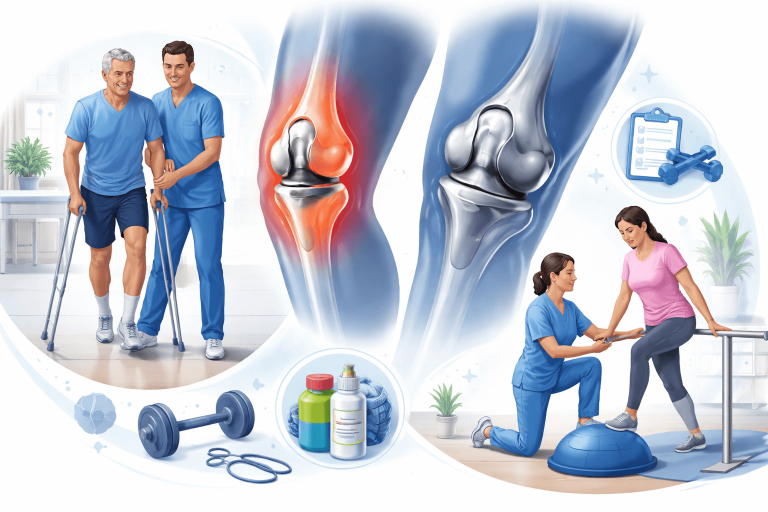
Physiotherapy helps:
- Restore joint mobility
- Improve walking and balance
- Prevent stiffness and long-term limitation
- Regain independence in daily activities
Without proper rehabilitation, even a technically successful surgery can lead to poor functional outcomes.
Is Pain Normal During Physiotherapy?
The short, medical answer:
Some discomfort is expected. Ongoing or worsening pain is not.
What patients may normally feel:
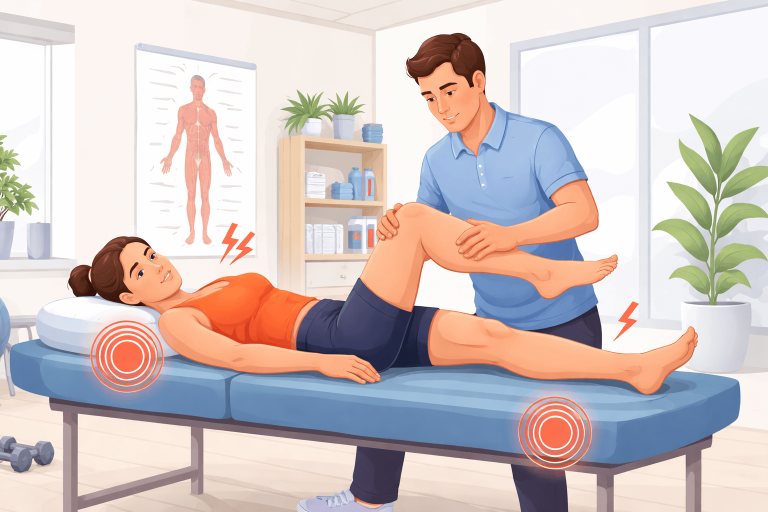
- Stretching discomfort when bending or straightening the joint
- Muscle soreness after exercises
- Mild swelling after sessions
These sensations usually settle within a few hours to a day and reduce gradually over time.
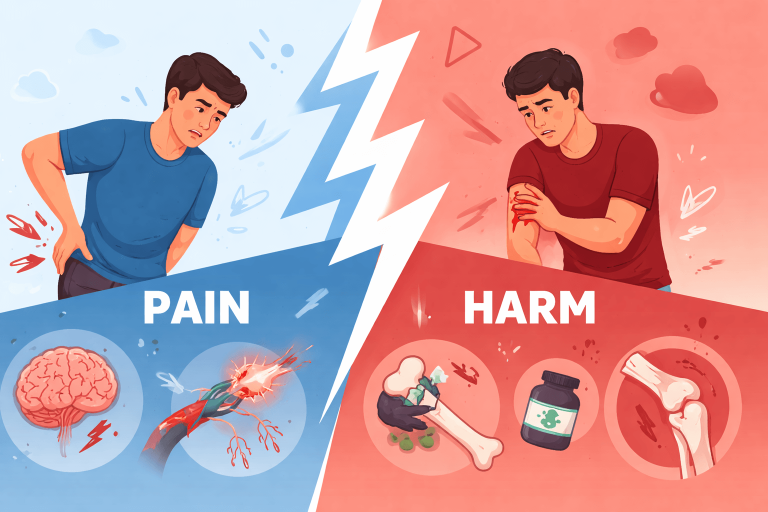
Pain vs Harm: Understanding the Difference
This distinction is critical.
Acceptable discomfort:
- Feels like stretching or effort
- Improves with rest or ice
- Does not worsen day by day
Concerning pain:
- Sharp, stabbing, or catching pain
- Pain that increases daily
- Pain with redness, warmth, or fever
- Pain that limits weight-bearing suddenly
Pain should guide treatment — not be ignored.
Step-by-Step: What to Expect After Joint Replacement
Early Phase (First 1–3 Weeks)
Focus: Swelling control, gentle movement, walking support
- Exercises are simple and short
- Some discomfort is common
- Aggressive bending is avoided
Forcing movement at this stage often increases pain and inflammation.
Middle Phase (Weeks 4–8)
Focus: Improving range of motion and strength
- Muscles may feel sore after therapy
- Joint movement improves gradually
- Pain should reduce overall
This is where proper guidance matters most.
Later Phase (2–3 Months Onwards)
Focus: Function, endurance, confidence
- Walking becomes easier
- Pain reduces significantly
- Exercises feel challenging but controlled
Persistent pain at this stage needs reassessment.
Real Clinical Examples (From Practice)
Case 1: Knee Replacement
A patient was advised to push through severe pain to “bend faster.” Swelling worsened, and progress slowed. After reducing intensity and focusing on controlled movement, recovery improved.
Lesson:
More pain does not mean faster recovery.
Case 2: Hip Replacement
Another patient avoided all discomfort out of fear, which led to joint stiffness and ultimately required a longer rehabilitation period—highlighting the importance of taking the right approach to regain strength with rehab support in Ahmedabad for a smoother recovery.
Lesson:
Avoiding movement completely can also delay recovery.
What Works — and What Doesn’t
What Works
- Gradual progression
- Pain-guided exercise intensity
- Swelling management
- Clear communication with therapist
What Doesn’t
- Forcing joint bending
- Comparing progress with others
- Ignoring persistent pain
- Copying online exercise videos
Rehabilitation is individual, not competitive.
When Physiotherapy May Not Be Enough
Physiotherapy should be paused or reviewed if:
- Pain worsens steadily
- Swelling does not reduce
- Joint becomes hot or red
- Fever or wound issues appear
These signs need medical evaluation, not harder exercise.
Common Home Mistakes That Increase Pain
- Skipping rest days
- Overdoing exercises
- Sitting in one position too long
- Poor walking technique
- Ignoring swelling control
Recovery happens between sessions, not only during them.
How Long Does Pain Last After Joint Replacement?
In most patients:
- Pain reduces significantly in 6–8 weeks
- Functional comfort improves by 3 months
- Mild stiffness may last longer
Recovery speed depends on:
- Age
- Pre-surgery joint condition
- Consistency of therapy
- Overall health
There is no “perfect timeline.”
Who Benefits Most from Physiotherapy After Joint Replacement?
Physiotherapy works best when:
- Started early but safely
- Progressed gradually
- Guided by experienced therapists
- Supported by patient cooperation
It is less effective when:
- Pain signals are ignored
- Exercises are forced
- Therapy is inconsistent
Final Doctor’s Advice
Physiotherapy after joint replacement should not feel like punishment. Some discomfort is part of healing — suffering is not.
If you are unsure:
- Ask why an exercise is given
- Speak up about pain
- Focus on function, not numbers
A good rehabilitation program protects your joint while helping you regain confidence, movement, and independence.
Is Physiotherapy Painful after Joint Replacement - FAQs
References